Source Graphitized Petroleum Coke for Steel, Chemical, and Foundry
Compare 30 listings of Graphitized Petroleum Coke from verified Chinese suppliers. Buyers can evaluate specifications like fixed carbon, sulfur content, and grain size for metallurgical, chemical, and papermaking applications.
Key considerations
Products List
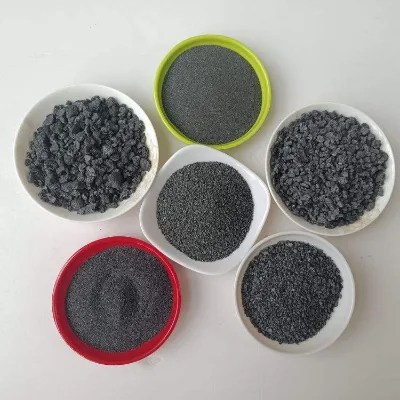


Calcined Petroleum Coke Graphitized Petroleum Coke High Carbon Good Price
$100.00 - $750.00
MOQ: 1 Tons


Comprehensive Sourcing Guide
Strategic Sourcing Guide for Graphitized Petroleum Coke
The global industrial landscape relies heavily on high-purity carbon materials to maintain efficiency in metallurgy, electroplating, and chemical processing. Graphitized Petroleum Coke (GPC) stands out as a critical raw material due to its high fixed carbon content, low ash levels, and specific crystal morphology. For procurement professionals, navigating the market for this commodity requires a disciplined approach that separates verified product attributes from marketing generalizations. This guide synthesizes available product data to provide a framework for evaluating suppliers, understanding technical specifications, and managing the complexities of international trade in carbon additives.
Technical Specifications and Material Composition
The primary differentiator for Graphitized Petroleum Coke lies in its chemical and physical composition. Buyers must scrutinize the fixed carbon (FC) percentage, as this directly correlates with the material's efficiency as a carbon raiser or additive. Data from current market listings indicates that high-grade products often maintain a fixed carbon content of 98.5% minimum, with some specialized variants reaching 99%. This high purity is essential for applications where impurities could compromise the final product's integrity, such as in steel casting or high-performance electrode manufacturing.
Conversely, the presence of impurities like sulfur and ash must be strictly controlled. Observed specifications suggest a sulfur content capped at 0.05% maximum, with some premium grades achieving as low as 0.03%. Ash content is equally critical, with typical observed values ranging between 0.5% and 0.8%. The volatile matter is generally observed at approximately 0.7%, indicating a high degree of calcination and graphitization. Phosphorus content, another potential contaminant, is noted at 0.02% in verified samples. These numerical thresholds are not universal guarantees but serve as benchmarks for what constitutes a high-quality industrial grade product.
The physical form of the material is equally significant. The crystal morphology can vary from compact crystalline graphite to aphanitic graphite, depending on the specific production process. The grain size is a key specification for application compatibility, with common ranges including 0.2-1mm, 1-5mm, and 0.5-5mm. Some suppliers offer customized sizing to meet specific furnace requirements. The crushing strength is typically described as "good," ensuring the material can withstand handling and transport without excessive degradation into fines. The calorific value is another performance metric, with observed figures around 7300 J/g, reflecting the high energy density of the carbon matrix.
Compliance, Certification, and Origin Verification
When sourcing Graphitized Petroleum Coke, verifying the origin and the manufacturing standards is a non-negotiable step in the compliance process. The supply chain for this material is geographically concentrated, with major production hubs identified in regions such as Hebei and Inner Mongolia in China. Buyers must explicitly confirm the place of origin on the commercial invoice and certificate of analysis, as regional differences in raw material quality can influence the final product's consistency.
While specific certification bodies are not universally mandated for all transactions, the product standard itself often dictates the required testing protocols. Specifications such as the model numbers GPC-01, GPC-Y-010, and CPC-YX-007 suggest that manufacturers adhere to internal or industry-specific grading systems. However, buyers should not assume that a model number implies a specific international standard without verification. The presence of a "High Pure Artificial Graphite Materials" designation or "Industrial Grade" classification should be cross-referenced with third-party laboratory reports.
Compliance also extends to the environmental and safety regulations of the importing country. The production process involves calcination and graphitization, which can generate specific emissions. Buyers should request documentation confirming that the supplier's facilities adhere to local environmental regulations. Furthermore, the "Customization" attribute listed in product descriptions indicates that many suppliers are willing to tailor the product, but this flexibility must be managed through a clear technical agreement to ensure that the customized parameters do not deviate from the buyer's quality control requirements.
Cost Drivers and Pricing Dynamics
The pricing of Graphitized Petroleum Coke is influenced by a complex interplay of raw material costs, energy consumption, and logistical factors. The observed price range in the market spans from $1.4 to $1000 per unit, a variance that reflects differences in purity, particle size, packaging, and order volume. The lower end of the spectrum typically corresponds to bulk industrial grades with standard specifications, while the higher end often includes specialized, highly purified, or custom-sized products.
Volume is a primary driver of cost efficiency. The Minimum Order Quantity (MOQ) varies significantly, ranging from 1 unit to 1000 units. Smaller MOQs allow for flexibility in testing new suppliers or fulfilling immediate, low-volume needs but often come with a higher per-unit cost. Conversely, larger orders leverage economies of scale, reducing the effective price per ton. Packaging also impacts the final cost; options such as 25kg bags or metric tons (Mt) bags into larger containers affect handling efficiency and shipping costs. Buyers should evaluate whether the cost savings from bulk packaging outweigh the storage and handling requirements of their facility.
Energy costs play a substantial role in the production of graphitized coke, as the graphitization process requires high temperatures. Fluctuations in global energy prices can lead to volatility in the base cost of the material. Additionally, the "Coking Technique," whether calcined or otherwise, influences the energy intensity and, consequently, the price. Buyers should request a breakdown of cost drivers to understand the baseline pricing structure and anticipate potential market shifts.
Typical Applications and Industry Requirements
Graphitized Petroleum Coke serves a diverse array of industrial sectors, each with distinct performance requirements. The metallurgical industry is a primary consumer, utilizing the material as a carbon additive and carbon raiser in steel and iron casting. In this context, the high fixed carbon content and low sulfur levels are critical to maintaining the chemical balance of the molten metal. The foundry sector similarly relies on the material's ability to improve the mechanical properties of castings without introducing detrimental impurities.
The chemical and petrochemical industries utilize GPC for its stability and conductivity, often in the production of electrodes or as a component in specialized chemical processes. The electroplating industry also depends on the material's purity to ensure consistent plating quality. In the papermaking industry, the carbon additive properties are leveraged to enhance the efficiency of certain manufacturing steps. The "Expansion Ratio," observed to be greater than 150ml/G, is a specific attribute that may be relevant for applications requiring volumetric changes or specific structural properties during processing.
The versatility of the material is further demonstrated by its form. Whether supplied as granular material, fines, or specific grain sizes, the application dictates the required physical form. For instance, a foundry might require 1-5mm granules for ease of charging into a furnace, while a chemical manufacturer might prefer finer particles for better dispersion. Buyers must align their procurement specifications with the precise needs of their downstream processes to avoid inefficiencies or product defects.
Supplier Evaluation and Quality Control
Evaluating a supplier for Graphitized Petroleum Coke requires a rigorous assessment of their technical capabilities and quality assurance systems. The "Brand Name" and "Product Type" are useful identifiers, but they should not be the sole basis for selection. Buyers should prioritize suppliers who can provide detailed certificates of analysis (CoA) that match the observed specifications, such as the 98.5% fixed carbon and 0.05% sulfur limits. The ability to offer "Customization" is a positive indicator of a supplier's flexibility, but it must be accompanied by a robust quality control process to ensure that custom orders meet the agreed-upon standards.
Quality control should be an ongoing process, not a one-time check. Buyers should implement a system of random sampling and third-party testing to verify that the incoming material consistently meets the specified parameters. The "Crushing Strength" and "Appearance" (granular or fines) should be visually and mechanically verified upon receipt. Discrepancies in ash content or volatile matter can indicate issues with the graphitization process or raw material quality, necessitating immediate communication with the supplier.
The "Product Model" (e.g., HQ-GPC-01, CPC-YX-007) serves as a reference point for consistency. Buyers should ensure that the supplier maintains a stable production process that does not result in significant batch-to-batch variation. The "Forming Way" (graphitized) and "Crystal Morphology" (graphite carbon, compact crystalline, or aphanitic) are technical details that should be confirmed in the product documentation to ensure they align with the buyer's technical requirements.
Long-Term Procurement Considerations
Sourcing Graphitized Petroleum Coke is a long-term strategic decision that impacts the operational efficiency and cost structure of the buyer's business. Building a reliable supply chain involves more than just securing a single transaction; it requires establishing a partnership with a supplier who can guarantee consistent quality and delivery. The "Lead Time" and "Production Capacity" of the supplier are critical factors that should be evaluated to ensure they can meet the buyer's demand fluctuations.
The "Usage" of the material as a carbon additive or raiser means that any inconsistency in the product can have cascading effects on the buyer's production line. Therefore, buyers should consider the supplier's ability to provide technical support and troubleshoot issues related to material performance. The "Application Area" listed, such as chemical industry, graphite manufacture, or smelting, should be verified against the buyer's specific needs to ensure the product is suitable for their intended use.
Furthermore, buyers should monitor market trends and regulatory changes that could affect the availability or cost of Graphitized Petroleum Coke. The "Place of Origin" and "Prod Origin" details are important for assessing supply chain risks, such as geopolitical instability or trade barriers. By maintaining a diversified supplier base and conducting regular performance reviews, buyers can mitigate risks and ensure a steady supply of high-quality Graphitized Petroleum Coke for their operations.
Comparative Analysis of Product Attributes
To facilitate decision-making, the following table summarizes key attributes observed in the market for Graphitized Petroleum Coke. This comparison highlights the range of specifications available and serves as a checklist for buyers to verify against supplier data.
| Attribute | Typical Observed Range | Critical Application Impact |
|---|---|---|
| Fixed Carbon (FC) | 98.5% - 99% | Determines efficiency as a carbon raiser; higher is better for steel casting. |
| Sulfur Content | 0.03% - 0.05% | Low sulfur is critical for high-grade steel to prevent brittleness. |
| Ash Content | 0.5% - 0.8% | Lower ash reduces slag formation and improves metal purity. |
| Grain Size | 0.2-1mm, 1-5mm, Custom | Affects mixing efficiency and furnace charging characteristics. |
| Crystal Morphology | Graphite Carbon, Compact, Aphanitic | Influences electrical conductivity and structural properties. |
| Crushing Strength | Good | Ensures material integrity during transport and handling. |
| Calorific Value | ~7300 J/g | Indicates energy density for combustion or heating applications. |
| Packaging | 25kg Bag, Mt Bag | Impacts logistics costs and storage requirements. |
This table underscores the importance of precise specification matching. While the ranges provided are based on observed data, buyers must verify that their specific supplier's product falls within these parameters to ensure optimal performance in their industrial processes. By adhering to these guidelines, procurement professionals can secure a reliable supply of Graphitized Petroleum Coke that meets the rigorous demands of modern industry.
FAQs
What is the minimum fixed carbon content for this product?
The minimum fixed carbon content is 98.5 percent for standard industrial grades. Some specialized variants reach 99 percent fixed carbon to ensure high purity for critical metallurgical applications.
How is the sulfur content controlled in the supply?
Sulfur content is capped at 0.05 percent maximum for standard grades. Premium variants can achieve sulfur levels as low as 0.03 percent to meet strict chemical industry requirements.
Which grain sizes are available for purchase?
Common grain sizes include 0.2-1mm, 1-5mm, and 0.5-5mm. Suppliers also offer customized sizing options to match specific furnace or processing requirements.
Can the product be customized for specific needs?
Yes, customization is available for various product attributes. Buyers can request specific packaging, grain sizes, or purity levels to align with their unique industrial processes.
What are the typical ash content limits?
Typical ash content ranges between 0.5 percent and 0.8 percent. This low ash level ensures the material remains effective as a carbon additive without introducing excessive impurities.
Where are the primary production locations?
Major production hubs are located in Hebei and Inner Mongolia in China. Buyers should verify the specific place of origin on certificates to ensure consistent quality from these regions.
How does the packaging affect shipping costs?
Packaging options include 25kg bags or metric tons into larger bags. Bulk packaging often reduces per-unit costs but requires adequate storage and handling facilities at the destination.