Source Fully Refined Industrial Paraffin Wax for candle, casting, and PVC
Find 30 listings for Fully Refined Industrial Paraffin Wax suitable for candle manufacturing, casting, and PVC processing. Compare specifications including softening points, oil content, and packaging options from verified suppliers in China.
Key considerations
Products List


Industrial Grade 58 Fully-Refined Paraffin Wax for Various Applications
$800.00 - $1050.00
MOQ: 1 Tons


China Origin Fully Refined Paraffin Wax - Premium Quality for Industrial Use
$670.00 - $845.00
MOQ: 2 Tons


$1180.00 - $1220.00
MOQ: 1 Tons




Comprehensive Sourcing Guide
Strategic Sourcing Guide for Fully Refined Industrial Paraffin Wax
Understanding Product Specifications and Variants
When sourcing Fully Refined Industrial Paraffin Wax, buyers must first navigate a landscape defined by specific physical and chemical attributes rather than generic descriptions. The core product is derived from crude oil, specifically noted in available market data as originating from sources such as Kunlun Oil and Petrochina Fushun in Liaoning, China. The refinement process is critical; the supply chain predominantly features "Fully Refined" grades, which distinguishes them from semi-refined or crude variants. This level of refinement ensures the removal of impurities, resulting in a product that is generally white in color, though some industrial listings may still reference yellow variants depending on the specific batch or grade.
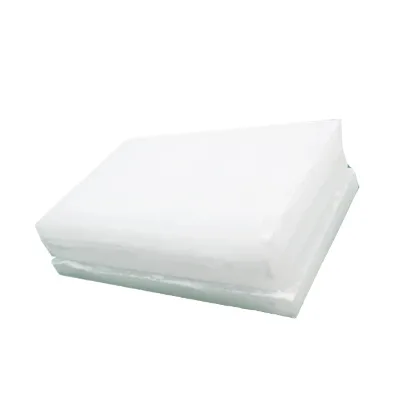
The physical form of the wax is a primary consideration for logistics and processing. Market observations indicate that the product is available in multiple forms, including white lumps, granular shapes, and slabs. The slab form is particularly common for industrial applications, with specific weight standards such as 5kg per block being observed. Packaging is equally variable, ranging from 25kg cartons to 50kg woven bags. Some suppliers offer mixed packaging options, such as 25kg boxes or 50kg bags, while others standardize on 50kg bags. The choice of packaging directly impacts handling efficiency and storage requirements within the buyer's facility.
Technical specifications vary significantly across different product models, necessitating precise identification before ordering. Common model designations include 58#, 60/62 DEG. C, and 64#. These numbers often correlate with the melting point or softening point of the wax. For instance, specific listings reference a softening point range of 100-105°C, while others specify a melting point of 60-62°C. Needle penetration, a measure of hardness, is another critical metric, with observed values ranging from 17 to 23 (1/10mm) at 25°C, and maximum limits set at 17 for certain grades. The oil content is a vital quality indicator; fully refined grades typically exhibit very low oil content, with observed maximums of 0.5% or 0.8%, and some specific grades listing 0.5% as a standard. The density of the material generally falls between 0.92 and 0.95 g/cm³, and viscosity is observed in the 5-10 range. Understanding these specific numerical ranges is essential for matching the wax to the thermal and mechanical requirements of the intended application.
Compliance, Certification, and Regulatory Verification
In the industrial procurement of paraffin wax, verifying compliance and certification is a non-negotiable step to ensure product safety and regulatory adherence. The supply chain for fully refined paraffin wax often includes documentation such as Certificates of Analysis (COA) and Material Safety Data Sheets (MSDS). These documents are critical for confirming the chemical composition and safety profile of the material. Additionally, ISO certification is frequently cited as a standard held by reputable suppliers, indicating adherence to international quality management systems.
Buyers must be vigilant regarding the specific standards applicable to their region and industry. While general market data references standards such as ASTM D721, ASTM D87, ASTM D1321, and ASTM D445, these should be treated as background knowledge rather than guaranteed attributes of every listed product. The actual product count and observed data suggest that specific test results and compliance with these exact ASTM standards vary by supplier and batch. Therefore, the procurement strategy must prioritize the verification of current COA data against the buyer's internal quality requirements.
The chemical identity of the product is also a compliance factor. The CAS No. 9002-88-4 is a standard identifier for paraffin wax, but buyers should also be aware of alternative ingredient listings. Some product descriptions list "Low Molecular Weight Polyethylene" or "High-Molecular Polymer" as ingredients, which may indicate specific blends or modified wax products rather than pure paraffin. This distinction is vital for industries with strict material purity requirements, such as food packaging or medical applications. The classification of the product as "Industrial Grade" is a baseline, but buyers should confirm if the specific grade meets the stricter requirements of their end-use application.
Cost Drivers and Pricing Dynamics
The pricing of Fully Refined Industrial Paraffin Wax is influenced by a complex interplay of raw material costs, refinement levels, and logistical factors. The observed price range in the market sits between $600 and $1,220 USD, reflecting the variability in product specifications and supplier positioning. Several key drivers contribute to this price spread. The grade of the wax is a primary factor; fully refined paraffin with lower oil content (e.g., 0.5% max) commands a premium over semi-refined or higher oil content variants. The specific melting point and softening point also influence cost, as higher melting point waxes often require more extensive processing.
Packaging and form factor play a significant role in the final landed cost. Products packaged in 50kg bags or 25kg cartons may have different unit prices compared to bulk shipments or specialized slab forms. The origin of the product, specifically from regions like Liaoning, China, impacts logistics costs, which are factored into the final price. Furthermore, the scale of deoiling, noted as 100% in some listings, indicates a higher level of processing that increases production costs.
Minimum Order Quantity (MOQ) is another critical cost driver. The observed MOQ range spans from 1 to 20 units, suggesting flexibility for smaller buyers but potentially higher per-unit costs for smaller orders. Larger orders may benefit from economies of scale, though specific volume discounts are not explicitly detailed in the available data. Buyers should negotiate based on their projected annual consumption to optimize the balance between unit price and inventory holding costs. Customization availability is also a factor; suppliers offering customization options may charge a premium for tailored specifications, such as specific color, shape, or additive blends.
Typical Applications and Usage Scenarios
Fully Refined Industrial Paraffin Wax is a versatile material with a wide array of applications across multiple industries. The observed usage data highlights its role in candle manufacturing, where its clean burn and molding properties are highly valued. In the casting industry, it serves as a casting wax for lost-wax processes, while in dentistry and jewelry, it is used for impression wax and modeling wax. The versatility extends to PVC processing, where the wax acts as a lubricant or stabilizer, and in poultry depilation, where it aids in the removal of feathers.
Food packaging is another significant application area, leveraging the non-toxic nature of fully refined wax to create protective coatings. The material's ability to form a barrier against moisture and oxygen makes it ideal for preserving food products. Additionally, the wax is used in the production of various industrial goods, including rubber and plastic compounds. The specific grade of wax selected must align with the thermal and mechanical demands of the application. For example, a higher melting point wax (60-62°C) might be preferred for candle manufacturing to ensure structural integrity in warmer environments, while a lower melting point variant might be suitable for specific casting or impression applications.
The following table summarizes the observed usage scenarios and their corresponding requirements:
| Application Sector | Primary Use Case | Key Wax Attributes Required |
|---|---|---|
| Candle Manufacturing | Wax base for candles | High melting point, low oil content, white color |
| PVC Processing | Lubricant/Stabilizer | Specific viscosity, compatibility with polymers |
| Food Packaging | Protective coating | Food-grade purity, low oil content |
| Casting & Impression | Molding and patterns | Specific softening point, low needle penetration |
| Poultry Depilation | Feather removal | Specific melting range, adhesion properties |
| Rubber/Plastic | Additive for compounds | Purity, specific molecular weight |
Supplier Evaluation and Selection Criteria
Selecting the right supplier for Fully Refined Industrial Paraffin Wax requires a rigorous evaluation process that goes beyond price comparison. Buyers should prioritize suppliers who can provide transparent documentation, including COA and MSDS, to verify the product's quality and safety. The origin of the product is a significant factor; suppliers based in established industrial regions like Liaoning, China, often have access to high-quality raw materials such as Kunlun Oil and Petrochina Fushun, which can be a proxy for product consistency.
The supplier's ability to offer customization is another critical criterion. The market data indicates that customization is available, allowing buyers to tailor the wax to their specific needs regarding color, shape, and packaging. This flexibility can be a decisive factor in long-term partnerships. Additionally, the supplier's track record in handling specific grades, such as the 58# or 60/62 DEG. C variants, should be assessed. Buyers should inquire about the supplier's quality control processes and their ability to maintain consistent oil content and needle penetration values across batches.
Packaging capabilities are also essential. Suppliers who offer a range of packaging options, from 25kg cartons to 50kg bags, demonstrate logistical flexibility. The ability to provide customized packaging, such as 5kg slabs or specific woven bags, can reduce waste and improve handling efficiency. Finally, the supplier's responsiveness and communication style are vital for resolving any issues that may arise during the procurement process. A reliable supplier will be proactive in addressing quality concerns and providing timely updates on order status.
Quality Control and Long-Term Procurement Considerations
Implementing a robust quality control (QC) strategy is essential for maintaining the integrity of the supply chain. Buyers should establish clear acceptance criteria based on the observed specifications, such as oil content (0.5% or 0.8% max), needle penetration (17-23), and softening point (100-105°C). Regular testing of incoming batches against these parameters ensures that the product meets the required standards. The use of COA and third-party testing can further validate the quality of the wax.
Long-term procurement considerations involve building a sustainable relationship with suppliers. This includes negotiating favorable terms for volume purchases, securing consistent supply, and establishing clear protocols for handling deviations in quality. Buyers should also monitor market trends and raw material costs to anticipate price fluctuations. The availability of customization options allows for strategic adjustments to the product specification as market demands evolve.
Furthermore, buyers should consider the environmental and safety implications of the product. Fully refined paraffin wax is generally considered safe, but proper handling and storage are necessary to prevent contamination. The supplier's adherence to safety standards and their ability to provide comprehensive safety data are crucial for maintaining a safe working environment. By focusing on these long-term factors, buyers can ensure a stable and reliable supply of high-quality Fully Refined Industrial Paraffin Wax.
FAQs
What is the typical oil content for Fully Refined Industrial Paraffin Wax?
The oil content is typically 0.5% maximum for fully refined grades, though some listings show up to 0.8%. This low oil content ensures high purity suitable for candle manufacturing and food packaging applications.
Which packaging options are available for this industrial wax?
Products are commonly available in 50kg bags, 25kg cartons, or 5kg slabs. Suppliers often offer mixed options like 25kg boxes or 50kg woven bags to suit different handling and storage requirements.
Can buyers request customization for the wax specifications?
Yes, customization is available for specific needs regarding color, shape, or additive blends. Buyers can tailor the product to match exact thermal or mechanical requirements for their specific industrial processes.
What is the minimum order quantity for purchasing this wax?
The minimum order quantity ranges from 1 to 20 units depending on the supplier and specific product model. Smaller orders may have higher per-unit costs compared to larger volume purchases.
Where is the origin of this fully refined paraffin wax?
The product originates from Liaoning, China, with specific sources including Kunlun Oil and Petrochina Fushun. This region is known for producing high-quality industrial grade wax with consistent refinement levels.
What certifications are typically provided with this product?
Suppliers usually provide Certificates of Analysis, Material Safety Data Sheets, and ISO certification documents. These ensure the product meets international quality management systems and safety standards for industrial use.