Source Handcrafted Preserved Eternal Rose for Home, Wedding, and Festival
Find 30 options for Handcrafted Preserved Eternal Rose varieties suitable for indoor decor, weddings, and festivals. Compare styles like floral and bonsai, check sizes from 6 to 12 heads, and review customization options for your specific sourcing needs; compare the available evidence and request quotations based on your requirements.
Key considerations
Products List


Rose 21 Heads Preserved Flowers Online Best Selling Preserved Eternal Flower
$12.00 - $20.00
MOQ: 1 Bunches


Handmade Festival and Birthday Gift Box Preserved Flower Blue Eternal Rose
$18.50 - $18.70
MOQ: 5 Piece


Christmas Easter Halloween New Year Natural Flower Gift Box Preserved Rose
$12.10 - $12.20
MOQ: 10 Piece


Wholesale Elegant Festival Gift Decorative Preserved Flower Eternal Rose Bouquet
$10.00 - $11.00
MOQ: 10 pieces


Decorative Flowers Wreaths Type Long Time Preserved Roses Preserved Flower
$45.00 - $53.80
MOQ: 10 Pieces

Best Gift Wholesale Eternal Rose Preserved Valentine's Day Forever Flower Rose
$35.00 - $45.20
MOQ: 10 Pieces


Beautiful Rose Flowers Everlasting Rose Preserved Flower Eternal Rose in Glass
$13.50 - $18.00
MOQ: 10 Pieces


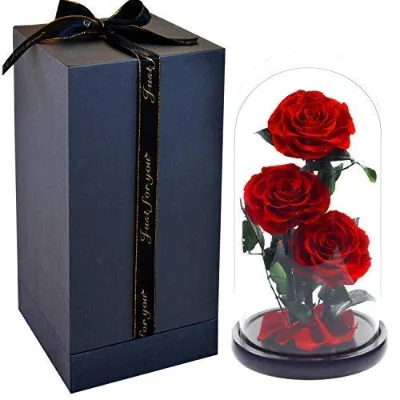

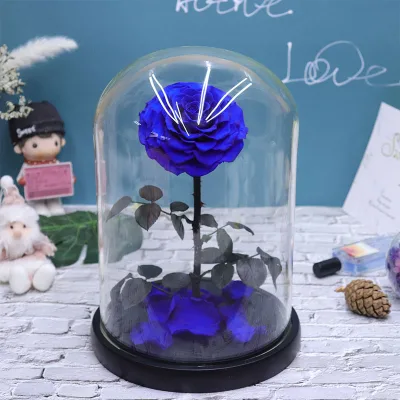


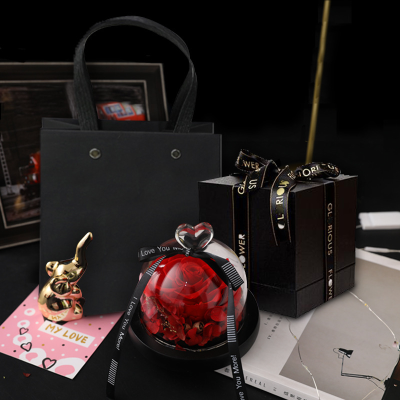


Comprehensive Sourcing Guide
Handcrafted Preserved Eternal Rose Sourcing Guide
Buyers evaluating handcrafted preserved eternal roses must first distinguish between products marketed as "evergreen" and those explicitly labeled as "fresh cut flowers," as the supplied data reveals a mix of these distinct categories. While the core keyword implies a long-lasting, non-perishable item, some listings in the observed range describe fresh cut varieties, requiring immediate verification of the preservation method to ensure the product meets the "eternal" expectation. This distinction is critical because the durability and maintenance requirements for a preserved rose differ fundamentally from those of a fresh cut flower, directly impacting the total cost of ownership for the buyer.
The observed product attributes indicate a strong focus on home decoration, festivals, and wedding applications, with specific mentions of "Nature" and "Preserved Rose" properties. Buyers should prioritize suppliers who explicitly confirm the "Evergreen" feature and "Long-lasting" durability, as these are the defining characteristics of a true preserved rose. The presence of "Customized Color" options and "Floral" styles suggests a market ready for bespoke orders, yet the buyer must ensure that customization does not compromise the structural integrity of the flower, which is essential for maintaining the eternal aesthetic in high-traffic decorative environments.
Product Scope and Observed Listing Signals
The product scope for handcrafted preserved eternal roses varies significantly in terms of head count and packaging, with observed listings offering configurations such as 6, 8, or 12 heads per unit. Buyers must carefully review the "prod_model" and "Size" specifications, as some entries list dimensions like 19*21.5cm while others reference larger wholesale boxes or specific models like GP-06. This variance in physical presentation means that a single SKU may not represent the entire product line, and procurement teams need to map specific model numbers to their intended use cases, whether for individual gifting or bulk event decoration.
Listing signals also reveal a divergence in fragrance profiles, with some products noted as "Unscented" while others are explicitly "Scented." This inconsistency requires buyers to verify the scent profile before placing an order, as the olfactory experience is a key differentiator in the premium flower market. Additionally, the "prod_packing" field shows a mix of "by Air," "Carton," and "OPP Bag+Carton" options, indicating that logistics handling varies by supplier. Buyers should align their packaging requirements with their shipping method to prevent damage during transit, ensuring the delicate preserved petals arrive in pristine condition.
Technical Specifications to Verify
Technical verification must begin with the physical dimensions and structural standards, as the data presents conflicting size metrics ranging from 2-3cm to 100cm40cm40cm. Buyers need to confirm whether these measurements refer to the flower head diameter, the stem length, or the overall box dimensions for shipping. The "prod_standard" field lists specific dimensions like 19*21.5CM, which likely applies to a specific model, but without clear context, this data point could lead to ordering errors. Clarifying the exact physical footprint of the product is essential for space planning in home or event settings.
The material composition and origin are equally critical technical parameters, with the supplied facts confirming the material as "Flower" and the origin primarily as "China Kunming" or "Yunnan, China." Kunming is a recognized hub for flower production, but buyers must verify that the "Preserved" status is achieved through a specific chemical treatment process rather than simple drying. The "Power Source: Electric" attribute found in some listings is anomalous for a flower and suggests a potential listing error or a hybrid product with lighting elements. Buyers must scrutinize the technical sheet to ensure the product is purely botanical and matches the "Eternal Rose" classification.
Compliance and Safety Documentation
While the supplied facts do not list specific certifications, buyers must request documentation regarding the safety of the preservation chemicals used on the flowers. Since the product is intended for "Home Decoration," "Wedding Decoration," and "Garden" use, it is vital to ensure that the treatment process does not release harmful volatile organic compounds (VOCs) or allergens. The "Customization" and "OEM/ODM" capabilities imply that the supplier may apply unique dyes or scents, which necessitates a review of Material Safety Data Sheets (MSDS) to confirm compliance with international safety standards for decorative items.
Documentation should also address the environmental impact and disposal guidelines for the preserved roses, particularly given the "Nature" attribute and the "Evergreen" claim. Buyers should verify if the supplier adheres to any environmental standards regarding the sourcing of raw materials or the disposal of waste during the preservation process. Although the "prod_standard" mentions specific dimensions, it does not confirm adherence to international quality or safety standards. Therefore, procurement teams must explicitly ask for proof of compliance with relevant safety regulations before finalizing any bulk order to mitigate liability risks.
Cost Drivers and Commercial Terms
The cost structure for handcrafted preserved eternal roses is influenced by the "MOQ" range, which spans from as low as 2 pieces to as high as 1000 units. Buyers with smaller budgets can leverage the low MOQ options, such as the 2-piece or 5-piece minimums, to test the market or fulfill small orders. However, larger procurement needs may require negotiating better unit prices by committing to the higher volume tiers, such as the 10-box minimum. Understanding these thresholds is essential for optimizing the cost per unit and managing cash flow effectively.
Commercial terms are further defined by the "Delivery Time" of 7-15 days and the "Sample" availability, which allows buyers to validate quality before committing to large volumes. The "OEM/ODM: Acceptable" status indicates that customization costs may be factored into the final price, potentially increasing the unit cost compared to standard stock items. Buyers should clarify whether the 7-15 day lead time includes the time required for custom color matching or if it applies only to standard inventory. Clear communication on these terms prevents unexpected delays and ensures that the total landed cost aligns with the project budget.
Supplier Qualification and Quality Control
Supplier qualification should focus on verifying the "prod_origin" as Kunming or Yunnan, China, which are established regions for high-quality flower production. Buyers must confirm that the supplier has a dedicated facility for the preservation process, as the "Preserved Rose" property requires specialized expertise to maintain the "Fresh Cut Flower" appearance over time. The presence of "Customized Color" options suggests a capability for dyeing, but buyers should audit the supplier's quality control protocols to ensure color consistency across batches, especially for large orders.
Quality control checks must include a rigorous inspection of the "Evergreen" and "Long-lasting" claims, as these are the primary value propositions of the product. Buyers should request a sample batch to test the durability of the petals and the stability of the color under various lighting conditions. The "prod_packing" methods, ranging from simple bags to cartons, must be evaluated for their ability to protect the flowers during shipping. A supplier that consistently delivers products in perfect condition, regardless of the packaging method, demonstrates a robust quality control system essential for maintaining brand reputation.
Long-Term Procurement Checks
Long-term procurement success depends on establishing a reliable supply chain that can consistently meet the "Festival" and "Wedding Decoration" demands without stockouts. Buyers should monitor the supplier's ability to maintain the "Customized Color" and "Style" consistency over multiple production cycles, as variations in the "Floral" style can disrupt event planning. Regular audits of the production process will help ensure that the "Preserved" quality remains high and that the "Nature" attributes are not compromised by cost-cutting measures.
Finally, buyers must track the performance of the product in real-world applications to validate the "Durability" claims over time. Since the product is marketed for "Indoor" and "Outdoor" use, long-term checks should include monitoring how the roses withstand environmental factors like humidity and temperature changes. Establishing a feedback loop with the supplier allows for continuous improvement in the "prod_model" and "Size" specifications. This proactive approach ensures that the handcrafted preserved eternal roses continue to meet the evolving needs of the market and maintain their status as a premium decorative item.
FAQs
What sizes are available for preserved rose bouquets?
Preserved rose bouquets are available in multiple head counts including 6, 8, and 12 heads. These options allow buyers to select arrangements that fit specific decorative needs. Customized colors are also offered to match interior themes. The standard packaging dimensions are 100cm by 40cm by 40cm, ensuring safe transport. This variety supports diverse home and festival decoration requirements effectively.
Can these preserved roses be customized for orders?
Yes, customization is available for these preserved roses. Buyers can request customized colors to suit specific design preferences. OEM and ODM services are acceptable for tailored production needs. The flowers maintain their evergreen nature while adapting to specific aesthetic requests. This flexibility ensures the final product aligns perfectly with unique decorative or gifting requirements.
How long do these eternal roses last?
These eternal roses are designed to be long-lasting and evergreen. They retain their appearance without wilting, making them ideal for permanent decoration. The preserved nature ensures they remain fresh cut in look without requiring water. This durability makes them suitable for both indoor and outdoor decorative applications over extended periods.
What is the typical delivery time for these flowers?
The typical delivery time for these preserved roses is 7 to 15 days. This timeframe allows for proper processing and packaging before shipment. Samples are available for quality verification prior to bulk orders. The origin is China, specifically Kunming, known for quality floral production. This lead time supports efficient planning for festival or wedding decoration schedules.
Are these preserved roses scented or unscented?
The preserved roses are generally unscented, focusing on visual longevity. However, some variants may be scented depending on specific product models. The primary feature is their eternal nature and preserved state. Buyers should check specific product details for fragrance attributes. This ensures the selection matches the desired sensory experience for home or garden decoration.
What is the minimum order quantity for these roses?
The minimum order quantity varies by product model, ranging from 2 pieces to 10 boxes. Some items have an MOQ of 5 pieces, while others require 10 boxes. This flexibility accommodates both small sample orders and larger wholesale purchases. Buyers can choose based on their specific volume needs and budget constraints for decoration projects.