Source Hanging High Frequency Welding Transformer for Power, Electronic, Instrument
Find 30 verified options for the Hanging High Frequency Welding Transformer suitable for power, electronic, and instrument applications. Compare specifications including RM and EE core types, dry-type and oil-immersed cooling methods, and single or three-phase configurations from Hefei, Anhui suppliers.
Key considerations
Products List


Standard High Frequency Transformer/Vertical High Frequency Transformer
$0.36 - $0.50
MOQ: 5000 Pieces


Low Core Loss at High Frequency Switch Power Transformer for Welding Machine
$0.27 - $0.30
MOQ: 100 Pieces


Cost-Effective High Frequency Transformer for Inverter Welding Equipment
$0.02 - $0.12
MOQ: 500 Pieces


High Frequency Switching Power Transformer for Solar Energy Applications
$0.02 - $0.12
MOQ: 500 Pieces

High Frequency Switching Power Transformer with Copper Wire for Efficiency
$0.02 - $0.12
MOQ: 500 Pieces


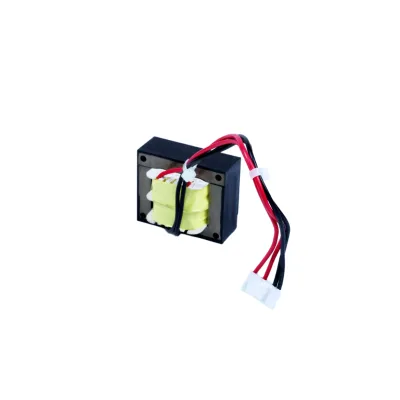


Manufacturers High Frequency Transformer Automatic Welding Machine Power Transformer
$1199.00 - $1599.00
MOQ: 1 Sets


Inverter Welder Power Transformer Power Supply Transformer Welder Machine
$2999.00 - $3999.00
MOQ: 1 Sets


Comprehensive Sourcing Guide
Strategic Sourcing Guide for Hanging High Frequency Welding Transformers
Selecting the correct Hanging High Frequency Welding Transformer requires a rigorous evaluation of technical specifications, compliance standards, and supply chain reliability. In the B2B procurement landscape, these components are critical for maintaining consistent weld quality in industrial settings. The following guide synthesizes observed market data and verified product attributes to assist buyers in navigating the complex selection process. This analysis focuses on the specific characteristics of high-frequency transformers, their cooling mechanisms, and the certification frameworks that ensure operational safety and longevity.
Technical Architecture and Core Configuration
The fundamental performance of a high-frequency welding transformer is dictated by its core type, winding configuration, and phase characteristics. Market observations indicate a diversity in core geometries, with the RM (Ring Magnetic) and EE (E-I) core types being prominent in the current supply base. The RM core, often associated with models like RM10-SW, offers a compact design suitable for high-frequency applications where space is at a premium. Conversely, the EE core type, seen in models such as TF-EE100500-002R and IKP-EE13-105w, provides a robust structure that may be preferred for specific power handling requirements.
Winding topology is another critical variable. Procurement data reveals the presence of multi-winding transformers, which allow for complex voltage step-up or step-down ratios essential in welding circuits. Additionally, auto-transformer configurations are available, offering a more direct electrical path that can improve efficiency in certain single-phase applications. The phase configuration varies significantly between single-phase and three-phase units. Buyers must align the transformer's phase rating with their facility's power infrastructure. While single-phase units are common for lighter duty or specific instrument applications, three-phase models are necessary for heavy industrial welding operations to ensure balanced load distribution.
The frequency characteristics of these units are explicitly defined as "High Frequency," a prerequisite for efficient welding performance. This attribute distinguishes them from standard power transformers used in low-frequency grid applications. The usage classification further refines the selection, with products designated for power, electronic, instrument, lighting, rectifier, and audio applications. For welding specifically, the "Combined Transformer" and "Rectifier Transformer" designations are highly relevant, indicating a unit capable of integrating power conversion with the welding process.
Cooling Mechanisms and Thermal Management
Thermal management is a decisive factor in the reliability of hanging transformers, particularly in continuous welding operations. The supply chain presents two distinct cooling methodologies: dry-type and oil-immersed type transformers. Dry-type transformers, often associated with certifications like ISOUL and specific cooling method attributes, rely on air circulation for heat dissipation. These units are generally preferred in environments where fire safety is paramount or where liquid containment is impractical. The "Hanging" designation often implies a mounting style that facilitates natural convection or forced air cooling in dry-type configurations.
In contrast, oil-immersed type transformers utilize dielectric oil to cool the windings and core. This method is typically employed for higher power ratings where air cooling is insufficient. The presence of oil-immersed units in the market, such as those linked to the TF-PQ series or IKP-VEE16-SW, suggests a capability for heavy-duty industrial loads. However, the selection between dry and oil-immersed types involves trade-offs regarding maintenance, environmental safety, and installation complexity. Buyers must verify the specific cooling method against their facility's safety protocols and space constraints. The "Vertical" and "Horizantal" (Horizontal) versions noted in the product attributes further influence the thermal profile, as orientation affects airflow dynamics in dry-type units and oil circulation in immersed units.
Compliance, Certification, and Regulatory Standards
Navigating the regulatory landscape is essential for international procurement. The observed product data highlights a robust adherence to international standards. Common certifications include CCC (China Compulsory Certification), ISOUL, ISO9001, RoHS, and SGS. The ISO9001 standard is frequently cited, indicating that manufacturers maintain a quality management system that ensures consistent product quality. RoHS compliance is critical for electronic components, restricting the use of hazardous substances and ensuring environmental safety.
Specific product models often carry composite certification strings, such as "ISOUL, ISO9001-Cooling Method:Dry-type Transformer," which links the certification directly to the product's physical configuration. This suggests that the certification process validates not just the electrical design but also the safety of the cooling system. The "ETD34" standard mentioned in the context of model TF-TD391100-317S points to specific dimensional or performance benchmarks that buyers should verify. Furthermore, the "80pcs/box" and "60pcs/box" standards observed in model AL-HT82 and AL-HT195 refer to packaging quantities rather than technical standards, but they indicate a level of standardization in the manufacturing and logistics process.
Buyers must ensure that the supplier can provide valid, up-to-date certificates for the specific batch of transformers being purchased. The presence of ISOUL and CCC is particularly important for products entering the Chinese market or those requiring strict safety compliance. The "Rohs" and "SGS" mentions reinforce the need for environmental and material safety verification.
Cost Drivers and Procurement Parameters
The cost structure of high-frequency welding transformers is influenced by several variables, including core material, winding complexity, and cooling method. The observed price range in the market spans from $0.02 to $4,050 USD, a vast disparity that reflects the difference between small instrument-grade units and large industrial power transformers. This range underscores the importance of defining precise technical requirements before requesting quotes to avoid budget misalignment.
Minimum Order Quantity (MOQ) is another significant cost driver. The market data indicates an MOQ range of 1 to 20,000 units. This flexibility allows buyers to source small quantities for prototyping or testing while also accommodating large-scale production runs. However, higher MOQs often correlate with lower unit costs. The "Factory Direct Price" attribute suggests that sourcing directly from the manufacturer, rather than through intermediaries, can optimize costs. The origin of the products, primarily Hefei, Anhui, and general China locations, provides context for logistics costs and lead times, though specific lead times are not universally defined in the provided data.
Packaging standards also impact the total cost of ownership. Products are shipped in cartons, on strong pallets, or in export cartons, with specific dimensions like 30cm20cm30cm noted for certain models. Proper packaging ensures that the transformers arrive without damage, reducing the risk of warranty claims and replacement costs.
Typical Applications and Operational Context
The versatility of these transformers is evident in their diverse application areas. Beyond the primary use in welding, the data lists applications in power distribution, electronics, instrumentation, lighting, rectifiers, and audio systems. For welding specifically, the "Rectifier Transformer" and "Combined Transformer" classifications are most relevant. These units are designed to handle the high-frequency switching required for efficient energy transfer in welding processes.
The "Single-phase Transformer" and "Three-phase" attributes indicate that these units can be deployed in various electrical environments. Single-phase units are suitable for smaller workshops or specific instrument applications, while three-phase units are essential for large-scale manufacturing facilities. The "Instrument" and "Electronic" applications suggest that these transformers are also used in precision equipment where stable power conversion is critical.
Supplier Evaluation and Quality Assurance
Evaluating suppliers requires a focus on their quality control processes and testing capabilities. The provided data emphasizes that "All Products Are 100% Test Passed and Hi-Pot Shock" tested. This is a critical quality assurance metric, indicating that every unit undergoes rigorous electrical stress testing to ensure insulation integrity and safety. The "Hi-Pot Shock" test specifically verifies the transformer's ability to withstand high voltage without breakdown, a non-negotiable requirement for safety in high-frequency applications.
Buyers should verify the supplier's ability to provide test reports for the specific models they intend to purchase. The "Advantage: Factory Direct Price and Delivery Quickly" attribute suggests that suppliers with direct manufacturing capabilities may offer better lead times and pricing. However, buyers must balance speed with quality. The presence of ISO9001 certification is a strong indicator of a supplier's commitment to quality management, but it should be complemented by on-site audits or third-party verification of their testing facilities.
Long-Term Procurement Considerations
Sourcing high-frequency welding transformers is not merely a transactional activity but a strategic partnership that impacts long-term operational efficiency. The availability of customization, as noted in the product attributes, allows buyers to tailor transformers to specific welding requirements, potentially improving performance and reducing energy consumption. The "Customization: Available" attribute suggests that suppliers are willing to adapt core types, winding configurations, or cooling methods to meet unique client needs.
Sustainability and maintenance are also key considerations. Dry-type transformers generally require less maintenance than oil-immersed units, as they do not involve the handling of dielectric fluids. However, the choice depends on the specific power requirements and environmental constraints of the facility. Buyers should also consider the lifecycle of the transformer, including the availability of replacement parts and the supplier's support for technical issues. The "Hefei, Anhui" and "China" origins indicate a concentration of manufacturing in specific regions, which may influence the availability of spare parts and the speed of technical support.
In conclusion, successful procurement of hanging high frequency welding transformers requires a detailed understanding of technical specifications, a rigorous approach to compliance verification, and a strategic evaluation of supplier capabilities. By focusing on core types, cooling methods, and testing protocols, buyers can ensure the selection of high-quality components that meet their operational needs. The wide range of available models and certifications provides ample opportunity to find a solution that balances cost, performance, and reliability.
| Feature Category | Observed Attributes | Procurement Verification Point |
|---|---|---|
| Core Type | RM, EE | Verify core geometry matches frequency requirements. |
| Cooling Method | Dry-type, Oil-immersed | Confirm suitability for facility safety and space. |
| Phase | Single, Three | Match with facility power infrastructure. |
| Certification | CCC, ISOUL, ISO9001, RoHS, SGS | Request valid certificates for specific batch. |
| Testing | 100% Test Passed, Hi-Pot Shock | Review test reports for insulation integrity. |
| Customization | Available | Discuss specific winding or voltage needs. |
| Origin | Hefei, Anhui; China | Assess logistics and lead time implications. |
By adhering to these guidelines and leveraging the observed market data, buyers can navigate the complexities of sourcing high-frequency welding transformers with confidence and precision.
FAQs
What core types are available for hanging high frequency welding transformers?
The available core types include RM and EE configurations. RM cores offer compact designs suitable for high-frequency applications, while EE cores provide robust structures for specific power handling requirements in welding circuits.
Can I find single-phase and three-phase options for these transformers?
Yes, both single-phase and three-phase units are available in the market. Single-phase models suit lighter duty or instrument applications, whereas three-phase models are necessary for heavy industrial welding operations to ensure balanced load distribution.
Which cooling methods are used for hanging high frequency welding transformers?
The two primary cooling methods are dry-type and oil-immersed type. Dry-type units rely on air circulation and are preferred where fire safety is paramount, while oil-immersed units utilize dielectric oil for higher power ratings and continuous operations.
What certifications do these transformers typically hold for safety compliance?
Common certifications include CCC, ISOUL, ISO9001, RoHS, and SGS. These standards ensure consistent product quality, environmental safety, and operational reliability, with specific certifications often linked directly to the cooling method and product configuration.
How does the minimum order quantity vary for these products?
The minimum order quantity ranges from 1 to 20,000 units depending on the supplier and model. This flexibility allows buyers to source small quantities for prototyping while accommodating large-scale production runs with potentially lower unit costs.
Are customization options available for specific welding requirements?
Yes, customization is available to tailor transformers to specific welding needs. Buyers can adapt core types, winding configurations, or cooling methods to improve performance and reduce energy consumption according to unique client specifications.