Source Heat Resistant Mouth Blown Pitcher and Tumblers Set for Home, Hotel, Bar
Explore 30 options for the Heat Resistant Mouth Blown Pitcher and Tumblers Set suitable for home, hotel, and bar use. Buyers can compare specifications like volume, material, and customization features to find the best match for their sourcing needs.
Key considerations
Products List


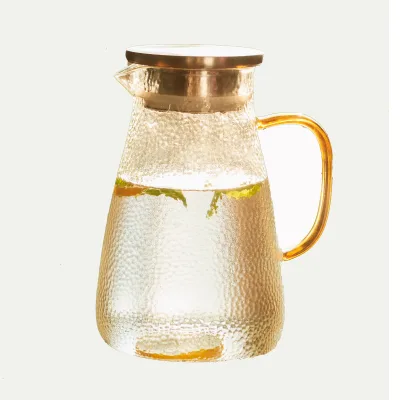
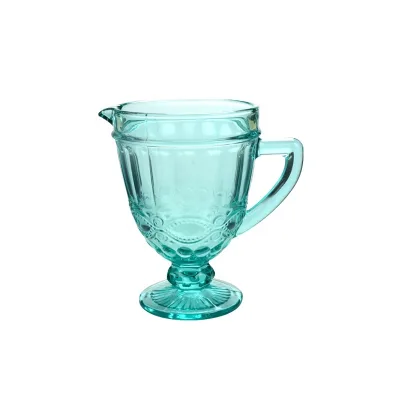
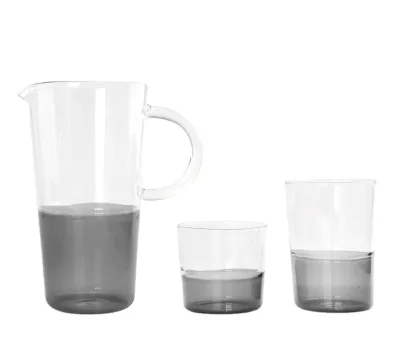


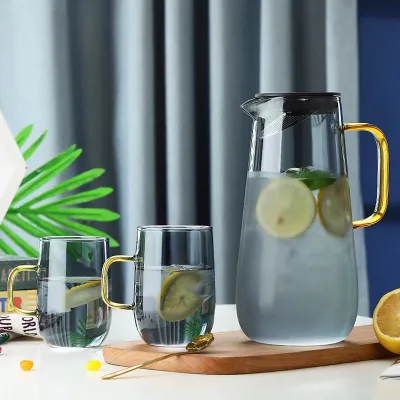
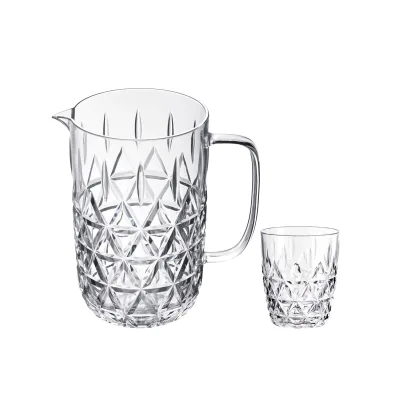


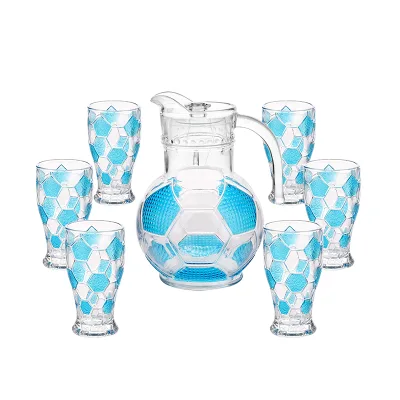


Hot Sale 500ml Insulated Tumbler Set Stainless Steel Water Bottle Gift Set
$2.00 - $3.50
MOQ: 2000 Pieces
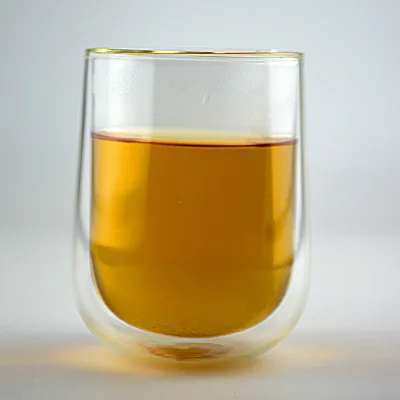
HOT! 12 oz mouth-blown double wall borosilicate Glass Cups mug (Set of 2)
$2.76 - $3.07
MOQ: 2000 Minimum
Comprehensive Sourcing Guide
Strategic Sourcing Guide for Heat Resistant Mouth Blown Pitcher and Tumbler Sets
Understanding Product Attributes and Technical Specifications
When sourcing a heat-resistant mouth-blown pitcher and tumbler set, the primary objective is to identify products that balance aesthetic craftsmanship with functional durability. The term "mouth-blown" implies a specific manufacturing technique where glass is shaped by a blowpipe, often resulting in unique textures and variations that distinguish the product from mass-produced, machine-made alternatives. However, market observations indicate a significant variance in production methods. While some listings explicitly describe items as "Machine Made" with "Decal DECORATED" techniques, others emphasize "Engraved Design" or "Simple" styles. Buyers must verify the actual production method, as machine-made glass often offers tighter tolerances and lower costs, whereas mouth-blown glass provides a premium feel but may carry higher price points and longer lead times.
The material composition is non-negotiable for this category; the core material must be glass, specifically formulated to withstand thermal shock if the "heat-resistant" claim is to be trusted. In the current market data, products are categorized by their wall structure, with "Single Wall" being a common specification. This is a critical distinction, as single-wall glass is more susceptible to thermal stress compared to double-wall constructions. Buyers should scrutinize the "prod_standard" and volume specifications, which range widely from small 80ml units to large 1500ml jugs paired with 250ml cups. The shape is predominantly "Cylindrical," but the presence of accessories like handles or covers varies. Some sets include a "with Handle" feature for the cup, while others offer a "with Cover" for the pitcher, which is essential for maintaining temperature in restaurant or hotel settings.
Compliance and Certification Verification
In the B2B procurement of glassware intended for food and beverage contact, regulatory compliance is the first line of defense against liability and product rejection. The supplied data highlights specific certifications that serve as indicators of safety and quality. Notably, "LFGB" and "FDA" certifications appear as high-confidence facts for certain product lines. LFGB (Lebensmittel-, Bedarfsgegenstände- und Futtermittelgesetzbuch) is the German Food and Feed Code, often considered more rigorous than FDA standards regarding heavy metal migration and thermal shock resistance. FDA (Food and Drug Administration) compliance ensures the material is safe for use in the United States.
However, buyers must exercise caution. The presence of these certifications in a product listing does not guarantee that every SKU within a supplier's catalog holds the same status. It is imperative to request valid, current certificates for the specific batch being ordered. The "prod_standard" often lists capacities such as "650ml or customized as your requirement" or specific volumes like "520ml," but these numbers do not inherently confer safety. Safety is derived from the chemical composition of the glass and the manufacturing process. For heat-resistant applications, the glass must be borosilicate or a high-quality soda-lime glass treated for thermal shock. Buyers should verify that the "Eco-Friendly" attribute, which is frequently listed, aligns with the material's recyclability and the absence of harmful lead or cadmium in the decal decorations.
Cost Drivers and Pricing Dynamics
The pricing structure for glass pitcher and tumbler sets is influenced by a complex interplay of material costs, production complexity, and logistical factors. The observed price range in the market spans from $0.61 to $31.00 USD. This wide disparity suggests that the lower end of the spectrum likely corresponds to basic, machine-made, single-wall glass items with minimal customization, while the higher end reflects custom designs, mouth-blown techniques, or sets with intricate engravings and packaging.
The Minimum Order Quantity (MOQ) is a significant cost driver. Data indicates an MOQ range from 10 units to as high as 5100 units, with some suppliers requiring a full container load, such as "1X40hq" (40-foot high cube). Ordering at the lower end of the MOQ spectrum may result in a higher unit cost due to the fixed costs of setup and tooling. Conversely, larger orders benefit from economies of scale but require significant capital outlay and storage capacity. The "prod_packing" also affects the final landed cost. Options range from simple "White Box with Bubble Bag" to premium "Gift Box Packing" or "Color Box with Bubble Bag." Enhanced packaging increases the unit price and the cubic meter (Cbm) volume, which directly impacts freight charges. For instance, a set with a "1PC Jug + 6PCS Cup" configuration has specific packing requirements that may result in a Cbm of 0.056 per set, influencing the total shipping cost per unit.
Typical Applications and Usage Scenarios
The versatility of glass pitcher and tumbler sets allows them to serve diverse applications across various sectors. The "Usage" field in product specifications often lists "Glass Office Cup," "Tableare," "Restaurant, Hotel, Home, Bar," and "Water Kettle" applications. This indicates that the product line is not monolithic but serves distinct market needs. In a corporate or office environment, the "Simple" style and "Colorless" (clear) finish are preferred for their professional appearance and ease of cleaning. For hospitality venues like hotels and bars, the "Engraved Design" and "Decal DECORATED" options add a touch of elegance that enhances the dining experience.
The "Volume" specification is a key determinant for application suitability. Sets with a total volume of "Less Than 1 Liter" are ideal for individual service or small group settings, such as home use or office breakrooms. In contrast, larger configurations, such as a "1500ml Jug + 250ml Cup" or "1-2 Liters" capacity, are better suited for family dining or commercial service where multiple servings are drawn from a single source. The "Type" of the product, whether it is a "Single Wall" cup or a "Glass Jug Set," dictates its thermal performance. Single-wall glass is suitable for cold beverages or warm drinks that are consumed quickly, whereas heat-resistant claims are critical for hot tea or coffee service. Buyers should align the product's "Shape" and "Style" with the brand identity of their end clients, ensuring that the "Fancy" or "Simple" aesthetic matches the intended market positioning.
Supplier Evaluation and Operational Logistics
Selecting a reliable supplier requires a thorough evaluation of their operational capabilities, location, and logistical readiness. The supply chain for glassware is heavily influenced by the "prod_origin," with major manufacturing hubs identified in "Hebei, China" and "Jiangsu, China." These regions have established infrastructure for glass production, but buyers should verify the specific factory's capacity to handle custom orders. The "Customization" attribute is listed as "Available" and "Customized," indicating that suppliers can accommodate specific branding, logo placement, and design modifications. However, the "Logo: Can Be Customized" feature often comes with its own MOQ and lead time implications.
Logistical factors are equally critical. The "Fob Port" (Free on Board) varies, with "Guangzhou" and "Fob Lianyungang" being common departure points. The choice of port affects freight costs and transit times to the buyer's destination. Furthermore, the "Delivery Time" or "lead_time" is a vital metric for supply chain planning. The observed data suggests a lead time of "45-60 Days," which is standard for custom glassware but requires early planning to avoid stockouts. Buyers must also consider the "Packing" method, such as "Safety Packing or as Per Customer's Requirement," to ensure that the fragile glass items arrive without damage. The "Cbm" (cubic meter) data provided for specific sets helps in calculating container utilization and optimizing freight costs. A supplier that offers flexible packing solutions can significantly reduce the overall cost of goods sold (COGS) by maximizing container space.
Quality Control and Long-Term Procurement Considerations
Maintaining product quality in the glassware sector requires a robust quality control (QC) protocol. Given the fragility of glass, the "prod_packing" is the first line of defense against breakage during transit. Buyers should insist on a packing standard that includes bubble bags, color boxes, and sturdy cartons, as indicated by the "Color Box with Bubble Bag" and "White Box with Bubble Bag" specifications. For custom orders, the "Decal DECORATED" and "Engraved Design" processes must be inspected for adhesion, color consistency, and alignment. The "Craft: Machine Made" attribute suggests a high degree of uniformity, but visual inspection is still necessary to detect any surface imperfections or bubbles.
Long-term procurement considerations involve building a sustainable relationship with suppliers who can adapt to changing market demands. The "Customization" feature allows buyers to differentiate their products, but it requires clear communication of technical specifications. Buyers should establish a quality agreement that defines acceptable defect rates for both the glass body and the decorative elements. Additionally, the "Eco-Friendly" attribute should be verified through third-party testing to ensure that the materials and packaging meet environmental standards. As the market evolves, buyers should monitor the "prod_model" numbers, such as "TP115," "CP08," and "GB12095-YH3," to track product iterations and ensure continuity in their supply chain. By focusing on these technical and operational details, buyers can secure a reliable source of high-quality glass pitcher and tumbler sets that meet both functional and aesthetic requirements.
FAQs
What certifications do these glass sets have?
The products hold LFGB and FDA certifications to ensure safety for food contact. These standards verify the glass is free from harmful substances and suitable for use in restaurants, hotels, and homes.
Can I customize the logo and design?
Yes, customization is available for logos and specific design requirements. Suppliers offer options like decal decoration or engraved designs, allowing buyers to tailor the appearance for their brand or specific events.
What is the typical lead time for orders?
The standard delivery time ranges from 45 to 60 days for production and shipping. This timeline accounts for manufacturing processes like machine making or decal decoration and varies based on order volume and customization needs.
Which capacities are available for these sets?
Available capacities include 80ml, 250ml, 350ml, 450ml, 520ml, 650ml, and large jugs up to 1500ml. Sets often combine a jug with multiple cups, such as a 1500ml jug paired with 250ml tumblers.
How are the products packed for shipping?
Items are packed in color boxes with bubble bags or white boxes for protection. Larger sets may use gift box packing with four sets per carton to ensure safety during transit and optimize container space.
What is the minimum order quantity required?
The minimum order quantity ranges from 10 units up to 5100 units depending on the supplier. Some suppliers require a full container load, such as one 40-foot high cube container for bulk purchases.
Where are these glass products manufactured?
Products originate from manufacturing hubs in Hebei and Jiangsu, China. These regions provide established infrastructure for glass production, offering both single-wall cups and jug sets with various finishing techniques.