Source Heavy Duty Pulse Bag for Gymnasium, Park, Community
Compare 30 verified listings for Heavy Duty Pulse Bag solutions suitable for gymnasium, park, and community applications. Buyers can evaluate customization options, certifications, and packing details to find the right supplier for their industrial needs.
Key considerations
Products List





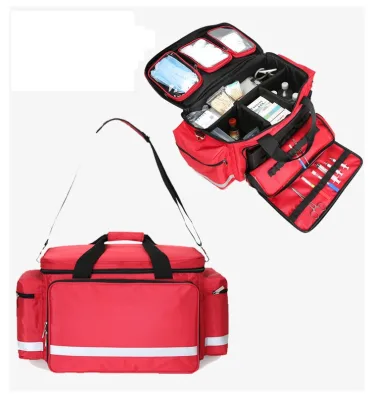


Aed Handbag Standard Backpack Carrying Case Defibrillator Weatherproof Bag
$14.90 - $15.60
MOQ: 20 Pieces

Aed Handbag Standard Backpack Carrying Case Defibrillator Weatherproof Bag
$59.50 - $66.00
MOQ: 20 Pieces

Comprehensive Sourcing Guide
Strategic Sourcing Guide for Heavy Duty Pulse Bags
Understanding Product Definitions and Technical Specifications
When initiating a procurement strategy for heavy-duty pulse bags, buyers must first distinguish between the specific industrial application and the generic product attributes often listed in broad catalogs. In the context of industrial filtration, a "pulse bag" typically refers to a filter element used in pulse-jet cleaning systems to capture particulate matter from air streams. The supplied product data indicates that while general storage bags exist with attributes like "Eco-Friendly" and "Lightweight," the specific industrial requirement for a heavy-duty pulse bag demands a focus on filtration efficiency and structural integrity.
The core technical specification for such a bag involves its ability to withstand high-velocity air pulses without tearing. The provided data notes a "Removing Dust Efficiency" of 99.5% for specific fabric dust collectors, which serves as a benchmark for performance verification. Buyers should verify that the supplier can provide test data confirming this efficiency level for their specific heavy-duty models. Furthermore, the "Dust Collecting Method" is identified as "Dry," which implies the bag operates without liquid wetting, a critical factor for maintaining the integrity of the filter media in dry industrial environments.
Material composition is another paramount specification. The data highlights "Metal Fiber" as a medium material in certain contexts, suggesting that for heavy-duty applications, the inclusion of metallic reinforcement or specific metal fiber blends may be necessary to enhance durability and heat resistance. Standard fabric types like "Corduroy" are noted for general storage and luggage, but for a heavy-duty pulse bag, the fabric must be engineered for abrasion resistance and tensile strength. Buyers must explicitly request material specifications that go beyond standard textile descriptions to ensure the bag can handle the mechanical stress of the pulse-jet cleaning cycle.
Compliance and Certification Verification Protocols
In the industrial filtration sector, compliance is not merely a formality but a safety and operational necessity. The supplied facts list "CE" and "RoHS" certifications, as well as "ISO" standards, which are critical indicators of a supplier's adherence to international safety and environmental regulations. When sourcing heavy-duty pulse bags, buyers must demand that the specific product lot carries valid CE certification, confirming that the equipment meets the essential health, safety, and environmental protection requirements of the European Economic Area.
RoHS compliance is equally vital, particularly if the facility operates in regions with strict hazardous substance restrictions. This certification ensures that the materials used in the bag, including any adhesives, coatings, or metal fibers, do not contain restricted levels of lead, mercury, cadmium, or other toxic substances. The presence of "ISO" certification in the data suggests a commitment to quality management systems, but buyers should verify the specific ISO standard (e.g., ISO 9001) relevant to the manufacturing process of the filter bags.
It is important to note that while the data mentions "S/M/L/XL" and "5/10/15/20/25kg" as product standards, these likely refer to sizing or weight capacities for different product lines. For a heavy-duty pulse bag, the buyer must verify that the certification applies specifically to the industrial filtration product and not just to a generic storage bag variant. The "dimensional tolerance" of <±1mm mentioned in the data is a high-precision standard that should be verified for the bag's diameter and length to ensure a proper fit within the filter housing. A mismatch in dimensions can lead to air bypass, reducing filtration efficiency and potentially damaging the bag during the pulse cycle.
Cost Drivers and Pricing Structure Analysis
The pricing of heavy-duty pulse bags is influenced by several distinct factors, primarily material composition, manufacturing complexity, and order volume. The observed price range in the market data spans from $0.01 to $7,000, a vast disparity that reflects the difference between simple consumer storage bags and specialized industrial filtration systems. For a heavy-duty pulse bag, the cost will likely be driven by the use of specialized materials such as metal fibers or high-grade synthetic fabrics designed for high-temperature and high-dust environments.
The "MOQ" (Minimum Order Quantity) range of 1 to 100,000 units indicates significant flexibility in supplier capabilities. However, for heavy-duty industrial components, the unit cost often decreases as the order volume increases due to economies of scale in material procurement and production setup. Buyers should be aware that the "Single package size" of 10x10x2 cm and a "Single gross weight" of 0.850 kg suggest that packaging and logistics costs are significant variables. The "OPP Bag + Carton + Wooden Case" packing method mentioned in the data is suitable for heavy-duty items requiring robust protection during shipping, which adds to the overall landed cost.
Customization is a major cost driver. The data confirms that "Customization" is available, including "Customized Color" and "OEM Logo" options. While these features add value for branding and identification, they incur additional setup and production costs. Buyers must balance the need for specific branding or color-coding against the budget constraints. Additionally, the "Installation Method" being "Vertical" and the "Shape" being "Square" are specific design choices that may require custom tooling, further influencing the price per unit.
Typical Applications and Operational Environments
Heavy-duty pulse bags are primarily designed for industrial environments where dust collection is critical for operational safety and environmental compliance. The data references "Fabric Dust Collector" and "Wardrobe" as applicable spaces, but the industrial application is far more demanding. These bags are typically deployed in facilities such as cement plants, steel mills, woodworking shops, and chemical processing units where fine particulate matter is generated in large quantities.
The "Usage" attribute of "Strength Training" and "Home, Gymnasium, Park, Community" in the data refers to general fitness equipment, which is distinct from the industrial filtration context. However, the "Appliance" category for "Home, Gymnasium, Park, Community" highlights the versatility of the supplier's product range. For the heavy-duty pulse bag, the relevant application is the "Fabric Dust Collector" operating in an "Automatic" mode. This implies the bag is part of a larger automated system that uses compressed air pulses to clean the filter surface continuously.
The "Advantage" of being an "Ideal Travel Luggage Bag" is irrelevant to the heavy-duty pulse bag application, but the "Feature" of being "Durable" and "Lightweight" is highly relevant. In an industrial setting, a durable bag ensures a longer service life, reducing downtime for replacement. The "Lightweight" attribute is beneficial for handling and installation, especially if the bags are large and require manual handling during maintenance. The "Installation Type" of "Hook Type" suggests a specific mounting mechanism that must be compatible with the existing filter housing in the facility.
Supplier Evaluation and Capability Assessment
Evaluating a supplier for heavy-duty pulse bags requires a rigorous assessment of their manufacturing capabilities and quality control processes. The data indicates that the "prod_origin" is "China," with specific mentions of "Anhui, China" and "Jiangsu, China." These regions are known for their manufacturing hubs, but buyers should verify the specific factory location to assess logistics and supply chain stability. The "place of origin" being Jiangsu, a province with a strong industrial base, suggests a higher likelihood of advanced manufacturing capabilities.
Buyers must verify the "OEM" status, as the data confirms "OEM: Yes" and "OEM Logo" availability. This indicates the supplier is capable of producing custom-branded products, which is essential for companies requiring specific identification on their filtration equipment. The "technics" of "Sewing" is a fundamental manufacturing process, but for heavy-duty bags, the quality of the stitching, seam strength, and reinforcement at stress points must be scrutinized.
The "Standard" of "S/M/L/XL" and "5/10/15/20/25kg" suggests the supplier offers a range of sizes and load capacities. However, for a heavy-duty pulse bag, the buyer must ensure the supplier can meet the specific dimensional and load requirements of their filtration system. The "Customized" nature of the "Size" and "Color" allows for tailoring the product to specific needs, but this also requires clear communication of technical drawings and specifications to avoid errors.
Quality Control and Performance Verification
Quality control is the cornerstone of ensuring the reliability of heavy-duty pulse bags. The data mentions a "weight tolerance" of <±1% and a "dimensional tolerance" of <±1mm. These tight tolerances are indicative of a high-precision manufacturing process, which is essential for ensuring that the bags fit perfectly within the filter housing and function correctly under pressure. Buyers should request detailed quality control reports that verify these tolerances for every batch of products.
The "Removing Dust Efficiency" of 99.5% is a critical performance metric. Buyers must verify this claim through independent testing or by reviewing the supplier's test reports. The "Operation Type" being "Automatic" implies that the bag must perform consistently without manual intervention, making the reliability of the filtration efficiency paramount. Any deviation in efficiency can lead to increased emissions and potential regulatory violations.
The "Feature" of being "Eco-Friendly" is a positive attribute, but in an industrial context, it must be balanced with durability. The "Style" being "Eco-Friendly, patient specific" seems to refer to medical or consumer goods, but the "Feature" of "Durable" is the key requirement for the pulse bag. Buyers should ensure that the eco-friendly aspects do not compromise the bag's ability to withstand the harsh conditions of an industrial dust collection system.
Long-Term Procurement and Lifecycle Management
Sourcing heavy-duty pulse bags is not a one-time transaction but part of a long-term lifecycle management strategy. The "Customization" and "OEM" capabilities of the supplier allow for long-term partnerships where the product can be adapted as the facility's needs change. The "Packaging" of "Polybag Then Carton" ensures that the bags are protected during storage, which is crucial for maintaining their quality before installation.
Buyers should consider the "Lead Time" and "MOQ" when planning their inventory. The wide range of MOQs (1 to 100,000) suggests that suppliers can accommodate both small-scale testing and large-scale production runs. However, for a heavy-duty application, maintaining a consistent supply chain is vital to avoid production stoppages. The "Single package size" and "Single gross weight" are important for calculating storage space and shipping costs over the long term.
Finally, the "Installation Method" of "Vertical" and the "Shape" of "Square" must be compatible with the facility's existing infrastructure. Any changes in the facility's layout or filtration requirements may necessitate a re-evaluation of the supplier's ability to provide custom solutions. By maintaining a close relationship with a supplier who offers "Customized Color" and "OEM Logo" options, buyers can ensure that their procurement strategy remains flexible and responsive to future operational needs.
FAQs
Can heavy duty pulse bags be customized for specific branding needs?
Yes, customization is available for heavy duty pulse bags including OEM logos and customized colors. Buyers can request specific branding elements while ensuring the product meets industrial filtration standards and maintains structural integrity during operation.
What certifications should heavy duty pulse bags possess for safety compliance?
Heavy duty pulse bags should possess CE and RoHS certifications to ensure safety and environmental compliance. Some products may also carry ISO standards, verifying adherence to quality management systems and international regulatory requirements for industrial equipment.
How does the material composition affect the durability of pulse bags?
Material composition significantly impacts durability, with options including metal fiber blends for enhanced strength. Standard fabrics like corduroy exist for storage, but heavy duty applications require engineered materials capable of withstanding high-velocity air pulses and abrasion.
Which dimensions are critical for ensuring proper fit in filter housings?
Critical dimensions include diameter and length with a dimensional tolerance of less than plus or minus 1mm. Precise sizing ensures a proper fit within the filter housing to prevent air bypass and maintain high filtration efficiency during the pulse cycle.
What is the typical dust removal efficiency for these industrial fabric collectors?
The typical dust removal efficiency for these fabric dust collectors is 99.5 percent. This high efficiency level serves as a benchmark for performance verification, ensuring the bags effectively capture particulate matter in dry industrial environments.
Can buyers find suppliers offering vertical installation methods for these bags?
Yes, suppliers offer vertical installation methods compatible with specific filter housing designs. The installation type is often hook-based, requiring verification that the mounting mechanism aligns with the existing facility infrastructure for seamless automated operation.