Source Heavy Duty Semi Trailer Parts for Trucks, Trailers, and Logistics
Compare 10 verified listings for Heavy Duty Semi Trailer Parts including rear axles, suspension systems, and mechanical components. Buyers can evaluate specifications like payload capacity, axle types, and customization options from Chinese manufacturers; compare the available evidence and request quotations based on your requirements.
Key considerations
Products List



Comprehensive Sourcing Guide
Heavy Duty Semi Trailer Parts Sourcing Guide
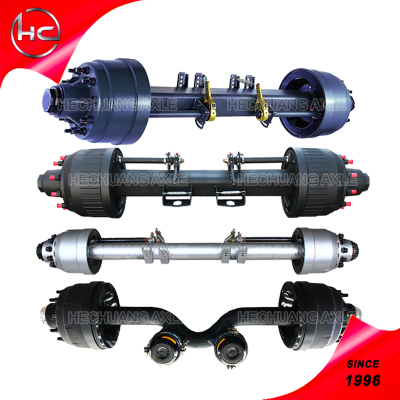
Buyers must first distinguish between mechanical leaf spring assemblies and advanced air suspension systems when evaluating Heavy Duty Semi Trailer Parts. The market offers distinct configurations, including independent suspension units and American or German type systems, each serving specific load distribution needs. Understanding whether the requirement is for a standard drum axle or a complex triple axle suspension is the primary step in defining the procurement scope.
Procurement teams should verify that the listed components match the intended trailer architecture, such as semi-trailer axles or general suspension parts. The observed product range includes specific models like LSZB-axles2001 and LSZB66, alongside generic American type identifiers. Ensuring the selected part aligns with the vehicle's existing mechanical suspension or air suspension system prevents compatibility issues during installation and operation.
Product Scope and Observed Listing Signals
The available inventory spans a wide spectrum of heavy duty components, ranging from basic drum axles to complete suspension assemblies. Listings frequently highlight customization options for payload capacity, track width, and color, allowing buyers to tailor specifications to unique operational demands. This flexibility is critical for fleets operating in diverse regions where road conditions and regulatory weight limits vary significantly.
Buyers should scrutinize the observed price range and minimum order quantities to align with their budget and volume requirements. The market data indicates a broad pricing structure and MOQs that can vary from small batches to large industrial orders. Evaluating the specific model numbers and material compositions, such as steel or stainless steel, helps in filtering listings that offer the durability required for long-haul transportation applications.
Technical Specifications to Verify
Dimensional accuracy is paramount when selecting Heavy Duty Semi Trailer Parts, particularly regarding axle beam thickness and hanger dimensions. Specifications such as the 150*150mm axle beam and hanger thicknesses ranging from 6mm to 10mm must be confirmed against the trailer's design blueprints. Verifying these physical attributes ensures that the components can withstand the intended stress loads without premature failure or structural deformation.
Critical parameters like brake dimensions, spring centers, and wheel compatibility must be cross-referenced with the existing trailer setup. The observed data includes brake sizes of 420mm and recommended wheel sizes like 7.5V-20, which dictate the overall braking performance and stability. Buyers must ensure that the P.C.D. values and leaf spring widths match the hub and suspension geometry to guarantee a seamless fit and optimal mechanical function.
Compliance and Safety Documentation
Safety compliance in the heavy duty sector relies heavily on adherence to recognized international standards and precise machining tolerances. Documentation should explicitly confirm that parts meet DIN standards and ISO 9001 certifications, which validate the manufacturing process and quality control measures. Without these verifiable credentials, the risk of component failure under heavy loads increases significantly, potentially leading to costly accidents and liability issues.
Buyers must also verify that the casting methods and surface roughness levels meet industry safety expectations for critical load-bearing parts. The use of thermal gravity casting and precision casting techniques, with surface roughness around Ra3.2, indicates a high level of manufacturing control. Ensuring that the supplier provides test results or certificates confirming these process parameters is essential for maintaining fleet safety and regulatory compliance.
Cost Drivers and Commercial Terms
The total cost of ownership for Heavy Duty Semi Trailer Parts is influenced by material selection, customization levels, and packaging requirements. Premium materials like stainless steel or specialized steel alloys command higher prices but offer extended service life in corrosive environments. Additionally, customizing parameters such as payload capacity or track width often incurs additional charges that must be factored into the initial budget planning.
Commercial terms regarding packaging and shipping logistics play a significant role in the final landed cost of the procurement. Items are typically shipped on pallets, which affects handling efficiency and storage requirements at the destination. Buyers should negotiate clear terms regarding lead times and shipping methods to avoid delays that could disrupt fleet operations, ensuring that the commercial agreement supports the operational timeline.
Supplier Qualification and Quality Control
Supplier qualification requires a rigorous assessment of their manufacturing capabilities and quality assurance protocols. Buyers should prioritize suppliers who demonstrate expertise in producing complex components like triple axle suspensions and air suspension systems. Verifying the supplier's history with similar heavy duty parts and their ability to maintain consistent quality across large production runs is essential for long-term reliability.
Quality control processes must be transparent and documented, covering everything from raw material inspection to final assembly checks. Suppliers should be able to provide evidence of their adherence to specific standards and their ability to maintain tight tolerances during the machining and casting processes. Establishing a clear communication channel for quality feedback ensures that any deviations from specifications are identified and corrected before shipment.
Long-Term Procurement Checks
Sustaining a reliable supply chain for Heavy Duty Semi Trailer Parts involves regular performance reviews and periodic audits of the supplier's operations. Buyers should establish key performance indicators related to delivery times, defect rates, and responsiveness to customization requests. Continuous monitoring of these metrics helps in identifying potential supply chain vulnerabilities and ensures that the supplier remains aligned with the buyer's evolving operational needs.
Long-term partnerships should be built on mutual trust and a shared commitment to quality and safety standards. Regularly reviewing the technical specifications and compliance documentation of new batches ensures that the supplier maintains the high standards required for heavy duty applications. This proactive approach to procurement management minimizes the risk of unexpected downtime and supports the overall efficiency and safety of the transportation fleet.
FAQs
What materials are used for Heavy Duty Semi Trailer Parts?
Heavy Duty Semi Trailer Parts are primarily manufactured from steel and stainless steel. These materials ensure high durability and resistance to wear under heavy loads. The components undergo precision casting and gravity casting processes to maintain structural integrity. Surface roughness is controlled to Ra3.2 for optimal performance. This material selection supports the mechanical strength required for semi-trailer axles and suspension systems.
Can Heavy Duty Semi Trailer Parts be customized for specific needs?
Yes, Heavy Duty Semi Trailer Parts offer available customization options. Buyers can specify dimensions, colors, and payload capacities to match their operational requirements. The axle beam size, spring width, and hanger thickness can be adjusted. Common parameters like 13t or 18t payloads are supported. This flexibility ensures that the parts integrate seamlessly with various trailer configurations and customer demands.
Which certifications apply to Heavy Duty Semi Trailer Parts?
Heavy Duty Semi Trailer Parts comply with ISO 9001 certification standards. This ensures consistent quality in machining and production processes. The tolerance for machining is maintained at plus or minus 0.01mm. DIN standards are also referenced for specific component specifications. These certifications guarantee that the parts meet international quality benchmarks for reliability and safety in heavy-duty applications.
What is the typical MOQ for Heavy Duty Semi Trailer Parts?
The minimum order quantity for Heavy Duty Semi Trailer Parts ranges from 5 to 1000 units. This flexible MOQ accommodates both small-scale testing and large-volume procurement needs. The exact quantity depends on the specific part type and customization level. Pallet packing is used for standard shipments. Buyers can negotiate quantities based on their production schedules and inventory requirements.
How are Heavy Duty Semi Trailer Parts packaged for shipping?
Heavy Duty Semi Trailer Parts are packaged using pallets to ensure safe transit. This method protects components from damage during handling and transportation. The packaging is designed to secure items like axles and suspension parts effectively. Standard palletization supports efficient loading and unloading at destination ports. This approach minimizes risk and maintains the condition of the parts upon arrival.
What specifications are available for heavy duty semi trailer axles?
Heavy duty semi trailer axles feature a 2190mm size and 150x150mm axle beam. Brake dimensions are available in 420mmx180/200/220mm variants. The track width options include 1840mm or 1850mm. Recommended wheels are 7.5V-20, 8.0V-20, or 8.5V-20. These specifications support various payload capacities and suspension types for semi-trailer applications.