Find Height Adjustable Trailer Hitch Drop for RVs, Trucks, and Trailers
Source 30 verified listings for Height Adjustable Trailer Hitch Drop components including ball mounts and couplers. Buyers can compare specifications, materials, and pricing from suppliers in China to find suitable parts for towing applications.
Key considerations
Products List
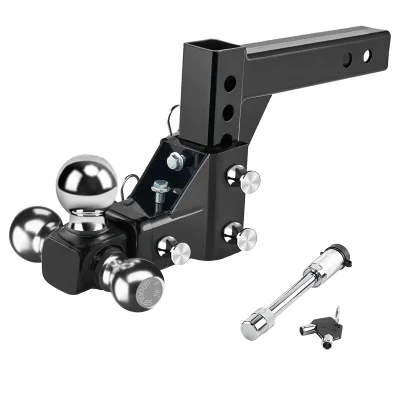
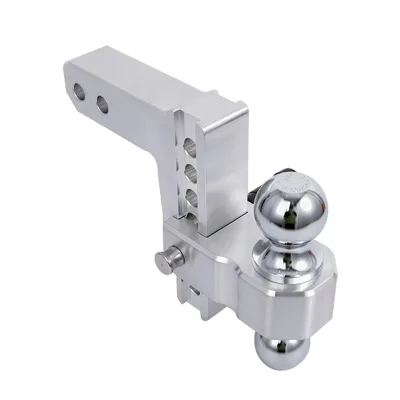
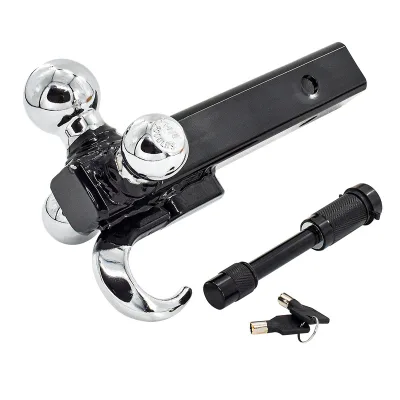


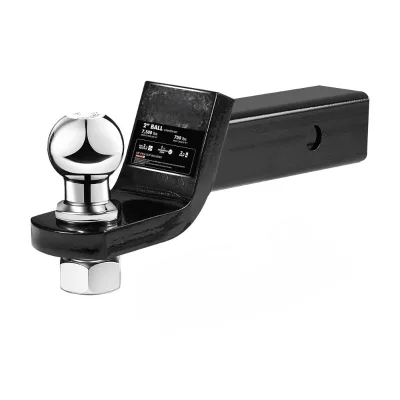
2000 Lbs Trailer Hitch Ball Mount Fits 1-1/4 Inches Drop 5/8 Inches Rise
$10.00 - $25.00
MOQ: 50 Pieces

OEM Heavy Duty Drop Rise Adjustable Trailer Hitch Trailer Hitch Ball Reversible Mount
$8.00 - $10.00
MOQ: 200 Pieces


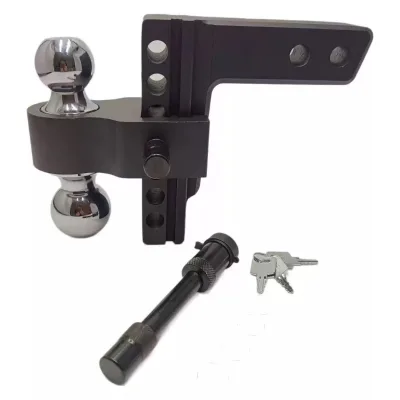
6 Inch Height Adjustable Trailer Hitch Drop for Fits 2 Inch Receiver 2" 2-5/16"
$63.00 - $67.00
MOQ: 30 pieces

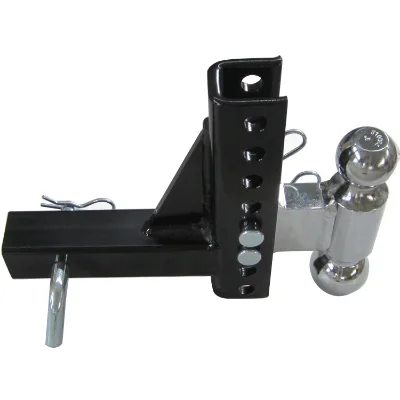
2 Inch Receiver 8 Inch Adjustable Trailer Hitch Drop 8'' with Double Pins
$38.90 - $41.90
MOQ: 50 pieces
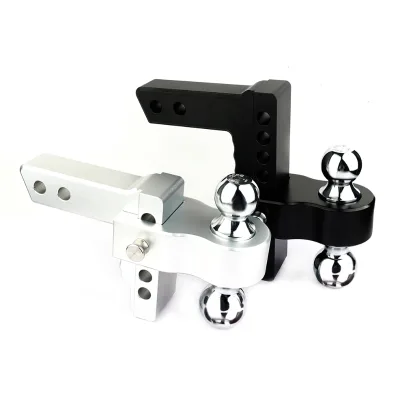


Boat Trailer Accessories Extended Trailer Hitch Ball Reversible Mount Towing Hitch
$8.00 - $15.00
MOQ: 500 Pieces



Comprehensive Sourcing Guide
Strategic Sourcing Guide for Height Adjustable Trailer Hitch Drop Systems
Understanding the Technical Architecture of Adjustable Hitch Systems
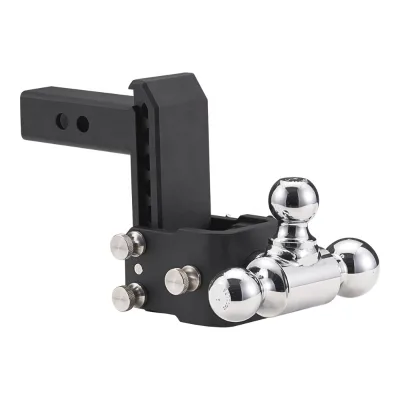
When sourcing Height Adjustable Trailer Hitch Drop systems, buyers must first distinguish between the specific mechanical configurations available in the current market. The core keyword implies a need for a mechanism that allows the towing vehicle's hitch receiver to align vertically with the trailer coupler, compensating for differences in ride height. Based on observed product attributes, the market offers distinct variations including "Drop Hitch three Ball" units and "Adjustable Trailer Hitch Mount" models. These components are critical for ensuring a level towing platform, which directly impacts vehicle stability and braking efficiency.
The material composition of these systems is a primary determinant of their load-bearing capacity and durability. Supply data indicates a divergence in material selection, with some units specified as "Carbon steel" while others utilize "Aluminum" or generic "Steel." Carbon steel is typically preferred for high-load applications due to its tensile strength, whereas aluminum offers a weight reduction benefit, potentially improving fuel efficiency and handling dynamics. The "Max Payload" observed in specific listings reaches 35,000 LBS, a figure that suggests the existence of heavy-duty industrial-grade options alongside standard consumer models. Buyers must verify that the material specification matches the intended payload requirements of their specific fleet or personal use case.
Surface treatment processes are equally vital for longevity, particularly as these components are often exposed to road debris, moisture, and varying weather conditions. The observed surface treatments include "Powder Painted," "spray coating," and more robust finishes like "Color Painted/Electric Plated/Hot Galvanized." Hot galvanization is generally the superior choice for environments prone to corrosion, such as coastal regions or areas with heavy road salt usage. The "OEM" customization options noted in the data suggest that surface treatment colors and specific coating thicknesses can often be tailored to meet fleet branding or specific durability standards.
Compliance Verification and Certification Standards
In the realm of trailer towing equipment, regulatory compliance is not merely a formality but a critical safety requirement. The supply data explicitly lists several certifications that buyers should look for to ensure product legitimacy and safety. These include "ISO/TS16949," "CCC," "DOT," "ISO," and "CE." The presence of "DOT" (Department of Transportation) certification is particularly significant for products intended for the North American market, as it indicates adherence to federal safety standards regarding towing hardware. Similarly, "ISO/TS16949" signifies that the manufacturing facility adheres to the quality management system specific to the automotive industry, ensuring consistent production quality.
Buyers must exercise caution when interpreting certification claims. While the data confirms that some suppliers offer products with these certifications, it does not guarantee that every listed item possesses them. Therefore, procurement protocols must include a verification step where the specific batch or model number is cross-referenced with the issuing authority. The "ABS" (Anti-lock Braking System) attribute is noted as "Without ABS" in some listings, which is expected for passive hitch components but requires confirmation that the hitch system does not interfere with the vehicle's active safety systems.
Standardization is another area requiring rigorous attention. The data references specific model standards such as "1-7/8''" for ball mounts and "Adjustable Trailer Hitch Mount" specifications. However, the "prod_standard" is also listed as "Customized" in several entries. This duality indicates that while standard sizes exist, a significant portion of the market offers bespoke solutions. Buyers should verify that any customized standard still aligns with the trailer's coupler size and the vehicle's receiver tube dimensions. The "prod_model" identifiers, such as "BZ-011513" or "BZ ball mount," serve as unique identifiers for these configurations and should be used to track specific compliance documentation.
Cost Drivers and Pricing Dynamics in the Market
The pricing structure for Height Adjustable Trailer Hitch Drop systems is influenced by a complex interplay of material costs, manufacturing processes, and order volume. The observed listed price range in the market spans from 0.01 to 100 USD, a wide variance that reflects the difference between basic single-item units and comprehensive, heavy-duty assemblies. This range suggests that price alone is an unreliable indicator of quality without context regarding the specific product attributes.
The Minimum Order Quantity (MOQ) is a significant cost driver. The data shows an observed MOQ range from 1 to 1000 units, with specific instances of 10 pieces and 20 pieces noted. For buyers seeking to minimize upfront capital expenditure, suppliers with lower MOQs (e.g., 10 or 20 pieces) offer a lower barrier to entry. However, these smaller orders often come with a higher unit cost compared to bulk purchases. Conversely, suppliers requiring an MOQ of 1000 pieces may offer significantly reduced per-unit pricing, making them suitable for large fleet procurement or distribution networks.
Payment terms also play a role in the total cost of ownership. The standard payment method observed is "T\T" (Telegraphic Transfer), which is a common practice in international trade but requires buyers to manage cash flow timing carefully. Additionally, the "Selling Units" are typically listed as "Single item," which simplifies the purchasing process for individual buyers but may not be cost-effective for bulk acquisitions. Buyers should also consider the "Single gross weight" and "Single volume" when calculating logistics costs. Although some data points list these as 0.0 kg and 0 cm, this is likely a data entry artifact; in reality, the shipping weight and volume of steel or aluminum hitch components will significantly impact the final landed cost, especially for international shipments.
Typical Applications and Operational Scenarios
The versatility of Height Adjustable Trailer Hitch Drop systems allows them to serve a wide array of applications, ranging from recreational towing to heavy industrial transport. The primary application categories identified in the data include "Trailer / RV," "Trailer Parts," and "Trailer Suspension." For recreational users, the "Drop Hitch three Ball" configuration is particularly valuable, offering multiple ball sizes to accommodate different trailer couplers without needing to swap the entire hitch assembly. This flexibility is essential for RV owners who may tow different types of trailers, such as campers, boats, or utility trailers.
In the commercial sector, the "Adjustable Trailer Hitch Mount" and "Standard Coupler" types are critical for logistics and fleet operations. The "Use for: Repair, Replacement" attribute highlights the aftermarket demand for these components, indicating that a significant portion of the market is driven by the need to replace worn or damaged parts in existing fleets. The "Max Payload" of 35,000 LBS suggests that these systems are also engineered for heavy-duty applications, such as transporting construction equipment or large cargo containers.
The "Type: Towing Pin" and "Type: Standard Coupler" classifications further define the operational context. Towing pins are often used in conjunction with drop hitches to secure the connection between the hitch and the trailer, ensuring that the vertical adjustment does not compromise the structural integrity of the link. For buyers in the "Trailer Suspension" sector, the integration of these hitches with suspension systems is vital for maintaining ride quality and reducing wear on the towing vehicle's chassis. The "Condition: New" attribute confirms that the market primarily deals in replacement parts rather than refurbished units, ensuring that buyers receive components with full structural integrity.
Supplier Evaluation and Geographic Considerations
When evaluating potential suppliers for Height Adjustable Trailer Hitch Drop systems, geographic origin and manufacturing capabilities are key factors. The data indicates that the primary places of origin are "Guangdong, China" and "Shandong, China." These regions are known for their robust manufacturing ecosystems and specialization in automotive and trailer components. Suppliers from Guangdong may offer a wider variety of finished goods with diverse surface treatments, while those from Shandong might specialize in heavy-duty steel components.
Supplier reliability can be assessed through their certification portfolio and customization capabilities. The presence of "ISO/TS16949" certification is a strong indicator of a supplier's commitment to quality management. Additionally, the "Customization: Available" attribute suggests that suppliers are willing to adapt their products to specific buyer requirements, such as specific surface treatments or color schemes. Buyers should verify that the supplier has the infrastructure to support these customizations without compromising the structural integrity of the product.
The "Brand Name" "Ketuo" is observed in the data, but buyers should not limit their search to a single brand. Instead, they should focus on the supplier's ability to provide consistent quality across their product line. The "Warranty: One Year" attribute is a crucial metric for supplier confidence; a one-year warranty indicates that the manufacturer stands behind the durability of their products. Buyers should also inquire about the "Packing" standards, which are described as "Carton+foam" or "Carton Box," to ensure that the products are protected during transit and arrive in pristine condition.
Quality Control Protocols and Long-Term Procurement Strategy
Implementing a robust quality control protocol is essential for mitigating risks associated with sourcing trailer hitch components. Given the safety-critical nature of these products, buyers should mandate third-party testing or on-site inspections for critical batches. The "Finish" options, such as "Electric Plated" or "Hot Galvanized," require specific verification to ensure that the coating thickness meets the required corrosion resistance standards. Buyers should request test reports or certificates of analysis that confirm the material composition and surface treatment specifications.
Long-term procurement strategies should focus on building relationships with suppliers who offer consistent quality and reliable lead times. The "MOQ" flexibility observed in the market allows buyers to start with smaller orders to test product quality before committing to larger volumes. However, for sustained operations, establishing a contract with a supplier that can meet higher volume requirements while maintaining the "High-Quality" standard is advisable.
Buyers should also consider the "Standard" and "Model" consistency over time. Switching between different models or standards can lead to compatibility issues in the field. Therefore, maintaining a standardized inventory of "BZ ball mount" or "Adjustable Trailer Hitch Mount" models is recommended. Finally, the "Payment" terms should be negotiated to align with the buyer's cash flow needs, ensuring that the financial relationship remains sustainable over the long term. By adhering to these guidelines, buyers can secure reliable, high-performance Height Adjustable Trailer Hitch Drop systems that meet both operational and safety requirements.
FAQs
What materials are used for height adjustable trailer hitch drops?
These components are primarily manufactured from carbon steel, aluminum, or generic steel. Carbon steel is preferred for high-load applications due to its tensile strength, while aluminum offers weight reduction benefits for improved handling dynamics.
Which certifications should I look for in trailer hitch suppliers?
Look for products with ISO/TS16949, CCC, DOT, ISO, and CE certifications. The presence of DOT certification indicates adherence to federal safety standards, while ISO/TS16949 signifies adherence to automotive industry quality management systems.
How does surface treatment affect the longevity of these hitches?
Surface treatments like powder painting, spray coating, or hot galvanization protect against corrosion. Hot galvanization is superior for environments with road salt or moisture, and OEM options allow for customized color and coating thickness.
Can I find adjustable hitches with a 35000 LBS payload capacity?
Yes, specific heavy-duty models in the market offer a maximum payload of 35000 LBS. This capacity suggests the existence of industrial-grade options suitable for transporting construction equipment or large cargo containers alongside standard consumer models.
What is the typical minimum order quantity for these products?
The minimum order quantity ranges from 1 to 1000 units, with specific instances of 10 or 20 pieces noted. Lower MOQs offer a lower barrier to entry, while higher volumes may reduce the per-unit cost for fleet procurement.
Where are the main manufacturing locations for these trailer parts?
Primary places of origin include Guangdong and Shandong in China. These regions possess robust manufacturing ecosystems specializing in automotive and trailer components, offering diverse surface treatments and heavy-duty steel options.