Source Helical Gear Motor for Industrial Automation and Moving Machinery
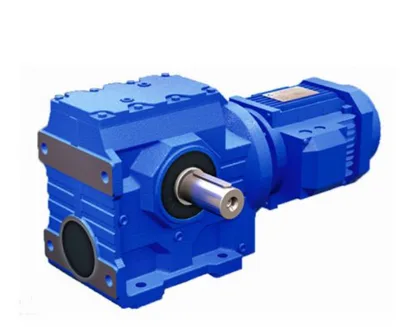
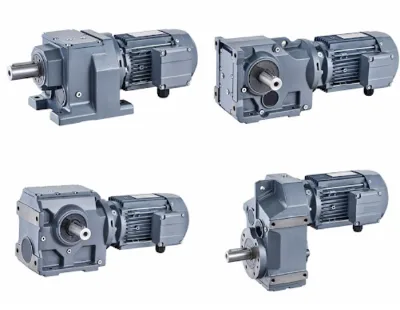
Find and compare 30 Helical Gear Motor options featuring variable speed, direct on-line starting, and three-phase input power. These units support industrial applications, automation equipment, and moving machinery with customizable flanges and shafts.
Key considerations
Products List




Comprehensive Sourcing Guide
Helical Gear Motor Sourcing Guide
Sourcing helical gear motors requires a disciplined approach to aligning mechanical performance with industrial application demands. These units combine an AC motor with a helical reduction gearbox, offering high torque density and smooth operation due to the angled tooth engagement of the gears. Buyers must navigate a market where specifications vary significantly, from small precision units for automation equipment to heavy-duty models for moving machinery. The core challenge lies in verifying that the observed listing signals—such as input power ranges, speed ratios, and mounting configurations—accurately reflect the physical capabilities of the product before committing to a purchase order.
This guide provides evidence-based procurement strategies for helical gear motors, focusing on technical verification, compliance, and commercial risk management. By leveraging observed market data and trusted category knowledge, buyers can construct a robust evaluation framework. The following sections detail how to interpret product attributes, validate technical specifications, ensure regulatory compliance, and manage long-term supplier relationships. The goal is to transform raw listing data into actionable procurement intelligence, ensuring that the selected Helical Gear Motor meets the specific operational requirements of the end application.
Product Scope and Observed Listing Signals
The observed market for helical gear motors presents a wide spectrum of capabilities, indicated by input power ranges spanning from 0.12 kW to 200 kW. This broad range suggests that suppliers cater to diverse needs, from low-power automation equipment to high-torque industrial machinery. Buyers should note that the "Three-Phase" stator configuration is a common attribute, implying that these motors are designed for standard industrial power supplies. The voltage range of 380-440V further confirms their suitability for heavy industrial environments rather than residential or light commercial use. Understanding this power spectrum is the first step in narrowing down potential suppliers to those who can meet the specific torque and speed requirements of the project.
Listing signals also reveal significant customization options, which are critical for integrating gear motors into existing machinery. Attributes such as "Customization: Available" and "Customised: Available for Flange and Shaft" indicate that buyers are not limited to off-the-shelf configurations. The availability of B5 or B14 coupled flange types, along with optional foot mounting, allows for flexible installation methods. Additionally, the observation of "Variable Speed" and "Direct on-line Starting" modes suggests that these motors can be adapted for different control strategies. Buyers should prioritize suppliers who explicitly offer these customization features, as they reduce the need for additional adapters or modifications during installation.
Technical Specifications to Verify
Verifying the technical specifications of helical gear motors is essential to ensure compatibility with the intended application. Key parameters to validate include the speed ratio, output torque, and input speed. For instance, observed listings indicate a ratio range of 5-750, which allows for significant speed reduction and torque multiplication. Buyers must confirm that the selected model’s output speed and torque align with the mechanical load requirements. Specific models, such as those with a 54 speed ratio, may yield an output speed of 16.7 rpm and an output torque of 204 N.m, demonstrating the precision with which these units can be matched to specific tasks. It is crucial to request detailed performance curves from suppliers to verify these values under actual operating conditions.
The physical dimensions and mounting configurations are equally important for successful integration. The "Closed Type" casing protection suggests that these motors are designed for environments where dust or moisture ingress must be minimized. Buyers should verify the standard dimensions, such as 90mm or 120mm shaft heights, to ensure compatibility with existing mounting structures. The transmission type, identified as "Helical" with a "Two-Staged" reduction, offers a balance of efficiency and compactness. Additionally, the manufacturing method, described as "Cut Gear" with a "Bevel Wheel" toothed portion shape in some contexts, highlights the precision engineering involved. Buyers should request CAD drawings or physical samples to confirm that the mounting holes, shaft diameters, and overall footprint match their design specifications.
Compliance and Safety Documentation
Compliance with international standards is a non-negotiable aspect of sourcing helical gear motors for industrial applications. Observed certifications include CCC and ISO standards, which indicate adherence to specific safety and quality management protocols. Buyers must verify that the supplier holds valid certificates for the specific models being purchased, as certification status can vary across product lines. The presence of ISO9001 certification suggests that the manufacturer follows a structured quality management system, which is a positive indicator of consistent production quality. However, buyers should not assume that all listed products are automatically certified; each batch or model should be verified against the relevant regulatory requirements of the destination market.
Safety documentation should also include detailed information on electrical and mechanical safety features. The "AC Motor" power source and "380-440V" voltage rating require proper insulation and grounding to prevent electrical hazards. Buyers should request test reports or compliance certificates that confirm the motor’s ability to withstand specified voltage fluctuations and thermal loads. Additionally, the "One Year and Free Technical Support" warranty mentioned in some listings provides a layer of protection against early failures. Buyers should clarify the terms of this warranty, including coverage for parts and labor, and ensure that the supplier has a reliable support network in the buyer’s region. This documentation is critical for risk mitigation and ensuring long-term operational reliability.
Cost Drivers and Commercial Terms
The cost of helical gear motors is influenced by several factors, including input power, customization level, and packaging requirements. Observed price ranges vary significantly, from $9.99 to $11,000, reflecting the diversity of models and specifications available. Buyers should understand that higher input power and more complex customization options, such as specific flange types or shaft modifications, will increase the unit cost. The "Standard Plywood Case Package" or "Customized Packing" options also impact logistics costs, as specialized packaging may be required for fragile or high-value units. Understanding these cost drivers allows buyers to negotiate more effectively and allocate budget appropriately across different components of the supply chain.
Minimum Order Quantities (MOQ) and lead times are critical commercial terms that affect procurement planning. Observed MOQ ranges from 1 to 500 units, indicating that suppliers are flexible in accommodating both small-scale trials and large-volume orders. Buyers should negotiate MOQs based on their production schedule and storage capacity, aiming for a balance between inventory costs and unit price discounts. Lead times, while not explicitly stated in the observed data, are typically influenced by the level of customization and the supplier’s production capacity. Buyers should establish clear delivery schedules and penalty clauses for delays in the purchase agreement to mitigate supply chain disruptions. Additionally, payment terms should be structured to protect cash flow, such as using letters of credit or milestone-based payments for large orders.
Supplier Qualification and Quality Control
Supplier qualification is a critical step in ensuring the reliability of Helical Gear Motor procurement. Buyers should conduct a thorough assessment of the supplier’s manufacturing capabilities, quality control processes, and financial stability. The observation of "Ningbo, Zhejiang, China" and "Zhejiang Taizhou" as origins indicates that many suppliers are located in established industrial hubs known for motor manufacturing. Buyers should verify the supplier’s production facilities, including the presence of advanced cutting gear machinery and testing equipment. Requesting factory audits or third-party inspection reports can provide valuable insights into the supplier’s operational efficiency and quality standards.
Quality control measures should be integrated into the procurement process to minimize the risk of defects. Buyers should specify incoming inspection criteria, such as dimensional accuracy, electrical performance, and noise levels, in the purchase agreement. The "ISO9001:2008" certification observed in some listings suggests that the supplier has a documented quality management system, but buyers should verify that this system is actively enforced. Additionally, buyers should request sample units for pre-production testing to validate performance against specifications. Establishing a clear communication channel with the supplier for technical support and issue resolution is also essential for maintaining quality standards throughout the production cycle.
Long-Term Procurement Checks
Long-term procurement success depends on continuous monitoring of supplier performance and product reliability. Buyers should establish key performance indicators (KPIs) to track metrics such as on-time delivery, defect rates, and response time to technical inquiries. Regular reviews of these metrics can help identify potential issues early and facilitate corrective actions. The "One Year and Free Technical Support" warranty mentioned in some listings provides a baseline for post-purchase support, but buyers should negotiate extended warranty options or service level agreements for critical applications. Building a strong relationship with the supplier can also lead to better pricing, priority production, and access to new product developments.
Sustainability and adaptability are increasingly important factors in long-term procurement strategies. Buyers should assess the supplier’s commitment to environmental standards and energy-efficient manufacturing practices. The "Variable Speed" capability of helical gear motors aligns with energy-saving initiatives, as these units can be optimized for varying load conditions. Buyers should also consider the supplier’s ability to adapt to changing market demands, such as the introduction of new models or customization options. By maintaining a proactive approach to supplier management, buyers can ensure a stable and reliable supply of helical gear motors that support their operational goals and strategic objectives.
FAQs
What input power range is available for helical gear motors?
The available input power ranges from 0.12 to 200 kW. This wide range supports various industrial applications, from small automation equipment to heavy-duty moving machinery. Buyers can select models based on specific torque and speed requirements within this power spectrum.
Can helical gear motors be customized for specific mounting needs?
Yes, customization is available for flanges, shafts, and foot mounting. Options include B5 or B14 coupled flange types, and foot-mounted configurations can be requested. This flexibility ensures the motor integrates seamlessly into diverse industrial machinery and automation setups.
What certifications do these helical gear motors hold?
These motors hold CCC and ISO certifications, including ISO9001 and ISO9001:2008 standards. These certifications verify quality management and product compliance, ensuring reliability for industrial applications. Buyers can trust the manufacturing processes meet established international quality benchmarks.
What is the typical voltage and speed configuration?
The standard voltage is 380-440V with variable speed capabilities. Input speed can be 1400 rpm, and the ratio range spans 5-750. This allows precise control for different operational speeds, making them suitable for diverse industrial and automation tasks.
How are helical gear motors packaged for shipping?
Packaging includes standard plywood cases, wooden boxes, or customized options. Some models use carton packaging with wooden pallets for multiple sets. This ensures safe transport and allows buyers to request specific packing methods to meet their logistical requirements.
What is the warranty and support provided?
A one-year warranty is provided along with free technical support. This ensures long-term reliability and assistance for industrial users. Buyers receive dedicated support to address any operational issues, ensuring minimal downtime for their machinery and automation systems.