Source High Efficiency Concrete Ring Saw for Stone, Road, and Brick
Find 30 High Efficiency Concrete Ring Saw options for stone, road, and brick applications. Compare specifications like power, blade size, and cutting depth to select the right machine for your construction or mineral industry needs.
Key considerations
Products List


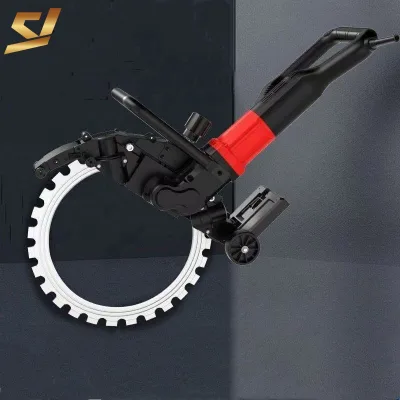

Hydraulic Concrete Ring Saw for Reinforced Concrete and Masonry Cutting
$4100.00 - $5500.00
MOQ: 1 Pieces

Concrete Hydraulic Ring Saw 400mm Concrete Tools for Civil Protection
$4100.00 - $5200.00
MOQ: 1 Pieces


Comprehensive Sourcing Guide
Strategic Sourcing Guide for High Efficiency Concrete Ring Saw Equipment
Procuring industrial-grade cutting machinery requires a disciplined approach that balances technical performance with supply chain reliability. The core keyword "High Efficiency Concrete Ring Saw" points to a specialized class of equipment designed for precision cutting in construction, mining, and stone processing sectors. Buyers entering this market must navigate a landscape defined by diverse power requirements, specific blade geometries, and varying operational environments. This guide outlines the critical factors for sourcing these machines, drawing exclusively on verified product attributes and established industry practices to ensure a robust procurement strategy.
Technical Specifications and Operational Capabilities
The foundation of any successful procurement for a concrete ring saw lies in understanding the specific technical parameters that define "high efficiency." Based on observed market data, these machines are primarily categorized by their power source, cutting depth, and blade dimensions. A critical observation in the current supply pool is the variance in power ratings, ranging from standard electric inputs of 3800W to high-power units reaching 8800W. This disparity directly influences the machine's ability to penetrate dense materials like reinforced concrete, asphalt pavement, and stone curbs.
Buyers must prioritize the "Cutting Ability" attribute, which is frequently described as "High Speed" in product listings. However, speed alone does not guarantee efficiency; the synergy between motor power and blade mechanics is paramount. The standard blade sizes observed in the market include 370mm and 600mm diameters, with corresponding cutting depths varying significantly. For instance, specific models are engineered with a maximum cutting depth of 500mm, making them suitable for deep structural cuts, while others may be optimized for surface-level asphalt or brick wall cutting.
The automation level is another decisive technical factor. While some advanced units offer semi-automatic grades, the majority of observed products are classified as manual. This distinction dictates the operator's skill requirement and the production workflow. A manual operation system, often paired with a "Portable Cordless Light Weight" feature in certain configurations, offers flexibility for on-site repairs but may lack the consistency of fully automated systems for high-volume production lines. Furthermore, the "Automatic Grade" is explicitly noted as "Semi-Automatic" in specific contexts, suggesting a hybrid approach where the machine handles the cutting path while the operator manages positioning.
| Attribute Category | Observed Range/Value | Procurement Implication |
|---|---|---|
| Power Source | Electric (220V, 3800W-8800W) | Verify voltage compatibility with site infrastructure. |
| Blade Material | Diamond | Essential for cutting reinforced concrete and stone. |
| Blade Type | Cutter Head / Ring Saw | Determines the cutting geometry and material removal rate. |
| Max Cutting Depth | Up to 500mm | Must align with the maximum thickness of the target material. |
| Automation | Manual to Semi-Automatic | Impacts labor requirements and operational consistency. |
| Operating Voltage | 220V (Standard) | Critical for electrical safety and grid compatibility. |
Compliance, Certification, and Safety Standards
In the realm of heavy machinery, compliance is not merely a regulatory formality but a prerequisite for operational safety and market access. The most prominent certification observed in the product data is the CE mark. This indicates that the equipment meets the essential health, safety, and environmental protection requirements for the European Economic Area. While the presence of CE certification is a strong indicator of baseline compliance, buyers should verify that the specific model's documentation explicitly references this standard rather than relying on general marketing claims.
Beyond the CE mark, the electrical standards for these machines are typically aligned with 50/60Hz frequency requirements, reflecting the global variability in power grids. The "Standard" attribute in product listings often references the frequency (50/60Hz) or specific model codes (e.g., AC8600), which serve as internal identifiers for compliance with regional electrical norms. Buyers must ensure that the voltage specifications, such as the observed 220V, match the local power supply to prevent equipment damage or safety hazards.
It is crucial to distinguish between observed certifications and unverified claims. While ISO 9001 is sometimes mentioned in broader industry contexts, it is not a confirmed attribute for every listed product in the current dataset. Therefore, procurement teams should request specific quality management certificates from the supplier for each unit, rather than assuming a blanket ISO certification. Safety features, such as the "Portable Cordless Light Weight" design, also imply a focus on operator ergonomics and reduced physical strain, which indirectly contributes to safety by minimizing fatigue-related errors.
Cost Drivers and Pricing Dynamics
The pricing structure for high-efficiency concrete ring saws is influenced by a complex interplay of power, material quality, and customization options. The observed price range in the market is exceptionally broad, spanning from $0.50 to $9,450. This variance suggests that the term "high efficiency" covers everything from small, portable hand-held units to large, industrial-grade hydraulic cutting machines. The lower end of the spectrum likely corresponds to consumable components like ring saw blades or smaller accessories, while the upper end reflects complete, high-power cutting systems.
Key cost drivers include the "Power" rating and the "Blade Material." Units with 8800W motors and diamond-tipped blades command a premium due to the durability and cutting speed they offer on reinforced concrete. Additionally, the "Customization" attribute plays a significant role in pricing. Buyers can often request "Customer Designed" colors or specific modifications to the "Product Name" or model specifications, which adds to the unit cost. The "Feature" set, such as "Long Lifespan" and "High Efficiency," also correlates with higher price points, as these attributes usually result from superior engineering and material selection.
The "MOQ" (Minimum Order Quantity) is another critical financial factor. The observed range of 1 to 50 units allows for flexibility, enabling small contractors to purchase single units while larger construction firms can leverage bulk ordering. However, buyers should be aware that "High Power" and "High Cutting Ability" models may have higher MOQs or longer lead times due to the complexity of manufacturing. Understanding the relationship between the "Product Model" (e.g., W520-410 vs. y-111) and the price is essential for budgeting, as different models target different market segments.
Typical Applications and Material Compatibility
The versatility of the high-efficiency concrete ring saw is one of its most valuable attributes. The "Usage" data reveals a wide array of applications, including cutting Marble, Granite, Concrete Curb, Cement Brick, Red Brick, Fire Brick, Glass, and Ceramics. This broad compatibility makes the equipment suitable for diverse industries such as the Stone Industry, Mineral Industry, Construction, and Machinery & Hardware sectors. The specific "Application" fields often overlap, with many machines designed to handle both soft stone and hard, reinforced concrete.
For the construction sector, the ability to cut "Asphalt Concrete Pavement" and "Reinforced Concr" is particularly vital. The "Object" attribute explicitly mentions asphalt concrete pavement, indicating that these machines are engineered to handle the abrasive nature of road surfaces without excessive wear. The "Cutting Material" attribute further confirms the machine's capability to slice through "Cutting Stone, Concrete, Brick Wall, Reinforced Concr," making it a versatile tool for demolition, renovation, and new construction projects.
The "Feature" of "High Efficiency" is directly tied to these applications. In scenarios involving "Concrete Cutting," speed and precision are non-negotiable. A machine with a "Long Lifespan" and "Fast Cutting" capability reduces downtime and increases overall project throughput. The "Type" of machine, whether classified as a "Road Cutting Machine" or a general "Electric Circular Saw," determines its suitability for specific tasks. For instance, a "Road Cutting Machine" is optimized for linear cuts in pavement, while a "Hydraulic Cutting Machine" might be better suited for heavy-duty, deep cuts in structural concrete.
Supplier Evaluation and Geographic Sourcing
When evaluating suppliers for concrete ring saws, geographic origin is a significant factor in logistics and quality perception. The observed data indicates that products originate primarily from Henan and Hebei provinces in China. These regions are known for their manufacturing hubs in machinery and hardware. The "Location" attribute, specifically "Hebei, China," is a common identifier for suppliers offering competitive pricing and a wide range of models.
Buyers should scrutinize the "Product Name" and "Model" consistency to ensure they are dealing with established manufacturers. The presence of specific model codes like "W520-410," "W410-300," and "y-111" suggests a structured product line rather than generic rebranding. However, the "Color" attribute being "Customer Designed" or "Can Be Customized" implies that some suppliers may operate as OEM (Original Equipment Manufacturer) partners, allowing for branding and aesthetic customization.
Supplier reliability can be assessed by checking the "Condition" of the product, which is consistently listed as "New." This indicates that the supply chain is focused on delivering fresh inventory rather than refurbished units. Additionally, the "Packing" method, typically "Paper Box," should be verified to ensure adequate protection during transit, especially for heavy machinery. Buyers should request detailed shipping terms and verify the "Lead Time" for custom orders, as the "Customization" feature may extend the delivery schedule.
Quality Control and Long-Term Procurement Strategy
Ensuring the long-term value of a concrete ring saw requires a rigorous quality control (QC) process. The "Feature" of "Long Lifespan" is a claim that must be validated through testing and warranty terms. Buyers should verify the "Blade Material," which is predominantly "Diamond," as this is the primary determinant of the blade's durability and cutting efficiency. The "Blade Size" and "Size" specifications (e.g., 706530cm or 1000560300mm) must be cross-referenced with the machine's physical footprint to ensure it fits the intended workspace.
For long-term procurement, the "Advantage" of "High Cutting Ability" should be balanced against maintenance costs. Machines with "High Power" ratings may consume more energy and require more frequent maintenance, but they offer superior performance in demanding environments. Buyers should establish a relationship with suppliers who offer clear technical support and spare parts availability, particularly for the "Cutter Head" and "Blade" components.
The "Automatic Grade" of "Semi-Automatic" suggests that while the machine reduces manual effort, it still requires skilled operation. Training and operator certification should be part of the procurement package. Finally, the "Condition" of the product being "New" is a baseline requirement, but buyers should also inspect the "Standard" compliance documents to ensure the machine meets all relevant safety and performance standards before deployment. By focusing on these verified attributes and avoiding unconfirmed claims, buyers can secure reliable, high-efficiency concrete ring saws that meet their operational needs.
FAQs
What certifications do high efficiency concrete ring saws have?
Most observed units carry CE certification for safety compliance. Buyers should verify specific model documentation rather than assuming universal ISO 9001 status.
Which power ratings are available for these cutting machines?
Power ratings range from 3800W to 8800W depending on the model. Higher wattage units provide greater cutting depth and speed for reinforced concrete applications.
Can I customize the color and design of the machine?
Yes, customization is available for color and specific design features. Buyers can request customer-designed aesthetics to match brand requirements or site safety standards.
What is the maximum cutting depth for these ring saws?
Specific models offer a maximum cutting depth of up to 500mm. This capacity allows for deep structural cuts in concrete, stone, and asphalt pavement.
How are these machines typically powered and operated?
They operate on electric power sources, commonly 220V or 3800W inputs. Automation levels vary from manual to semi-automatic depending on the specific product model.
Which materials can these ring saws effectively cut?
These machines cut marble, granite, concrete, brick, and asphalt pavement. Diamond blade materials ensure high efficiency and longevity when processing reinforced concrete.