Source High Gain Modular CPE Router for FTTH, SOHO, Enterprise
Compare 30 High Gain Modular CPE Router options featuring built-in antennas, waterproof designs, and support for 4G LTE and 5G networks. These devices suit FTTH, SOHO, and enterprise applications with customizable firmware and firewall capabilities.
Key considerations
Products List


5g CPE PRO H158-381 5g CPE PRO Router 5g WiFi 6 5.4gbps Wireless Router
$356.00 - $368.00
MOQ: 1 Pieces

Professional Router LTE SIM Card WiFi Router Wireless Hotspot 3G 4G Router
$18.00 - $26.00
MOQ: 1 Pieces

High-Speed Low-Latency Gigabit 5g CPE Router with Stable Wireless Bridge
$120.00 - $180.00
MOQ: 1 Pieces



Comprehensive Sourcing Guide
Strategic Sourcing Guide for High Gain Modular CPE Routers
The procurement of high gain modular CPE (Customer Premises Equipment) routers requires a disciplined approach that balances technical performance with supply chain reliability. These devices are critical for extending network coverage in Fiber to the Home (FTTH) deployments, intermediate node router applications, and enterprise environments where signal penetration is a primary concern. Buyers must navigate a complex landscape of specifications, certifications, and production capabilities to ensure the selected hardware meets operational demands without incurring hidden costs or compliance risks. This guide outlines the essential factors for evaluating high gain modular CPE routers based on verified market data and industry standards.
Technical Architecture and Signal Performance
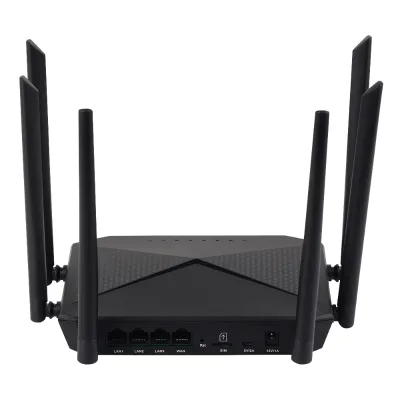
The core value of a High Gain Modular CPE Router lies in its ability to maintain stable connectivity over long distances or through challenging physical barriers. When evaluating technical specifications, buyers should prioritize the antenna architecture and gain metrics. The market offers units featuring built-in antennas with varying gain levels, such as 6dBi or 10dBi configurations. Higher gain antennas, like the 10dBi variants observed in specific industrial-grade models, provide superior signal strength, which is essential for SOHO (Small Office/Home Office) and enterprise applications where coverage area is expansive.
Modularity is another critical technical attribute. Modular port structures allow for flexibility in network integration, enabling the device to adapt to different cabling standards or future upgrades. In terms of wireless performance, the device should support modern Wi-Fi standards, specifically WiFi 6 (IEEE 802.11ax) and its variants like WiFi 6+. This ensures high throughput and efficient handling of multiple concurrent connections. The chipset is a fundamental determinant of performance; high-end models often utilize advanced chipsets such as the Qualcomm X62, which supports 5G signal access and 256QAM modulation. This modulation scheme allows for higher data rates by packing more data into each radio wave symbol.
Connectivity interfaces also play a significant role in the router's utility. A robust CPE unit typically includes a combination of WAN, LAN, and RJ11 ports to support both data and voice services. The transfer rate should be verified against the intended network speed; while some units support up to 1000Mbps, buyers must ensure the internal architecture, such as a Crossbar System, can handle the load without bottlenecks. Additionally, the device's ability to support various LTE categories (Cat 4, Cat 6, Cat 12) and 5G bands ensures compatibility with diverse carrier networks.
Compliance and Certification Verification
In the B2B sector, compliance is not merely a formality but a prerequisite for market entry and operational safety. Buyers must rigorously verify that suppliers possess valid certifications. The most common and critical certifications observed in the market include ISO 9001 for quality management, RoHS (Restriction of Hazardous Substances) for environmental compliance, and CE (Conformité Européenne) for safety and health protection. These certifications indicate that the manufacturing process adheres to international standards and that the products do not contain restricted hazardous materials.
Beyond general certifications, specific product standards must be checked. The production standard often cited is OEM (Original Equipment Manufacturer), which implies the device is built to specific client requirements rather than being a generic off-the-shelf item. Buyers should also verify the physical dimensions and weight specifications to ensure the device fits the intended installation environment. For instance, some ruggedized models are designed with specific dimensions (e.g., 93.5x93.5x172.5mm) and weights (e.g., 554g) to accommodate outdoor mounting or specific rack configurations.
Furthermore, the operating environment dictates the need for additional protection standards. Features such as waterproof and dustproof ratings are essential for outdoor CPE installations. While specific IP ratings may vary, the presence of these features should be confirmed through product documentation. The system software, often based on OpenWrt, offers flexibility for customization, but buyers must ensure the firmware is stable and supports the necessary protocols like PPTP, L2TP, and IPsec VPN for secure connectivity.
Cost Drivers and Pricing Dynamics
Understanding the cost structure of high gain modular CPE routers is vital for budget planning. The observed price range in the market spans from approximately $16 to $640 USD. This wide variance is driven by several factors, including the chipset quality, antenna gain, build materials, and the level of customization required. A unit priced at the lower end of the spectrum may feature a standard chipset and lower gain antennas, suitable for basic connectivity needs. Conversely, models at the higher end often incorporate advanced chipsets like the Qualcomm X62, support for 5G, and higher gain antennas, justifying the increased cost through superior performance and longevity.
The Minimum Order Quantity (MOQ) is another significant cost driver. The market exhibits an MOQ range from 1 unit to 3,000 units. For buyers testing the market or requiring small-scale deployment, an MOQ of 1 allows for low-risk procurement. However, for large-scale enterprise rollouts, negotiating a higher MOQ can often result in better unit pricing. Buyers should also consider the production lead time, which typically ranges from 10 to 25 days. Longer lead times may necessitate earlier ordering to avoid project delays, potentially affecting the total cost of ownership if expedited shipping is required.
Supply capacity is a critical factor in cost stability. Suppliers with a capacity of 10,000 pieces per month are better positioned to handle large orders without compromising on quality or delivery schedules. This capacity ensures that the unit price remains stable even during periods of high demand. Buyers should also factor in packaging costs; while some units come in paper boxes, others may require cartons for bulk shipping, which can impact the final landed cost.
Typical Applications and Deployment Scenarios
High gain modular CPE routers are designed for a diverse range of applications, primarily driven by the need for reliable connectivity in specific environments. One of the primary use cases is Fiber to the Home (FTTH) deployments, where the CPE acts as the final gateway connecting the fiber network to the end-user's premises. In these scenarios, the router must support high-speed data transfer and provide robust Wi-Fi coverage throughout the home or office.
Intermediate node routers represent another key application area. These devices are used in telecommunications networks to bridge gaps between the core network and the last mile. The modular port structure allows these routers to be integrated into existing network infrastructure seamlessly. For enterprise applications, the router's ability to support features like Firewall, QoS (Quality of Service), and VPN is crucial for maintaining network security and prioritizing critical traffic.
Outdoor and harsh environment deployments are also common. Ruggedized CPE units with waterproof and dustproof features are ideal for industrial sites, remote locations, or areas with extreme weather conditions. The high gain antennas ensure that the signal can penetrate obstacles and reach distant nodes. Additionally, the support for various SIM card slots (1.8V/3V) and eSIM cards provides flexibility for mobile network integration, making these devices suitable for temporary deployments or mobile assets.
Supplier Evaluation and Supply Chain Reliability
Selecting the right supplier is as important as selecting the right product. Buyers should evaluate suppliers based on their production capacity, lead times, and customization capabilities. A supplier with a stated supply capacity of 10,000 pieces per month demonstrates the ability to handle large orders, which is essential for scaling operations. The production lead time of 10-25 days should be factored into the project timeline to ensure timely delivery.
Customization is a key differentiator among suppliers. Many manufacturers offer OEM services, allowing buyers to tailor the product to their specific needs. This includes customizing the firmware, hardware interfaces, or physical dimensions. Buyers should verify the supplier's ability to support these customizations without compromising the product's integrity or certification status. The availability of a 1-year product warranty is another indicator of supplier confidence in their product quality.
Geographic origin is also a consideration. Most of the observed products originate from China, a global hub for electronics manufacturing. While this offers access to a vast supply chain, buyers must ensure that the supplier adheres to international quality standards. The condition of the products should be verified as "New" to avoid receiving refurbished or used units that may have reduced lifespan or reliability.
Quality Control and Long-Term Procurement Considerations
Quality control is paramount in ensuring the longevity and reliability of CPE routers. Buyers should implement a rigorous testing protocol that includes checking the physical build quality, verifying the antenna gain, and testing the wireless performance under various conditions. The use of high-quality components, such as the Qualcomm X62 chipset, contributes to the overall reliability of the device. Additionally, the system software, often based on OpenWrt, should be tested for stability and compatibility with the intended network protocols.
Long-term procurement considerations involve planning for future scalability and maintenance. The modular nature of these routers allows for easy upgrades and replacements, reducing the total cost of ownership over time. Buyers should also consider the availability of spare parts and technical support from the supplier. A supplier that offers a 1-year warranty and has a track record of reliable support is preferable for long-term partnerships.
Finally, buyers should monitor market trends and technological advancements. The rapid evolution of 5G and Wi-Fi 6+ standards means that the hardware selected today may need to be upgraded in the near future. By choosing suppliers who offer customization and stay updated with the latest standards, buyers can ensure their network infrastructure remains competitive and efficient. The combination of high gain antennas, modular design, and robust certifications makes these routers a valuable asset for any network deployment strategy.
Summary of Key Specifications
To assist in the evaluation process, the following table summarizes the key specifications observed in the market for high gain modular CPE routers:
| Specification Category | Observed Attributes | Verification Requirement |
|---|---|---|
| Antenna & Gain | Built-in, 6dBi, 10dBi, MIMO 4*4 | Verify gain matches coverage needs |
| Wireless Standard | WiFi 6+, 802.11b/G/N/a/AC/Ax | Ensure compatibility with devices |
| Chipset | Qualcomm X62 | Confirm performance benchmarks |
| Connectivity | 1 Wan + 1 LAN + RJ11, 1000Mbps | Check port configuration |
| Certifications | ISO, RoHS, CE, ISO9001 | Validate current certificates |
| Environment | Waterproof, Dustproof, New | Confirm IP rating for deployment |
| Power | 5V Voltage | Ensure power supply compatibility |
| Warranty | 1 Year | Review terms and conditions |
By adhering to these guidelines and verifying the specific attributes against the supplied facts, buyers can make informed decisions that align with their technical requirements and business objectives. The focus on high gain, modular design, and certified quality ensures a robust and scalable network solution.
FAQs
What certifications do high gain modular cpe routers typically have?
These routers typically hold ISO, RoHS, and CE certifications. Some models also carry ISO9001 for quality management. Buyers must verify these specific marks to ensure compliance with international safety and environmental standards before procurement.
Which antenna gain levels are available for these devices?
Available antenna gain levels include 6dBi and 10dBi configurations. Higher gain variants like 10dBi are often found in ruggedized models suitable for outdoor use. The specific gain depends on the intended application and whether the antenna is built-in.
Can these routers support 5G signal access and WiFi 6 standards?
Yes, many units support 5G signal access and WiFi 6+ standards. They often utilize advanced chipsets like Qualcomm X62 to enable 256QAM modulation. This combination ensures high throughput and compatibility with modern network requirements for FTTH and enterprise use.
What is the typical production lead time for these routers?
The typical production lead time ranges from 10 to 25 days. Buyers should account for this duration when planning large deployments. Supply capacity of 10,000 pieces per month helps ensure timely delivery for orders within this timeframe.
How does the minimum order quantity vary for these products?
The minimum order quantity ranges from 1 unit up to 3,000 units. Lower MOQs allow for market testing while higher volumes often secure better pricing. Buyers should select an MOQ that aligns with their specific deployment scale and budget constraints.
Which ports are commonly included on these modular routers?
Common port configurations include 1 WAN, 1 LAN, and RJ11 interfaces. Some models feature modular port structures for flexibility. Transfer rates typically reach up to 1000Mbps, supporting both data and voice services in SOHO or enterprise environments.