Source High Resolution Thumb Wheel Potentiometer for Audio, Industrial, Medical
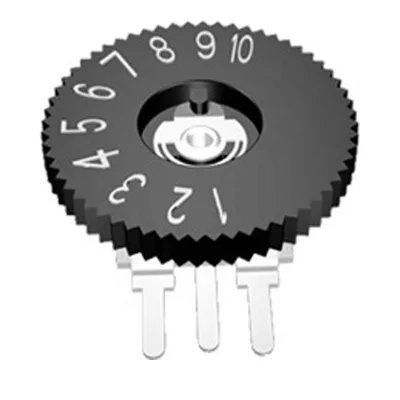
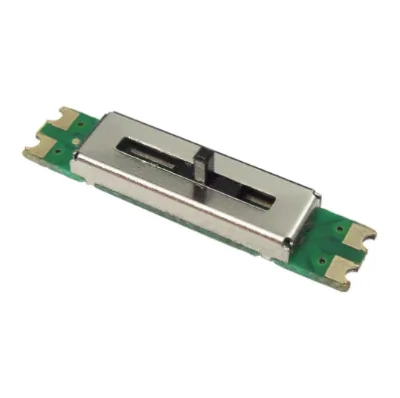
Compare 30 High Resolution Thumb Wheel Potentiometer options from verified Chinese manufacturers. Evaluate specifications like resistance tolerance, power rating, and travel cycles to find the right component for your electronic design needs; compare the available evidence and request quotations based on your requirements.
Key considerations
Products List






Comprehensive Sourcing Guide
High Resolution Thumb Wheel Potentiometer Sourcing Guide
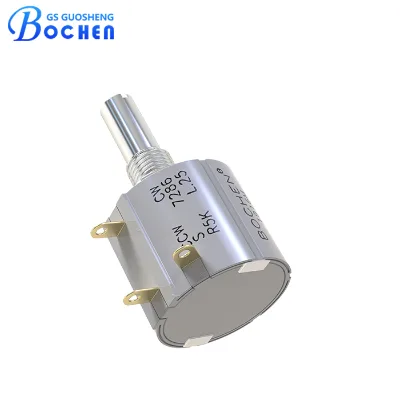
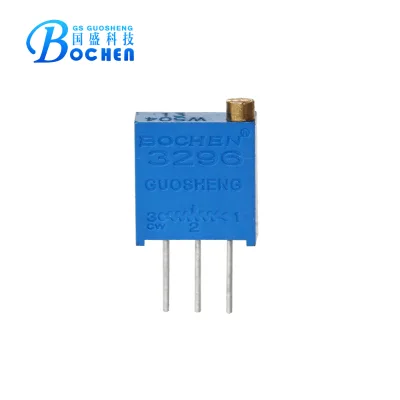
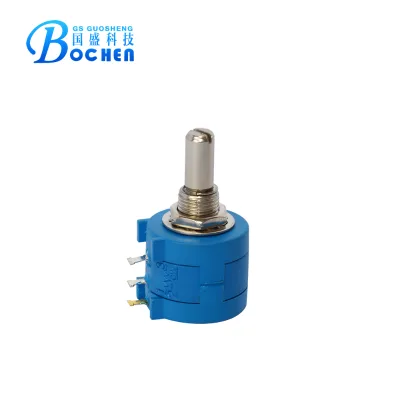
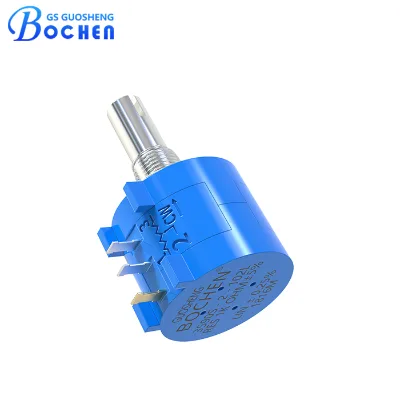
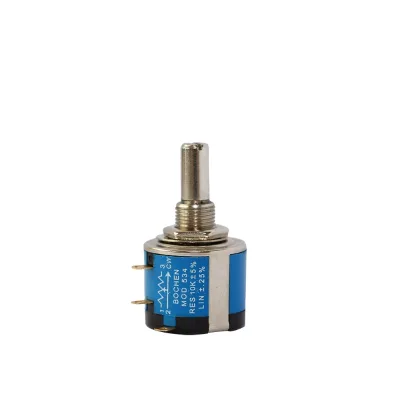
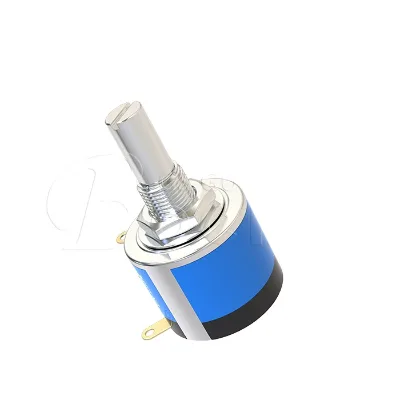
Procuring high-resolution thumb wheel potentiometers requires distinguishing between wirewound and cermet technologies, as the supplied data indicates distinct performance profiles for each. The observed listings feature wirewound models like the 7286 and 3590S series, which offer robust power ratings up to 2W and precise linearity of ±0.25%, suitable for demanding industrial control environments. Conversely, cermet trimmers such as the 3296W series provide a different electrical profile with a 0.5W rating and a specific effective travel of 30 cycles, often preferred for calibration tasks where fine adjustment is critical over high power handling.
Buyers must carefully align the specific model number with their application's mechanical and electrical constraints, as the product range includes multiturn options with 10 turns and effective travels exceeding 3600 degrees. The 7286 model, for instance, is explicitly described as a precision multiturn wirewound potentiometer, while the 3590S series offers top adjustment capabilities with resistance ranges spanning from 100 ohms to 150K ohms. Understanding these distinctions ensures that the selected component meets the exact resolution and durability requirements of the final assembly without over-specifying or under-engineering the solution.
Product Scope and Observed Listing Signals
The current market signals reveal a diverse inventory of rotary and trimmer potentiometers originating from Sichuan, China, with brands like BOCHEN dominating the observed listings. These products are categorized by their construction material, ranging from wirewound elements to cermet compositions, each offering unique trade-offs between power handling and resolution. The listings explicitly mention key terms such as "dimmer switch potentiometer" and "electronic potentiometer," indicating that these components are frequently integrated into lighting control systems and general electronic circuitry where variable resistance is essential for user interface or feedback loops.
Commercial listings show a wide variance in packaging and unit configurations, with options available in tubes of 50 pieces or boxes of 20, reflecting different procurement scales. The observed price range spans from $0.01 to $2943, suggesting that costs are heavily influenced by the specific model complexity, power rating, and order volume rather than a uniform market price. Buyers should note that while some items are sold as single units, the presence of specific packaging types like "50 tube" implies that bulk purchasing is the standard expectation for most industrial applications, necessitating a clear understanding of the Minimum Order Quantity (MOQ) before initiating a transaction.
Technical Specifications to Verify
When evaluating technical suitability, the insulation resistance is a critical parameter that must meet or exceed 1G ohm to ensure signal integrity and safety in high-voltage environments. The supplied facts confirm that specific models achieve an insulation resistance of R1 ≥ 1G ohm, a threshold that is vital for preventing leakage currents in sensitive instrumentation. Additionally, the temperature coefficient varies significantly between product lines, with some wirewound models exhibiting a coefficient of 100ppm/°C while cermet trimmers may show ±250 ± 100ppm/℃, requiring buyers to select components that maintain stability across their intended operating temperature ranges.
Electrical travel and linearity are equally important for applications requiring precise control, with observed models offering effective travels of 3600°±10° for multiturn variants and 30±2 cycles for trimmer types. The independent linearity of ±0.25% for the 7286 model demonstrates high precision, whereas noise levels are specified as ≤3%R or 3Ω, which can impact the smoothness of the control signal in audio or feedback systems. Buyers must verify that the terminal resistance variation, listed as ≤0.2%R or 5Ω for some models and ≤1%R or 2 ohm for others, aligns with the tolerance requirements of their specific circuit design to avoid signal degradation.
Compliance and Safety Documentation
While the provided data does not explicitly confirm certification status for every listed item, trusted category knowledge suggests that modern electronic components often adhere to RoHS and REACH standards to facilitate global trade. Buyers should explicitly request proof of compliance with these directives, as the absence of such documentation can lead to regulatory hurdles in export markets, particularly in the European Union and North America. The observed listings mention "BOCHEN Cermet Trimmer 3296W" and similar models, but without explicit certification claims in the source text, procurement teams must treat compliance as a verification step rather than an assumed attribute of the product.
Safety documentation should also include withstand voltage ratings, which are critical for ensuring the component can handle transient spikes without failure. The supplied facts indicate specific withstand voltage capabilities, such as 600V at 101.3 KPa and 360V at 8.5 KPa, providing a baseline for electrical stress testing. However, buyers must confirm that these ratings apply to the specific batch being ordered and that the manufacturer can provide test reports validating these figures. Relying solely on general product descriptions without verified test data can expose the supply chain to unexpected failures during operation or stress testing.
Cost Drivers and Commercial Terms
The commercial landscape for these potentiometers is influenced by several factors, including the complexity of the manufacturing process, such as wirewound versus cermet technology, and the specific packaging requirements. The observed delivery times of 1-7 workdays for normal orders suggest a responsive supply chain, but this lead time may fluctuate based on order volume and the specific model's availability. Buyers should anticipate that higher MOQs, ranging from 1 to 1000 units, will significantly impact the unit price, with bulk orders likely securing more favorable rates compared to single-item purchases.
Payment terms and service capabilities, such as OEM and ODM support, also play a pivotal role in the total cost of ownership. The listings indicate that suppliers offer customization services, which can add value but may introduce additional costs or lead times for tooling and setup. It is essential for buyers to clarify whether the quoted price includes packaging costs, as options like "50 tube" or "20 pieces/box" vary in expense. Negotiating clear terms regarding delivery schedules and potential penalties for delays is crucial, especially when the 1-7 day window is critical for production schedules.
Supplier Qualification and Quality Control
Supplier qualification should focus on verifying the consistency of the manufacturing process, particularly for wirewound potentiometers where the winding technique directly impacts linearity and noise performance. The observed data highlights specific model numbers like 7286 and 3590S, which implies a standardized production line, but buyers must ensure that the supplier maintains strict quality control to prevent variations in resistance tolerance, which is listed as ±5% for some models and ±10% for others. Consistency in the resistive material, whether cermet or wirewound, is essential to guarantee that every unit meets the specified electrical characteristics.
Quality control protocols should also address the mechanical durability of the adjustment mechanism, given that effective travel and number of turns are key performance indicators. The 10-turn design of the 7286 model, for example, requires precise engineering to ensure that the mechanical travel does not degrade over time, which could affect the long-term reliability of the product. Buyers should request sample testing results that verify the contact resistance variation and noise levels against the stated specifications, ensuring that the supplier's quality assurance processes are robust enough to catch defects before shipment.
Long-Term Procurement Checks
Sustaining a reliable supply chain for high-resolution potentiometers requires regular audits of the supplier's ability to maintain consistent specifications over time. The observed resistance ranges, such as 10Ω-5MΩ and 100 ohm~150K ohm, indicate a broad capability, but buyers must verify that the supplier can consistently deliver within these ranges without significant drift in performance metrics. Long-term checks should include periodic sampling and testing to ensure that the insulation resistance and temperature coefficients remain within the specified limits, preventing potential failures in the field due to component degradation.
Additionally, buyers should monitor the supplier's inventory management and lead time stability, as the 1-7 day delivery window is a competitive advantage that must be maintained. Changes in raw material availability or production capacity could disrupt this timeline, so establishing a contingency plan is advisable. Regular communication regarding updates in product lines, such as the introduction of new series or modifications to existing models like the 3296W, ensures that the procurement strategy remains aligned with the latest technological advancements and market availability.
FAQs
What is the effective travel range for the 7286 model?
The effective travel range is at least 3600 degrees with a tolerance of plus or minus 10 degrees. This specification ensures precise adjustment capabilities for high resolution applications requiring stable performance over extended rotation cycles.
Can I order custom ODM and OEM services for these potentiometers?
Yes, the supplier offers both ODM and OEM services for custom requirements. Buyers can request specific modifications to meet unique design needs while maintaining the core performance standards of the wirewound or cermet series products available.
What is the rated power capacity for the 7286 potentiometer?
The rated power capacity for the 7286 model is 2 watts. This power rating supports reliable operation in various electronic circuits without overheating, ensuring long-term durability under standard operating conditions for industrial applications.
How is the resistance tolerance defined for the 3296W series?
The resistance tolerance for the 3296W series is typically plus or minus 10 percent. This tolerance level allows for acceptable variation in resistance values while maintaining the precision required for trimmer applications in sensitive electronic assemblies.
What is the delivery time for normal orders of these components?
The delivery time for normal orders is between 1 to 7 days after payment is received. This quick turnaround ensures that buyers can receive their required inventory promptly without significant delays affecting their production schedules or project timelines.
Which packaging type is used for the 3590S wirewound potentiometers?
The 3590S wirewound potentiometers are packaged in boxes containing 20 pieces each. This packaging method protects the components during shipping and storage while providing an efficient unit count for assembly line operations and inventory management.
What is the insulation resistance value for the listed products?
The insulation resistance value is at least 1 gigaohm for the listed products. This high resistance ensures excellent electrical isolation between the resistive element and the housing, preventing leakage currents and ensuring safety in high voltage environments.