Source Home Office Desk for Living Room, Hotel, and Office
Find 30 Home Office Desk options featuring metal or wood materials with adjustable heights and locking features. Compare modern and industrial styles suitable for hotels, living rooms, and offices with customizable colors and export packaging.
Key considerations
Products List


Folding Computer Desk with Modern Design for Small Home Office Workspace
$10.42 - $11.00
MOQ: 100 Pieces


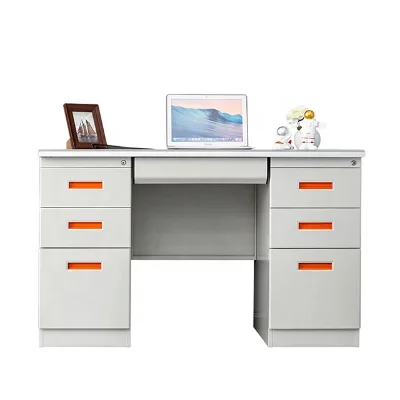


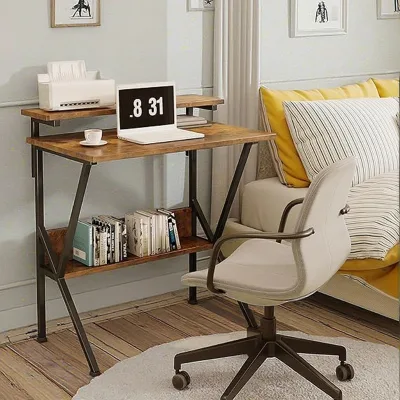


Comprehensive Sourcing Guide
Strategic Sourcing Guide for Home Office Desks
The global shift toward hybrid work models has fundamentally altered the procurement landscape for home office furniture, elevating the "Home Office Desk" from a niche category to a critical infrastructure component for modern enterprises. Buyers navigating this market must move beyond simple aesthetic selection to a rigorous evaluation of technical specifications, material integrity, and supply chain reliability. The following guide synthesizes observed market data and industry standards to provide a disciplined framework for sourcing these essential workstations.
Technical Specifications and Material Composition
When evaluating home office desks, the primary differentiator lies in the material composition and structural design. Market observations indicate a diverse range of materials, with metal and wood being the most prevalent categories. Specifically, listings frequently cite "Metal" as a leg material, often paired with "Solid Wood" or general "Wood" surfaces. This combination suggests a hybrid construction approach where metal provides structural rigidity and durability, while wood offers the desired aesthetic warmth suitable for residential environments.
Buyers must scrutinize the specific application of these materials. For instance, some products are explicitly categorized as "PC Desk" or "Computer Desk," implying a design optimized for electronic equipment, cable management, and monitor placement. Others are labeled as "Steel office desk" or "Office Table," which may indicate a heavier industrial build. The presence of "Solid Wood" as a distinct material attribute often commands a higher price point and suggests a focus on premium finishes, whereas "Metal" legs with "Wood" tops may offer a more cost-effective solution for high-volume deployments.
The physical dimensions and configuration are equally critical. Data reveals a wide spectrum of sizes, ranging from "Rectangular PC Table Small Desk" configurations to larger units with specific drawer counts. Common configurations include "One Drawer One Door/1.2m" or "Four drawers/1.2m," with variations in thickness noted as "Thickened." The availability of "Five drawers" options in both 1.2m and 1.4m lengths indicates that storage capacity is a primary driver for purchase decisions. Furthermore, the "Shape" is predominantly "Rectangular," which maximizes floor space efficiency in typical home office layouts.
Functional Versatility and Design Styles
The functional requirements of a Home Office Desk extend beyond simple surface area. Modern procurement demands versatility to accommodate diverse usage scenarios. The observed "Usage" attributes span a broad spectrum, including "Home Office," "Living Room," "Bedroom," "Office," "Study," and even "Hotel" or "School" applications. This multi-use capability suggests that many desks are designed with a neutral aesthetic that can transition seamlessly between a dedicated workspace and a shared living area.
Design style plays a pivotal role in matching the desk to the user's environment. The market currently features "Modern," "Simple," "Industrial," and "Morden Work Office Desk" styles. The "Industrial" style often pairs well with metal frames and raw wood finishes, while "Modern" and "Simple" styles tend to favor cleaner lines and minimal hardware. Color options are highly flexible, with "Black," "Silver," and "Customized Ral Color" being common offerings. The ability to customize color allows buyers to align the furniture with specific corporate branding or interior design schemes.
A significant functional trend is the integration of adjustability. Some products feature "Adjustable (Height)" capabilities, which are essential for ergonomic health and long-term productivity. Additionally, specific features such as "Locking" mechanisms are highlighted, suggesting that security or stability is a priority for certain users. The "Folded" status is noted as "Unfolded" for most standard units, indicating that while some desks may be collapsible, the primary market offering consists of permanent, sturdy structures. The "Function" is explicitly defined as "Computer Desk" or "Healthy Office Furniture," reinforcing the focus on productivity and user well-being.
Compliance, Certification, and Safety Standards
In the B2B procurement of office furniture, compliance with safety and environmental standards is non-negotiable, yet specific certification data is often absent from general product listings. Buyers must verify that materials meet international safety standards for flammability, formaldehyde emissions, and structural stability. While the provided data mentions "Customizable" standards and "Export Standard Packing," it does not explicitly list specific certifications such as BIFMA, EN, or ISO.
Therefore, the procurement strategy must include a mandatory verification step where suppliers are required to provide third-party test reports. For desks made of "Solid Wood," buyers should confirm that the wood is sourced from sustainable forests and treated with low-VOC finishes. For "Metal" components, the verification of powder-coating durability and rust resistance is essential, particularly for units intended for "Commercial Furniture" or high-traffic environments. The "General Use" category includes "Hospital," "School," and "Warehouse," which implies that the furniture must withstand rigorous daily use.
Buyers should also ensure that the "Packaging Details," described as "Carton Box" or "Export Packaging," meet the requirements for international shipping. The "Export Standard Packing" suggests that the packaging is designed to prevent damage during transit, but specific testing for drop resistance or humidity control should be requested. Without explicit certification data in the initial product description, the onus is on the buyer to demand proof of compliance before finalizing any order.
Cost Drivers and Pricing Dynamics
The pricing for home office desks in the current market exhibits a wide range, observed between 1 and 1500 USD. This significant variance is driven by several key factors, including material quality, size, and the level of customization. Desks constructed with "Solid Wood" and featuring "Adjustable (Height)" mechanisms will naturally occupy the higher end of the price spectrum. Conversely, basic "Metal" leg desks with standard "Wood" tops and fixed dimensions may be found at the lower end.
The "MOQ" (Minimum Order Quantity) is another critical cost driver. The observed range spans from 1 to 300 units. For buyers seeking a single unit for a pilot program or a small home office setup, an MOQ of 1 is highly advantageous. However, for large-scale corporate deployments, negotiating an MOQ closer to 300 could unlock volume discounts. The "Supply Ability" of 1000 cartons per month indicates that suppliers have the capacity to handle substantial orders, but lead times may vary based on the complexity of the customization requested.
Customization is a major factor influencing cost. Attributes such as "Customized," "Customizable" standards, and "Optional" colors allow for tailored solutions but often incur additional charges. The "Product Name" and "Description" fields often reflect the level of customization; for example, a "Steel office desk" with a specific "Design Style" may cost more than a generic "Office Table." Buyers must balance the desire for specific features, such as "One Drawer One Door" configurations, against the budget constraints, understanding that complex drawer arrangements and specialized finishes will increase the unit price.
Supplier Evaluation and Supply Chain Reliability
Evaluating suppliers requires a focus on their operational capabilities and geographic origins. The data indicates that products originate from regions such as "Hebei, China" and "Jilin, China." These regions are known for their manufacturing clusters, but buyers must verify the specific factory's capacity and reputation. The "Port of dispatch" is listed as "Ningbo" or "Shanghai," which are major shipping hubs, facilitating efficient logistics for international buyers.
The "Selling Units" are typically "Single item," which suggests that suppliers are flexible in their sales models, catering to both individual buyers and bulk purchasers. However, the "Mail packing" attribute marked as "N" implies that some suppliers may not offer specific mailing services for small parcels, requiring buyers to arrange their own logistics for small orders. The "Packing" method, described as "Carton," is standard, but buyers should confirm the quality of the carton material to ensure product safety during transit.
When assessing supplier reliability, the "Supply Ability" of 1000 cartons per month serves as a baseline metric. Buyers should inquire about the supplier's ability to scale production during peak seasons and their track record for meeting delivery deadlines. The "Customization" availability is a positive indicator of a flexible supply chain, but it also introduces complexity. Buyers must ensure that the supplier has a robust quality control process in place to handle custom orders without compromising on consistency or delivery times.
Quality Control and Long-Term Procurement Considerations
Quality control is paramount when sourcing home office desks, especially given the diverse range of materials and designs. The "Care" instructions, such as "Wipe with a Damp Cloth," suggest that the finishes are relatively easy to maintain, but buyers should verify the durability of these finishes under heavy use. For "Solid Wood" desks, the risk of warping or cracking due to humidity changes must be mitigated through proper treatment and storage.
Long-term procurement considerations involve the lifecycle of the furniture. Desks intended for "Home Office," "Living Room," or "Hotel" use must be durable enough to withstand daily wear and tear. The "Special Feature" of "Locking" mechanisms adds a layer of security and stability, which is crucial for long-term use. Buyers should also consider the modularity of the desks; units with "One Drawer One Door" or "Five drawers" configurations offer storage solutions that can adapt to changing needs over time.
Furthermore, the "Design Style" should be timeless to ensure the furniture remains relevant for years. "Modern" and "Simple" styles tend to have longer lifespans than highly trendy designs. Buyers should also evaluate the "Application" scope; desks labeled for "Commercial Furniture" or "General Use" are likely built to higher standards than those intended for temporary or light-duty use. Finally, the "Product Name" and "Description" should be reviewed to ensure they accurately reflect the product's capabilities, avoiding any potential mismatches between expectation and reality.
Conclusion
Sourcing home office desks requires a meticulous approach that balances technical specifications, material quality, and supply chain reliability. By understanding the nuances of metal and wood construction, evaluating the diverse design styles, and verifying compliance standards, buyers can make informed decisions that meet their specific needs. The wide price range and flexible MOQ options provide opportunities for both small-scale and large-scale procurement, provided that buyers conduct thorough due diligence on supplier capabilities and product quality. Ultimately, the goal is to secure furniture that enhances productivity, supports ergonomic health, and stands the test of time in a dynamic work environment.
FAQs
What materials are used for home office desks?
Most desks combine metal legs with wood or solid wood surfaces. This hybrid construction offers structural rigidity while providing aesthetic warmth suitable for residential environments and various office settings.
Can I customize the color of the desk?
Yes, customization is available for color options including black, silver, or custom RAL colors. Buyers can align the furniture with specific corporate branding or interior design schemes through these flexible options.
What is the minimum order quantity for these desks?
The minimum order quantity ranges from one unit to three hundred units depending on the supplier. This flexibility allows buyers to order single items for pilot programs or bulk units for large deployments.
How are the desks packaged for shipping?
Products are typically packed in carton boxes using export standard packaging. This method is designed to prevent damage during transit, though buyers should verify specific carton quality for international shipping requirements.
Which locations are the suppliers based in?
Suppliers are located in regions such as Hebei and Jilin in China. These areas are known for manufacturing clusters, with dispatch ports typically located in Ningbo or Shanghai for efficient logistics.
Are adjustable height features available for these desks?
Some products feature adjustable height capabilities to support ergonomic health and productivity. This functional trend is essential for users requiring dynamic workspaces that adapt to different postures throughout the day.