Source Hot-dip Galvanized Glass Greenhouse for Farming, Garden, Production
Compare 30 hot-dip galvanized glass greenhouse options featuring steel frames, glass cover materials, and customizable sizes. Buyers can evaluate specifications like wind load, snow load, and optional systems for mixed farming or garden production needs.
Key considerations
Products List


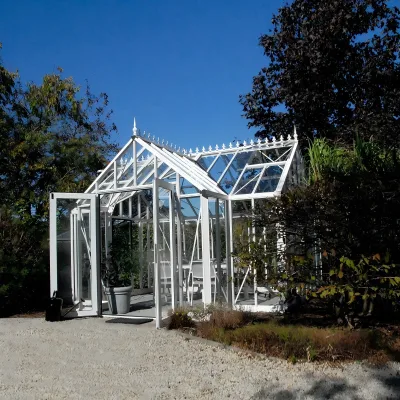

Agricultural/Commercial Glass Greenhouse Glasshouse for Vegetables
$20.00 - $70.00
MOQ: 1000 Square Meters

Multi Span Glass Greenhouse Intelligent Glass/PC Greenhouse for Planting/Cultivation/Agriculture
$15.00 - $60.00
MOQ: 1000 Square Meters


Large Size Multi-Span Glass Greenhouse Tomato Greenhouse Strawberry Greenhouse
$19.00 - $50.00
MOQ: 1000 Square Meters


Garden Glass Greenhouse with Ventilation Window
$15.00
MOQ: 200 Square Meters
Cangzhou Zhuotai Greenhouse Equipment Manufacturing Co., Ltd.

High-Grade Glass Greenhouse for Year-Round Plant Cultivation
$10.00 - $14.00
MOQ: 200 Square Meters
Cangzhou Zhuotai Greenhouse Equipment Manufacturing Co., Ltd.

Modern Style Glass Greenhouse for Yard
$15.00
MOQ: 200 Square Meters
Cangzhou Zhuotai Greenhouse Equipment Manufacturing Co., Ltd.


Comprehensive Sourcing Guide
Strategic Sourcing Guide for Hot-Dip Galvanized Glass Greenhouses
Procuring a hot-dip galvanized glass greenhouse represents a significant capital investment for agricultural operations, commercial nurseries, and research facilities. These structures are distinguished by their robust steel frames treated with a hot-dip galvanization process to ensure long-term corrosion resistance, paired with high-transmittance glass coverings that maximize photosynthetic efficiency. When sourcing these assets, buyers must navigate a complex landscape of technical specifications, material standards, and supplier capabilities. The following guide provides a disciplined approach to evaluating potential suppliers and defining requirements, ensuring that the final procurement aligns with operational needs and structural integrity standards.
Technical Specifications and Structural Integrity
The foundation of a reliable greenhouse lies in its structural design and material composition. In the current market, the primary frame material for these units is consistently identified as hot-dip galvanized steel. This treatment is critical for preventing rust and extending the lifespan of the structure, particularly in humid or coastal environments where corrosion rates are higher. The frame often incorporates aluminum profiles for specific components, offering a balance between strength and weight. The glass covering material is a defining feature, selected for its optical properties. High-performance glass units in this category typically boast a light transmittance rate of more than 90%, which is essential for maximizing crop yield in production greenhouses.
Structural dimensions are rarely one-size-fits-all. Buyers should expect specifications to be highly customizable, with length and overall size tailored to the specific footprint of the facility. The span of the structure is often multi-span, allowing for larger, contiguous growing areas that improve operational efficiency. Vertical dimensions are equally flexible, with eaves heights ranging from 3 to 9 meters, accommodating various crop types and internal equipment. The column space is typically configured in intervals of 4 or 8 meters, providing a modular approach to internal layout.
Environmental load ratings are non-negotiable safety parameters. Buyers must verify that the design accounts for specific regional weather patterns. Documented specifications for similar units indicate a wind load capacity of 0.6 kN/M2 and a snow load capacity of 0.5 kN/M2. Additionally, the structure must withstand heavy rainfall, with some models rated for a maximum row of rainfall of 140mm/H. For crops requiring vertical support, the planting hanging load capacity is a critical metric, with observed standards reaching up to 15kg/M2. The roof shape is generally designed as a shaped roof, often featuring long or staggered top windows and rack-out tuning or sliding side windows to facilitate natural ventilation and climate control.
Compliance, Certification, and Material Verification
While specific certification documents are not universally standardized across all listings, the verification of material standards is a prerequisite for any serious procurement. The term "hot-dip galvanizing" implies adherence to specific metallurgical processes, often referencing standards such as ISO 1461 for zinc coatings, though buyers must confirm if a specific supplier claims compliance with this or equivalent national standards. The absence of a specific certification claim in a listing does not imply non-compliance, but it necessitates a request for mill test reports or coating thickness certificates from the supplier.
When evaluating compliance, buyers should focus on the origin of the materials. The supply chain for these greenhouses frequently originates from manufacturing hubs in China, specifically regions like Hebei. This geographic concentration allows for economies of scale but requires rigorous quality assurance to ensure that the "hot-dip" process is genuine and not merely a surface treatment. The frame material must be explicitly verified as hot-dip galvanized steel rather than electro-galvanized or painted steel, as the former offers superior longevity.
Furthermore, the "customized" nature of these products means that compliance with local building codes in the buyer's country is the ultimate responsibility of the purchaser. Suppliers may offer "Professional Export-Standard Packaging" and "Standard Packagecontainers," but the structural design must be validated against the specific wind, snow, and seismic loads of the installation site. Buyers should request engineering calculations or structural drawings that demonstrate how the specific model, such as those designated by codes like JL-GH-905 or DG-G-1224, meets the load requirements of the intended location.
Cost Drivers and Pricing Dynamics
The pricing of hot-dip galvanized glass greenhouses is highly variable, influenced by a complex interplay of factors. Observed market data indicates a price range spanning from approximately 8 USD to 11,999 USD per unit or set, reflecting the vast difference between small garden models and large-scale industrial production facilities. This wide disparity is not indicative of quality variance alone but rather of scale, customization, and included systems.
The primary cost driver is the surface area and the complexity of the design. A single-layer, small-span structure will naturally cost significantly less than a multi-span, double-layer system with an integrated heating and cooling infrastructure. The "Layer" attribute can vary from single to double configurations, directly impacting material usage and cost. Additionally, the inclusion of optional systems such as shading systems, cooling systems, and heating boilers significantly increases the final price. A basic structure with just the frame and glass will be at the lower end of the spectrum, while a fully automated "Production Greenhouse" with external shading and garden heaters will command premium pricing.
Minimum Order Quantity (MOQ) also plays a role in unit economics. While some suppliers offer an MOQ of just 1 set, allowing for small-scale purchases, larger orders often benefit from volume discounts. The customization level is another critical cost factor. Standard models with fixed dimensions are generally more affordable than fully bespoke designs where the length, width, and height are tailored to exact specifications. Buyers should also consider the "Economic" and "Easy Installed" advantages listed in product descriptions; these features can reduce labor costs and installation time, indirectly affecting the total cost of ownership.
Typical Applications and Operational Scenarios
Hot-dip galvanized glass greenhouses are versatile assets designed for a wide array of agricultural and horticultural applications. The "Usage" classification often points to "Production Greenhouse," indicating their suitability for commercial crop cultivation. These structures are ideal for "Mixed Farming" operations where diverse crops are grown simultaneously or sequentially. The high light transmittance makes them particularly effective for high-value crops that require maximum sunlight, such as tomatoes, cucumbers, peppers, and ornamental flowers.
The "Cultivation Method" is frequently listed as "Vertical Farm," suggesting that these structures are well-suited for hydroponic systems or vertical stacking of plants to maximize yield per square meter. The "Season" attribute is typically "All-Season," meaning that with the addition of heating systems like boilers or garden heaters, these greenhouses can support year-round production even in colder climates. However, it is important to note that some configurations are listed as "Unheated," which limits their utility to temperate climates or specific seasons unless supplemental heating is added.
The "Application" field often includes "Garden" and "Garden Greenhouses," indicating that these structures are also appropriate for residential or small-scale commercial landscaping. The "Department" classification as "Glass Greenhouse" reinforces their specialized nature compared to plastic-covered polytunnels. Whether used for research, commercial production, or private gardening, the durability of the hot-dip galvanized frame ensures that the structure can withstand the rigors of daily agricultural operations.
Supplier Evaluation and Selection Criteria
Selecting the right supplier requires a due diligence process that goes beyond price comparison. Buyers should prioritize suppliers who demonstrate transparency in their manufacturing processes and material sourcing. The "Brand Name" and "Product Name" fields, such as "YONGSHENG" or "Hot dip galvanizing steel greenhouse," can serve as initial identifiers, but buyers should not rely on brand recognition alone without verifying the supplier's track record.
Key evaluation criteria include the supplier's ability to provide detailed technical drawings, material certificates, and installation guides. The "Feature" of being "Eco-Friendly" and "Easily Assembled" should be substantiated with evidence, such as assembly manuals or case studies of previous installations. Buyers should also assess the supplier's capacity for customization, as the "Standard" is often listed as "customize," meaning the supplier must be flexible enough to adapt the design to specific client needs.
The "Spare Parts" availability is another critical factor. Suppliers that list "Cooling Fan" and other related facilities as standard or optional spare parts demonstrate a commitment to long-term support. The "prod_packing" method, whether "Customized" or "Professional Export-Standard Packaging," is indicative of the supplier's attention to detail and logistics capability. Buyers should verify that the packaging is robust enough to prevent damage during international shipping, especially for fragile glass components.
Quality Control and Long-Term Procurement Considerations
Quality control in the manufacturing of glass greenhouses must be rigorous to ensure structural safety and operational longevity. Buyers should insist on a quality assurance protocol that includes checks on the galvanization thickness, weld integrity, and glass quality. The "Advantage" of being "Economic" should not come at the expense of durability; the hot-dip galvanization process must be verified to meet the required thickness standards to prevent premature corrosion.
Long-term procurement considerations involve the lifecycle management of the greenhouse. The "Related Facilities" such as the "External Shading System" and "Heating System" require regular maintenance and potential replacement. Buyers should evaluate the supplier's after-sales support, including the availability of replacement parts and technical assistance. The "Optional System" list, which may include shading and cooling, suggests that the greenhouse is designed for modularity, allowing for future upgrades as the operation expands or climate control needs change.
Furthermore, the "prod_model" numbers, such as JL-GH-905 or DG-G-1224, serve as unique identifiers for specific configurations. Buyers should ensure that the model selected matches their specific requirements for size, load capacity, and ventilation. The "Location" of the product as "Outdoor" necessitates that all components are weather-resistant. Finally, the "prod_origin" being China implies that buyers must account for logistics, import duties, and potential language barriers in technical communication. Establishing clear communication channels and detailed contracts is essential to mitigate these risks and ensure a successful procurement outcome.
Conclusion
Sourcing a hot-dip galvanized glass greenhouse is a strategic decision that requires a deep understanding of technical specifications, material standards, and supplier capabilities. By focusing on the core attributes of the frame material, glass quality, and structural load ratings, buyers can make informed decisions that align with their operational goals. The wide range of customization options allows for tailored solutions, but this flexibility also demands rigorous supplier evaluation and quality control. Whether for a small garden or a large-scale production facility, the investment in a high-quality glass greenhouse can yield significant returns in crop yield and operational efficiency. Buyers must remain vigilant in verifying all claims and ensuring that the final product meets the specific environmental and structural demands of their location.
FAQs
What materials are used for the frame and cover?
The frame is constructed from hot-dip galvanized steel with aluminum profiles, while the cover material is glass. This combination ensures high structural durability and a light transmittance rate of more than 90% for optimal crop growth.
Can the greenhouse dimensions be customized?
Yes, the length and size are fully customized to fit specific site requirements. The span is typically multi-span, and the eaves height can range from 3 to 9 meters to accommodate various cultivation needs.
What is the minimum order quantity for purchase?
The minimum order quantity is 1 set, allowing for small-scale acquisitions. However, larger orders may benefit from volume discounts, and the product is available in both single and double layer configurations.
How does the structure handle wind and snow loads?
The design supports a wind load of 0.6 kN/M2 and a snow load of 0.5 kN/M2. It is also rated to withstand a maximum rainfall of 140mm per hour and a planting hanging load of 15kg per square meter.
Which optional systems are available for climate control?
Optional systems include shading, cooling, and heating capabilities. Specific facilities listed include cooling fans, external shading systems, and heating boilers or garden heaters to ensure all-season production capability.
Where are these greenhouses manufactured and shipped from?
The products originate from China, specifically the Hebei region. They are packaged using standard export-standard methods or customized packaging to ensure safe transport of the glass and steel components.