Source Hot Dip Galvanized Scaffolding Board for Construction, Hotel, Warehouse
Compare 30 listings of Hot Dip Galvanized Scaffolding Board from verified suppliers in China. Evaluate steel plank specifications, thickness, and surface treatment options for building construction, hotel projects, and warehouse support needs.
Key considerations
Products List

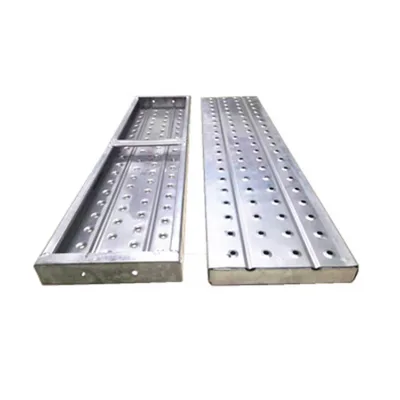
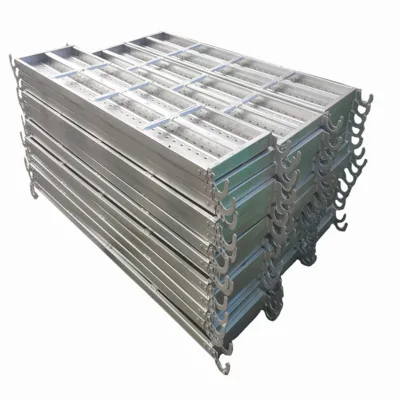


Metal Scaffolding Planks Scaffold Platform Steel Plank Frame Scaffolding Plank
$4.50 - $8.50
MOQ: 1000 Pieces

Galvanized Catwalk Board Scaffolding Galvanized Scaffolding Board Steel Plank
$4.50 - $8.50
MOQ: 100 Pieces


Comprehensive Sourcing Guide
Strategic Sourcing Guide for Hot Dip Galvanized Scaffolding Boards
Understanding Product Attributes and Technical Specifications
When sourcing hot dip galvanized scaffolding boards, buyers must first distinguish between the specific product variants available in the market. The core keyword often encompasses a range of structural forms, including steel planks, metal planks, and deck scaffolding boards. Based on current market observations, these products are primarily constructed from high-grade steel materials, specifically Q195, Q235, and Q345 steel grades. The selection of the steel grade is critical as it directly influences the load-bearing capacity and durability of the board in heavy-duty construction environments.
The physical dimensions of these boards vary significantly to meet different project requirements. Standard length specifications observed in the market include fixed lengths of 1100mm and 1000mm, as well as modular options ranging from 1 meter to 4 meters (1/1.5/2/3/4m). The width of the planks typically falls within a range of 210mm to 500mm, with specific common widths noted at 210mm, 225mm, 240mm, and 250mm. Thickness is another vital parameter; while some standard planks feature a thickness of 3mm, others may have wall thicknesses ranging from 1.0mm to 2.0mm depending on the specific design and intended load class. The height of the board profile, which affects rigidity, is commonly observed at 38mm, 45mm, or 50mm.
The surface treatment process is the defining characteristic of a "hot dip galvanized" product. The manufacturing process involves painting or galvanizing to ensure corrosion resistance. The observed surface treatments include both painted and galvanized finishes, with the galvanized layer providing a robust barrier against rust, particularly for external scaffolding applications. The color of these boards is frequently yellow or silver, which aids in visibility on construction sites. The structural style is often designed as tower scaffolding or combined scaffolding, with an erection position typically designated for external use. The product type is generally fixed, meaning it is designed to be securely installed rather than temporary or removable without tools.
Compliance, Certification, and Safety Standards
Ensuring that scaffolding boards meet international and local safety standards is paramount for any procurement decision. While specific standard numbers like EN 12811-1 or EN12811 are often referenced in the broader industry, buyers must verify that the specific products they source are certified against these or equivalent local regulations. The supply chain data indicates that reputable manufacturers often hold ISO certification, which serves as a baseline indicator of quality management systems. However, ISO certification alone does not guarantee that every individual batch of scaffolding planks meets specific load-bearing or safety performance criteria.
Buyers should demand explicit documentation regarding the material composition and surface treatment processes. The presence of ISO certification suggests a commitment to standardized production, but the verification of the hot dip galvanization process is equally important. The galvanization layer must be thick enough to withstand the harsh conditions of construction sites, including exposure to moisture, chemicals, and physical abrasion. Buyers should request mill test reports that confirm the steel grade (Q195, Q235, or Q345) and the thickness of the galvanization coating. Without these specific test results, the "galvanized" claim remains an observation rather than a verified performance guarantee.
Furthermore, the structural integrity of the board must be validated. The product should be tested for its ability to support the intended load without deformation. The "Fixed" type designation implies a specific installation method that must be adhered to for safety. Buyers should ensure that the supplier provides clear installation guidelines and that the product design aligns with the structural requirements of the specific scaffolding system being used, whether it is a floor type or tower type system. The absence of specific test data in the general product listing means that the buyer must actively request this information before finalizing any purchase.
Cost Drivers and Pricing Dynamics
The pricing of hot dip galvanized scaffolding boards is influenced by a complex interplay of material costs, manufacturing processes, and logistical factors. The observed price range in the market is extensive, spanning from $1.20 to $3,000 USD per unit or lot. This wide variance is not indicative of a single product but rather reflects differences in size, material grade, thickness, and order volume. A single lightweight plank will naturally cost significantly less than a heavy-duty, custom-sized steel deck designed for high-rise construction.
Material costs are the primary driver of the base price. Steel prices fluctuate based on global market conditions, and the use of higher-grade steel like Q345 will increase the cost compared to Q195. The thickness of the board also plays a significant role; a 3mm thick board requires more raw material than a 1.0mm variant, directly impacting the unit price. Additionally, the surface treatment process adds cost. Hot dip galvanization is a more expensive process than simple painting, and the quality of the galvanization (measured in microns) will affect the final price.
Order volume is another critical cost factor. The Minimum Order Quantity (MOQ) varies widely, with observed ranges from 1 unit up to 2,000 units. Suppliers often offer tiered pricing structures where the unit cost decreases as the order volume increases. For buyers requiring small quantities for maintenance or minor repairs, the per-unit cost will be higher due to the fixed costs of production and handling. Conversely, large-scale construction projects can leverage bulk purchasing to achieve significant cost savings.
Logistics and packaging also contribute to the final landed cost. The standard packaging for these products is often a seaworthy standard package, designed to protect the boards during transit. The single package size can vary, with observations of dimensions like 100x40x10 cm or 60x40x15 cm. The weight of the packages, ranging from 0.083kg to 15kg per item or package, affects shipping costs. Buyers should factor in the total cost of ownership, including freight, insurance, and potential customs duties, rather than focusing solely on the factory gate price.
Typical Applications and Project Suitability
Hot dip galvanized scaffolding boards are versatile components used across a diverse array of construction and industrial sectors. Their primary application is in building construction, where they serve as the working platform for laborers and the storage area for tools and materials. The robust nature of steel planks makes them suitable for concrete construction support, ensuring stability during the pouring and curing phases. Beyond general construction, these boards are frequently utilized in the renovation and maintenance of existing structures, including hotels, office buildings, and hospitals.
The specific design of these boards allows for their use in a wide variety of environments. In residential projects, they are employed in the construction of villas, apartments, and courtyards. In commercial settings, scaffolding planks are essential for the development of malls, supermarkets, and sports venues. The durability of the galvanized finish makes them particularly suitable for outdoor applications where exposure to the elements is a constant concern. They are also used in industrial facilities such as warehouses, workshops, and factories, where heavy loads and frequent movement of equipment are common.
The versatility extends to specialized applications as well. Scaffolding boards are used in the construction of schools, parks, and leisure facilities, ensuring safe access for workers during the building process. In agricultural settings, they support the construction of farmhouses and barns. Even in domestic settings, they are utilized for home renovations, kitchen installations, and bathroom upgrades. The ability to customize the length and width of the boards allows them to fit into tight spaces or cover large areas, making them an indispensable tool for project solution capabilities that include 3D model design and total project solutions.
Supplier Evaluation and Selection Criteria
Selecting the right supplier for scaffolding boards requires a rigorous evaluation process that goes beyond price comparison. Buyers should prioritize suppliers who demonstrate a clear understanding of the technical specifications and can provide comprehensive documentation. The origin of the product is a key factor; many suppliers are based in regions known for steel manufacturing, such as Hebei and Tianjin in China. While the location of the factory can indicate supply chain efficiency, it does not guarantee product quality.
Buyers should verify the supplier's capability to provide customization. The market data indicates that customization is available, allowing for specific lengths, widths, and thicknesses to be tailored to project needs. A supplier that offers 3D model design and total project solutions demonstrates a higher level of expertise and can assist in optimizing the scaffolding layout for safety and efficiency. The availability of after-sales service is another critical criterion. Suppliers offering online technical support, onsite installation, onsite training, and onsite inspection provide a safety net for buyers, ensuring that the products are used correctly and that any issues are resolved promptly.
The warranty period is a strong indicator of the supplier's confidence in their product. A 5-year warranty suggests that the manufacturer expects the product to perform reliably over an extended period. Buyers should also check the payment terms, which often include a 30% TT advance and a 70% balance payment. This structure is standard but should be negotiated based on the order size and the buyer's risk tolerance. Finally, the brand reputation and history of the supplier should be considered. While specific brand names like Huaruitai or HRT are observed in the market, buyers should focus on the overall track record of the company rather than just the brand name.
Quality Control and Long-Term Procurement Considerations
Implementing a robust quality control (QC) strategy is essential for ensuring the safety and longevity of scaffolding boards. Buyers should establish clear QC protocols that include pre-shipment inspections, material verification, and surface treatment checks. The QC process should verify that the steel grade matches the specification (Q195, Q235, or Q345) and that the wall thickness falls within the agreed-upon range. The hot dip galvanization process must be inspected to ensure the coating is uniform and free from defects such as bare spots or excessive roughness.
Long-term procurement considerations involve building a sustainable relationship with suppliers who can consistently deliver high-quality products. Buyers should look for suppliers who offer free spare parts and return and replacement policies, which provide protection against manufacturing defects. The ability to provide onsite inspection and training ensures that the scaffolding is installed correctly, reducing the risk of accidents. Additionally, buyers should consider the environmental impact of their procurement choices, opting for suppliers who adhere to sustainable manufacturing practices.
The maintenance of scaffolding boards is also a long-term consideration. While hot dip galvanization provides excellent corrosion resistance, regular inspections are necessary to identify any signs of wear or damage. Buyers should develop a maintenance schedule that includes checking for rust, deformation, and structural integrity. By investing in high-quality boards and maintaining them properly, buyers can extend the lifespan of the equipment and reduce the total cost of ownership. The availability of online technical support and onsite training from the supplier can further enhance the longevity of the scaffolding system by ensuring that users are well-informed about proper care and usage.
Summary of Key Sourcing Parameters
To facilitate a streamlined procurement process, buyers should refer to the following summary of key parameters observed in the market. This table consolidates the critical attributes that should be verified during the sourcing of hot dip galvanized scaffolding boards.
| Parameter | Observed Range / Options | Verification Requirement |
|---|---|---|
| Material | Q195, Q235, Q345 Steel | Request Mill Test Reports |
| Thickness | 1.0mm - 3.0mm | Verify with Caliper/Documentation |
| Length | 1m - 4m (1100mm, 1000mm) | Confirm Customization Availability |
| Width | 210mm - 500mm | Check against Project Specs |
| Surface | Painted, Galvanized | Inspect Coating Uniformity |
| Certification | ISO (General) | Request Specific Safety Certs |
| MOQ | 1 - 2000 Units | Negotiate based on Volume |
| Origin | Hebei, Tianjin, China | Verify Factory Location |
| Warranty | 5 Years | Confirm Terms in Contract |
| Payment | 30% Advance, 70% Balance | Standard Industry Practice |
By adhering to these guidelines and maintaining a disciplined approach to verification, buyers can secure high-quality scaffolding boards that meet the rigorous demands of modern construction projects. The focus on technical specifications, compliance, and supplier capability ensures that the procurement process is both efficient and safe.
FAQs
What materials are used for hot dip galvanized scaffolding boards?
These boards are constructed from Q195, Q235, or Q345 steel grades. The specific steel grade selected influences the load-bearing capacity and durability required for heavy-duty construction environments.
Which surface treatments are available for these scaffolding planks?
The products feature painted or hot dip galvanized finishes to ensure corrosion resistance. This treatment is essential for external scaffolding applications to withstand harsh weather conditions.
How can I customize the dimensions of the scaffolding steel plank?
Customization is available for lengths ranging from 1 meter to 4 meters and widths between 210mm and 500mm. Buyers can request specific sizes to fit unique project requirements.
What certifications do the scaffolding manufacturers typically hold?
Reputable manufacturers often hold ISO certification as a baseline indicator of quality management systems. Buyers should verify specific mill test reports for material composition and coating thickness.
Can I get onsite support for installation and training?
Yes, after-sale services include onsite installation, onsite training, and onsite inspection. Additional support covers online technical assistance and free spare parts for maintenance.
What is the typical minimum order quantity for these steel planks?
The minimum order quantity varies from 1 unit up to 2000 units depending on the supplier. Bulk purchasing often results in lower per-unit costs for large construction projects.
Where are these scaffolding boards typically manufactured?
Products originate from manufacturing hubs in Hebei and Tianjin, China. These regions are known for steel production and offer efficient supply chain capabilities for export.
What warranty is provided for the scaffolding steel plank?
A standard warranty period of 5 years is often provided for these products. This warranty reflects the manufacturer's confidence in the durability and performance of the galvanized steel.