Source Hot Pressed Asphalt Cutting Disc for Masonry, Concrete, Metal
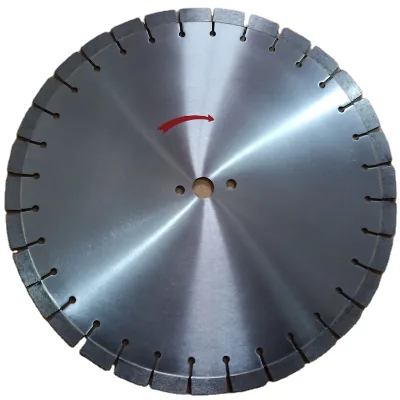
Find 30 Hot Pressed Asphalt Cutting Disc options from Chinese manufacturers. Buyers can compare models like CASD and CALS, segment heights, and arbor sizes for handheld power saws and angle grinders.
Key considerations
Products List


$20.00 - $50.00
MOQ: 10 Pieces


$20.00 - $50.00
MOQ: 10 Pieces




Comprehensive Sourcing Guide
Strategic Sourcing Guide for Hot Pressed Asphalt Cutting Discs
Understanding Manufacturing Processes and Material Composition
When sourcing hot pressed asphalt cutting discs, the primary differentiator lies in the manufacturing process, which dictates the bond strength and segment durability. The supplied product data explicitly identifies "Hot Press" as a distinct process type alongside High Frequency Welded and Laser Welded methods. This distinction is critical for buyers because the hot pressing technique involves compressing diamond segments onto the steel core under high heat and pressure, creating a robust metallurgical bond. This process is often preferred for heavy-duty applications where the disc must withstand significant thermal stress and mechanical impact without segment loss.
The material composition of these discs is equally vital. The core data indicates that the primary material is a composite of Diamond and Metal. The diamond segments provide the cutting action, while the metal bond matrix holds the abrasive particles in place. For asphalt applications, the metal bond must be formulated to wear at a rate that continuously exposes fresh diamond grit, preventing glazing while maintaining cutting speed. The observed data also lists "Vacuum Brazed" and "Brazing" as alternative processes. While brazing is common for continuous rim blades, the specific mention of "Hot Press" suggests a segment attachment method that may offer superior resistance to the high vibration and shock loads inherent in asphalt cutting compared to standard brazing techniques.
Buyers must verify the specific segment height and width, as these dimensions directly influence the blade's cutting depth and life. The available data shows segment heights of 10mm and widths ranging from 3.2mm to 4.5mm. These dimensions are not arbitrary; they are engineered to balance the cutting efficiency with the structural integrity of the blade. A segment that is too narrow may wear out quickly, while one that is too wide may cause excessive kerf loss and heat generation. When evaluating suppliers, request detailed technical drawings that confirm these specific segment dimensions match the requirements of your asphalt cutting equipment.
Technical Specifications and Dimensional Standards
The technical specifications of hot pressed asphalt cutting discs vary significantly based on the intended application equipment and the specific model series. The product data reveals a wide range of standard sizes, including 300mm, 400mm, 500mm, and up to 600mm. Specific models such as CASD, CALS, and CALU are associated with dimensions like 300mm-600mm, while others like HC405 are standardized at 405mm. For asphalt cutting, the diameter must align with the power output of the handheld or walk-behind saws being used. The data also lists specific standard dimensions like 400x10x25.4mm, which likely refers to the outer diameter, segment height, and arbor hole size respectively.
The arbor size is a critical compatibility factor. The supplied facts indicate arbor sizes of 20mm and 25.4mm (1 inch). A mismatch in arbor size can lead to dangerous operational failures or the inability to mount the disc on the machine. Buyers must cross-reference the arbor specifications of their existing power tools with the disc's inner diameter before placing an order. The data also highlights compatibility with Die Grinders and Angle Grinders, suggesting that smaller diameter discs in the 100mm to 125mm range (such as models AMU100160 and AC100160) are available for precision work, though larger diameter discs are typically preferred for deep asphalt cuts.
Blade type is another essential specification. The data mentions "Continuous Boundary" and "Cutter Head" types. For asphalt, a continuous rim or segmented rim design is often chosen based on the need for cooling and dust control. Continuous boundary blades provide smoother cuts but require water cooling to prevent overheating, whereas segmented blades allow for better air cooling and are often used in dry cutting scenarios. The observed production environment notes "Steady Temperature and Humidity," implying that the manufacturing process is sensitive to environmental conditions, which can affect the final dimensional stability of the disc. Buyers should verify that the supplier maintains controlled environments to ensure consistent quality across batches.
Compliance, Certification, and Safety Verification
While the provided data does not explicitly confirm certification status for every listed product, it references ISO 9001 and CE as background standards. In the context of sourcing cutting discs, these certifications are indicative of a supplier's commitment to quality management systems and European safety compliance. However, buyers must treat these as potential attributes rather than guaranteed facts for every specific SKU. The presence of "CE" in the background data suggests that some products in this category may meet the Essential Health and Safety Requirements (EHSR) for machinery and personal protective equipment in the European market.
Compliance verification should extend beyond the supplier's claims to the actual product markings. A compliant Hot Pressed Asphalt Cutting Disc should bear clear markings regarding its maximum operating speed (RPM), diameter, and arbor size. The data mentions "Production Environment: Fast Sharp Cutting and Stable Performa," which implies a focus on performance consistency, but this is an observation rather than a certified standard. Buyers should request test reports or batch-specific quality certificates that validate the disc's ability to withstand the thermal and mechanical stresses of asphalt cutting.
Safety standards for cutting discs are often governed by regional regulations. For instance, in the United States, discs must meet ANSI B7.1 standards, while in Europe, they must comply with EN 12413. The supplied text mentions "300mm-600mm" as a standard range, but it does not specify the safety rating for these sizes. Therefore, procurement teams must explicitly ask suppliers for the specific safety certification applicable to the model number being purchased. Relying solely on the general mention of CE or ISO 9001 without verifying the specific product's compliance can lead to regulatory violations and safety hazards on the job site.
Cost Drivers and Pricing Dynamics
The pricing for hot pressed asphalt cutting discs is influenced by several factors, including the manufacturing process, material quality, and order volume. The observed price range in the data spans from $0.05 to $91 USD, a wide variance that reflects differences in disc size, segment material, and brand positioning. Smaller discs for angle grinders (e.g., 100mm models) will naturally fall at the lower end of this spectrum, while large diameter discs for walk-behind saws (e.g., 600mm models) will command higher prices. The "Hot Press" process, being more energy-intensive and requiring specialized equipment, may also contribute to a higher base cost compared to standard laser-welded alternatives.
Minimum Order Quantity (MOQ) is another significant cost driver. The data indicates an MOQ range of 1 to 1000 units. For small contractors or those testing a new supplier, an MOQ of 1 allows for low-risk evaluation. However, larger industrial buyers can leverage the higher end of the MOQ range to negotiate better unit economics. The data also lists "Customized Support: OEM/ODM" and "Customization: Available," suggesting that buyers can tailor specifications to their needs, though custom orders often carry a premium or higher MOQ threshold.
Packaging also impacts the final landed cost. The observed packing methods include "Carton, Pallet," "Paper Carton," and "White/Colour Box, Double/Single Blister, PVC Bag." Bulk shipments on pallets are generally more cost-effective for large orders, while individual blister packs are suitable for retail or small-scale distribution. Buyers should consider the total cost of ownership, including shipping and packaging, rather than just the unit price. The "Delivery Time" of 7-15 days is a standard lead time, but expedited shipping or custom manufacturing could extend this period and increase costs.
Typical Applications and Equipment Compatibility
Hot pressed asphalt cutting discs are designed for a diverse range of applications, primarily focused on hard materials like concrete, steel, and asphalt. The data explicitly lists "Concrete" and "Refractory Material" as application areas, alongside "Metal, Stone, Plastic Pipe, Glass, Wall." The specific mention of "Handheld Power Saw, Walk Behind Saw, Masonry Saw" confirms that these discs are versatile enough for both portable and stationary cutting tasks. The "High Grinding Efficiency" advantage noted in the data suggests that these discs are optimized for rapid material removal, which is crucial in asphalt cutting where time is often a critical factor.
The compatibility with various power tools is a key consideration for buyers. The data confirms compatibility with "Die Grinders" and "Angle Grinders," indicating that the product line includes smaller discs for detailed work and larger discs for heavy demolition. The "Segment Height" of 10mm and "Segment Width" of 3.2mm to 4.5mm are tailored to provide a balance between cutting depth and blade stability. For asphalt cutting specifically, the ability to cut through "Steel, Sheet Metal, Stainless Steel, Rebar" embedded in the pavement is a valuable feature, as these materials are commonly found in road construction and repair.
The "Production Environment" described as "Steady Temperature and Humidity" and "Fast Sharp Cutting and Stable Performa" implies that the discs are engineered to maintain performance under demanding conditions. This is particularly important for asphalt cutting, which generates significant heat and dust. Buyers should ensure that the disc's design, such as the "Continuous Boundary" or "Cutter Head" type, matches the cooling requirements of their specific application. For example, dry cutting applications may require a segmented rim design to allow for air cooling, while wet cutting applications can utilize a continuous rim for a smoother finish.
Supplier Evaluation and Quality Control Protocols
Evaluating suppliers for hot pressed asphalt cutting discs requires a rigorous assessment of their manufacturing capabilities and quality control systems. The data highlights "China" and "Hebei" as origins, regions known for a high concentration of cutting tool manufacturers. While this indicates a robust supply chain, buyers must verify the specific factory's adherence to quality standards. The mention of "Production Environment: Steady Temperature and Humidity" suggests that the supplier controls critical process variables, which is a positive indicator of quality consistency.
Quality control should focus on the integrity of the hot pressing process. Buyers should request evidence of segment bonding strength and core flatness. The "Hot Press, High Frequency Welded, Laser Welded" process types listed indicate that the supplier offers multiple manufacturing options, but the buyer must ensure that the specific process used for their order matches the required performance criteria. The "Customized Support: OEM/ODM" capability suggests that the supplier is flexible, but buyers should verify their track record with custom orders to ensure that quality is not compromised by customization.
Inspection protocols should include visual checks for segment alignment, core thickness, and arbor hole precision. The data lists various colors, including "Metallic Color," "Gold/Customizable," and "Red/Orange/Blue/Metallic Color." While color is often a branding choice, it can also indicate different bond formulations or segment types. Buyers should not rely on color alone to determine quality but should use it as a secondary verification method alongside technical specifications. The "Delivery Time" of 7-15 days is a standard metric, but buyers should also evaluate the supplier's ability to meet deadlines during peak demand periods.
Long-Term Procurement and Performance Optimization
Long-term procurement of hot pressed asphalt cutting discs involves more than just securing a reliable supply; it requires optimizing performance and minimizing total operational costs. The "Advantage: High Grinding Efficiency" noted in the data suggests that these discs can reduce cutting time, which translates to labor savings and increased productivity. However, buyers must balance this efficiency with the disc's lifespan. The "Segment Height" of 10mm is a standard dimension, but the wear rate will depend on the material being cut and the operating conditions.
Buyers should establish a performance tracking system to monitor disc life and cutting speed over time. This data can be used to negotiate better pricing with suppliers or to adjust the selection of disc models based on actual field performance. The "Customization: Available" attribute offers an opportunity to tailor discs to specific asphalt compositions, potentially extending their life and improving cut quality. For example, a supplier might be able to adjust the metal bond hardness to better suit the aggregate content of a specific asphalt mix.
Sustainability and waste reduction are also becoming important considerations in procurement. The "Packing" options, including "Carton, Pallet" and "Paper Carton," suggest that suppliers are aware of packaging waste. Buyers should inquire about the recyclability of the packaging materials and the supplier's efforts to minimize waste during the manufacturing process. Additionally, the "Lead Time" of 7-15 days allows for just-in-time inventory management, reducing the need for large stockpiles and the associated storage costs. By maintaining a strategic relationship with a supplier who offers customization and consistent quality, buyers can ensure a steady supply of high-performance hot pressed asphalt cutting discs that meet their evolving operational needs.
FAQs
What manufacturing processes are used for these discs?
Hot pressed asphalt cutting discs utilize Hot Press, High Frequency Welded, and Laser Welded processes. Some variants also employ Vacuum Brazed or standard Brazing methods to bond diamond segments to the metal core for durability.
Which equipment is compatible with these cutting discs?
These discs are compatible with Handheld Power Saws, Walk Behind Saws, Masonry Saws, Die Grinders, and Angle Grinders. The specific model determines the exact tool fitment and cutting depth capabilities for various applications.
What are the standard arbor sizes available?
The standard arbor sizes for these discs are 20mm and 25.4mm. Buyers must verify their tool specifications match these dimensions to ensure safe mounting and proper operation during cutting tasks.
Can I order customized segment dimensions?
Yes, customization is available for segment height and width. Specific options include a 10mm segment height and widths ranging from 3.2mm to 4.5mm, allowing for tailored cutting performance on different materials.
What is the typical delivery time for orders?
The standard delivery time for these products is 7 to 15 days. This lead time applies to standard orders, though custom OEM or ODM requests may require additional processing time depending on complexity.
Where are these discs manufactured?
These discs originate from China, with specific production facilities located in Hebei. This region is a known hub for cutting tool manufacturing, offering a robust supply chain for industrial buyers.
What materials can these discs cut?
These discs are designed to cut Metal, Stone, Plastic Pipe, Glass, Wall, Concrete, and Asphalt. They are also effective on Steel, Sheet Metal, Stainless Steel, and Rebar found in construction and repair projects.