Find HPV Detection Kit for Research, Health, and Diagnostics
Source 30 HPV detection kits from verified Chinese manufacturers. Buyers can compare nucleic acid detection options for scientific research, health monitoring, and diagnostic reagent applications with varying MOQs and storage requirements.
Key considerations
Products List


$0.40 - $0.60
MOQ: 1000 Pieces


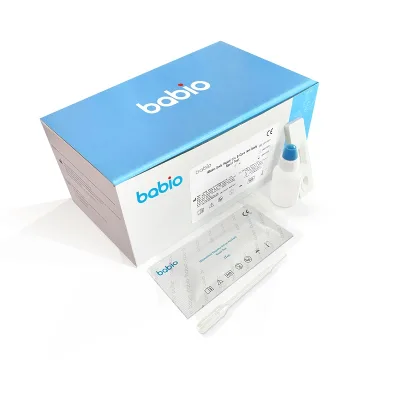


Comprehensive Sourcing Guide
Strategic Sourcing Guide for HPV Detection Kits in the Global Market
Navigating the procurement landscape for Human Papilloma Virus (HPV) detection kits requires a rigorous understanding of the intersection between clinical diagnostics and scientific research applications. For buyers in the B2B sector, the decision to source these reagents is not merely a transactional purchase but a strategic alignment with quality assurance, regulatory compliance, and operational continuity. The market for nucleic acid detection kits, particularly those targeting HPV, is characterized by a diverse array of product specifications, ranging from laboratory-grade reagents to clinical diagnostic tools. This guide provides a structured approach to evaluating suppliers and products, ensuring that procurement decisions are grounded in verifiable facts and industry standards rather than unverified marketing claims.
Technical Specifications and Product Classification
The foundation of any successful procurement strategy for HPV detection kits lies in a precise understanding of the technical specifications and product classification. In the current market, these products are predominantly categorized as IVD (In Vitro Diagnostic) reagents or biochemical reagents, depending on their intended regulatory status and usage. A critical observation in the available product data is the variation in product names and models, such as "Human Papilloma Virus Nucleic Acid Detection Kit" and associated models like RM-FP-070. These identifiers are essential for tracking inventory and ensuring that the specific nucleic acid target matches the buyer's diagnostic or research needs.
The physical and chemical properties of these kits are equally significant. Most observed products in this category present as liquids, stored under specific conditions such as -20°C to maintain stability. The packaging often utilizes cold chain logistics to preserve the integrity of the reagents during transit, a factor that directly impacts the shelf life and efficacy of the product upon arrival. Buyers must verify the storage requirements and packaging integrity, as deviations from the specified cold chain can render the reagents ineffective. Furthermore, the classification of these items often extends to "Diagnostic Reagents" or "Laboratory Reagents," indicating their dual potential for clinical use and scientific research.
When evaluating technical specifications, the content and concentration of the reagents are paramount. Some products are described as having "Standard" content, while others may be "Self-Prepared Solutions." This distinction affects the reproducibility of results and the need for additional calibration steps by the end-user. The application scope is typically broad, covering scientific research, health monitoring, and specific diagnostic purposes. Buyers should ensure that the product's stated application aligns with their operational goals, whether the kit is intended for high-throughput clinical screening or specialized research projects.
Compliance, Certification, and Regulatory Standards
In the realm of diagnostic reagents, compliance and certification are non-negotiable pillars of supplier evaluation. The market for HPV detection kits is heavily regulated, and the presence of valid certifications serves as a primary indicator of a supplier's commitment to quality and safety. Common certifications observed in this sector include ISO standards, MSDS (Material Safety Data Sheet) compliance, and CE marking. These documents verify that the product meets international safety, quality, and performance benchmarks.
However, buyers must exercise caution when interpreting certification claims. While some products list "ISO MSDS CE" as a combined certification status, others may present more specific classifications, such as "Physiological Functions of Diagnosis and Monitoring Equipment." It is crucial to verify the validity and scope of these certifications with the issuing bodies, as a generic claim does not guarantee that the specific product batch has undergone the necessary testing. The certification status should be cross-referenced with the intended market of the buyer, as regulatory requirements vary significantly between regions.
Additionally, the standardization of the product is a key compliance factor. Specifications such as "50 test" per kit define the throughput and capacity of the reagent. Buyers must ensure that the standard aligns with their expected usage rates and that the kit includes all necessary components to perform the specified number of tests. The presence of a "Quality Guarantee Period," often cited as one year, provides a timeframe for the supplier's liability regarding product performance. This guarantee should be clearly defined in the contract, outlining the conditions under which the supplier will replace or refund the product if it fails to meet the stated specifications.
Cost Drivers and Economic Considerations
Understanding the cost drivers for HPV detection kits is essential for budgeting and financial planning. The price of these reagents is influenced by a complex matrix of factors, including the complexity of the nucleic acid extraction process, the specificity of the primers and probes used, and the scale of production. The observed price range in the market can vary significantly, from lower-cost options to premium diagnostic solutions, with some products listed within a range of 0 to 2000 USD. This wide variance reflects differences in technology, brand reputation, and the level of customization available.
The Minimum Order Quantity (MOQ) is another critical economic factor. Suppliers often set MOQs to optimize their production and logistics costs, with observed ranges spanning from 20 tests to 10,000 tests. For smaller laboratories or research groups, a lower MOQ of 20 tests may be more suitable, whereas large-scale diagnostic centers may benefit from bulk purchasing at higher MOQs. Buyers must balance their immediate inventory needs with the financial implications of bulk ordering, considering storage costs and the risk of product expiration.
Customization is a significant value-add that can influence the total cost of ownership. Many suppliers offer customization options, allowing buyers to tailor the kit to specific research protocols or diagnostic requirements. While this adds flexibility, it may also introduce additional costs and lead times. Buyers should clearly define their customization needs early in the procurement process to avoid unexpected expenses. Furthermore, the logistics of cold chain shipping and the need for specialized packaging can add to the overall cost, making it essential to factor these expenses into the total cost of acquisition.
Typical Applications and Usage Scenarios
The versatility of HPV detection kits allows them to serve a wide range of applications, from clinical diagnostics to advanced scientific research. The primary usage is in the detection of Human Papilloma Virus nucleic acids, which is critical for the early diagnosis of cervical cancer and other HPV-related conditions. In a clinical setting, these kits are used to screen patients, monitor treatment efficacy, and guide therapeutic decisions. The high sensitivity and specificity required for these applications, often exceeding 95%, are vital for ensuring accurate diagnosis and minimizing false positives or negatives.
Beyond clinical diagnostics, these kits are extensively used in scientific research. Researchers utilize them to study the epidemiology of HPV, investigate viral mechanisms, and develop new therapeutic strategies. The "Scientific Research" and "Health" applications listed in product specifications highlight this dual utility. In research environments, the ability to extract RNA/DNA from samples is a common prerequisite, and kits designed for this purpose often include specific extraction components. The "Viral Rna/DNA Extraction Kit" is a notable example, serving as a foundational tool for downstream analysis.
The target demographic for these kits also varies. Some products are specifically designed for "Middle-aged and Old" populations, reflecting the higher prevalence of HPV-related diseases in these age groups. This demographic targeting influences the design of the kit, including the sensitivity thresholds and the ease of use for healthcare providers. Understanding the specific application and target population is crucial for selecting the right product, as a kit optimized for high-throughput clinical screening may not be suitable for low-volume research studies.
Supplier Evaluation and Quality Control
Evaluating suppliers for HPV detection kits requires a multifaceted approach that goes beyond price and product specifications. The origin of the product, such as "Hunan, China" or general "China" origin, can provide insights into the manufacturing capabilities and regulatory environment of the supplier. However, the location alone is not a sufficient metric; buyers must assess the supplier's track record, production capacity, and quality control processes.
Quality control is paramount in the production of diagnostic reagents. Buyers should inquire about the supplier's internal testing protocols, including batch-to-batch consistency and stability testing. The "Precision" of the product, often cited as 0.3‰ in some contexts, is a key metric that reflects the reliability of the kit. Additionally, the sterilization method, such as "Ethylene Oxide Sterilization," ensures that the product is free from contaminants, which is critical for patient safety.
The supplier's ability to provide technical support and after-sales service is another important consideration. Products with a "One Year" quality guarantee period indicate a level of confidence in the product's longevity. Buyers should verify the terms of this guarantee and the process for claiming replacements or refunds. Furthermore, the availability of "Logo Printing" and other customization options can be a sign of a supplier's flexibility and willingness to partner with buyers to meet specific branding or operational needs.
Long-Term Procurement and Supply Chain Stability
Sourcing HPV detection kits is not a one-time transaction but a long-term commitment that requires careful planning for supply chain stability. The lead time and availability of the product are critical factors that can impact the continuity of operations. Buyers should establish clear communication channels with suppliers to monitor inventory levels and anticipate potential shortages. The "Cold Chain" requirement for packaging adds a layer of complexity to the logistics, necessitating reliable shipping partners who can maintain the required temperature conditions throughout the transit.
Sustainability and scalability are also important considerations for long-term procurement. As the demand for HPV testing grows, buyers must ensure that their suppliers have the capacity to scale production without compromising quality. The "Customization" availability mentioned in product attributes suggests that suppliers are capable of adapting to changing market needs, but buyers should verify the lead times associated with custom orders.
Finally, the integration of these kits into existing laboratory workflows is a key aspect of long-term success. Buyers should assess the compatibility of the kit with their current equipment and software systems. The "Response" time, such as "Within 3 minutes" for certain assays, can significantly impact the throughput of a laboratory. By carefully evaluating these factors, buyers can build a resilient supply chain that supports their diagnostic and research objectives over the long term.
Conclusion
The procurement of HPV detection kits is a complex process that demands a thorough understanding of technical specifications, regulatory compliance, and supply chain dynamics. By focusing on the verified facts and industry standards, buyers can make informed decisions that ensure the quality and reliability of their diagnostic tools. The market offers a wide range of options, from standard kits to highly customized solutions, each with its own set of advantages and challenges. Through diligent supplier evaluation and a commitment to quality control, buyers can secure a steady supply of high-performance reagents that meet the evolving needs of the healthcare and research sectors.
FAQs
What certifications do HPV detection kits typically hold?
These kits commonly hold ISO, MSDS, and CE certifications. Buyers must verify that specific batches match these standards, as generic claims do not guarantee every product satisfies all listed regulatory requirements.
How are these reagents stored and shipped?
Products are stored at -20°C and shipped via cold chain logistics. This specific packaging requirement ensures the integrity of the liquid reagents during transit and maintains their efficacy upon arrival at the destination.
What is the minimum order quantity for these kits?
Minimum order quantities vary from 20 tests to 1000 tests depending on the specific model. Buyers should check individual product listings as some models require higher volumes while others allow smaller initial purchases.
Can these kits be customized for specific needs?
Customization is available for many of these diagnostic reagents. This option allows buyers to tailor the product to specific research protocols, though it may influence the final pricing and lead time for delivery.
Where are these HPV detection kits manufactured?
The products originate from Hunan, China, or other locations within China. This geographic origin provides insight into the manufacturing capabilities and regulatory environment of the suppliers offering these biochemical reagents.
What is the quality guarantee period for these kits?
A one-year quality guarantee period is standard for these products. This timeframe defines the supplier's liability regarding product performance and outlines conditions for replacements if the reagents fail to meet specifications.