Source Flange Connection Mechanical Water Meter for Industrial, Civil, and Dry Water Uses
Compare 30 Flange Connection Mechanical Water Meter options featuring turbine and ultrasonic principles for industrial and civil applications. Buyers can evaluate specifications like pressure ratings, accuracy classes, and connectivity types to select the right flow measurement solution.
Key considerations
Products List

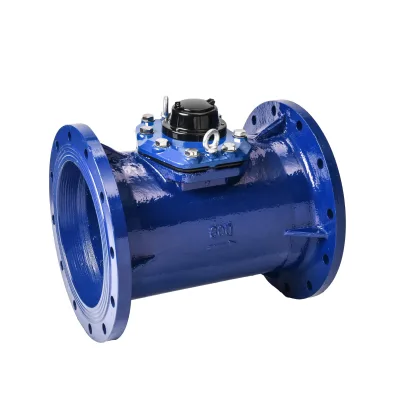


Industrial DN65 Vertical Flange Connection Mechanical Water Flow Meter
$42.00 - $160.00
MOQ: 100 Pieces


Comprehensive Sourcing Guide
Strategic Sourcing Guide for Flange Connection Mechanical Water Meters
Selecting the right Flange Connection Mechanical Water Meter requires a rigorous understanding of the intersection between hydraulic engineering, material durability, and data integrity. In the industrial and civil sectors, the transition from manual reading to automated monitoring has elevated the importance of meters that combine robust mechanical principles with reliable connectivity. This guide synthesizes observed market data and technical specifications to provide a disciplined framework for procurement professionals evaluating flange-mounted mechanical water meters. The focus remains on evidence-based attributes, ensuring that sourcing decisions are grounded in verifiable product characteristics rather than marketing assertions.
Technical Architecture and Measurement Principles
The core of a Flange Connection Mechanical Water Meter lies in its internal mechanism and the method by which it quantifies flow. Based on observed product attributes, the market offers distinct architectures, primarily driven by the principle of operation. A significant segment of available units utilizes the speed of water meter principle, where the flow velocity of the liquid drives a rotor or turbine, converting kinetic energy into rotational motion that is then translated into a volume count. These are often categorized under turbine meters, which are particularly suited for applications requiring high flow rates and low pressure drop.
The physical configuration of these meters is critical for installation compatibility. The standard observation indicates a horizontal installation requirement, which dictates the orientation of the piping system during design. The connection method is explicitly flanged, a choice that facilitates easy maintenance and replacement without cutting pipes. Specific dimensional data observed in the market includes a bolt circle diameter of 125mm and a connecting flange specification of 4-M16 bolts, which are standard metrics for DN50 (2-inch) connections. However, buyers must verify that these dimensions align with their specific piping standards, as flange face types and bolt patterns can vary by region and industry code.
The measurement range is another pivotal technical factor. Products in this category demonstrate a measurement range spanning from 25 to 600 cubic meters per hour. This wide operational window suggests suitability for both medium and high-flow industrial applications. The accuracy class observed is typically Class 2, which meets many general industrial requirements but may need to be upgraded for high-precision billing applications. The flow profile sensitivity, noted as U0/D0 in some ultrasonic contexts, highlights the need to ensure the meter is installed in a straight pipe run to minimize turbulence effects, although mechanical turbine meters generally have their own straight-run requirements that must be confirmed with the specific model datasheet.
Operational Limits and Environmental Resilience
Procurement decisions must account for the harsh environments in which water meters often operate. The working environment for these devices is frequently categorized as dry, yet the protection class ratings indicate a high degree of resilience against moisture ingress. Observed protection classes include IP68, IP65, and IP66. An IP68 rating implies complete protection against dust and continuous immersion in water, which is essential for meters installed in wet wells or underground chambers. Conversely, IP65 and IP66 ratings offer protection against water jets and splashes, suitable for above-ground installations in exposed areas.
Temperature and pressure constraints are equally vital. The observed water temperature range for specific models extends from 0 to 90 degrees Celsius, covering both cold and hot water applications. However, other product entries specify a "Cold Water" medium temperature classification, indicating that not all flange meters are suitable for high-temperature industrial processes. Buyers must strictly verify the temperature class, which may be optional (e.g., T30 or T50), against their system's maximum operating temperature. Regarding pressure, the market presents a dichotomy between general water meters rated at 1.0 MPa and high-pressure water meters rated up to 1.6 MPa. Selecting a meter with insufficient pressure rating can lead to catastrophic failure, while over-specifying can unnecessarily inflate costs.
Humidity levels in the installation environment must also be considered. The observed humidity limit is less than 93%, a standard threshold for electronic components housed within the meter's housing. If the installation environment exceeds this humidity, additional dehumidification or enclosure strategies may be required to prevent internal corrosion or electronic failure.
Compliance, Standards, and Certification Verification
In the B2B procurement of industrial instrumentation, compliance is not merely a formality but a prerequisite for liability and insurance coverage. The observed product attributes reference the ISO standard, a globally recognized benchmark for quality management and product specifications. However, the mere mention of "ISO" in a product listing is insufficient; buyers must verify the specific ISO standard number (e.g., ISO 4064 for water meters) and the scope of the certification.
Certification status should be treated as a dynamic verification point rather than a static attribute. While some listings mention compliance, the actual certification documents must be requested and reviewed to ensure they are current and issued by an accredited body. For flange connection meters, additional standards regarding flange dimensions (such as ANSI, DIN, or JIS) must be cross-referenced to ensure mechanical compatibility with existing piping infrastructure.
The origin of the product is another compliance factor. Many observed units originate from Zhejiang, China, a major manufacturing hub. While this location indicates access to a robust supply chain, it necessitates a thorough due diligence process regarding the supplier's quality management systems. Buyers should not assume that products from this region automatically meet Western or local regulatory standards without explicit documentation. The brand name "YOUIXIN" is observed in the market, but reliance on a single brand is discouraged; instead, the focus should be on the manufacturer's ability to provide traceable certification for every batch.
Cost Drivers and Economic Evaluation
The price range for flange connection mechanical water meters in the current market is extensive, spanning from 5 to 3,003.6 USD. This vast disparity is driven by several key factors that procurement professionals must analyze to avoid budget overruns or under-specification. The primary cost driver is the measurement principle and technology level. Basic mechanical turbine meters with simple mechanical counters will sit at the lower end of the spectrum. In contrast, meters equipped with wireless communication capabilities, such as LoRaWAN, 4G, NB-IoT, or W-Bus, command a premium due to the embedded electronics and connectivity modules.
The protection class also influences cost. An IP68 rated meter with a robust stainless steel or high-grade composite housing will cost significantly more than an IP65 unit. Similarly, the pressure rating is a major cost determinant; high-pressure models (1.6 MPa) require thicker walls and more robust flange designs, increasing material and manufacturing costs.
The minimum order quantity (MOQ) is another economic variable, ranging from 1 to 500 units. For small-scale projects or pilot programs, an MOQ of 1 allows for flexibility, whereas large-scale municipal or industrial deployments can leverage economies of scale by ordering in bulk. However, buyers must calculate the total cost of ownership (TCO), which includes installation labor, maintenance, and data transmission costs, rather than focusing solely on the unit price. A cheaper meter with a short lifespan or high failure rate may result in higher long-term costs due to replacement and downtime.
Application Scenarios and Suitability Analysis
The versatility of flange connection mechanical water meters allows them to serve diverse sectors, from industrial processing to civil infrastructure. The observed application categories include "Industrial" and "Civil," reflecting their broad utility. In industrial settings, these meters are often used for monitoring process water, cooling systems, and boiler feed lines. The ability to handle high flow rates (up to 600 m³/h) and varying temperatures makes them suitable for large-scale manufacturing plants.
In civil applications, such as municipal water distribution or building management systems, the focus shifts to durability and long-term reliability. The "Dry Water Meter" classification suggests suitability for environments where the register is kept separate from the wet end, protecting the reading mechanism from moisture. The availability of digital counter instructions indicates a trend toward remote reading capabilities, which is essential for modern smart city initiatives.
The type of liquid being measured is also a critical consideration. While the primary medium is water, some models are rated for sewage and uniform fluids. This expands their applicability to wastewater treatment plants and industrial effluent monitoring. However, buyers must be cautious with non-water fluids, as the internal mechanics of turbine meters may be susceptible to clogging or wear when handling particulate-laden fluids.
Supplier Evaluation and Quality Assurance
Evaluating suppliers for flange connection mechanical water meters requires a multi-faceted approach that goes beyond price comparison. The first step is verifying the supplier's capacity to provide the specific technical attributes observed in the market, such as the R100 or R250/R400/R500 range ratios. These ratios indicate the meter's turndown ratio, or the ability to measure accurately across a wide range of flow rates. A high range ratio is crucial for applications with fluctuating demand.
Quality control processes should be a central part of the supplier evaluation. Buyers should request evidence of factory acceptance testing (FAT) and third-party calibration reports. The presence of specific output options, such as Pulse, 4-20mA, or RS485, requires verification of the signal integrity and compatibility with existing SCADA or building management systems. The supplier must demonstrate the ability to customize the meter, as indicated by the "Customization: Available" attribute, to meet unique project requirements.
Furthermore, the supply chain stability is paramount. With an observed origin in Zhejiang, China, buyers should assess the supplier's logistics capabilities and lead times. While specific lead times are not provided in the general data, the ability to meet project deadlines is essential. Buyers should also inquire about the warranty terms and the availability of spare parts, ensuring that the long-term maintenance of the installed meters is not compromised by supply chain disruptions.
Long-Term Procurement and Lifecycle Management
The procurement of water meters is a long-term investment that extends well beyond the initial purchase. The selection of a meter with a robust protection class and a suitable accuracy class ensures that the asset will perform reliably for years. However, the lifecycle management strategy must include provisions for calibration and maintenance. Mechanical meters, particularly those with moving parts like turbines, are subject to wear and tear over time.
The digital counter and wireless communication features observed in the market offer significant advantages for lifecycle management. These features enable predictive maintenance, where data anomalies can signal impending failures before they occur. Buyers should prioritize suppliers who offer comprehensive software platforms or integration support for these digital features.
Finally, the procurement strategy should be flexible enough to accommodate future technological advancements. As the industry moves towards more sophisticated IoT solutions, the ability to upgrade firmware or replace communication modules without replacing the entire meter can extend the asset's useful life. By focusing on these long-term considerations, procurement professionals can ensure that their investment in flange connection mechanical water meters delivers sustained value and operational efficiency.
FAQs
What is the accuracy class for flange connection mechanical water meters?
The accuracy class is typically Class 2 for these meters. This level meets general industrial requirements but may need upgrading for high-precision billing applications where tighter tolerances are mandatory.
Which protection classes are available for these water meters?
Available protection classes include IP68, IP65, and IP66. An IP68 rating ensures complete dust protection and continuous water immersion, while IP65 and IP66 offer protection against water jets for above-ground installations.
Can these meters handle high-pressure industrial applications?
Yes, high-pressure water meters rated up to 1.6 MPa are available. However, general models operate at 1.0 MPa, so buyers must verify the specific pressure rating against their system requirements to prevent failure.
What is the maximum water temperature these meters can measure?
The observed water temperature range extends from 0 to 90 degrees Celsius. Some models are classified specifically for cold water, so verifying the optional temperature class like T30 or T50 is essential for hot water systems.
How is the flow profile sensitivity defined for these devices?
Flow profile sensitivity is noted as U0/D0 in certain ultrasonic contexts. Mechanical turbine meters generally require straight pipe runs to minimize turbulence, so installation guidelines must be strictly followed for accurate readings.
Which output options are supported for data transmission?
Supported output options include Pulse, 4-20mA, LoRaWAN, 4G, NB-IoT, W-Bus, and RS485. Buyers should verify signal integrity and compatibility with existing SCADA or building management systems before finalizing procurement.
What is the minimum order quantity for these meters?
The minimum order quantity ranges from 1 to 500 units depending on the supplier. Small projects can order single items, while large deployments can leverage bulk pricing, though total cost of ownership must be calculated.