Source High Accuracy Ultrasonic Weather Station for Industrial, Marine, and Household Use
Source 30 High Accuracy Ultrasonic Weather Station models with digital displays and RS485 Modbus-RTU interfaces. Buyers can compare specifications including temperature ranges from -40 to 100°C, wind speeds up to 70m/s, and pressure ranges from 300 to 1100hPa across various industrial and marine applications.
Key considerations
Products List


High Precision 6-in-1 Ultrasonic Weather Station Anemometer with RS485 Output
$285.00 - $295.00
MOQ: 1 Sets


Non-Contact Ultrasonic Weather Station for Accurate Speed Measurements
$253.00 - $298.00
MOQ: 1 Pieces


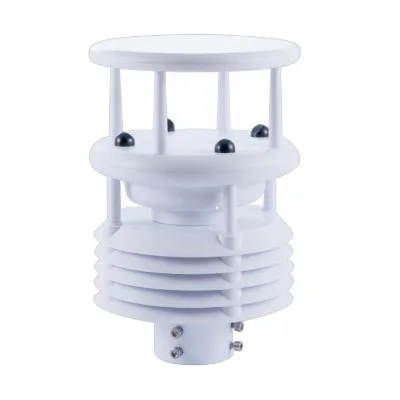


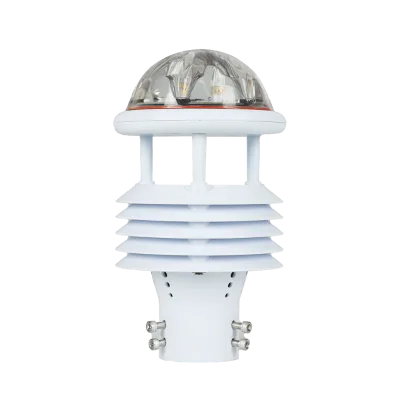
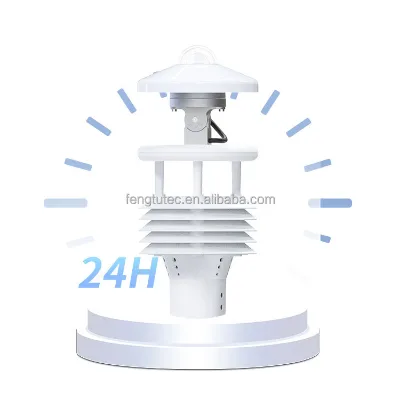
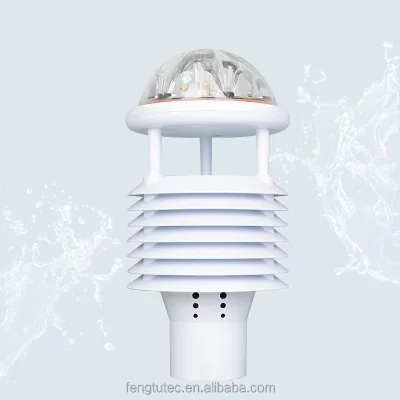
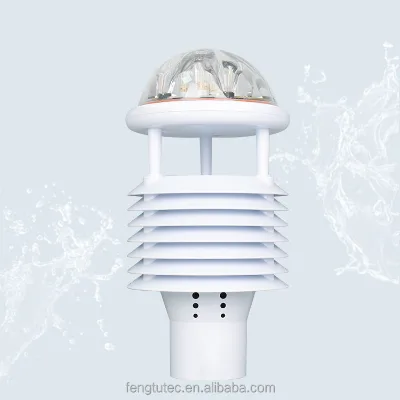


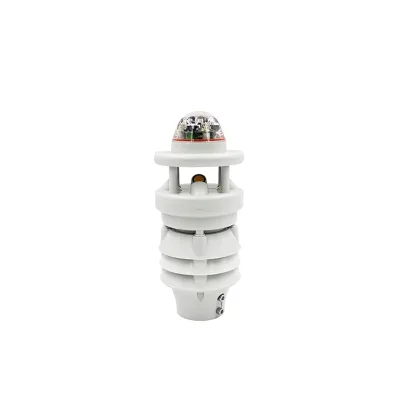
Portable Ultrasonic Weather Station Emergency Mobile Micro Weather Station
$914.00 - $1121.00
MOQ: 1 Pieces


Comprehensive Sourcing Guide
Sourcing Guide for High Accuracy Ultrasonic Weather Stations
Understanding the Core Technology and Measurement Capabilities
When sourcing a High Accuracy Ultrasonic Weather Station, buyers must first distinguish between traditional mechanical anemometers and modern ultrasonic sensors. The core advantage of ultrasonic technology lies in its lack of moving parts, which significantly reduces maintenance requirements and eliminates mechanical wear. In the context of the available product data, the "Probe Type" is explicitly identified as "Ultrasonic," and the "Measuring Medium" is "Air." This configuration allows for the precise measurement of wind speed and direction without the friction issues inherent in cup or vane systems.
The technical specifications observed in the market for these units indicate a robust capability to handle extreme environmental conditions. The "Temperature Range" for the atmospheric sensors is listed as spanning from -40°C to +80°C or +85°C, depending on the specific model configuration. This wide operating window ensures functionality in diverse climates, from arctic industrial sites to tropical maritime environments. Furthermore, the "Temperature Accuracy" is a critical metric for high-precision applications, with observed values of ±0.3°C at 25°C and a resolution of 0.01°C. For wind measurements, the "Speed Range" extends up to 60m/s or 70m/s, while the "Direction Range" covers a full 360°, with some specifications noting a precision of 0~360° ±3°.
Buyers should also consider the ancillary sensors often integrated into these units. The observed product attributes include ranges for "Illumination" up to 200,000 lux, "Rainfall" up to 200mm/hr, and "Atmospheric Pressure" between 300-1100hPa. Advanced models may also monitor particulate matter, with "Pm2.5, Pm10" ranges up to 2000ug/M3, and "Visibility" from 10 to 10,000 meters. The "Operating Humidity" capability is noted as 0~100%Rh, ensuring the sensor remains functional even in saturated air conditions. These multi-parameter capabilities transform the device from a simple wind monitor into a comprehensive "Compact Meteorological Unit."
Technical Specifications and Interface Standards
Selecting the right interface and communication protocol is essential for integrating a weather station into an existing industrial or scientific network. The product data highlights several communication standards, including "RS485 Modbus-RTU" as a default configuration. This protocol is widely favored in industrial automation due to its robustness over long distances and its ability to support multiple devices on a single bus. Additionally, some models offer "4G" connectivity as an optional feature, which is vital for remote sites lacking wired infrastructure. The "Operating Current" specifications suggest flexibility in power and signal transmission, with options for 4~20mA analog signals alongside digital protocols.
Physical dimensions and packaging are also critical logistical factors. The observed "prod_standard" dimensions vary significantly between models, ranging from compact units measuring 23x15x15 cm to larger configurations at 45x28x28 cm or 25x18x16 cm. The "prod_model" identifiers, such as "BGT-W87X" and "RK900-12," often correlate with these physical and functional differences. Buyers must verify the exact dimensions against their mounting infrastructure, as the "prod_packing" is consistently listed as "Carton" or "Carton Package," which may require specific handling during shipping to prevent damage to the sensitive ultrasonic probes.
The "Standard" for temperature measurement is observed as "Celsius/Fahrenheit," providing flexibility for international projects. However, the "Accuracy" specification of ≤0.5°C serves as a benchmark for high-precision applications. When evaluating the "Product Name" such as "Marine Compact Weather Station," buyers should ensure that the materials used, such as the "Gas" material noted in some contexts (likely referring to the internal gas fill or housing composition), are suitable for the specific corrosive environments of marine or industrial settings. The "Direction" accuracy of 1° is particularly relevant for applications requiring precise wind vector analysis.
Compliance, Certification, and Regulatory Verification
In the B2B procurement of meteorological equipment, compliance with international standards is non-negotiable. The supplied facts explicitly mention "CE" certification, which is a mandatory requirement for products sold within the European Economic Area. This certification indicates that the manufacturer has met EU safety, health, and environmental protection requirements. However, buyers should not assume that a single certification covers all global markets. For projects in North America, additional certifications such as UL or FCC may be required, while industrial applications in other regions might demand specific ISO standards.
The "Warranty" period is a key indicator of manufacturer confidence and product reliability. The observed warranty term is "1 Year," which serves as a baseline for procurement planning. Buyers should scrutinize the terms of this warranty, specifically regarding what constitutes a defect versus normal wear and tear, and whether the warranty covers the ultrasonic probes specifically. Since the "Usage" is listed as both "Industrial" and "Household," the certification requirements may vary based on the intended application environment. Industrial settings often demand higher robustness and specific compliance with safety standards that residential applications do not.
When verifying certifications, buyers must ensure that the documentation provided by the supplier is current and valid. The "Certification" field in product listings should be cross-referenced with the actual certificate numbers provided by the manufacturer. It is also important to note that while "CE" is observed, other standards like "Celsius" or "Celsius/Fahrenheit" are measurement standards rather than safety certifications. Buyers should request test reports that validate the "Accuracy" claims of ±0.3°C or ≤0.5°C, as these figures are often derived from controlled laboratory conditions and may vary in real-world deployment.
Cost Drivers and Pricing Structure Analysis
The pricing for high accuracy ultrasonic weather stations is influenced by a complex interplay of factors, including sensor resolution, communication protocols, and build quality. The observed price range in the market spans from $8.5 to $1499 USD. This wide disparity suggests that the lower end of the spectrum may represent basic sensors or entry-level models with limited features, while the higher end likely includes fully integrated systems with advanced data logging, multiple communication options, and enhanced durability.
The "MOQ" (Minimum Order Quantity) range of 1-5 units indicates that these products are accessible for both small-scale pilots and large-scale deployments. For buyers requiring customization, the "Customization" attribute is marked as "Available," which can introduce additional cost variables. Customization may involve modifying the "prod_model" specifications, altering the "prod_packing," or integrating specific sensors like "Pm2.5" or "Noise" monitors. The "Production Process" is noted as "Weather Station," implying a specialized manufacturing line that may affect lead times and unit costs.
Buyers should also consider the total cost of ownership, which includes installation, maintenance, and potential replacement costs. The "Warranty" of 1 Year helps mitigate initial risk, but the long-term cost is heavily dependent on the "Accuracy" and "Resolution" of the sensors. Higher resolution, such as the 0.01°C temperature resolution and 0.1%Rh humidity resolution, often commands a premium price but offers greater value in applications requiring precise data. Additionally, the "Operating Current" requirements and power consumption, while not explicitly quantified in the facts, are critical for calculating the energy costs of remote deployments.
Typical Applications and Industry Use Cases
The versatility of ultrasonic weather stations makes them suitable for a broad spectrum of applications, ranging from marine environments to industrial facilities. The "Product Name" "Marine Compact Weather Station" highlights a specific use case where saltwater corrosion and high humidity are constant challenges. In these environments, the "Temperature Range" of -40°C to +80°C and the "Operating Humidity" of 0~100%Rh are essential for maintaining data integrity. The "Direction" accuracy of 1° is particularly valuable for maritime navigation and wind energy applications where precise wind vector data is critical.
In industrial settings, the "Usage" classification as "Industrial" points to applications in manufacturing plants, chemical processing facilities, and power generation sites. Here, the ability to monitor "Pm2.5, Pm10" and "Noise" levels (30-130 Db) adds significant value for environmental compliance and worker safety. The "Atmospheric Temperature" and "Pressure" ranges allow these stations to serve as part of a larger environmental monitoring network, providing data for HVAC optimization, process control, and safety alarms.
The "Compact Meteorological Unit" designation suggests suitability for urban planning, agricultural monitoring, and research stations where space is limited but data quality is paramount. The "Altitude" range of -500m to 9000m indicates that these units can be deployed in high-altitude regions, such as mountainous areas or aerospace testing facilities. The "Radiation" sensor (0-2000W/M2) is particularly useful for solar energy projects, where accurate irradiance data is needed to optimize panel placement and efficiency.
Supplier Evaluation and Quality Control Protocols
Evaluating suppliers for ultrasonic weather stations requires a rigorous approach to quality control and technical verification. Buyers should prioritize suppliers who provide detailed "Technical Specifications" that align with the observed data points, such as the "Temperature Accuracy" of ±0.3°C and the "Speed Range" of 0-60m/s. It is crucial to verify that the "Probe Type" is indeed ultrasonic and that the "Measuring Medium" is air, as mislabeling can lead to significant performance issues.
Quality control should extend beyond the factory floor to include pre-shipment testing. Buyers should request calibration certificates that confirm the "Accuracy" claims under various conditions. The "Standard" dimensions, such as 23x15x15 cm or 45x28x28 cm, should be verified against the physical product to ensure consistency in manufacturing. The "prod_packing" being listed as "Carton" or "Carton Package" requires inspection to ensure that the packaging is sufficient to protect the sensitive ultrasonic components during transit.
When assessing supplier reliability, the "Warranty" terms and the "Customization" capabilities are key indicators. A supplier offering "Customized" solutions demonstrates flexibility and technical competence. However, buyers must ensure that customization does not compromise the "Certification" status or the "Standard" compliance of the product. The "Production Process" should be transparent, allowing buyers to understand how the "Weather Station" is assembled and tested.
Long-Term Procurement and Maintenance Considerations
Long-term procurement strategies for ultrasonic weather stations must account for the durability of the sensors and the availability of spare parts. The "Warranty" of 1 Year is a starting point, but buyers should plan for a lifecycle that extends well beyond this period. The "Temperature Range" and "Operating Temperature" specifications suggest that the units are built to withstand harsh conditions, but regular maintenance is still necessary to ensure continued accuracy.
The "Operating Current" and power requirements should be evaluated in the context of the deployment site's power infrastructure. For remote locations, the "4G" optional connectivity may require a subscription service, which adds to the long-term operational costs. Buyers should also consider the "Resolution" of the sensors, as higher resolution data may require more sophisticated data processing and storage solutions.
Finally, the "Customization" aspect should be leveraged to future-proof the procurement. As environmental monitoring needs evolve, the ability to upgrade sensors or modify the "prod_model" can extend the useful life of the equipment. Buyers should establish a relationship with the supplier that allows for ongoing support, firmware updates, and technical assistance. By focusing on these long-term factors, buyers can ensure that their investment in high accuracy ultrasonic weather stations delivers consistent value over time.
Comparative Analysis of Key Product Attributes
To facilitate informed decision-making, the following table summarizes the key attributes observed in the market for high accuracy ultrasonic weather stations. This comparison highlights the variability in specifications and helps buyers identify the features most relevant to their specific needs.
| Attribute | Observed Range / Value | Significance for Procurement |
|---|---|---|
| Probe Type | Ultrasonic | Eliminates moving parts; reduces maintenance. |
| Temperature Range | -40°C to +85°C / +100°C | Determines suitability for extreme climates. |
| Temperature Accuracy | ±0.3°C (25°C) / ≤0.5°C | Critical for high-precision scientific/industrial use. |
| Wind Speed Range | 0-60m/s / 0-70m/s | Defines operational limits for high-wind events. |
| Direction Accuracy | 0~360° ±3° / 1° | Essential for wind vector analysis and navigation. |
| Communication | RS485 Modbus-RTU, 4G (Opt), 4-20mA | Determines integration complexity and remote capability. |
| Certification | CE | Mandatory for EU markets; verify for other regions. |
| Warranty | 1 Year | Baseline for risk mitigation and support. |
| Dimensions | 23x15x15 cm to 45x28x28 cm | Impacts mounting requirements and space planning. |
| Packing | Carton / Carton Package | Affects shipping protection and logistics costs. |
| Additional Sensors | Pm2.5, Noise, Radiation, Rainfall | Expands functionality for environmental monitoring. |
This table serves as a reference for buyers to cross-reference their specific requirements against the available market data. By focusing on these core attributes, procurement teams can select the most appropriate ultrasonic weather station for their project, ensuring optimal performance and compliance with all relevant standards.
FAQs
What is the temperature accuracy of the ultrasonic weather station?
The temperature accuracy is typically ±0.3°C at 25°C with a resolution of 0.01°C. This precision ensures reliable data for industrial and marine environments where atmospheric conditions vary significantly.
Which communication protocols are supported by the device?
The device supports RS485 Modbus-RTU as a default protocol with optional 4G connectivity. Users can also select 4~20mA analog signals for flexible integration into existing industrial monitoring networks.
Can the weather station operate in extreme cold temperatures?
Yes, the unit operates reliably in temperatures ranging from -40°C to +60°C. This wide range allows deployment in arctic industrial sites or high-altitude regions without performance degradation.
What is the wind speed measurement range for this model?
The wind speed range extends from 0 to 60m/s or 70m/s depending on the specific configuration. This capability covers most severe weather events encountered in maritime and open industrial settings.
How is the product packaged for shipping and protection?
The product is consistently packed in carton packages designed to protect sensitive components. Dimensions vary by model, ranging from compact 23x15x15 cm units to larger 45x28x28 cm configurations.
What certifications does the manufacturer provide for this equipment?
The equipment carries CE certification, indicating compliance with European safety and environmental standards. Buyers should verify specific documentation for other regional requirements like UL or FCC if applicable.