Source Hydraulic Construction Cutting Plier for Building, Decoration, and Wire Work
Find 30 listings for Hydraulic Construction Cutting Plier designed for building decoration and wire processing. Compare models like EMS-50 and MCP300 with varying weights, sizes, and customization options from Chinese manufacturers.
Key considerations
Products List


Concrete Hydraulic Crushing Pliers for Excavator Suitable Separation of Reinforced Concrete
$3000.00 - $50000.00
MOQ: 1 Pieces

Excavator Demolition Concrete Hydraulic Crushing Pliers for House Demolition
$3000.00 - $50000.00
MOQ: 1 Pieces


Expansion Pliers Destructive Pliers Separation Pliers Flange Separator Hydraulic Tool
$1999.00 - $2999.00
MOQ: 1 Pieces


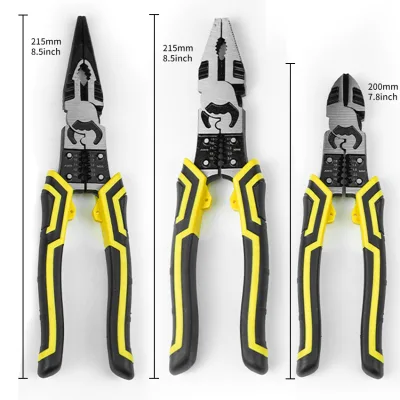


Professional Excavator Hydraulic Pliers with Enhanced Grip Strength
$4000.00 - $20000.00
MOQ: 1 Pieces
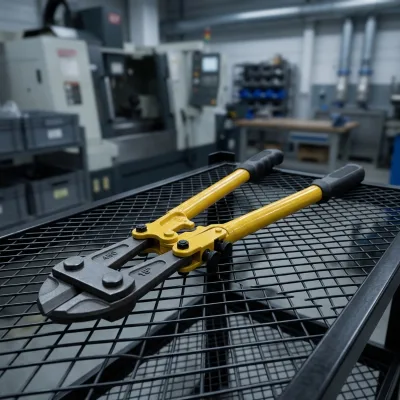


Comprehensive Sourcing Guide
Strategic Sourcing Guide for Hydraulic Construction Cutting Pliers
Understanding the Technical Landscape of Hydraulic Cutting Tools
When sourcing hydraulic construction cutting pliers, buyers must first distinguish between manual hand tools and heavy-duty hydraulic systems designed for industrial demolition and construction. The product landscape for this category is defined by specific mechanical attributes that determine suitability for high-load environments. Based on available market data, the core product type is identified as "Hydraulic Cutting Tools," yet the functional scope often extends to multi-purpose utility tools capable of cutting, wire stripping, crimping, and punching. This versatility is critical for construction sites where a single tool must handle diverse tasks ranging from rebar cutting to electrical cable preparation.
The material composition is a primary determinant of tool longevity and performance. The observed supply data indicates that high-quality units in this category are constructed from "High Carbon Steel." This material choice is essential for maintaining edge hardness and resistance to deformation under the extreme pressures generated by hydraulic systems. The structural integrity of these tools is further reinforced by specific joint configurations. Buyers should verify whether the tool utilizes a "Box Joint" or a "Half-Box Joint" structure. The Box Joint configuration typically offers superior lateral stability and load distribution, which is vital when the tool is subjected to the 300mm opening width observed in heavy-duty models.
Performance metrics for these tools vary significantly based on the intended application. While some units are rated for general "Cutting" and "Twisting" operations, others are engineered for specific heavy-lift scenarios. The observed data highlights a "Tool Weight" of up to 150kg for certain hydraulic variants, indicating that these are not portable hand tools but rather stationary or excavator-mounted systems. Conversely, lighter manual variants with a "Single Gross" weight of 20kg and dimensions of 60x50x20cm are available for smaller scale tasks. The "Excavator Weight" compatibility is another crucial specification, with some models designed specifically for machines in the 2-4t range, ensuring that the hydraulic pressure and mechanical leverage are matched to the host equipment's capacity.
Compliance, Certification, and Safety Standards
In the B2B procurement of construction equipment, compliance with international safety and quality standards is non-negotiable. The primary certification observed in the current market for these tools is the "CE" mark. This certification indicates that the product meets the essential health, safety, and environmental protection requirements for products sold within the European Economic Area. While the CE mark is a critical baseline, buyers must understand that it represents a declaration of conformity rather than a guarantee of specific performance metrics like tensile strength or fatigue life.
Beyond the CE mark, the industry often references standards such as ISO 5745 and ISO 9001. However, it is important to note that these specific standard numbers appear in the background context with lower confidence levels. Therefore, procurement teams should not assume that every listed product automatically satisfies ISO 5745 or ISO 9001 requirements. Instead, the verification process must involve a direct request for the manufacturer's quality management system certificates and specific product testing reports. The "Quality" attribute is listed as "Good" in general descriptions, but this is a subjective observation. Buyers must demand objective evidence, such as third-party test results, to validate that the tool's material properties and structural design meet the rigorous demands of construction sites.
Safety is paramount when dealing with hydraulic systems that can generate immense force. The "Voltage" for these tools is often listed as "Customized," which implies that the electrical or hydraulic power requirements must be tailored to the specific site infrastructure. This customization extends to the "Product Standard" dimensions, which can range from compact 4.5-inch manual pliers to massive systems with a standard size of 4200mm1200mm1200mm. The lack of a universal standard size means that buyers must carefully match the tool's physical dimensions to the available workspace and the mounting points of their machinery.
Cost Drivers and Pricing Variables
The pricing structure for hydraulic construction cutting pliers is highly variable, reflecting the vast difference between manual hand tools and heavy industrial machinery. The observed price range spans from $0.50 to $50,000 USD. This extreme disparity is driven by several key factors, including the complexity of the hydraulic system, the weight of the tool, and the scale of production. A manual crimping tool with a "Single Gross" weight of 20kg and a "Single Package" size of 60x50x20cm will naturally fall at the lower end of this spectrum. In contrast, a hydraulic system weighing 150kg, designed for excavator mounting, and featuring complex customization options will command a price at the higher end.
The "MOQ" (Minimum Order Quantity) is another significant cost driver. The observed MOQ range is 1 to 100,000 units. For buyers requiring a single unit for a pilot project or a specific replacement, the low MOQ of 1 allows for flexibility without a massive upfront capital commitment. However, for large-scale construction firms or distributors, the ability to order up to 100,000 units suggests economies of scale that can significantly reduce the per-unit cost. The "Selling Units" are typically listed as "Single Item," but bulk purchasing often involves "Master Box" or "Pallets or Wooden Boxes" packaging, which affects logistics costs and final pricing.
Customization is a major factor influencing the final price. The "Customization" attribute is marked as "Available," meaning buyers can request specific modifications to the tool's dimensions, handle colors, or hydraulic specifications. While customization adds value by tailoring the tool to specific operational needs, it invariably increases the unit cost and may extend the lead time. The "Voltage" being "Customized" further complicates pricing, as it requires the manufacturer to adjust the internal components or hydraulic pumps to match the buyer's power supply, adding engineering time to the production process.
Typical Applications and Operational Environments
Hydraulic construction cutting pliers are designed for a wide array of applications, primarily centered around "Construction" and "Building Decoration." The "Use Place" is explicitly noted as "Building Decoration," indicating their utility in finishing works where precision cutting and crimping are required. However, the heavy-duty variants with a 150kg weight and 300mm opening are clearly intended for demolition and structural modification tasks. These tools are capable of handling "Hard Wire" with a diameter of 0.8mm and "Flexible Cord" up to 2.0mm, making them versatile for electrical installations within construction projects.
The "Application Age" is listed as "Adult," which implies that these tools require a certain level of physical strength and technical training to operate safely. The "Handle Color" being "Colorful" suggests that manufacturers often use color-coding to differentiate between tool sizes or functions, aiding in quick identification on busy job sites. The "Function" of these tools extends beyond simple cutting to include "Wire Stripping," "Crimping," and "Punching." This multi-functionality is particularly valuable in building decoration, where a single tool can prepare cables, cut rebar, and punch holes in metal sheets, reducing the need for multiple specialized instruments.
For heavy-duty applications, the tool's compatibility with "Excavator Weight" classes is a critical consideration. Models designed for 2-4t excavators are likely used in earthmoving and demolition contexts where high hydraulic pressure is available. The "Structure" of the tool, whether "Box Joint" or "Half-Box Joint," determines its suitability for different types of loads. A Box Joint structure is generally preferred for heavy demolition work due to its superior resistance to bending, while a Half-Box Joint might be sufficient for lighter construction tasks. The "Performance" of "Twisting & Cutting" suggests that these tools can also be used for manipulating twisted metal or rebar, adding another layer of utility to their operational profile.
Supplier Evaluation and Verification Protocols
Selecting the right supplier for hydraulic construction cutting pliers requires a rigorous evaluation process that goes beyond simple price comparisons. The "Place of Origin" for the observed products is "China," which is a major manufacturing hub for this category. However, the sheer volume of suppliers in this region necessitates a careful vetting process to ensure quality and reliability. Buyers should verify the supplier's ability to provide "Customization" services, as this indicates a level of technical capability and flexibility that is essential for meeting specific project requirements.
One of the primary evaluation criteria is the supplier's adherence to quality standards. While the "Quality" attribute is listed as "Good," this is a general observation. Buyers must request detailed documentation regarding the "Material" used, specifically confirming the "High Carbon Steel" content and its heat treatment process. The "Certification" status, particularly the CE mark, should be verified through official channels to ensure it is valid and applicable to the specific model being purchased. Additionally, buyers should inquire about the supplier's experience with "Customized" voltage and hydraulic specifications, as this demonstrates their engineering competence.
The "MOQ" and "Selling Units" provided by the supplier are also important indicators of their business model. A supplier offering an MOQ of 1 is likely a distributor or a manufacturer with a flexible production line, whereas a supplier with an MOQ of 100,000 is likely a large-scale manufacturer focused on bulk exports. The "Product Name" and "prod_model" listings, such as "EMS-50 60 85" or "EP-55 85 105 85C," should be cross-referenced with the supplier's catalog to ensure that the specific model matches the buyer's technical requirements. The "Structure" and "Function" details provided in the product listing should be confirmed through direct communication with the supplier to avoid discrepancies between the advertised features and the actual product delivered.
Quality Control and Long-Term Procurement Considerations
Ensuring the long-term reliability of hydraulic construction cutting pliers requires a robust quality control (QC) strategy. The "Single Gross" weight and "Single Package" dimensions are critical for logistics planning, but they also serve as indicators of the tool's build quality. A tool with a "Single Gross" weight of 20kg and a package size of 60x50x20cm suggests a compact, portable design, while a 150kg tool with a "Standard" size of 4200mm1200mm1200mm indicates a massive, stationary system. Buyers must verify that the packaging, whether "Plastic Box," "Master Box," or "Pallets or Wooden Boxes," is sufficient to protect the tool during transit, especially given the high value and fragility of hydraulic components.
The "Measurement" of the tool, such as the "Size L(mm)" of 4.5"/115mm, should be measured against the buyer's specific operational needs. Inconsistent measurements or deviations from the stated "Standard" can lead to operational failures on the job site. Buyers should implement a QC protocol that includes dimensional checks, material hardness tests, and hydraulic pressure testing before accepting the shipment. The "Performance" of "Cutting" and "Twisting" should be validated through practical testing to ensure that the tool can handle the specified "Hard Wire" and "Flexible Cord" diameters without failure.
Long-term procurement considerations also involve the availability of spare parts and after-sales support. The "Customization" feature, while beneficial, can complicate the supply chain if the specific components are not standard. Buyers should ensure that the supplier has a reliable supply chain for replacement parts, particularly for hydraulic seals, cutting blades, and joint components. The "Condition" of the product is listed as "New," but buyers should also inquire about the warranty period and the supplier's policy on repairs or replacements. Given the high cost of these tools, a comprehensive warranty and support agreement is essential to mitigate the risk of downtime and ensure a return on investment.
Summary of Key Specifications and Procurement Checklist
To facilitate a streamlined procurement process, buyers should utilize the following checklist based on the observed market data. This summary consolidates the critical technical and commercial parameters that must be verified before finalizing a purchase.
| Specification Category | Key Attributes to Verify | Observed Data Points |
|---|---|---|
| Product Type | Hydraulic Cutting Tools | Type: Hydraulic Cutting Tools |
| Material | High Carbon Steel | Material: High Carbon Steel |
| Function | Cutting, Stripping, Crimping, Punching | Function: Cutting, Wire Stripping, Crimping, Punching |
| Structure | Box Joint or Half-Box Joint | Structure: Box Joint, Half-Box Joint |
| Dimensions | Size L, Standard Size, Package Size | Size L: 4.5"/115mm; Standard: 560X380X150mm |
| Weight | Tool Weight, Gross Weight | Tool Weight: 150kg; Single Gross: 20.000 Kg |
| Certification | CE Mark | Certification: CE |
| Customization | Voltage, Dimensions, Model | Voltage: Customized; Customization: Available |
| MOQ | Minimum Order Quantity | MOQ: 5 (Range: 1-100,000) |
| Application | Construction, Building Decoration | Usage: Construction; Use Place: Building Decoration |
By adhering to this structured approach, buyers can navigate the complex market of hydraulic construction cutting pliers with confidence. The key to successful procurement lies in balancing the observed technical specifications with rigorous supplier verification and a clear understanding of the specific operational requirements of the construction project. Whether sourcing a compact manual tool or a massive hydraulic system, the focus must remain on quality, compliance, and long-term reliability to ensure safe and efficient operations on the job site.
FAQs
What materials are used for hydraulic construction cutting pliers?
These tools are constructed from high carbon steel to ensure durability and edge hardness under extreme hydraulic pressure. This material choice is essential for maintaining structural integrity during heavy-duty cutting and twisting operations on construction sites.
Which certifications are available for these hydraulic cutting tools?
The primary certification observed for these products is the CE mark, indicating compliance with European safety standards. Buyers should verify specific documentation as other standards like ISO 9001 are not guaranteed for every listed model without direct confirmation.
How much does a Hydraulic Construction Cutting Plier cost?
The price range spans from 0.50 to 50,000 USD depending on the tool type and customization. Manual variants cost less, while heavy-duty excavator-mounted systems with complex specifications command prices at the higher end of this spectrum.
Can these tools be customized for specific voltage requirements?
Yes, customization is available for voltage and other specifications to match site infrastructure. This flexibility allows buyers to tailor the tool to specific operational needs, though it may impact the final unit cost and production lead time.
What is the minimum order quantity for these cutting pliers?
The minimum order quantity ranges from 1 to 100,000 units depending on the supplier and product model. This flexibility allows buyers to purchase single items for pilot projects or large batches for bulk distribution and large-scale construction projects.
Which structure types are used in hydraulic construction cutting pliers?
Tools utilize either a box joint or half-box joint structure for stability and load distribution. The box joint offers superior lateral stability, making it suitable for heavy demolition work requiring high hydraulic pressure and large opening widths.
What is the typical weight range for these hydraulic tools?
Weights vary significantly from 20kg for portable manual units to 150kg for heavy excavator-mounted systems. The specific weight depends on the model size and intended application, ranging from building decoration tasks to large-scale demolition operations.