Source Hydrogen Making Nickel Wire Mesh for screening, filtration, and protection
Compare 30 listings of Hydrogen Making Nickel Wire Mesh from verified suppliers. Options include square and diamond hole shapes, various mesh counts, and customizable dimensions for industrial screening, filtration, and protection applications.
Key considerations
Products List

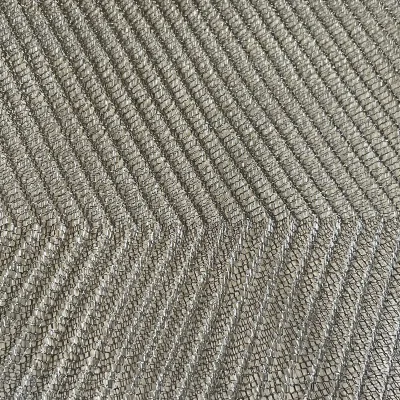
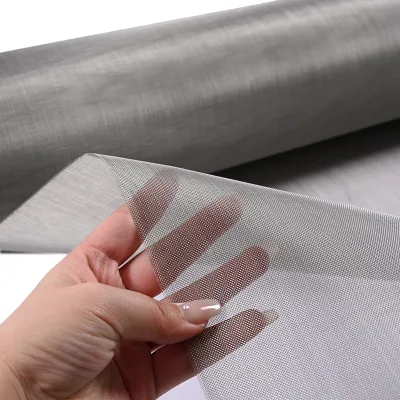
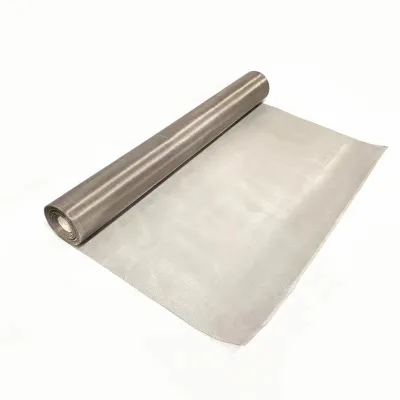
Hydrogen Making Pure Ni Mesh Plain Twill Weaving 40 46 60 Mesh Nickel Wire Mesh Screen
$29.99 - $39.99
MOQ: 1 Square Meters


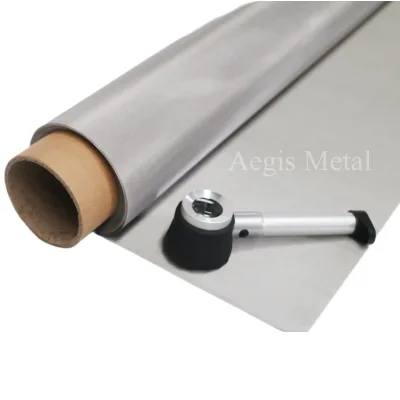
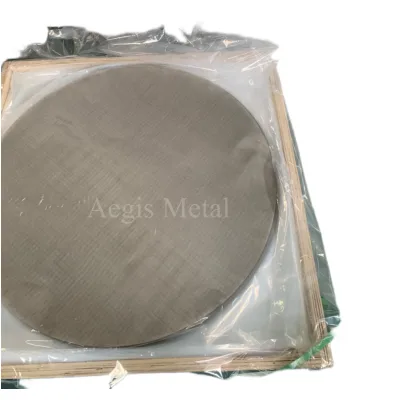


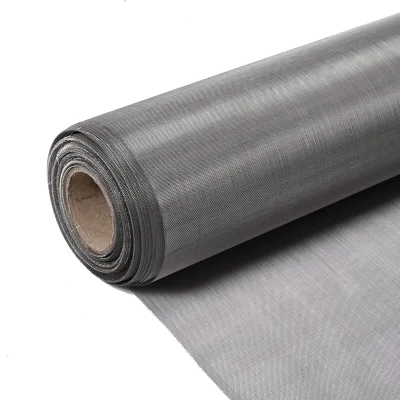
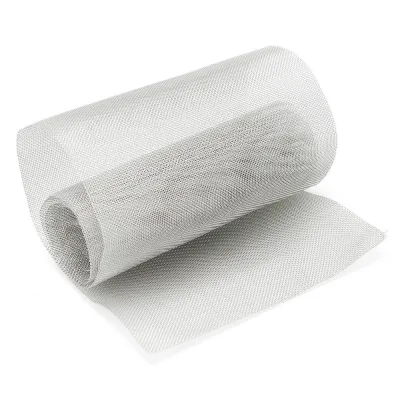
Comprehensive Sourcing Guide
Strategic Sourcing Guide for Hydrogen-Grade Nickel Wire Mesh
Understanding Material Variants and Technical Specifications
When sourcing nickel wire mesh for hydrogen-related applications, buyers must first distinguish between the specific metallurgical forms and structural configurations available in the current market. The core material is consistently identified as nickel, yet the manufacturing process dictates the final utility. The market presents distinct categories including expanded nickel metal mesh, knitted wire mesh, and flat mesh variants. For hydrogen generation and electrolysis processes, the structural integrity and surface area are paramount. The observed product data indicates a primary model designation of "AGS-Nickel expanded mesh" and "Ni201 Expanded Nickel Mesh," suggesting that expanded forms are a significant portion of the supply.
The technical specifications for these materials vary significantly based on the intended application. For expanded nickel mesh, the wire diameter ranges from 0.03mm to 0.5mm, while the thickness of the resulting mesh sheet can span from 0.05mm to 2mm. In contrast, knitted nickel mesh offers a different structural characteristic, described with an irregular shape or single-strand braid weave style. The width of these products is highly customizable, with observed ranges extending from 10cm to 300mm, and specific industrial widths listed as 1m, 1.22m, 1.5m, 1.6m, 1.8m, and 2m. Length specifications also vary, with standard roll lengths observed at 10m, 20m, and 30m, though custom lengths are frequently available.
The aperture geometry is another critical specification. While some listings highlight a square hole shape, others specify a diamond pattern, which is typical for expanded metal mesh. The mesh standard is often defined by the opening size, with observed standards ranging from 1 to 400 mesh. For hydrogen applications, the specific mesh count must be verified against the required flow rate and filtration efficiency. The "Swd" (strip width or related dimension) is noted in the range of 0.2mm to 5mm, which directly impacts the open area percentage and mechanical strength. Buyers should not assume a single specification fits all hydrogen processes; the choice between a knitted braid and an expanded sheet depends on whether flexibility or rigidity is required for the specific reactor or filter assembly.
Compliance, Certification, and Material Verification
In the hydrogen sector, material purity and traceability are non-negotiable. While the provided data confirms the material as "Nickel" and specifically mentions "Ni201" (a commercial pure nickel grade), buyers must verify the exact chemical composition against international standards for hydrogen service. The origin of the products is consistently listed as China, specifically Anping and Hebei, which are known manufacturing hubs for wire mesh. However, the country of origin does not automatically guarantee compliance with specific hydrogen safety standards.
Buyers must request documentation proving that the nickel plate or wire meets the required purity levels for electrolytic or catalytic applications. The observed product data mentions a "prod_standard" of 1-400 mesh, but this refers to aperture density rather than material certification. For hydrogen making, the absence of contaminants like sulfur or lead is critical to prevent catalyst poisoning. Therefore, procurement teams should insist on Mill Test Certificates (MTC) that detail the elemental analysis.
Furthermore, the product data lists various packing methods, including paper tubes, wooden boxes, and wooden cases. While this is logistical information, it also hints at the handling requirements. For sensitive hydrogen applications, the packaging must prevent surface contamination during transit. The "Package Logo Can Be Custom" attribute suggests that suppliers are willing to engage in branding, but this should not be the primary focus of the compliance check. Instead, the verification process should center on the material's ability to withstand the specific chemical environment of hydrogen production, including resistance to hydrogen embrittlement and corrosion in alkaline or acidic electrolytes.
Cost Drivers and Pricing Dynamics
The pricing for nickel wire mesh is volatile and heavily influenced by the raw material cost of nickel, which fluctuates on global commodity exchanges. The observed price range in the market is extensive, spanning from $5 to $260,000 USD. This massive variance indicates that the "per unit" cost is not a simple linear function of area but is driven by complexity, customization, and volume. A $5 unit likely represents a small sample or a basic, non-customized sheet, whereas the $260,000 figure likely corresponds to a large-scale industrial order with complex custom specifications, such as specific mesh counts, heavy gauges, or specialized surface treatments.
The Minimum Order Quantity (MOQ) is another significant cost driver. The observed MOQ ranges from 1 square meter to 30 square meters. For small-scale prototyping or research and development in hydrogen technology, an MOQ of 1 sqm is advantageous, allowing for low-risk testing. However, for commercial hydrogen plant deployment, the economies of scale become critical. Buyers should anticipate that the unit price will decrease as the order volume increases, but the total cost will still be dominated by the raw nickel content.
Customization is a major factor in pricing. The data confirms that customization is available for logos, widths, lengths, and potentially mesh patterns. Customizing the width to non-standard dimensions (e.g., specific widths between 1m and 300mm) or altering the weave style from standard expanded to knitted will incur additional tooling or processing fees. The "Weight" is described as "Middle-weight," which suggests a balance between material usage and structural integrity, but specific weight calculations will depend on the wire diameter and mesh count. Buyers must request detailed quotes that break down the base material cost from the processing and customization fees to understand the true cost structure.
Typical Applications in Hydrogen Production
The versatility of nickel wire mesh allows it to serve multiple roles in the hydrogen value chain. The observed applications listed include "Filter," "Screening," "Protection," and "Sieving Diversified Pellet." In the context of hydrogen making, the "Filter" application is likely the most critical. Nickel mesh is often used as a porous electrode or a filter medium in electrolyzers to separate gas bubbles from the electrolyte. The high surface area provided by the expanded or knitted structure facilitates efficient gas-liquid separation.
The "Screening" attribute points to the use of nickel mesh in separating solid catalysts or pellets from the liquid stream. In reforming processes, nickel mesh can act as a support structure for catalysts, providing mechanical stability while allowing reactant flow. The "Protection" usage suggests that the mesh may be employed as a safety screen or a barrier in high-pressure hydrogen systems to prevent debris from entering critical components.
Additionally, the data mentions "Aquaculture" and "Civil Building," which are less relevant to hydrogen but indicate the general durability of the material. For hydrogen-specific use, the "Ni Metal Mesh" and "Nickel Anode Flat Mesh" designations are particularly important. These suggest that the mesh can function as an anode or cathode component. The "Weave Characteristic" of "Stamping" for expanded mesh implies a robust structure suitable for high-stress environments, while the "Irregular Shape/Single Strand Braid" of knitted mesh offers flexibility for conforming to complex reactor geometries. Buyers should map these observed applications to their specific process requirements, ensuring the mesh type matches the pressure, temperature, and chemical exposure of their hydrogen generation system.
Supplier Evaluation and Sourcing Strategy
When evaluating potential suppliers for hydrogen-grade nickel wire mesh, buyers should focus on the consistency of their product data and their ability to provide technical transparency. The supply base is concentrated in Anping and Hebei, China. While these regions are established hubs, buyers must verify the specific capabilities of individual factories. The presence of multiple product models, such as "AGS-Nickel expanded mesh" and "ags-knitted nickel mesh," suggests that some suppliers offer a diverse portfolio, while others may specialize in a single type.
A key evaluation criterion is the supplier's responsiveness to customization requests. The data indicates that customization is available for logos, widths, and lengths. A reliable supplier will not only offer these options but will also provide engineering support to ensure that the custom dimensions meet the mechanical requirements of the hydrogen application. Buyers should also assess the supplier's quality control processes, specifically regarding the consistency of the wire diameter and mesh aperture. Variations in these parameters can lead to uneven flow distribution in electrolyzers.
The packaging methods listed, such as "Paper Tube," "Wooden Box," and "Wooden Cases," provide insight into the supplier's logistical capabilities. For international shipping, especially to regions with strict phytosanitary regulations regarding wood, the use of wooden cases may require specific treatment certificates. Buyers should confirm that the packaging is suitable for protecting the mesh from damage and contamination during transit. Additionally, the "Keyword" attributes like "Nickel Wire Mesh" and "3X6mm Electrode Nickel Mesh" can be used to search for suppliers, but buyers should verify that the specific keywords match their technical needs rather than relying solely on marketing terms.
Quality Control and Long-Term Procurement Considerations
Ensuring the long-term reliability of nickel wire mesh in hydrogen applications requires a robust quality control (QC) framework. Buyers should implement incoming inspection protocols that verify the physical dimensions, including width, length, and thickness, against the purchase order specifications. The observed thickness range of 0.05mm to 2mm and wire diameter of 0.03mm to 0.5mm must be measured with precision instruments to ensure they fall within the acceptable tolerance.
For hydrogen applications, surface quality is paramount. Buyers should inspect the mesh for any signs of surface defects, such as cracks, burrs, or uneven expansion, which could compromise the structural integrity or catalytic activity. The "Weave Style" and "Hole Shape" must be consistent throughout the roll or sheet. Inconsistent hole shapes, such as a mix of square and diamond patterns in a single product, would indicate a manufacturing defect.
Long-term procurement considerations also include the supply chain's resilience. Given the global demand for nickel and the geopolitical factors affecting its supply, buyers should secure long-term contracts with suppliers who have a track record of consistent production. The "Lead time" is not explicitly provided in the data, but buyers should negotiate clear delivery schedules to avoid production delays in their hydrogen projects. Furthermore, the availability of spare parts and replacement mesh is crucial for maintenance. Buyers should ensure that the supplier can provide consistent batches of the same model (e.g., "AGS-Nickel expanded mesh") to maintain process stability over time.
| Feature | Expanded Nickel Mesh | Knitted Nickel Mesh | Flat Nickel Mesh |
|---|---|---|---|
| Weave Style | Stamping / Expanded | Irregular Shape / Single Strand Braid | Flat / Plate |
| Hole Shape | Diamond | Irregular | Variable |
| Typical Thickness | 0.05mm - 2mm | Variable | Variable |
| Primary Application | Filtration, Screening, Protection | Flexible filtration, Cages | Anode, Electrode |
| Customization | Width, Length, Mesh Count | Width, Length, Braid Style | Width, Length, Model |
By adhering to these sourcing principles and leveraging the detailed technical data available, buyers can secure high-quality nickel wire mesh that meets the rigorous demands of hydrogen production technologies. The focus must remain on verifying material specifications, ensuring compliance with safety standards, and establishing a reliable supply chain partnership that supports long-term operational efficiency.
FAQs
What is the standard width range for Hydrogen Making Nickel Wire Mesh?
The standard width ranges from 10cm to 300mm, with industrial options available at 1m, 1.22m, 1.5m, 1.6m, 1.8m, and 2m. Custom widths are also available to meet specific reactor requirements.
Which hole shapes are available for nickel wire mesh in this supply?
Both square and diamond hole shapes are observed in the current product listings. The diamond pattern is typical for expanded metal mesh, while square shapes appear in other variants.
Can buyers customize the packaging for Hydrogen Making Nickel Wire Mesh orders?
Yes, customization is available for packaging, including options like paper tubes, wooden boxes, and wooden cases. Buyers can also request custom package logos for branding purposes.
What is the minimum order quantity for purchasing nickel wire mesh?
The minimum order quantity starts at 1 square meter, allowing for small-scale prototyping. Some listings indicate an MOQ range up to 30 square meters depending on the specific product.
How is the thickness of the nickel wire mesh defined in specifications?
The thickness of the mesh sheets ranges from 0.05mm to 2mm. This dimension varies based on the specific model, such as the AGS-Nickel expanded mesh or knitted variants.
Where are the primary manufacturing locations for this nickel wire mesh?
Products originate from China, specifically the Anping and Hebei regions. These locations are known manufacturing hubs for wire mesh and expanded metal products.
What applications are listed for nickel wire mesh beyond filtration?
Applications include screening, protection, road construction, railway construction, and aquaculture. The mesh is also used for sieving diversified pellets and as decorative or barbecue wire mesh.