Source Hydrogen Energy Scientific Experiment Machine for Lab, Medical, and Semiconductor
Compare 30 Hydrogen Energy Scientific Experiment Machine options from verified Chinese suppliers. These units support applications in lab analysis, pharmaceuticals, and new energy sectors with customizable capacities and high-purity output.
Key considerations
Products List


Compact AEM Hydrogen Producing Machine for Laboratory & Pilot Hydrogen Research
$85100.00 - $99400.00
MOQ: 1 Pieces


Low Power Consumption Durable Hydrogen Generator System for Industrial Lab
$10000.00 - $50000.00
MOQ: 1 Sets


Advanced Hydrogen Experiment Kits for Educational Institutions and Labs
$882.00 - $1800.00
MOQ: 1 Pieces


Adjustable Output Hydrogen Gas Generator for Laboratories and Homes
$12000.00 - $15000.00
MOQ: 1 Pieces


Pem Electrolyzer Test System Green Hydrogen System Hydrogen Testing Machine
$39999.00 - $69999.00
MOQ: 1 Pieces

Green Hydrogen System Multi-Channel Electrolyzer Test Machine-8 Hydrogen Testing System
$39888.00 - $69888.00
MOQ: 1 Pieces

Pem Electrolyzer Test System Green Hydrogen System Hydrogen Testing Machine-4 Multi-Channel
$38999.00 - $67999.00
MOQ: 1 Pieces

Pem Electrolyzer Test System Green Hydrogen System Hydrogen Testing Machine-6 Multi-Channel
$39999.00 - $66899.00
MOQ: 1 Pieces

Pem Electrolyzer Test System Green Hydrogen System Hydrogen Testing Machine -2 Multi-Channel
$38888.00 - $66888.00
MOQ: 1 Pieces

Pem Electrolyzer Test System Green Hydrogen System Hydrogen Testing Machine-1 Multi-Channel
$37888.00 - $69888.00
MOQ: 1 Pieces

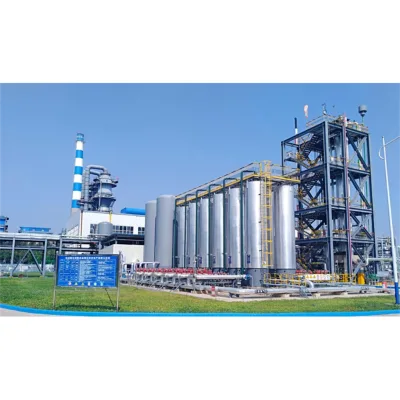


Hydrogen Machine Household Hydrogen Generator Mini Hydrogen Inhalation Machine Pure 99.99%
$198.00 - $270.00
MOQ: 1 Pieces


Comprehensive Sourcing Guide
Strategic Sourcing Guide for Hydrogen Energy Scientific Experiment Machines
Understanding the Technical Landscape of Hydrogen Generation Systems
When sourcing a Hydrogen Energy Scientific Experiment Machine, buyers must first navigate a complex array of technical configurations that define the machine's suitability for specific laboratory or industrial applications. The core keyword "Hydrogen Energy Scientific Experiment Machine" encompasses a diverse range of equipment, primarily distinguished by their underlying electrolysis technology. The available market data indicates that these systems frequently utilize PEM (Proton Exchange Membrane), PSA (Pressure Swing Adsorption), and Alkaline technologies. Each technology offers distinct advantages; for instance, PEM systems are often favored for their rapid response times and high purity output, while Alkaline systems are known for robustness in continuous operation.
A critical observation in the current product landscape is the variation in structural design. Buyers should expect to encounter machines categorized as Vertical Type, Cabinet-Type, Split-Type, or Container-Type. The choice of structure is not merely aesthetic but dictates the footprint, integration capability, and maintenance accessibility of the unit. For laboratory settings requiring compact integration, the "Compact Size" feature is a vital attribute, often paired with "Low Noise" or "Ultra Low" noise levels to ensure a safe and compliant working environment. The working pressure is another pivotal specification, with observed ranges extending from 0 to 1.6 MPa (adjustable) or up to 16 bar. This variability means that a single specification does not fit all experimental needs; the procurement team must align the working pressure with the specific requirements of the downstream process or analysis being conducted.
Furthermore, the cooling mechanism is a technical differentiator that impacts long-term reliability. Some units operate with natural air cooling, which may suffice for lower capacity applications, while others may require more complex thermal management systems. The power source requirements also vary, with systems designed to operate on 220V/380V single or three-phase power. Understanding these electrical and structural parameters is the first step in narrowing down the supplier pool to those offering machines that physically and technically align with the buyer's facility infrastructure.
Compliance, Certification, and Regulatory Standards
In the realm of hydrogen energy equipment, compliance is not optional; it is a fundamental prerequisite for safety and market entry. When evaluating potential suppliers, buyers must rigorously verify the certification status of the equipment. The observed product data highlights a recurring presence of major international certifications, specifically UL, ISO, and CE. These certifications serve as critical indicators that the manufacturer adheres to recognized safety and quality management systems. The presence of CCC (China Compulsory Certification) in some listings further suggests compliance with domestic Chinese standards, which is relevant if the equipment is manufactured in China, a noted origin for many of these systems.
Beyond general certifications, the specific standards to which the machines are built must be scrutinized. The data indicates adherence to standards such as GN-60, IEC, GB, and ASME. The ASME (American Society of Mechanical Engineers) compliance is particularly significant for pressure vessels and systems operating under pressure, as it ensures the mechanical integrity of the hydrogen generation components. Similarly, GB standards (Guobiao) reflect adherence to Chinese national standards, which often align with international practices but may have specific local nuances. Buyers should verify that the "Standard" field in product documentation explicitly lists the relevant codes for their intended application, whether it be for laboratory analysis, semiconductor manufacturing, or broader industrial use.
It is also essential to distinguish between the certification of the final product and the certification of the manufacturing process. While the product listings often cite ISO and CE, buyers must ensure that these certifications are current and applicable to the specific model being purchased. The "Condition" of the product is typically listed as "New," but this does not guarantee the validity of the certifications unless accompanied by valid certificates of conformity. In the context of hydrogen, where safety risks are elevated, relying solely on a supplier's claim without requesting physical proof of certification from the original equipment manufacturer (OEM) is a procurement risk. The presence of "Exported Standard Package" in some listings suggests that the packaging and handling processes may also be subject to specific logistical standards, which can be an indirect indicator of the manufacturer's attention to detail and compliance culture.
Cost Drivers and Pricing Dynamics in Hydrogen Equipment
The pricing of hydrogen energy scientific experiment machines is highly variable, driven by a combination of technical complexity, capacity, and customization requirements. The observed market data reveals a price range spanning from approximately $198 to $1,289,000 USD. This vast disparity underscores the importance of defining the exact scope of the experiment before engaging with suppliers. The lower end of the spectrum likely corresponds to smaller, benchtop units or specific components such as adsorption towers or gas tanks, which are listed as "Parts" in the product attributes. In contrast, the higher price points are associated with complete, integrated systems featuring advanced control modes, higher hydrogen purity, and larger capacities.
Several key factors drive these costs. First, the hydrogen purity level is a significant cost determinant. Systems capable of producing "99.999% Ultra High Purity" hydrogen command a premium over those producing 99.9% or 99.99% purity. Achieving ultra-high purity often requires more sophisticated membrane technologies, additional purification stages, and stricter quality control measures, all of which increase the manufacturing cost. Second, the capacity of the machine, measured in Nm3/h or Ml/Min, directly influences the price. Models with customizable capacities ranging from 0 to 5000 Ml/Min or specific outputs like 50 Nm3/h will have different cost structures based on the scale of the electrolysis stack and the associated balance of plant equipment.
The control mode is another substantial cost driver. Units featuring "PLC Intelligent Automatic Control" or advanced automation for load ranges of 25% to 110% are more expensive than manually operated or basic automated systems. The inclusion of features such as "Cold Start-up Time" of less than 20 minutes and specific power consumption metrics (e.g., ≤ 4.5 Kwh/Nm2 H2) also adds value and cost. Additionally, the "Customization" availability listed in the product attributes suggests that buyers may incur additional costs for tailored solutions, such as specific voltage requirements, unique structural configurations, or specialized application fields like "New Energy," "Pharmaceutical," or "Semiconductor."
Buyers should also consider the total cost of ownership, which includes energy efficiency. The "DC Power Consumption" metric is a critical indicator of operational costs. A machine with lower power consumption per unit of hydrogen produced will result in significant savings over the lifespan of the equipment, even if the initial purchase price is higher. The "Stack Warranty" of 3 years is another financial consideration, as it mitigates the risk of premature failure of the most expensive component, the electrolysis stack.
Typical Applications and Industry Use Cases
Hydrogen energy scientific experiment machines are versatile tools deployed across a wide spectrum of industries, each with unique requirements for purity, pressure, and operational stability. The product data explicitly lists "New Energy" as a primary application field, reflecting the growing demand for hydrogen in fuel cell development and renewable energy storage. In this sector, machines are used to generate hydrogen for testing fuel cell stacks, validating electrolyzer performance, and conducting research on hydrogen storage solutions.
Beyond new energy, the "Pharmaceutical," "Medical," and "Food" industries rely on high-purity hydrogen for various processes, including inerting, drying, and as a carrier gas in chromatography. The "Semiconductor" and "Electronic" sectors require ultra-high purity hydrogen (up to 99.999%) for the manufacturing of microchips and the processing of electronic components, where even trace impurities can compromise product quality. The "Chemical" and "Petroleum" industries utilize these machines for hydrogenation reactions, refining processes, and catalyst testing.
The "Lab Analysis" application is particularly relevant for scientific research institutions. Here, the "Compact Size" and "Low Noise" features are paramount to ensure the equipment fits within laboratory constraints and does not interfere with sensitive measurements. The "Working Temperature" of 90±5°C and "Working Pressure" ranges must be precisely controlled to simulate specific reaction conditions. Furthermore, the "Parts" such as "Adsorption Tower" and "Gas Tank" are integral to systems designed for gas purification and storage, making them essential for applications requiring continuous and stable hydrogen supply.
The versatility of these machines is further highlighted by their ability to serve multiple "Application Fields" simultaneously. A single unit might be configured for use in both "Laboratory Analysis" and "New Energy" research, provided it meets the specific purity and pressure requirements of both domains. This multi-functionality makes the equipment a valuable asset for institutions that conduct diverse research projects. However, it also necessitates careful selection to ensure that the machine's specifications, such as the "Load Range" and "Control Mode," are adequate for the most demanding application within the buyer's portfolio.
Supplier Evaluation and Quality Assurance Protocols
Evaluating suppliers for hydrogen energy scientific experiment machines requires a rigorous approach that goes beyond simple price comparison. Given the technical complexity and safety implications of hydrogen equipment, buyers must assess the supplier's technical capability, manufacturing consistency, and after-sales support. The "Customization: Available" attribute indicates that suppliers should be capable of adapting standard models to meet specific client needs. This capability is a strong indicator of a supplier's engineering competence and flexibility.
Quality assurance should be a central component of the supplier evaluation process. Buyers should request detailed documentation regarding the manufacturing process, including quality control checks at each stage of production. The "Condition: New" status is a basic requirement, but buyers must verify that the equipment has not been refurbished or modified in ways that could compromise its integrity. The "Stack Warranty: 3 Year" is a positive signal, suggesting that the supplier stands behind the durability of their core components. However, the terms of this warranty should be clearly understood, including what is covered and the process for claims.
The "Origin: China" location of many products suggests that buyers should be prepared to navigate international logistics and potential supply chain complexities. While China is a major hub for manufacturing, buyers must ensure that the supplier has a robust track record of exporting equipment safely and reliably. The "Exported Standard Package" attribute is a good sign, indicating that the supplier is familiar with international shipping requirements and has protocols in place to protect the equipment during transit.
Buyers should also evaluate the supplier's ability to provide technical support and training. The "PLC Intelligent Automatic Control" and "PLC Control" features imply a level of complexity that requires skilled operators. A supplier that offers comprehensive training and ongoing technical support adds significant value to the procurement. Additionally, the "Parts" availability, such as "Adsorption Tower" and "Gas Tank," is crucial for long-term maintenance. A supplier with a strong spare parts inventory ensures that downtime is minimized in the event of component failure.
Long-Term Procurement and Operational Considerations
Sourcing a Hydrogen Energy Scientific Experiment Machine is a long-term investment that requires careful consideration of operational efficiency, maintenance requirements, and scalability. The "Power Source" compatibility (220V/380V Single/Three Phase) is a critical factor that must be verified against the buyer's facility infrastructure to avoid costly retrofitting. Similarly, the "Cooling" method, whether "Air Natural" or otherwise, must be compatible with the environmental conditions of the installation site.
The "Working Pressure" and "Working Temperature" ranges define the operational envelope of the machine. Buyers should ensure that the selected model can handle the full range of conditions required for their experiments without operating at the extreme limits of its design, which could lead to premature wear and tear. The "Load Range" of 25% to 110% indicates the flexibility of the machine to operate under varying loads, which is essential for experiments that require dynamic adjustments.
Scalability is another important consideration. As research projects evolve, the demand for hydrogen may increase. The "Capacity: 0 5000 Ml/Min Customizable" feature suggests that buyers can start with a smaller unit and scale up as needed, or that the supplier can provide larger units for expanded operations. This flexibility is valuable for institutions with growing research programs.
Finally, the "Product Name" and "Application Fields" should be aligned with the buyer's long-term strategic goals. Whether the focus is on "New Energy," "Semiconductor," or "Medical" applications, the chosen machine should be capable of supporting the buyer's research trajectory for years to come. The "Hydrogen Dew Point" of -65°C and "Hydrogen Purity" levels are critical metrics that will determine the suitability of the machine for high-precision applications. By carefully evaluating these long-term factors, buyers can ensure that their investment in hydrogen energy scientific experiment machines delivers sustained value and supports their research objectives effectively.
FAQs
What certifications do hydrogen energy scientific experiment machines have?
These machines typically hold UL, ISO, and CE certifications to ensure safety and quality. Some models also include CCC certification for domestic compliance. Buyers should verify specific certificates for the exact model to confirm adherence to international standards like IEC and ASME.
Which technology types are available for hydrogen generation?
Available technologies include PEM, PSA, and Alkaline methods for hydrogen production. Each type offers distinct operational characteristics suitable for different experimental needs. The choice depends on required purity levels and response times for specific laboratory or industrial applications.
Can I customize the capacity of the hydrogen generator?
Yes, customization is available for capacity ranging from 0 to 5000 Ml/Min. Specific models also offer outputs like 50 Nm3/h. Buyers must specify their exact requirements to ensure the selected unit meets the precise flow needs of their experiment.
How is the working pressure controlled in these machines?
Working pressure is adjustable from 0 to 1.6 MPa or up to 16 bar depending on the model. The system uses PLC intelligent automatic control to maintain stable output. This ensures safety and precision during various experimental conditions requiring specific pressure levels.
What is the hydrogen purity level offered by these units?
Hydrogen purity levels range from 99.9% to 99.999% ultra-high purity. Higher purity grades require advanced membrane technologies and purification stages. Select the appropriate purity level based on the sensitivity of the semiconductor, pharmaceutical, or lab analysis application.
Where are these hydrogen energy machines manufactured?
The products originate from China as indicated in the product specifications. Manufacturers follow exported standard packaging and adhere to national GB standards alongside international codes. This origin ensures access to competitive pricing while maintaining compliance with global safety requirements.