Source Industrial Brushless Motor Wood Trimmer for factory, workshop, and trimming
Compare 30 listings of Industrial Brushless Motor Wood Trimmer units with varying power, voltage, and speed options. Buyers can evaluate specifications like 550W to 1400W power and 400rpm to 5000rpm rotating speed for factory or workshop applications.
Key considerations
Products List


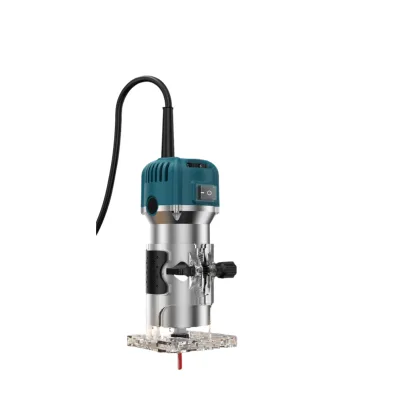


Brushless Electric Chainsaw 18V Cordless Tool for Tree Trimming Wood Branch Cutting
$18.25 - $29.88
MOQ: 100 Pieces


Comprehensive Sourcing Guide
Strategic Sourcing Guide for Industrial Brushless Motor Wood Trimmers
Understanding Technical Specifications and Performance Metrics
When sourcing an Industrial Brushless Motor Wood Trimmer, the primary objective is to align machine capabilities with specific production requirements. The technical landscape for these tools is defined by a complex interplay of voltage, power, and rotational speed. Based on available market data, industrial trimmers often operate within a voltage range of 110V to 220V, with frequency compatibility spanning 50Hz to 60Hz, ensuring adaptability across different regional power grids. Power consumption is a critical variable, with observed units ranging from 550W to 1400W, or specifically 0.8kW in certain configurations. This variance directly impacts the machine's ability to handle dense hardwoods versus softer lumber.
The rotational speed, or spindle speed, is perhaps the most defining characteristic of a brushless motor system. In the current supply chain, observed speeds vary significantly, from 400rpm to 5000rpm for general industrial applications, while high-precision router models may reach up to 33,000r/min. This high-speed capability is essential for achieving clean cuts and fine finishes in woodworking trimming. Buyers must verify that the specific model selected matches the intended material hardness; a unit with a maximum speed of 5000rpm may be insufficient for fine detailing compared to a 33,000r/min router. Furthermore, the motor type is often listed as "brushless" in advanced models, which offers superior efficiency and longevity compared to brushed alternatives, though the specific core components, such as the motor itself, must be confirmed in the product specifications.
The physical dimensions and weight of the equipment are equally vital for factory floor integration. Observed standard sizes for larger industrial units include dimensions around 2800mm x 2350mm x 1700mm, suitable for heavy-duty stationary applications. Conversely, handheld or semi-automatic units may be much more compact, with dimensions like 38cm x 36cm x 58cm and weights as low as 1.9kg. The body material is frequently specified as aluminum alloy, providing a balance of durability and reduced operator fatigue. The blade material is another critical technical specification, with common offerings including 50# Carbon Steel with a hardness of 48HRC for the blade and 46HRC for the hook, ensuring sharpness retention during extended operation.
Compliance, Certification, and Safety Standards
Navigating the regulatory landscape is a non-negotiable aspect of B2B procurement for industrial machinery. While specific certification statuses can vary by manufacturer, the presence of CE marking is a frequently observed attribute in the current market, indicating compliance with European health, safety, and environmental protection standards. Additionally, ISOCE certification is noted in some product listings, suggesting adherence to specific international organizational standards. Buyers must treat these certifications as observations rather than universal guarantees for every listed product. It is imperative to request valid, up-to-date certification documents directly from the supplier to verify that the specific unit being purchased holds the necessary approvals for the target market.
Safety standards are intrinsically linked to the machinery's design and operation. The "Condition" of the product is typically listed as "New," which implies the absence of wear-related safety hazards, but this must be verified against the actual delivery. For machinery originating from regions like Foshan, Guangdong, or Mengcheng in Anhui Province, China, local manufacturing standards apply. However, international buyers should ensure that the equipment meets the specific safety regulations of their own jurisdiction. The "Machinery Test Report" is a valuable document often provided by suppliers, offering third-party verification of performance and safety metrics. This report should be scrutinized to confirm that the machine has undergone rigorous testing for electrical safety, mechanical stability, and operational reliability before being deployed in a factory setting.
Cost Drivers and Pricing Structures
The pricing of industrial brushless motor wood trimmers is influenced by a multitude of factors, resulting in a wide observed range from $2.9 to $32,000. This vast disparity is not indicative of quality alone but reflects differences in scale, automation level, and component quality. Entry-level handheld trimmers or simple router attachments may fall at the lower end of the spectrum, while fully automated, heavy-duty industrial systems with advanced brushless motor technology command premium prices. The "Selling Units" are often listed as "Single item," suggesting that pricing is typically per unit rather than per batch, though bulk purchasing may influence the final negotiated rate.
Minimum Order Quantity (MOQ) is a significant cost driver in the procurement process. The observed MOQ range spans from 1 to 3000 units. A low MOQ of 1 allows for flexibility in testing and small-scale production, whereas high MOQs of 3000 units are typical for large-scale industrial deployments or OEM agreements. Buyers must balance their inventory needs against the per-unit cost savings offered by higher volume orders. Additionally, customization availability is a key factor; products with "Customized" models or specific branding (such as "Womai" or "HXD") may incur additional costs. The "Product Packing" also affects logistics costs, with options ranging from "Strong Package" to "Carton Packaging" or specific configurations like "1PC/PVC Head Bag, 24PCS/CTN." Buyers should calculate the total landed cost, including packaging and shipping, rather than focusing solely on the base unit price.
Typical Applications and Operational Environments
Industrial brushless motor wood trimmers are designed for diverse applications, primarily within factory settings. The "Application Place" is frequently cited as "Factory," indicating that these machines are built for continuous, high-volume production environments rather than occasional DIY use. The specific "Usage" is often categorized as "Router Wood" or "Woodworking Trimming Machine," highlighting their role in precision cutting, edge profiling, and surface finishing. The "Style" of the machine, such as a "Woodworking Trimming Machine," suggests specialized functionality tailored to the woodworking industry.
The operational environment dictates the required durability and feature set. For instance, machines with "Semiautomatic" automation levels are ideal for production lines where human intervention is needed for loading or unloading, while fully automatic systems might be required for high-throughput facilities. The "Key Selling Points" often include "Easy To Operate," which is crucial for minimizing training time and reducing operator error in fast-paced factory floors. The "Grips" material, often PP (Polypropylene), and the "Handle Material," which can be wooden, are designed to provide comfort and control during extended use. The "Blade Shape," typically a "Straight Knife," is optimized for specific cutting tasks, and the "Speed Mode" being "Adjust Speed" allows operators to fine-tune the machine for different wood densities and cut depths.
Supplier Evaluation and Geographic Considerations
Selecting the right supplier requires a thorough evaluation of their location, brand reputation, and production capabilities. The "Place of Origin" for many industrial wood trimmers is China, with specific hubs identified in Foshan, Guangdong, and Mengcheng, Anhui Province. These regions are known for their manufacturing clusters, offering a concentration of suppliers with varying levels of expertise. The "Brand" is another critical factor, with names like "Womai" and "HXD" appearing in the market. However, buyers should not rely solely on brand recognition; instead, they should assess the supplier's ability to provide "Customization" services and their track record for meeting delivery schedules.
Supplier reliability is often gauged by the "Warranty" terms offered. A standard "1 Year" warranty is common, but buyers should clarify the scope of coverage, including whether it covers motor failures, blade wear, or electrical components. The "CNC or not" attribute, often listed as "Normal," indicates the level of computer numerical control integration, which affects the precision and repeatability of the trimming process. For buyers seeking high-precision results, verifying the supplier's capability to integrate CNC features or provide high-precision models is essential. Additionally, the "Machinery Test Report" provided by the supplier serves as a tangible metric of their quality control processes. A supplier that readily provides detailed test reports demonstrates transparency and confidence in their product's performance.
Quality Control and Long-Term Procurement Strategy
Ensuring long-term value requires a robust quality control (QC) strategy that extends beyond the initial purchase. The "Condition" of the product, listed as "New," should be verified upon delivery to ensure no transit damage has occurred. The "Total Length" of the tool, such as 23 inches for handheld models, and the "Body Material" of aluminum alloy are physical attributes that should be measured against the order specifications to confirm compliance. The "Frequency" of the motor, ranging from 50Hz to 430Hz in some observations, must match the local power supply to prevent operational failures or motor burnout.
For long-term procurement, buyers should consider the availability of spare parts and the "Core Components" of the machine. The motor is a critical component, and its replacement cost and availability should be factored into the total cost of ownership. The "Blade HRC" and "Hook HRC" values (48HRC and 46HRC respectively) indicate the hardness and durability of the cutting edges; understanding the wear rate of these components is essential for planning maintenance schedules. The "Power Supply Voltage" must be strictly adhered to, as mismatches can lead to catastrophic failure. Finally, the "Automation" level, whether "Semiautomatic" or otherwise, should be evaluated against future production scaling plans. A supplier that offers "Customized" models and supports long-term maintenance will provide greater stability for the buyer's operations over time.
Comparison of Key Product Attributes
To facilitate decision-making, the following table summarizes the observed technical and operational attributes of industrial brushless motor wood trimmers found in the current market. This comparison highlights the diversity in specifications that buyers must navigate.
| Attribute Category | Observed Range / Specific Values | Relevance to Procurement |
|---|---|---|
| Voltage | 110V/220V; 220V-50HZ/110V-60HZ | Ensures compatibility with local power infrastructure. |
| Power | 550W-1400W; 0.8kW | Determines cutting capacity and energy efficiency. |
| Rotational Speed | 400rpm-5000rpm; 33000r/min | Critical for finish quality and material compatibility. |
| Dimensions | 280023501700mm; 38CM×36CM×58CM | Affects factory floor space requirements. |
| Weight | 1.9 KG (Handheld); Heavy (Industrial) | Influences operator fatigue and mobility. |
| Blade Material | 50# Carbon Steel (48HRC) | Dictates blade life and cutting performance. |
| Certification | CE, ISOCE | Mandatory for regulatory compliance in target markets. |
| MOQ | 1 - 3000 | Impacts initial capital expenditure and inventory risk. |
| Warranty | 1 Year | Defines the period of manufacturer liability. |
| Origin | Foshan, Guangdong, Mengcheng (China) | Indicates manufacturing hub and potential logistics lead times. |
This structured approach to evaluating technical specifications, compliance, cost, and supplier capabilities ensures that buyers can make informed decisions when sourcing industrial brushless motor wood trimmers. By focusing on verified attributes and avoiding unconfirmed claims, procurement teams can mitigate risk and secure equipment that meets their specific production needs.
FAQs
What certifications do industrial brushless motor wood trimmers have?
Many units carry CE and ISOCE certifications, indicating compliance with safety standards. Buyers should verify specific documents from suppliers, as these are observations rather than universal guarantees for every listed product.
How much does an Industrial Brushless Motor Wood Trimmer cost?
Prices range widely from 2.9 to 32000 USD depending on scale and automation. Entry-level handheld models cost less, while fully automated industrial systems command premium prices based on component quality and capacity.
Can I customize the model specifications for my factory needs?
Customization is available for many models, allowing for specific branding and design adjustments. Buyers can request tailored dimensions or features, though this may affect the final negotiated rate and minimum order quantity.
What is the minimum order quantity for these wood trimmers?
The minimum order quantity ranges from 1 to 3000 units depending on the supplier. A low MOQ of 1 allows for testing, while high volumes are typical for large-scale industrial deployments or OEM agreements.
Where are these industrial wood trimmers manufactured?
Products originate from various locations in China, including Foshan, Guangdong, and Mengcheng, Anhui Province. These regions are known manufacturing hubs offering a concentration of suppliers with varying levels of expertise and capacity.
What power specifications are available for these trimmers?
Power consumption varies from 550W to 1400W or 0.8kW in specific configurations. Voltage options include 110V/220V with frequency compatibility for 50Hz or 60Hz grids to ensure adaptability across different regional power supplies.
How fast do the spindles rotate on these machines?
Rotational speeds vary significantly, ranging from 400rpm to 5000rpm for general applications. High-precision router models may reach up to 33000r/min, which is essential for achieving clean cuts in dense hardwoods.