Source Industrial Cabinet Cylindrical Lock for security, storage, and equipment
Find 27 Industrial Cabinet Cylindrical Lock options from verified Chinese suppliers. Compare stainless steel and alloy models with customizable features, varying weights, and different mounting styles to meet specific security needs.
Key considerations
Products List


Brass Cylinder Turnbolt Lock with Protective Cover for Industrial Enclosure Security
$0.70 - $0.84
MOQ: 100 Pieces

Copper Plated Cross Key Cylinder Lock with Protective Cover for Outdoor Cabinets
$0.54 - $0.74
MOQ: 100 Pieces


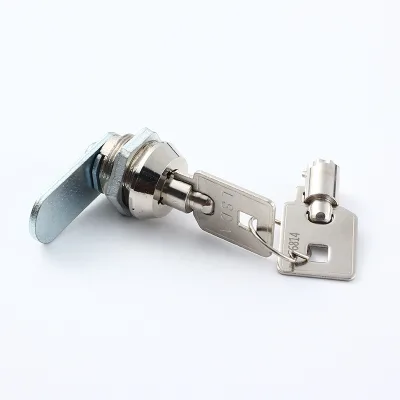
Comprehensive Sourcing Guide
Industrial Cabinet Cylindrical Lock Sourcing Guide
Sourcing industrial-grade cylindrical locks for cabinet applications requires a disciplined approach to verifying mechanical integrity, material composition, and installation compatibility. These locking mechanisms are critical components in securing high-value assets within industrial enclosures, server racks, and specialized equipment housings. Buyers must distinguish between standard consumer-grade hardware and robust industrial solutions that withstand frequent use, environmental stressors, and potential tampering. The selection process hinges on aligning specific technical attributes with the operational demands of the end-use environment, ensuring that the chosen lock provides reliable security without compromising the structural integrity of the cabinet door or frame.
This guide outlines the essential verification steps for procurement professionals evaluating cylindrical locks, with a focus on models such as the MS820-1, BIX series, and M105 variants observed in current market listings. By examining material properties, certification requirements, and commercial terms, buyers can mitigate supply chain risks and ensure long-term performance. The following sections provide a structured framework for assessing product scope, technical specifications, compliance documentation, cost drivers, supplier qualifications, and long-term maintenance considerations, enabling informed decision-making throughout the sourcing lifecycle.
Product Scope and Observed Listing Signals
The current market for industrial cabinet cylindrical locks features a diverse range of models, each tailored to specific mounting and functional requirements. Observed listings include single-point lock configurations like the MS820-1, which is designed for straightforward installation in standard cabinet doors. Additionally, the BIX series (including models CL23, CL24, CL25, CL27, CL31, and CL34) represents a broader family of locking mechanisms, often characterized by their robust construction and suitability for heavy-duty applications. These models are frequently available in black finishes, indicating a preference for durable, corrosion-resistant coatings that blend with industrial aesthetics while providing protection against environmental wear.
Installation methods vary significantly across the product range, with exposed mount designs being a common feature among the observed listings. This installation type requires careful consideration of the cabinet’s door thickness and edge profile to ensure a secure fit. Some models, such as the M105, offer customization options, allowing buyers to adapt the lock to specific dimensional constraints or functional needs. The availability of customization services suggests that suppliers are equipped to handle bespoke requirements, which is particularly valuable for specialized industrial applications where off-the-shelf solutions may not meet precise engineering specifications.
Technical Specifications to Verify
Material composition is a primary determinant of lock durability and security. Stainless steel and alloy constructions are prevalent in high-quality industrial locks, offering superior resistance to corrosion and mechanical stress compared to standard zinc or plastic alternatives. The key material, often iron in observed listings, must be hardened to resist picking and drilling attacks. Buyers should verify the specific alloy grades and heat treatment processes used in manufacturing, as these factors directly influence the lock’s lifespan and resistance to forced entry. Additionally, the finish, such as chrome plating, plays a crucial role in protecting the underlying metal from environmental degradation, particularly in humid or corrosive industrial settings.
Dimensional accuracy and mechanical life are critical technical parameters that must be validated before procurement. Panel thickness compatibility is a key consideration, with some models supporting a range of 1~5mm, ensuring versatility across different cabinet designs. The mechanical life of certain locks is rated for up to 12 years, indicating a high level of reliability for long-term use. Buyers should also examine the lock’s function, such as cylindrical locking mechanisms, and any additional features like compression and pressing functions, which can enhance security by preventing door rattle or unauthorized access. Verification of these specifications against the supplier’s technical datasheets is essential to ensure compatibility with existing infrastructure.
Compliance and Safety Documentation
Certification status is a vital indicator of a supplier’s commitment to quality and regulatory compliance. ISO certification is commonly observed among industrial lock manufacturers, signifying adherence to international standards for quality management systems. This certification ensures that the production process is consistent, controlled, and capable of delivering products that meet specified requirements. Buyers should request valid ISO certificates and verify their authenticity through the issuing body, as this provides assurance that the supplier maintains rigorous quality control measures throughout the manufacturing cycle.
Additional certifications, such as RoHS, indicate compliance with restrictions on hazardous substances, which is increasingly important for electronic and industrial equipment. While CE marking is mentioned in background contexts, buyers should exercise caution and verify the specific standards applied, such as EN 1303 for mechanical security, rather than assuming automatic compliance. Documentation should clearly state the standards tested against and the results of any third-party evaluations. Procurement teams should require test reports or compliance declarations from the supplier to ensure that the locks meet the safety and environmental regulations applicable in their target markets.
Cost Drivers and Commercial Terms
Pricing for industrial cabinet cylindrical locks varies based on material quality, customization requirements, and order volume. Observed price ranges span from low-cost options to premium models, reflecting differences in construction and features. Minimum Order Quantities (MOQs) typically range from 1 to 3000 units, offering flexibility for both small-scale projects and large-scale industrial deployments. Buyers should negotiate MOQs based on their consumption rates and storage capabilities, considering that higher volumes may unlock significant cost savings per unit.
Packaging and logistics are additional cost factors that influence the total landed cost. Products are often packed in cartons, pallets, or standard exporting packaging, with some suppliers offering customized packing solutions. The weight of individual units, ranging from 200 to 240 grams, affects shipping costs, particularly for bulk orders. Delivery lead times, such as shipping within 15 days after payment, should be factored into production planning. Buyers should clarify all commercial terms, including payment methods, warranty periods, and return policies, to avoid unexpected expenses and ensure a smooth procurement process.
Supplier Qualification and Quality Control
Supplier location and manufacturing capability are key indicators of reliability. Many industrial lock suppliers are based in China, with notable concentrations in Zhejiang, Yantai (Shandong), and Dongguan (Guangdong). These regions are known for their robust manufacturing ecosystems and expertise in hardware production. Buyers should assess the supplier’s production capacity, quality control processes, and ability to meet customization requests. Requesting factory audits or third-party inspections can provide valuable insights into the supplier’s operational standards and commitment to quality.
Quality control measures should include rigorous testing of mechanical components, finish durability, and key operation. Suppliers should provide evidence of their testing protocols, such as cycle testing for mechanical life and corrosion resistance tests for finishes. Buyers should also verify the supplier’s ability to handle defects and returns, ensuring that any non-conforming products are addressed promptly. Establishing a clear communication channel with the supplier’s technical support team can facilitate quick resolution of any issues that arise during installation or operation, minimizing downtime and maintaining security standards.
Long-Term Procurement Checks
Long-term success in sourcing industrial cabinet locks depends on continuous monitoring of product performance and supplier reliability. Buyers should establish a feedback loop with end-users to gather data on lock durability, ease of use, and any maintenance issues. This information can be used to refine future procurement specifications and identify potential improvements in product design or material selection. Regularly reviewing supplier performance metrics, such as on-time delivery rates and defect percentages, helps maintain high standards and encourages suppliers to continuously improve their offerings.
Adapting to evolving security needs and technological advancements is essential for long-term procurement strategies. As industrial environments become more complex, locks may need to integrate with electronic access control systems or offer enhanced anti-tampering features. Buyers should stay informed about industry trends and emerging technologies, engaging with suppliers who demonstrate innovation and a commitment to research and development. By maintaining a proactive approach to supplier management and product evaluation, organizations can ensure that their industrial cabinet security solutions remain effective, reliable, and cost-efficient over time.
FAQs
What materials are used for industrial cabinet cylindrical locks?
These locks are commonly made from stainless steel, alloy, or metal. Some specific models feature iron key materials. Buyers should verify the exact material composition for each product listing to ensure durability and corrosion resistance.
Can I customize the specifications of these locks?
Yes, customization is available for many industrial cabinet cylindrical locks. Buyers can request specific dimensions or features like three-point locking mechanisms. Customization options often include changing plate designs or adding compression functions.
What certifications do these locks typically hold?
Many products carry ISO and RoHS certifications. These standards indicate compliance with international quality and environmental regulations. Buyers should check individual product pages to confirm which specific certifications apply to their selected lock model.
How long is the delivery time for these locks?
Standard delivery details indicate shipping within 15 days after payment. This lead time applies to orders placed with suppliers in China. Buyers should confirm specific timelines with vendors as production schedules may vary by order volume.
What is the minimum order quantity for these locks?
The minimum order quantity ranges from 1 to 3000 units depending on the supplier. Some vendors offer low MOQs starting at just one piece. Buyers can often negotiate quantity requirements based on their specific customization needs.
Where are these locks manufactured?
Manufacturing locations include Zhejiang, Yantai in Shandong, and Dongguan in Guangdong, China. These regions are known for producing metal hardware and locking mechanisms. Buyers should verify the specific origin listed for each product to understand logistics implications.
What installation methods are supported for these locks?
These locks support exposed mount installation methods. They are designed for use in industrial settings with panel thicknesses ranging from 1 to 5mm. Buyers should ensure their cabinet structure matches the required mounting specifications before purchase.