Source Industrial Woodworking Dust Collector for CNC, Saw, and Sliding Table
Find 30 Industrial Woodworking Dust Collector options with varying air volumes, operation types, and filter materials. Buyers can compare specifications for saw machines, CNC routers, and sliding tables to select the right unit for their facility.
Key considerations
Products List


Industrial Using Cleaning Woodworking Dust Collector
$1850.00 - $3290.00
MOQ: 1 Sets
Jinan Tiansheng Environmental Protection Equipment Co., Ltd.


Industrial Woodworking Dust Collector Dust Extractor
$1850.00 - $3290.00
MOQ: 1 Sets
Jinan Tiansheng Environmental Protection Equipment Co., Ltd.


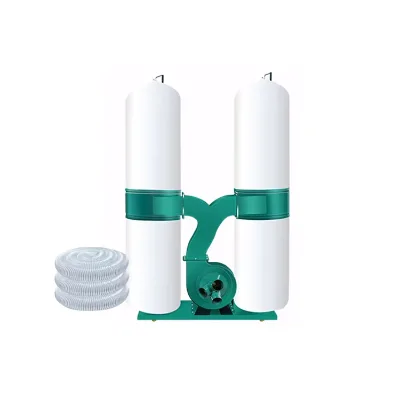

High-Efficiency Dust Collector for Woodworking and Industrial Use
$12045.00 - $12655.00
MOQ: 1 Pieces
Chungho Environmental Protection Technology Chengdu Co., Ltd.
Comprehensive Sourcing Guide
Industrial Woodworking Dust Collector Sourcing Guide
Sourcing an Industrial Woodworking Dust Collector requires a careful balance between airflow capacity, filtration efficiency, and operational safety. Buyers must recognize that these systems are not monolithic; they vary significantly in structure, cleaning mechanism, and media material. The decision to procure a unit involves evaluating whether the equipment aligns with specific woodworking processes, such as CNC routing or sawing, and ensuring the filtration media can handle the particulate load without rapid clogging or fire risk.
This guide provides a structured approach to evaluating suppliers and products based on observed market signals and technical realities. It focuses on verifying critical specifications, understanding cost drivers, and establishing quality control protocols. By adhering to these verification steps, procurement teams can mitigate the risk of selecting underperforming equipment and ensure long-term operational reliability in demanding industrial environments.
Product Scope and Observed Listing Signals
The current market for industrial dust collectors in the woodworking sector displays a wide range of configurations, from manual to fully automatic operation. Observed listings indicate that products are categorized by their dust collecting method, including half-dry and dry systems, and by their structural type, such as bag dust collectors, fabric dust collectors, and magnetic dust collectors. Buyers should note that while some units are marketed as "ordinary products," others offer extensive customization options for dimensions and airflow, suggesting that off-the-shelf solutions may not fit all facility layouts.
Marketing signals also reveal a diversity in core components and filtration media. Common materials include polyester with PTFE for cartridge filters and various thicknesses of PE or polyester for bag materials. Some listings specify glassfiber as a medium material, while others highlight metal fiber construction. These variations directly impact the system's ability to capture fine sawdust and wood chips. Procurement teams must cross-reference these material claims with the specific dust characteristics of their woodworking operations to ensure compatibility and longevity.
Technical Specifications to Verify
Airflow capacity is a primary technical parameter that must be verified against the number and type of dust extraction points in the facility. Observed data shows air volume specifications ranging from 2000 m³/h to 5000 m³/h, with some units rated at 4000 CMH. Buyers should calculate the total required airflow based on the suction needs of each machine, such as CNC routers or sliding table saws, and select a collector with a margin of safety. It is critical to confirm whether the stated air volume is measured at the fan inlet or outlet, as this affects the actual performance at the extraction points.
Filtration efficiency and cleaning mechanisms are equally vital for maintaining system performance. Many units advertise high dust removal efficiency, with some claiming up to 99.9% efficiency. The cleaning process is typically achieved through wind or pulse jet methods, which dislodge accumulated dust from the filter media. Buyers must verify the filter area, which can range from 50 to 5000 m², to ensure that the dust loading rate does not exceed the media's capacity. Additionally, the fan motor specifications, such as power ratings of 2.2kw to 7.5kw, should be matched to the system's resistance and airflow requirements to prevent motor overload.
Compliance and Safety Documentation
Certification status is a fundamental requirement for industrial equipment, particularly in regions with strict safety regulations. Observed listings frequently mention CE certification, and some suppliers also provide ISO certification. Buyers must request valid certificates from accredited bodies and verify their authenticity, as self-declared certifications may not meet local regulatory standards. For woodworking applications, where combustible dust poses a significant fire hazard, additional safety certifications related to explosion protection or static dissipation may be necessary, though these are not explicitly detailed in all listings.
Documentation regarding the origin and standard of the product is also essential for compliance and logistics. Most observed products originate from China, and buyers should confirm the specific manufacturing standards applied, which may depend on the air volume or custom requirements. Packaging standards, such as container or plywood packing, should be reviewed to ensure the equipment arrives without damage. Furthermore, buyers should inquire about the availability of video outgoing inspections, which provide visual proof of the product's condition and functionality before shipment.
Cost Drivers and Commercial Terms
The price range for industrial woodworking dust collectors is broad, reflecting the variability in size, material, and automation level. Observed prices span from $100 to $50,000, indicating that both small-scale units and large, custom-engineered systems are available. The cost is heavily influenced by the core components, such as the brand and power of the fan motor, which can be sourced from manufacturers like Simens, Dongyuan, or Wannan. Buyers should request detailed breakdowns of costs to understand the value proposition of higher-priced units, particularly regarding motor quality and filter media durability.
Minimum Order Quantity (MOQ) and customization options also impact commercial terms. Observed MOQs range from 1 to 9 units, suggesting that suppliers are flexible for small businesses or pilot projects. Customization is widely available, allowing buyers to tailor dimensions and airflow to their specific needs. However, customization may affect lead times and pricing. Buyers should clarify whether OEM branding is acceptable and if online technical services are included in the purchase price, as these factors can reduce long-term operational costs.
Supplier Qualification and Quality Control
Supplier qualification should begin with a review of their production capabilities and quality assurance processes. Buyers should verify if the supplier provides video outgoing inspections, which serve as a preliminary quality check. Additionally, the availability of online technical service indicates the supplier's commitment to post-sale support, which is crucial for troubleshooting operational issues. Suppliers that offer OEM services may have more flexible manufacturing processes, but buyers must ensure that quality control measures are consistent across custom and standard orders.
Quality control extends to the materials used in construction. Buyers should request material certificates for the filter media, such as polyester with PTFE or glassfiber, to verify their filtration properties and resistance to heat and moisture. The structure of the dust collector, whether it is a bag or cartridge type, should be inspected for robustness and ease of maintenance. Suppliers that provide detailed specifications for their core components, such as the engine and fan motor, demonstrate a higher level of transparency and reliability.
Long-Term Procurement Checks
Long-term procurement success depends on the availability of spare parts and the ease of maintenance. Buyers should inquire about the lifespan of the filter media and the cost of replacements, as frequent filter changes can significantly increase operational expenses. The cleaning mechanism, whether wind or pulse jet, should be designed for minimal downtime and easy access for cleaning. Suppliers that provide comprehensive technical documentation and training resources can help facility managers maintain the system effectively, extending its operational life.
Finally, buyers should establish a clear communication channel with the supplier for ongoing support. The availability of online technical service is a positive indicator, but buyers should also verify the response time and scope of support. Regular performance reviews of the dust collector, including monitoring airflow and pressure drop, can help identify issues early. By maintaining a proactive approach to maintenance and supplier engagement, buyers can ensure that their Industrial Woodworking Dust Collector continues to meet safety and efficiency standards over time.
FAQs
What types of dust collectors are available for woodworking workshops?
Listed options include filter cartridge dust collectors, industrial bag dust collectors, magnetic dust collectors, and fabric dust collectors. Bag and cartridge units use pulse jet or wind cleaning, while cartridge filters often use polyester with PTFE media. Selection depends mainly on required air volume, dust type, and installation space, so confirm your workshop layout and extraction points before choosing a model.
How efficient are industrial woodworking dust collectors at removing dust?
Many listed models advertise high dust removal efficiency, with some cartridge and fabric units stating up to 99.9 percent. Actual performance depends on filter media, air volume, dust load, and maintenance of the filter bags or cartridges. Ask suppliers for efficiency data matched to your dust type, such as wood chips from saw machines or fine sanding dust from CNC routers.
Can the dust collector be customized to my workshop size and air volume?
Yes, customization is available on many listed models, and dimensions are typically made to order. Air volume ratings range from around 2000 to 5000 cubic meters per hour on some units, with one model rated at 4000 CMH, and standard selection depends on air volume. Provide your workshop size, machine connections, and required airflow so suppliers can size the unit correctly.
What operation modes do these dust collectors support?
Operation types vary across listings, including manual, automatic, and fully automatic control. Cleaning processes include pulse jet and wind methods, and dust collecting methods include dry and half dry systems. Automatic models reduce operator workload, while manual units suit smaller workshops. Confirm which control mode and cleaning system each specific model offers before ordering.
Which certifications do industrial woodworking dust collectors carry?
Listed products show CE certification, and some also list ISO certification. Certification coverage can vary by model and supplier, so request copies of current certificates for the exact unit you plan to buy. Video outgoing-inspection is also provided on listed products, which helps verify build quality and configuration before shipment.
How are dust collectors packed and shipped from suppliers?
Packing methods shown in listings include container shipping and plywood packing, with one model standardized for a 1x20'GP container. Plywood cases protect units during sea freight, while direct container loading suits larger customized builds. Confirm the packing method, dimensions, and loading arrangements with the supplier, especially for customized dimensions that affect container fit.
Can I get OEM branding and after-sales technical support?
OEM branding is acceptable on listed products, so you can request your own brand marking on the equipment. Online technical service is offered, supporting installation guidance and troubleshooting after delivery. Clarify the scope of OEM options, such as color choices like Ral5010 or Ral7035, and confirm how technical support is delivered for your region.
Which power and fan options should I consider for my workshop?
Listed configurations include a 7.5kw power unit and fan power options of 2.2kw, 3kw, 4kw, and 5.5kw, with fan motors from brands such as Simens, Dongyuan, or Wannan. Choose fan power based on duct length, machine count, and required air volume. Larger multi-machine setups generally need higher power and greater air volume for consistent extraction.