Source Professional Makeup Brushes for Face Eye and Eyelash
Find 30 listings of Professional Makeup Brushes designed for face, eye, and eyelash applications. Buyers can compare materials like nylon, goat hair, and synthetic options alongside customization features and set configurations.
Key considerations
Products List






Comprehensive Sourcing Guide
Strategic Sourcing Guide for Professional Makeup Brushes
The global market for Professional Makeup Brushes has evolved into a sophisticated sector where material science, aesthetic customization, and rigorous quality control intersect. For procurement professionals, sourcing these tools requires a nuanced understanding of the specific attributes that define a "professional" grade product versus a generic consumer item. The available data indicates a diverse landscape of products ranging from single-use tools to comprehensive sets, with origins primarily concentrated in manufacturing hubs like China and Guangdong. This guide outlines the critical factors buyers must evaluate to ensure a supply chain that delivers consistent quality, adheres to safety standards, and meets specific operational requirements.
Material Composition and Brush Performance
The performance of a makeup brush is fundamentally dictated by the materials used in its construction, specifically the bristles and the handle. In the current market, bristle materials vary significantly, with observed options including Nylon, Goat Hair, and Synthetic Hair. Each material serves a distinct function in professional application. Nylon and Synthetic Hair are often preferred for liquid and cream products due to their non-absorbent nature and durability, whereas Goat Hair is traditionally associated with powder application, offering superior softness and pigment pickup. The data confirms the existence of products utilizing all three material types, suggesting that a professional buyer must align material selection with the specific product lines they intend to service.
The handle material is equally critical for ergonomics and brand perception. Observed specifications list Plastic, Wood, and Metal as the primary handle materials. Plastic handles are common for cost-effective, mass-market sets, while Wood offers a premium aesthetic often associated with high-end professional kits. Metal handles provide durability and a distinct weight that some artists prefer for precision. When evaluating suppliers, buyers should verify the specific material composition for each SKU, as "Customized" is a frequent attribute listed, implying that material choices can be tailored to the buyer's brand identity. The intersection of bristle and handle material defines the tactile experience and functional utility of the tool.
Technical Specifications and Product Configuration
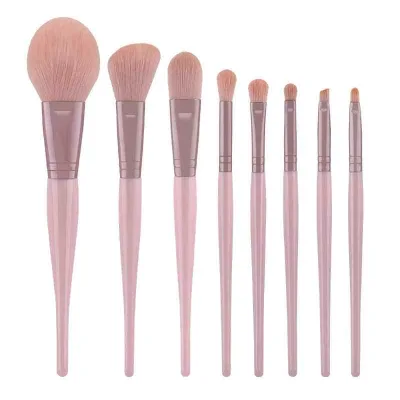
Professional procurement requires precise attention to technical specifications, particularly regarding product models, set configurations, and standardization. The market data reveals a wide array of product models, such as "Makeup Blush Brush-011L," "Makeup Brush Set-073O," and specific set codes like "ST7774" and "ST7665." These identifiers often correspond to specific configurations of brush counts. For instance, observed standards indicate set sizes ranging from "7 PCS ONE SET" to "25 PCS ONE SET," with common configurations including 10, 11, 12, and 24-piece sets.
Buyers must scrutinize these specifications to ensure they match their inventory needs. A "Makeup Eyeliner Brush-058C" represents a specialized tool, distinct from a general "Makeup Brush Set." The data also highlights "OEM" and "Customized" as key attributes, indicating that many suppliers offer the ability to modify product models to meet specific client requirements. Furthermore, the "prod_standard" field often details the composition of a set, such as "11 PCS ONE SET," which is a crucial metric for inventory planning. When comparing suppliers, buyers should create a matrix of available models against their required set compositions to avoid mismatches in product offerings.
Customization Capabilities and Branding
One of the most significant advantages in the professional makeup brush market is the high degree of customization available. The observed data consistently lists "Customization: Available," "OEM: Yes," and "Logo: Customized" as standard attributes. This suggests that suppliers are equipped to handle private labeling, logo placement, and potentially material or design modifications. The ability to accept a customer logo is a standard expectation for B2B buyers looking to build a distinct brand identity.
Beyond logos, the "prod_standard" being listed as "Customized" in some instances implies that the entire product specification, including set composition and packaging, can be tailored. For example, while some sets come in "Each Set in One OPP Bag," others may utilize bulk carton packaging with a count of "2000PC/CTN." Buyers should verify the extent of customization allowed, including whether the handle material, bristle type, or set count can be altered. The presence of "Accept Customer Logo" and "OEM: Welcomed" indicates a flexible supply chain, but the specific parameters of these customizations must be defined in the initial procurement agreement to ensure the final product aligns with brand guidelines.
Quality Assurance and Inspection Protocols
Quality control is paramount in the beauty tools sector, where product failure can lead to customer dissatisfaction and brand damage. The supplied facts highlight several quality-related attributes, including "Quality: Best," "Quality: 100% Checked," and "Feature: Skin-Friendly." These statements suggest that suppliers claim to implement rigorous inspection processes. However, buyers must treat these as observations of supplier claims rather than guaranteed outcomes without third-party verification.
The "100% Checked" attribute implies a 100% inspection rate, which is a significant differentiator from suppliers who rely on statistical sampling. For professional applications, ensuring that every brush is free from shedding, loose bristles, or defects in the ferrule (the metal part connecting bristles to the handle) is essential. Buyers should request detailed quality control reports that specify the inspection criteria used. Additionally, the "Skin-Friendly" feature indicates a focus on user safety, which is critical for products applied directly to the face and eyes. Procurement teams should verify that the materials used, particularly the bristles and adhesives, meet relevant safety standards for cosmetic tools to prevent allergic reactions or skin irritation.
Packaging Standards and Logistics Considerations
Packaging plays a dual role in protecting the product during transit and presenting it attractively to the end consumer. The data indicates a variety of packaging standards, ranging from individual OPP bags to bulk carton shipments. Specific observations include "Each Set in One OPP Bag" for retail-ready units and "2000PC/CTN" for bulk wholesale distribution. The "prod_packing" attribute varies, suggesting that suppliers offer flexible packaging solutions based on the buyer's distribution channel.
Logistics efficiency is also influenced by the packaging standard. For instance, a "Carton" standard with a high unit count like 2000 pieces per carton optimizes shipping volume and reduces per-unit freight costs. Conversely, individual bagging increases labor costs but enhances retail presentation. Buyers must balance these factors based on their target market. If the product is destined for direct-to-consumer e-commerce, individual packaging may be preferred. For wholesale distribution to beauty supply stores, bulk carton packaging might be more cost-effective. The "prod_origin" being listed as China and Guangdong provides context for lead times and shipping routes, which should be factored into the overall logistics plan.
Supplier Evaluation and Compliance Verification
When evaluating potential suppliers for Professional Makeup Brushes, buyers must look beyond the basic product listings. The presence of "OEM: Yes" and "Customization: Available" suggests a mature manufacturing base, but the specific location "Guangdong" and "China" requires verification of local compliance standards. While the data does not list specific certifications, buyers should proactively request documentation regarding material safety, such as FDA compliance for cosmetic tools or ISO standards for manufacturing processes.
The "Quality: Best" and "Quality: 100% Checked" claims should be validated through on-site audits or third-party inspections. Buyers should also assess the supplier's capacity to handle the observed MOQ range of 5 to 5000 units. This wide range indicates flexibility, but it also requires careful negotiation to ensure that the supplier can maintain quality consistency across different order sizes. The "Disposable: Non-Disposable" attribute confirms that these are durable goods, which necessitates a focus on longevity and durability testing. Suppliers should be able to provide test results or historical data demonstrating the lifespan of their brushes under typical usage conditions.
Long-Term Procurement and Market Adaptability
Sourcing Professional Makeup Brushes is not a one-time transaction but a strategic partnership that requires long-term planning. The market's emphasis on "Customized" models and "OEM" services indicates a trend toward brand differentiation. Buyers should consider how their suppliers can adapt to changing trends, such as the shift towards eco-friendly materials or new brush designs. The "Feature: Skin-Friendly" attribute suggests a growing consumer demand for safety and comfort, which should be a priority in future product development.
Furthermore, the variety of models, from "Makeup Eyeliner Brush" to "Makeup Brush Set," highlights the need for a diversified product portfolio. Buyers should evaluate their suppliers' ability to scale production for new models as market demands shift. The "prod_standard" variations, such as different set counts, offer opportunities to create tiered product lines. By maintaining a close relationship with suppliers who offer flexible customization and robust quality control, buyers can ensure a steady supply of high-quality Professional Makeup Brushes that meet the evolving needs of their customers. The integration of these factors into a cohesive procurement strategy will mitigate risks and enhance the competitiveness of the buyer's brand in the professional beauty market.
FAQs
What materials are used for the bristles in these brushes?
The bristles are made from Nylon, Goat Hair, or Synthetic Hair. Buyers should select the specific material based on whether they need tools for liquid, cream, or powder application to ensure optimal performance.
Can I customize the logo and handle material for my brand?
Yes, customization is available for logos and handle materials including Plastic, Wood, and Metal. Suppliers accept customer logos and can tailor the handle composition to match your specific brand identity requirements.
What are the standard set configurations available for purchase?
Sets range from 7 to 25 pieces per set, with common options like 10, 11, 12, and 24 pieces. Buyers must verify the specific model standard to ensure the set count matches their inventory planning needs.
How is the quality of these makeup brushes ensured before shipping?
Suppliers claim a 100% checked quality standard and best quality assurance for every unit. Buyers should request detailed inspection reports to verify that the brushes are free from shedding and meet skin-friendly safety standards.
What is the minimum order quantity for these products?
The minimum order quantity ranges from 5 to 5000 units depending on the supplier and product type. This wide range allows flexibility for both small trial orders and large wholesale distribution requirements.
Where are these Professional Makeup Brushes manufactured?
The products originate from China, with specific manufacturing hubs located in Guangdong. This location information is critical for calculating lead times and estimating shipping costs for international procurement.