Source Injection PP Homo Fiber for Automotive, Packaging, and Electronics
Compare 30 verified listings for Injection PP Homo Fiber suitable for automotive parts, packaging, and electronic components. Buyers can evaluate specifications, pricing, and supplier capabilities to find the right material for their manufacturing needs.
Key considerations
Products List




Comprehensive Sourcing Guide
Strategic Sourcing Guide for Injection PP Homo Fiber
Understanding Injection PP Homo Fiber Specifications
The core keyword "Injection PP Homo Fiber" directs buyers toward a specific subset of polypropylene materials designed for high-volume manufacturing processes. Polypropylene (PP) is a thermoplastic polymer, yet the supplied product data presents a critical observation: some listings describe the material as "Thermosetting Plastic" while others explicitly categorize it as "Thermoplastic Plastics." For injection molding applications, the material must exhibit thermoplastic behavior, meaning it melts upon heating and solidifies upon cooling, allowing for reprocessing. Buyers must verify that the specific grade selected is indeed a thermoplastic to ensure compatibility with injection molding cycles. The homo fiber designation typically refers to homopolymer grades, which offer high rigidity and strength, distinct from copolymer grades that prioritize impact resistance.
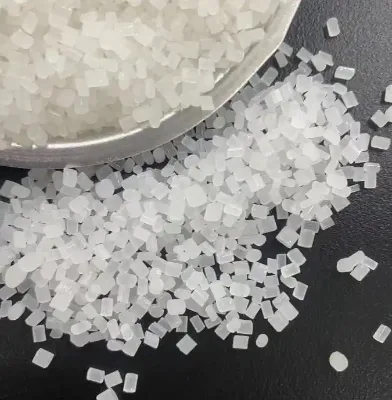
The physical form of these materials is consistently observed as "Granules," which is the standard feedstock for injection molding machines. The data indicates a wide range of processing capabilities, including "Injection," "Extrusion," and "Oil" processing, though the primary focus for this keyword is injection. The material is available in various filler contents, ranging from 0% to 60%, with fillers such as "Glass Fiber," "Carton Fiber," and "Flame Retardant" additives. This variability allows for customization of mechanical properties. The color is predominantly observed as "White," though the "Customization: Available" attribute suggests that other color options may be sourced depending on the supplier's capabilities. The material is described as "Environment Friendly" and meets "virgin/recycled" standards, indicating flexibility in sourcing based on sustainability goals.
Compliance, Certification, and Material Safety
When sourcing Injection PP Homo Fiber, verifying compliance with international standards is paramount. The product data lists specific certifications including "ISO," "Grs" (Global Recycled Standard), and "SGS." These certifications are critical indicators of a supplier's commitment to quality management and environmental responsibility. ISO certification typically refers to the ISO 9001 standard for quality management systems, ensuring consistent manufacturing processes. The Global Recycled Standard (GRS) is essential for buyers seeking materials with verified recycled content, aligning with corporate sustainability mandates. SGS certification provides third-party verification of product quality and safety.
Material safety is another critical dimension. The data explicitly states that the product is "Environment Friendly," which suggests low toxicity and compliance with regulations regarding hazardous substances. However, buyers must confirm that the specific batch or grade meets local regulatory requirements for the intended application, such as medical or food-contact standards, which are not explicitly detailed in the general data but are implied by the "Medical Grade" application listing. The "Standard" attribute varies, with some products listed under "25kg bag" or "25kg pe bag" standards, while others reference "virgin/recycled" as a standard classification. Buyers should request specific test reports to validate that the material meets the required safety thresholds for their specific industry, ensuring that the "Excellent" quality claim is backed by documented evidence.
Cost Drivers and Pricing Dynamics
The cost of Injection PP Homo Fiber is influenced by several dynamic factors, including raw material prices, processing methods, and supply chain logistics. The observed price range in the market data spans from $0.9 to $1500 USD, a vast disparity that reflects differences in material grade, purity, filler content, and order volume. The lower end of the spectrum likely corresponds to general-grade, unfilled, or recycled materials, while the higher end may represent specialized grades with high filler content (up to 60%), flame retardancy, or medical-grade certifications.
Minimum Order Quantity (MOQ) is a significant cost driver. The data shows an MOQ range from 1 unit to 1000 units, with specific listings noting an MOQ of "25kgs." Smaller MOQs increase the per-unit cost due to fixed logistics and handling fees, whereas larger orders benefit from economies of scale. The "Selling Units" are listed as "Single item," but the "Standard" of "25kg bag" suggests that bulk purchasing is the norm for industrial applications. Buyers should negotiate based on volume tiers to optimize costs. Additionally, the "Advantage" attributes listed include "Competitive Price," "High Quality," and "on-Time Delivery," indicating that price is often balanced against reliability and quality assurance. Logistics costs, determined by the "Ship Way" options (Sea, Air, Train, Truck), also impact the final landed cost, with air freight being significantly more expensive than sea freight for heavy granule shipments.
Typical Applications and Performance Characteristics
Injection PP Homo Fiber is versatile, serving a broad spectrum of industries. The data highlights applications ranging from "automotive parts" and "home appliance components" to "medical grade" devices and "electronic and electrical" fixtures. The material's "High Rigidity" and "Wear Resistance" make it ideal for structural components in automotive and industrial machinery. "Chemical Resistance" and "High Temperature Resistance" are crucial for applications involving exposure to harsh environments or elevated temperatures, such as under-the-hood automotive parts or industrial piping.
The "Feature" list includes "UV Resistance," "Weather Resistant," and "Aging Resistance," which are essential for outdoor applications like "sports equipment" or "pipe grade" materials exposed to the elements. For medical applications, the "Environment Friendly" nature and potential for "Medical Grade" certification are vital. The "Filler Content" of up to 60% allows for the production of lightweight yet durable parts, particularly when using glass fiber reinforcement. The "High Flow" property mentioned in the data suggests suitability for complex geometries and thin-walled injection molding, reducing cycle times and improving production efficiency. The "Photodegradable" feature indicates a specific niche application where controlled degradation is required, though this is less common for standard injection molding and requires careful selection.
Supplier Evaluation and Geographic Considerations
Evaluating suppliers requires a multi-faceted approach, considering origin, capacity, and reliability. The product data indicates origins in "China" (specifically Xiamen, Henan, and Hebei), "UAE," and "USA." Chinese manufacturers are noted for high volume and competitive pricing, with specific brands like "ZHUANGFA" appearing in the data. The "Mfr" (Manufacturer) count varies, with some listings showing 16, 10, or 36 manufacturers, suggesting a fragmented but active market. Buyers should verify the actual manufacturing capability of the supplier, distinguishing between trading companies and direct manufacturers.
The "Processing" attribute includes "Oil," which may refer to the raw material source or a specific processing step, but the primary focus for injection molding is the "Injection" forming method. Buyers should assess the supplier's ability to provide "Customization" services, as the data confirms this is available. The "Mrf" (likely a typo for Mfr or a specific metric) value of 70 appears in one listing, but without context, it should be treated as an observation rather than a universal standard. When evaluating suppliers, buyers should request samples to test the "Excellent" quality claim and verify the "Grade" specifications, such as "hot melt grade," "extrusion grade," or "injection molding grade," to ensure the material matches the intended application.
Quality Control and Long-Term Procurement Strategy
Quality control is essential to maintain consistency in injection molding production. The "Quality: Excellent" attribute is a general claim that must be validated through rigorous testing. Buyers should implement a quality control plan that includes incoming material inspection, verifying the "Filler Content" and "Color" against specifications. The "Standard" of "25kg bag" or "PE Bag" packing must be consistent to prevent contamination or moisture absorption, which can degrade the material's properties. The "Product Packing" options, ranging from "Plastic Bag" to "24.75mt/40gp with Pallet," offer flexibility but require verification of moisture barriers and pallet stability for long-term storage.
Long-term procurement considerations involve building a resilient supply chain. The "Ship Way" options (Sea, Air, Train, Truck) allow for diversified logistics strategies to mitigate risks. Buyers should consider the "Lead Time" and "MOQ" flexibility when negotiating contracts. The "Advantage" of "on-Time Delivery" is critical for maintaining production schedules. Additionally, the availability of "virgin/recycled" options allows buyers to adapt to changing sustainability regulations and market demands. By maintaining a relationship with suppliers who offer "Competitive Price" and "High Quality," buyers can secure a stable supply of Injection PP Homo Fiber that meets both technical and economic requirements.
Comparative Analysis of Material Grades
To facilitate decision-making, the following table summarizes key attributes observed in the product data, highlighting the variations available in the market.
| Attribute | Observation A | Observation B | Observation C |
|---|---|---|---|
| Plastic Forming Method | Injection | Extrusion | Oil Processing |
| Material Type | Polypropylene/PP | Polypropylene/PP | Polypropylene/PP |
| Properties After Heated | Thermosetting Plastic | Thermoplastic Plastics | Thermoplastic Plastics |
| Filler Content | 0%-60% | Glass Fiber/Carton Fiber | Flame Retardant |
| Origin | China (Xiamen, Henan, Hebei) | UAE | USA |
| Certification | ISO, Grs, SGS | ISO, Grs, SGS | ISO, Grs, SGS |
| Packing Standard | 25kg Bag | 25kg PE Bag | 24.75mt/40gp with Pallet |
| Application | Automotive, Medical, Home Appliance | Plastic Products | General Plastics, Engineering Plastics |
| MOQ | 25kgs | 1-1000 | 25kgs |
| Color | White | White | White |
This comparison underscores the importance of specifying exact requirements when sourcing. While the base material is consistent (PP), the processing methods, filler contents, and origins vary significantly. Buyers must align their specific application needs with the correct grade to avoid performance issues. The presence of "Thermosetting" descriptions in some data points serves as a warning to verify the thermoplastic nature of the material for injection molding, as thermosetting plastics cannot be remelted and reprocessed in the same way.
Final Procurement Recommendations
In conclusion, sourcing Injection PP Homo Fiber requires a disciplined approach that balances technical specifications, compliance, and cost efficiency. Buyers should prioritize suppliers who can provide verified certifications (ISO, GRS, SGS) and clear documentation of material safety and performance. The wide range of applications, from automotive to medical, demands precise grade selection, particularly regarding filler content and thermal properties. By leveraging the observed data on packing standards, shipping options, and customization availability, buyers can construct a robust procurement strategy that ensures high-quality output and supply chain resilience. Continuous verification of material properties against the "Excellent" quality claims is essential to maintain product integrity and meet the rigorous demands of modern manufacturing.
FAQs
What is the plastic property after heating for Injection PP Homo Fiber?
The material exhibits thermoplastic behavior, melting upon heating and solidifying upon cooling for reprocessing. Some listings incorrectly note thermosetting properties, so buyers must verify the specific grade is thermoplastic to ensure compatibility with injection molding cycles.
Which certifications are available for Injection PP Homo Fiber suppliers?
Suppliers commonly hold ISO, Grs, and SGS certifications to verify quality and environmental standards. These credentials indicate adherence to quality management systems and provide third-party verification of product safety and recycled content compliance for sustainable sourcing.
How is the minimum order quantity determined for Injection PP Homo Fiber?
Minimum order quantities typically range from 1 unit to 1000 units, with specific listings requiring 25kgs. Smaller orders increase per-unit costs due to logistics, while larger volumes benefit from economies of scale and competitive pricing structures.
Can Injection PP Homo Fiber be customized for specific applications?
Yes, customization is available to meet specific buyer requirements for color, filler content, or grade. Fillers like glass fiber or flame retardants can be added in amounts ranging from 0% to 60% to adjust mechanical properties for diverse industries.
What are the typical packing standards for Injection PP Homo Fiber?
Standard packaging includes 25kg bags, PE bags, or bulk palletized shipments like 24.75mt per 40gp container. Consistent packing prevents moisture absorption and contamination, ensuring the material remains in excellent condition during storage and transport.
Where are the primary manufacturing origins for Injection PP Homo Fiber?
Major production origins include China (Xiamen, Henan, Hebei), UAE, and the USA. Chinese manufacturers often offer high volume and competitive pricing, while other regions provide alternative supply chains for specific regional needs or specialized grades.
What are the main applications for Injection PP Homo Fiber granules?
Applications span automotive parts, medical devices, home appliances, and electronic fixtures. The material offers high rigidity, chemical resistance, and wear resistance, making it suitable for structural components and parts exposed to harsh environments or high temperatures.