Source Insulated Reusable Lunch Bag for Camping, Travel, and Shopping
Explore 30 options for an Insulated Reusable Lunch Bag suitable for outdoor activities, daily commuting, and travel. Buyers can compare features like material, capacity, and customization to find the ideal cooler bag for their needs.
Key considerations
Products List


Custom Large Capacity Insulated Lunch Bag for School Work and Outdoor Activities
$3.00 - $4.00
MOQ: 1000 Pieces


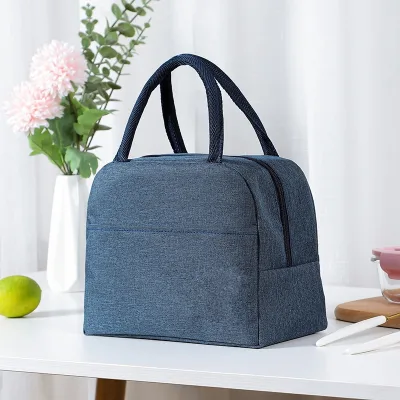


Student's Simple Portable Insulated Lunch Bag
$0.36 - $0.45
MOQ: 230 Pieces
Jinhua Hengyang Cross-Border Trade Limited Liability Company
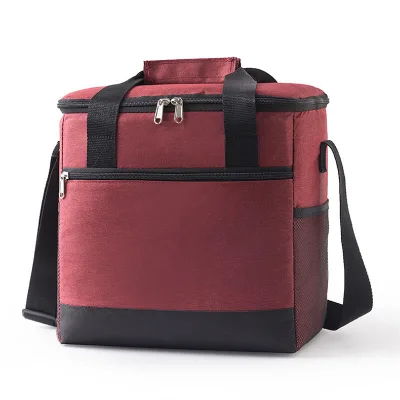
Comprehensive Sourcing Guide
Strategic Sourcing Guide for Insulated Reusable Lunch Bags
Understanding Product Attributes and Technical Specifications
When sourcing insulated reusable lunch bags, buyers must first distinguish between the various technical configurations available in the market. The core product category encompasses a wide range of designs, from compact single-serve carriers to larger multi-person coolers. Based on observed market data, these products are frequently categorized by their intended usage, such as camping, traveling, shopping, or general leisure. A critical technical distinction lies in the material composition. The supply chain offers options ranging from Polyester to Canvas, each presenting different durability and aesthetic profiles. Polyester variants are often selected for their water-resistant properties and ease of cleaning, while Canvas options provide a more rugged, textured appearance suitable for outdoor environments.
The structural integrity of the bag is defined by its insulation and lining. High-performance units typically feature PEVA lining, which serves as a critical barrier against moisture and helps maintain internal temperatures. The hardness of the product is another vital specification; buyers may encounter options labeled as "Soft" or "Medium Soft," which influence the bag's ability to hold shape when empty versus when fully loaded. For instance, a "Soft" classification suggests a flexible structure ideal for packing into tight spaces, whereas "Medium Soft" offers a balance between flexibility and structural support.
Dimensions and capacity vary significantly across the product range. Specific model observations indicate standard sizes such as 10.2 x 8.7 x 4.5 inches or 11.0" H x 10.0" W x 3.6" D. However, the market also supports fully customized dimensions, with some suppliers offering standard packaging sizes like 16.54" x 0.79" x 8.66" or larger configurations up to 12.09 x 10.98 x 2.44 inches. Capacity is often categorized by the number of persons served, with specific models designed for "≤2 Persons" or medium capacity needs. The closure mechanism is predominantly a Zipper, ensuring a secure seal to retain temperature and prevent spillage. Additionally, the presence of a Top Handle is a common feature, facilitating portability, while some designs include a Single Compartment layout to organize contents efficiently.
Compliance, Certification, and Safety Standards
Navigating the compliance landscape for insulated lunch bags requires a careful review of material safety and manufacturing standards. While the core product category does not always mandate specific third-party certifications for basic functionality, buyers should verify the safety of materials used in the lining and outer fabric. The supply chain data references potential compliance frameworks such as OEKO-TEX and REACH, which are relevant for assessing the absence of harmful substances in textiles and plastics. However, these should be treated as background considerations rather than guaranteed attributes of every listed product.
Buyers must explicitly request documentation regarding the safety of the PEVA lining and the Polyester or Canvas outer materials. Since these products are intended for food contact, verifying that the materials do not leach chemicals into food items is paramount. The standard for product dimensions, such as the 10.6"X6.7"x7.1" or 16.54" x 0.79" x 8.66" specifications, serves as a baseline for quality control but does not inherently imply safety certification. Instead, the buyer should verify that the manufacturing process adheres to the stated standards for the specific model, such as the I1225 or CLB2025 series, to ensure consistency.
Furthermore, the printing process, which often includes Gravure printing and Laminating, must be scrutinized for the use of non-toxic inks. The presence of custom logos and fashion elements like Stitching Bags requires that the printing and stitching processes do not compromise the integrity of the insulation or the safety of the food contact surfaces. Buyers should not assume that a product labeled as "Customized" automatically meets international safety standards; rather, they must request specific test reports or declarations of conformity for the specific batch being ordered.
Cost Drivers and Pricing Dynamics
The pricing structure for insulated reusable lunch bags is influenced by a complex interplay of material costs, customization levels, and order volume. The observed market price range spans from 0.2 to 34.9 USD, reflecting the vast diversity in product quality and complexity. At the lower end of the spectrum, products are likely simple, non-insulated or lightly insulated carriers with minimal customization, utilizing standard Polyester or Canvas materials. Conversely, the higher price points correspond to bags with advanced insulation features, custom dimensions, and complex printing processes like Laminating and Gravure.
Order Volume is a primary driver of unit cost. The Minimum Order Quantity (MOQ) ranges from 1 to 1000 units, with specific models like SU-CRB-003 or SU-CLB-004 potentially carrying an MOQ of 500PCS. Buyers purchasing at the lower end of the MOQ spectrum will face higher per-unit costs due to the fixed overheads of setup and production. As volume increases, economies of scale typically reduce the unit price. However, the cost is also heavily impacted by the "Customization" factor. Products requiring custom sizes, specific color combinations like Red or Black, and unique branding elements will incur additional tooling and setup fees.
Packaging requirements also contribute to the final cost. Standard packaging options include "1 PC Flat Into a Polybag" or "OPP Bags," which are cost-effective. However, bulk packing configurations, such as "100PCS/CTN" with specific gross weights like "28.7 Lbs," or custom carton dimensions like "21.65"" X 21.65"" X 19.69"," add to the logistics and material expenses. Buyers must weigh the cost of premium packaging against the need for product protection during transit. Additionally, the weight limit of the product, often exceeding 10 kg for larger units, affects shipping costs, which are a significant component of the total landed cost for international procurement.
Typical Applications and Usage Scenarios
The versatility of insulated reusable lunch bags makes them suitable for a wide array of applications, ranging from daily commuting to extended outdoor adventures. The "Usage" attribute frequently cites "Camping & Traveling" and "Shopping," indicating that these products are designed to bridge the gap between utility and lifestyle. For the "Camping & Traveling" segment, the "Medium Soft" hardness and "PEVA Lining" are essential features to maintain food safety in variable environmental conditions. The "All" Season designation suggests that these bags are engineered to perform effectively in both warm and cold climates, making them a year-round solution for consumers.
In the "Shopping" context, the "Handled" type and "Top Handle" design are critical for carrying groceries or market purchases. The "Single Compartment" layout is particularly useful for separating fresh produce from dry goods or keeping beverages cool. For "Leisure" and "Trend" oriented users, the aesthetic elements such as "Stitching Bag" fashion details and available colors like Red or Black become primary decision factors. The "Unisex" gender classification ensures that the product appeals to a broad demographic, making it a viable option for corporate gifting or promotional campaigns.
The capacity of the bag also dictates its application. Models designed for "≤2 Persons" are ideal for individual use or small family outings, while larger units with "Medium" capacity can serve groups or larger families. The "Outdoor" suitability further expands the use case to include picnics, beach trips, and sporting events. Buyers should consider the specific environment in which the bag will be used to select the appropriate material and insulation level. For instance, a bag intended for heavy-duty outdoor use might require a more robust Canvas material compared to a lightweight Polyester option for urban commuting.
Supplier Evaluation and Operational Capabilities
Evaluating potential suppliers requires a deep dive into their operational capabilities, particularly regarding customization and production flexibility. The supply chain data indicates that "Customization" is a widely available feature, allowing buyers to tailor products to specific brand requirements. However, the extent of this customization varies. Some suppliers offer "Customized" standard dimensions and sizes, while others provide specific model numbers like I1225, CLB2025, or SU-CLB-004 that may have fixed specifications. Buyers must clarify the scope of customization before placing an order to avoid misunderstandings regarding lead times and costs.
Production lead times are another critical factor in supplier selection. The "Sample Time" is observed to be 5-7 days, which is a standard benchmark for prototyping and design approval. However, the full production lead time for bulk orders is not explicitly defined in the provided data and should be negotiated based on the order volume and complexity. Suppliers with an MOQ of 500PCS may have different production schedules compared to those accepting orders as low as 1 unit. Buyers should inquire about the supplier's capacity to handle rush orders and their track record for meeting delivery deadlines.
Geographic origin is a significant consideration, with the majority of products originating from China. This location offers competitive manufacturing costs but requires careful management of logistics and import regulations. Buyers should verify the supplier's ability to provide accurate shipping documentation and their experience with international trade compliance. The "Gross Weight" of the packaging, such as "<0.1 kg" for individual units or "28.7 Lbs" for cartons, impacts freight costs and should be factored into the total procurement budget. Additionally, the "Printing Process" capabilities, including Gravure and Laminating, should be assessed to ensure the supplier can deliver the desired print quality and durability.
Quality Control and Long-Term Procurement Strategy
Establishing a robust quality control (QC) protocol is essential for maintaining product consistency and brand reputation. Given the variations in material hardness, insulation lining, and printing processes, buyers should implement a multi-stage QC approach. This includes pre-production sample approval, in-process inspections during manufacturing, and final random inspections before shipment. Specific attention should be paid to the integrity of the Zipper closure and the durability of the stitching, as these are common points of failure. The "Weight Limit" of ">10 kg" for certain models should be tested to ensure the bag can withstand the intended load without tearing or deforming.
Long-term procurement strategies should focus on building a reliable supply chain that can adapt to changing market demands. Buyers should consider the scalability of their suppliers, ensuring they can increase production volumes as demand grows without compromising quality. The availability of "Customized" options allows for product differentiation, but buyers must manage the complexity of maintaining multiple SKUs. Standardizing certain elements, such as the "Carton" packing method or the "PEVA Lining" specification, can streamline the procurement process while still allowing for brand-specific customization.
Finally, buyers should monitor the market for emerging trends and technologies that could impact product performance. The "Fashion Element" of "Stitching Bag" suggests that aesthetic trends play a role in product selection, and suppliers who can quickly adapt to these trends will be more valuable partners. By maintaining open communication with suppliers and conducting regular performance reviews, buyers can ensure a steady supply of high-quality insulated reusable lunch bags that meet both functional and aesthetic requirements. This proactive approach minimizes risks and maximizes the value of the procurement investment over the long term.
FAQs
What materials are used for insulated reusable lunch bags?
These bags are commonly made from Polyester or Canvas. Polyester offers water resistance while Canvas provides a rugged texture suitable for outdoor environments.
Can buyers request custom dimensions for these lunch bags?
Yes, customization is available for dimensions and sizes. Some models support fully customized specifications while others follow standard measurements like 10.2 x 8.7 x 4.5 inches.
How is the insulation lining constructed in these bags?
The bags typically feature PEVA lining to maintain internal temperatures and block moisture. This lining works with the outer material to ensure food safety during transport.
What is the typical minimum order quantity for these products?
The minimum order quantity ranges from 1 to 1000 units depending on the supplier. Specific models may require an MOQ of 500 pieces for custom branding orders.
Which closure types are standard for these lunch bags?
A Zipper closure is the predominant type used to ensure a secure seal. This design helps retain temperature and prevents spillage during travel or shopping.
How long does it take to receive a sample of these bags?
The sample time is typically 5 to 7 days for prototyping and design approval. This allows buyers to verify quality before committing to a bulk production order.