Source Silicone Hot Melt Glue Stick for woodworking, packing, and footwear
Explore 30 listings of Silicone Hot Melt Glue Stick options suitable for woodworking, packing, and footwear applications. Buyers can compare specifications like model numbers, packaging types, and origin locations to find the right adhesive solution.
Key considerations
Products List




Comprehensive Sourcing Guide
Strategic Sourcing Guide for Silicone Hot Melt Glue Stick Procurement
Understanding Product Variability and Technical Specifications
When sourcing a Silicone Hot Melt Glue Stick, buyers must first navigate the significant variability in product definitions found in the global market. While the core keyword implies a specific chemical composition, the actual product attributes observed in current listings reveal a broader category of thermoplastic adhesives. The supplied data indicates that products labeled as "Hot Melt Glue Stick" or "Hot Melt Adhesive Stick" often feature a "Main Agent Composition" of "Thermoplastic Resin" rather than pure silicone. This distinction is critical for procurement specialists, as thermoplastic resins and silicone polymers exhibit different thermal behaviors, bonding strengths, and chemical resistances.
The physical morphology of these adhesives varies across suppliers. Some listings describe the product as a "Solid-State" material, which aligns with the traditional stick form factor used in hot melt guns. Conversely, other entries list the morphology as "Solvent" or describe the appearance as a "Light Yellow Viscous Liquid," suggesting that the search term may also encompass liquid hot melt adhesives or formulations that require specific application equipment. Buyers must verify the exact physical state of the product before ordering. The "Processing Service" is frequently noted as "Moulding," indicating that the sticks are extruded or molded into specific shapes, such as the "Round" shape observed in some product attributes.
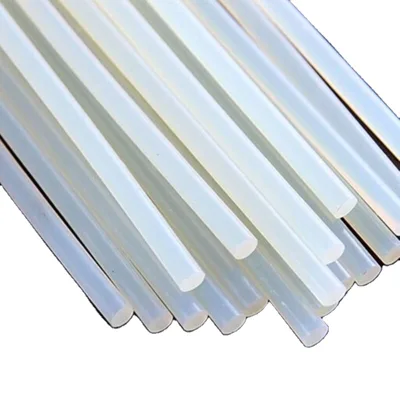
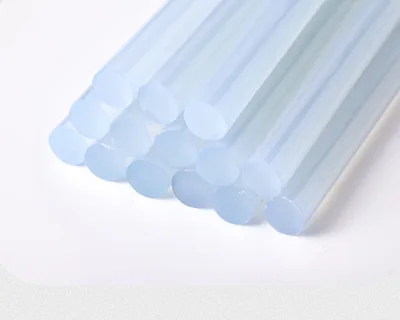
Color options are diverse, with listings showing "Yellow," "White," "Red," and "Clear" variants. The "Clear" or "White" options are generally preferred for applications where adhesive visibility is undesirable, such as in "Woodworking" or "Packing." The "Composition" is broadly categorized as "Organic Material," and the "Bonding Function" is often highlighted as "High Temperature Resistant Adhesive." However, the specific chemical resistance to heat and solvents must be confirmed against the intended application environment, as the "High Temperature" claim is a functional observation rather than a standardized metric.
Compliance, Certification, and Chemical Identification
Compliance verification is a paramount step in the procurement of industrial adhesives, particularly when the product is intended for use in regulated industries like "Automobile," "Construction," or "Footwear & Leather." The provided data explicitly lists "GS" as a certification attribute for certain products. GS certification, which stands for "Geprüfte Sicherheit" (Tested Safety), is a German safety mark indicating that the product meets specific safety standards. This is a high-confidence fact that buyers can reference when evaluating suppliers who claim this certification.
Beyond the GS mark, the data references "RoHS" and "REACH" in the low-confidence background section. While these are standard environmental directives for the European market, the provided text does not confirm that every listed product satisfies these requirements. Therefore, procurement teams must treat these as verification targets rather than guaranteed attributes. Buyers should request specific test reports or certificates of compliance to confirm that the "Thermoplastic Resin" and "Antioxidant" components do not contain restricted substances under RoHS or REACH regulations.
Chemical identification is another layer of compliance. Some product listings provide specific regulatory numbers, such as "CAS No.: 681 32-00-3" and "Einecs: 244-360-9." These identifiers are essential for safety data sheet (SDS) verification and customs clearance. However, the presence of these numbers in one listing does not guarantee that all "Hot Melt Glue Sticks" share the same chemical profile. The "Main Agent Composition" is identified as "Thermoplastic Resin," but the specific resin type (e.g., EVA, PO, or APAO) is not universally defined in the provided text. Buyers must request the full chemical composition from the supplier to ensure compatibility with their manufacturing processes and to verify that the adhesive does not contain hazardous substances prohibited in their target markets.
Cost Drivers and Pricing Dynamics
The economic landscape for sourcing hot melt glue sticks is influenced by several distinct factors, including raw material volatility, packaging standards, and order volume. The observed price range in the market is between 0.01 and 15 USD. This wide disparity suggests that the price is not solely determined by the adhesive itself but is heavily influenced by the unit of measurement, packaging type, and the specific formulation. A price of 0.01 USD likely corresponds to a single unit or a very small sample, whereas the 15 USD figure may reflect a bulk package or a specialized high-performance formulation.
Packaging plays a significant role in cost calculation. The data shows various packaging configurations, including "1kg Meltable Film Packaging," "Carton," "Bag/Carton," and standard weights like "20 kg" or "25kg." The choice of packaging affects the total landed cost, as heavier or more robust packaging may incur higher shipping fees. Additionally, the "Selling Units" are listed as "Single item" for some products, while others are sold in bulk. Buyers should clarify whether the quoted price is per kilogram, per stick, or per carton to avoid budgeting errors.
Minimum Order Quantity (MOQ) is another critical cost driver. The observed MOQ range spans from 1 to 18,000 units, with specific listings showing an MOQ of "1000kgs" for certain bulk formulations. This variation allows flexibility for small-scale prototyping or large-scale industrial production. However, the "Customization" attribute being "Available" often comes with a higher MOQ threshold. Suppliers may charge a premium for custom colors, shapes, or formulations, which can impact the unit cost. Buyers should negotiate based on their projected annual volume to secure more favorable pricing tiers, keeping in mind that the "Standard" is often "Customizable," which implies that standard off-the-shelf products may be more cost-effective than bespoke solutions.
Typical Applications and Performance Expectations
The versatility of hot melt glue sticks is evident in the wide range of applications listed in the product data. These adhesives are utilized in "Woodworking," "Packing," "Footwear & Leather," "Fiber & Garment," "Construction," and "Automobile" industries. The "Bonding Function" is described as providing "Strong Adhesion," which is a key performance indicator for these materials. However, the specific performance requirements vary by industry. For instance, "Woodworking" applications may prioritize fast setting times and gap-filling capabilities, while "Automobile" applications might demand higher thermal stability and resistance to vibration.
The "Shelf Life" of the product is a crucial factor for inventory management. One specific listing indicates a shelf life of "2 Years," which is a valuable benchmark for buyers planning long-term storage. However, this should not be assumed for all products without verification. The "Appearance" is noted as "Light Yellow Viscous Liquid" in some contexts, while others are solid sticks. This discrepancy highlights the need to match the product morphology to the application equipment. For example, "Solid-State" sticks are typically used in manual or semi-automatic hot melt guns, whereas "Viscous Liquid" formulations may require pump systems or automated dispensing units.
The "Promoter Composition" includes "Antioxidant," which suggests that the product is designed to resist degradation during storage and application. This is particularly important for adhesives used in "Construction" or "Automobile" sectors where environmental exposure can be harsh. The "Characteristic" of "Strong Adhesion" is a general claim, but buyers should request specific shear strength or peel strength data to validate performance for their specific use case. The "Classification" as "Hot Melt" confirms the application method, but the specific temperature range for melting and application should be confirmed to ensure compatibility with existing machinery.
Supplier Evaluation and Quality Assurance
Evaluating suppliers requires a meticulous review of their production capabilities and quality control processes. The "Place of Origin" is listed as "Zhejiang, China" and "Shandong, China," indicating that the majority of suppliers are located in these major manufacturing hubs. These regions are known for their extensive chemical and adhesive manufacturing infrastructure. Buyers should verify the specific factory location to assess logistics costs and lead times. The "Processing Service" of "Moulding" suggests that suppliers have in-house extrusion or molding capabilities, which is a positive indicator of production capacity.
Quality assurance should focus on the consistency of the "Model Number" and "Brand Name." The data shows various model numbers such as "TK," "CGL-250701-14," "CGL-250908-20," "EG-B301," and "SK-3271." These identifiers help in tracking specific formulations. Buyers should ensure that the supplier provides a consistent model number for repeat orders to avoid receiving different formulations that may have varying performance characteristics. The "Brand Name" is listed as "TK" in some cases, but many products are unbranded or generic. In such cases, the supplier's reputation and history become the primary quality indicators.
The "Standard" is often listed as "Customizable" or "20 kg" / "25kg," which refers to packaging standards rather than product quality standards. Buyers must request adherence to international quality management systems, such as ISO 9001, even if not explicitly listed in the product attributes. The "Customization" availability allows for tailored solutions, but it also introduces the risk of quality inconsistency. Therefore, buyers should insist on a pre-production sample and a post-production quality inspection report before committing to a large order. The "Appearance" and "Color" consistency should be verified against a physical standard to ensure that the final product meets the visual requirements of the end application.
Long-Term Procurement and Supply Chain Resilience
Long-term procurement strategies for hot melt glue sticks must account for supply chain resilience and the potential for product evolution. The "Customization" attribute being "Available" suggests that suppliers are willing to adapt their formulations to meet changing market needs. However, this flexibility can lead to changes in the "Main Agent Composition" or "Promoter Composition" over time. Buyers should establish a formal change management process with their suppliers to ensure that any modifications to the product formula are communicated and approved before implementation.
The "Lead Time" is not explicitly provided in the data, but the "MOQ" range of 1 to 18,000 units implies that suppliers can accommodate both small and large orders. For long-term contracts, buyers should negotiate fixed lead times and capacity reservations to mitigate the risk of supply disruptions. The "Shelf Life" of 2 years provides a buffer for inventory planning, but buyers should implement a first-in, first-out (FIFO) system to ensure that older stock is used before it degrades.
Finally, the "Application" diversity means that a single supplier may not be able to meet all of a buyer's needs. For example, a supplier specializing in "Woodworking" adhesives may not have the expertise to produce high-performance "Automobile" grade adhesives. Buyers should consider a multi-sourcing strategy to ensure redundancy and to leverage the specific strengths of different suppliers. The "Place of Origin" in China offers cost advantages, but buyers should also evaluate the geopolitical and logistical risks associated with importing from this region. Establishing a local inventory or working with a trading partner who has a presence in the destination market can help mitigate these risks and ensure a steady supply of critical adhesive materials.
FAQs
What is the main agent composition of these glue sticks?
The main agent composition is thermoplastic resin, not pure silicone. This distinction affects thermal behavior and bonding strength compared to silicone polymers, so verify the specific resin type before ordering for specialized applications.
Which certifications are confirmed for these products?
GS certification is a high-confidence fact for certain listed products. While RoHS and REACH are mentioned in background data, they are not guaranteed for every item, so request specific test reports to confirm compliance for regulated industries.
Can I customize the color and shape of the glue sticks?
Customization is available for colors like yellow, white, red, and clear, as well as round shapes. However, custom orders often require higher minimum order quantities, so confirm the specific MOQ and pricing tiers before finalizing your design.
What is the typical minimum order quantity for bulk purchases?
The minimum order quantity ranges from 1 unit to 18,000 units depending on the supplier. Some bulk formulations specifically require an MOQ of 1000 kilograms, so clarify the unit of measurement and volume requirements with the vendor.
How long is the shelf life of the adhesive product?
One specific listing indicates a shelf life of two years for storage. This duration should not be assumed for all products without verification, as storage conditions and specific formulations can significantly impact the actual longevity of the adhesive.
Which applications are these hot melt adhesives suitable for?
These adhesives are suitable for woodworking, packing, footwear, leather, fiber, garment, construction, and automobile sectors. The bonding function provides strong adhesion, but you must confirm thermal stability and chemical resistance for your specific industrial environment.
Where are the primary manufacturing locations for these items?
Primary manufacturing locations include Zhejiang and Shandong provinces in China. These regions host extensive chemical and adhesive infrastructure, so verify the specific factory location to accurately assess logistics costs and potential lead times for your order.