Source International Class Sport Artificial Grass for sports, recreation, landscaping
Compare 30 listings of International Class Sport Artificial Grass from verified Chinese manufacturers. Buyers can evaluate specifications like height, density, and backing materials for sports fields, recreation areas, and landscaping projects.
Key considerations
Products List

Wholesale Synthetic Backyard Green Artificial Grass Football Sport Artificial Grass
$2.00 - $6.00
MOQ: 500 Square Meters

High Quality Realistic Synthetic Grass for Football Artificial Plastic Sport Grass
$2.00 - $6.00
MOQ: 500 Square Meters

Wholesale Synthetic Grass Backyard Green Sport Football Artificial Grass
$2.00 - $6.00
MOQ: 500 Square Meters


Wholesale Hot Sale High Quality Artificial Grass Sports Football Artificial Grass
$2.00 - $6.00
MOQ: 500 Square Meters

Wholesale Sports Use Eco-Friendly Synthetic Artificial Grass for Football
$2.00 - $6.00
MOQ: 500 Square Meters
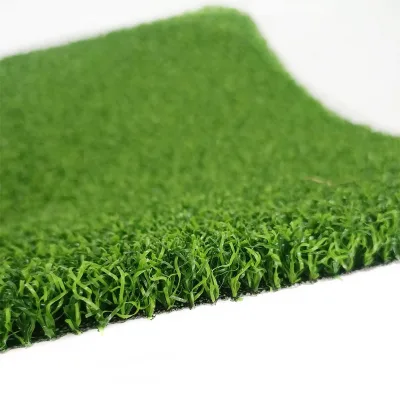


Realistic Synthetic Turf for Outdoor Sports Premium Artificial Grass
$1.18 - $6.48
MOQ: 300 Square Meters


Quality Artificial Grass with 6-8 Years Durability for Football Fields
$4.20 - $5.50
MOQ: 500 Square Meters

High-Performance Artificial Grass for Football Turf and Play Areas
$4.20 - $5.50
MOQ: 500 Square Meters

Premium Artificial Grass for Football Fields - Cool & Comfortable
$2.00 - $2.40
MOQ: 100 Square Meters


Cheap Chinese Artificial Football Grass for Synthetic Turf for Football
$7.90 - $8.60
MOQ: 500 Square Meters

Top Quality Environment Friendly 50mm Durable Synthetic Turf Artificial Grass for Football Fields
$5.30 - $8.80
MOQ: 500 Square Meters

50mm High Quality Synthetic Turf Artificial Sports Grass for Football Soccer Courts
$3.40 - $8.30
MOQ: 500 Square Meters


High Quality Environmental Turf Football Sport Gym Artificial Grass
$2.50 - $10.00
MOQ: 500 Square Meters

40mm W-Shape Football Grass Synthetic Grass Sport Grass Artificial Grass
$4.00 - $4.10
MOQ: 1000 Square Meters


Artificial Grass with Cheap Good Quality Football Field Artificial Synthetic Turf for Football
$4.70 - $5.00
MOQ: 1000 Square Meters

Artificial Grass of 50mm Sports for Football Field Synthetic Grass
$2.50 - $10.00
MOQ: 500 Square Meters


Factory Price International Class for Sport Grass PP Bag 2m*25m Sport Grass
$2.30 - $3.50
MOQ: 1000 Square Meters
Comprehensive Sourcing Guide
Strategic Sourcing Guide for International Class Sport Artificial Grass
Defining the Scope of International Class Performance
When sourcing artificial grass designated as "International Class," buyers must first understand that this classification implies a specific tier of performance suitable for high-intensity competitive sports rather than casual recreation. The supplied product data indicates that while some listings explicitly state "International Class," others reference "National Class," suggesting a variance in quality tiers that requires careful verification. The core material composition for these products typically involves Polypropylene (PP) and Polyethylene (PE), which are selected for their durability and resistance to UV degradation. The "International Class" designation generally correlates with higher density specifications and more complex backing systems designed to withstand rigorous athletic movement. Buyers should not assume that all products labeled as "Artificial Turf" or "Football Grass" meet this specific standard; the distinction lies in the rigorous testing of shock absorption, surface friction, and pile resilience that international governing bodies often require.
Technical Specifications and Material Architecture
The technical architecture of international class sport turf is defined by a combination of yarn geometry, pile height, and density. Observed data reveals a range of heights, with specific models listed at 25mm and 30mm, indicating that taller piles are often preferred for sports requiring significant cushioning. The yarn form is critical; while some products feature "Straight Cut" filaments, others utilize a mix of "Straight Cut," "Curving," and "Curl" profiles to enhance natural ball roll and player footing. The cross-profile of the filament also varies, with "Arc Type," "Olive Type," and "Flat Type" profiles observed. For international sports applications, the Arc or Olive profiles are often preferred as they provide better vertical stiffness and recovery.
Density is a primary metric for distinguishing quality. The observed data lists densities ranging from 9,450 to 16,800 tufts per square meter (tufs/sqm). A higher density, such as the 16,800 tufs/sqm figure, typically indicates a more robust surface capable of withstanding heavy foot traffic without matting. The row spacing also varies significantly, with options including 3/16 inch, 3/8 inch, 3/4 inch, and 5/8 inch. Tighter row spacing generally contributes to a more uniform playing surface. Furthermore, the backing system is essential for stability; the data notes a "PP/SBR Latex" backing, which provides the necessary adhesion for the yarns while allowing for drainage. The ground cloth beneath the backing can be either "Grid" or "Complex," with the complex structure often offering superior dimensional stability and tear resistance.
Compliance Verification and Standard Alignment
Ensuring that the product meets international standards is a critical step that cannot be bypassed. The supplied facts mention that the product standard can be "Customized" or adhere to specific dimensional standards like "225m/250m/425m/450m." However, "International Class" implies adherence to external certifications from bodies such as FIFA, FIH, or World Rugby, which are not explicitly listed in the provided data. Buyers must verify that the supplier can provide third-party test reports confirming compliance with these specific international regulations. The data mentions "Grade: International Class" alongside "Grade: National Class," reinforcing the need to request documentation that proves the specific product batch meets the higher tier.
Additionally, the origin of the product is a factor in compliance. The data indicates origins in "China" and specifically "Shandong Binzhou." While this location is a major manufacturing hub, buyers should ensure that the specific factory has the capacity to produce to international export standards. The product model numbers, such as "ES-CA20211122A9," serve as unique identifiers that should be cross-referenced with the supplier's quality assurance logs. Without explicit certification data in the listing, the buyer must treat the "International Class" label as a claim that requires validation through sample testing and audit reports before finalizing a procurement contract.
Cost Drivers and Economic Factors
The cost of international class artificial grass is driven by several variables, including material composition, density, and customization levels. The observed price range of $1.18 to $15.50 USD per unit suggests a wide disparity, likely influenced by the specific application (sport vs. landscaping) and the complexity of the backing system. Higher density products, such as those at 16,800 tufs/sqm, will inherently cost more due to the increased volume of yarn and latex required. The "Filaments Twist Number," observed at 8,800 Dtex and 10,000 Dtex, also impacts cost; higher twist numbers generally indicate better durability and resilience, commanding a premium price.
Minimum Order Quantities (MOQ) are another significant economic factor. The data shows an MOQ range of 50 to 1,000 units, with a specific mention of 500 square meters for certain models. For large-scale sports facilities, the ability to negotiate MOQs based on total project area is crucial. The packaging method, listed as "Package/Rolls" or "Roll Package," also affects logistics costs. Products shipped in rolls of specific lengths (e.g., 25m or 50m) optimize shipping efficiency but may require on-site cutting and seaming, adding labor costs. Buyers should analyze the total landed cost, including freight, customs duties, and installation labor, rather than focusing solely on the unit price.
Typical Applications and Installation Requirements
The versatility of the observed products allows for multiple applications, ranging from professional sports to landscaping. The data explicitly lists occasions for "Sport," "Recreation," and "Landscaping." For international class sport applications, the turf is designed for football, soccer, and potentially other field sports requiring high durability. The "Without Sand" classification in some listings suggests these may be sand-free systems, while others imply the need for infill, which is a critical decision for sports performance. The base preparation is equally important; the data lists "Asphalt Base," "Cement," and "Gravel" as compatible substrates. Proper base preparation is essential to ensure the turf remains flat and prevents water pooling.
Installation specifications include a width of 2m or 4m, with customizable lengths. The "Customized" nature of the product standard allows for tailored dimensions to fit specific field sizes. However, the buyer must ensure that the seaming process maintains the integrity of the "Complex" or "Grid" ground cloth. For landscaping applications, the "Field Green" and "Multicolor" options provide aesthetic flexibility, but the "International Class" designation is primarily relevant for the sport-specific variants. The "3years" warranty mentioned in the data serves as a baseline expectation, but for high-traffic sports fields, buyers should seek extended warranty terms that cover wear and tear.
Supplier Evaluation and Quality Assurance
Evaluating suppliers requires a focus on their ability to deliver consistent quality across large orders. The "Brand Name: Custom" attribute indicates that many suppliers operate as OEM manufacturers, producing private-label goods. This is common in the industry but requires the buyer to establish strict quality control protocols. The "Customization: Available" feature is a double-edged sword; while it allows for tailored solutions, it also introduces variability. Buyers must define the exact technical parameters—such as yarn length (Medium or Long), height (25mm or 30mm), and density—before requesting a quote to avoid ambiguity.
Quality assurance should include a review of the supplier's production capabilities in Shandong Binzhou. Buyers should request factory audits to verify that the "International Class" products are manufactured on dedicated lines with appropriate quality control checks. The "Standard: 2mx25m or 4mx25m" indicates that the supplier has established production runs, but the "Customized" standard suggests flexibility. It is vital to confirm that the customization does not compromise the structural integrity of the "PP/SBR Latex" backing. Additionally, the "Product Name: Artificial Turf" is a generic term; buyers must ensure the specific product ordered matches the technical requirements for their intended sport.
Long-Term Procurement and Maintenance Considerations
Long-term procurement involves more than just the initial purchase; it encompasses the lifecycle of the turf. The "3years" warranty is a starting point, but buyers should consider the expected lifespan of the turf, which depends heavily on usage intensity and maintenance. The "Straight Cut" and "Curving/Curl" yarn forms affect how the turf recovers from compression. For high-traffic sports fields, a higher density and a more complex backing system will extend the service life. The "Row Spacing" and "Filaments Twist Number" also play a role in long-term performance; tighter spacing and higher twist numbers generally resist matting better over time.
Maintenance requirements vary based on the infill system. If the product is "Without Sand," it may require different cleaning protocols compared to sand-filled systems. The "Ground Cloth: Complex" backing offers better drainage, reducing the risk of mold and mildew, which is crucial for longevity. Buyers should plan for regular brushing to maintain the "Yarn Form" and prevent the fibers from matting down. The "Color: Field Green" and "Multicolor" options may fade over time, so UV resistance is a key factor in the material selection. Finally, the "Customizable" length and width allow for efficient replacement of damaged sections, but buyers must ensure that the supplier can provide matching batches for future repairs to maintain visual consistency.
Summary of Key Technical Parameters
To assist in the final selection process, the following table summarizes the critical technical parameters observed in the market data for International Class Sport Artificial Grass.
| Parameter | Observed Range/Options | Relevance to International Class |
|---|---|---|
| Material | PP, PE | Determines durability and UV resistance. |
| Density | 9,450 to 16,800 tufs/sqm | Higher density correlates with better performance. |
| Height | 25mm, 30mm | Affects cushioning and ball roll characteristics. |
| Yarn Form | Straight Cut, Curving, Curl | Influences natural feel and recovery. |
| Cross Profile | Arc, Olive, Flat | Arc/Olive preferred for sport stability. |
| Backing | PP/SBR Latex | Essential for yarn adhesion and drainage. |
| Base Compatibility | Asphalt, Cement, Gravel | Determines installation complexity. |
| Warranty | 3 years (Baseline) | Indicates manufacturer confidence in quality. |
| Origin | China (Shandong Binzhou) | Major manufacturing hub; verify factory audits. |
By rigorously evaluating these parameters and verifying the "International Class" claims through third-party testing, buyers can secure high-performance artificial grass that meets the demands of professional sports while ensuring long-term value and safety.
FAQs
What materials are used for International Class Sport Artificial Grass?
The materials used are typically Polypropylene (PP) and Polyethylene (PE). These materials are selected for their durability and resistance to UV degradation, ensuring the turf withstands high-intensity competitive sports and varied weather conditions.
Which density levels are available for international class sport turf?
Available density levels range from 9,450 to 16,800 tufts per square meter. Higher densities like 16,800 tufs/sqm indicate a more robust surface capable of withstanding heavy foot traffic without matting during rigorous athletic movement.
Can the product height be customized for specific sports requirements?
Yes, the product height can be customized, with observed options including 25mm and 30mm. Taller piles are often preferred for sports requiring significant cushioning, while specific heights influence ball roll and player footing characteristics.
What backing systems are used for international class artificial grass?
The backing systems typically consist of PP/SBR Latex. This combination provides the necessary adhesion for the yarns while allowing for effective drainage, which is essential for maintaining surface stability and preventing water pooling.
How does the yarn form affect the performance of the turf?
Yarn forms include Straight Cut, Curving, and Curl profiles to enhance natural ball roll and player footing. These variations influence how the turf recovers from compression and provide a more natural feel for athletes during play.
What are the standard packaging options for shipping this turf?
Standard packaging options include Package/Rolls or Roll Package configurations. Products are often shipped in rolls of specific lengths like 25m or 50m to optimize shipping efficiency, though lengths can be customized to fit specific field sizes.