Source Inverter VRF System for Household homes and offices
Find 30 Inverter VRF System for Household applications including residential villas, small commercial buildings, and office spaces. Compare specifications like cooling capacity, energy efficiency, and noise levels from verified Chinese manufacturers.
Key considerations
Products List


High-Efficiency 300kw Multi-Zone DC Inverter Vrf System for Commercial Spaces
$1500.00 - $2500.00
MOQ: 1 Pieces


Africa Market: LG High-Efficiency DC Inverter Vrf System for Hotels
$3300.00 - $14000.00
MOQ: 1 Pieces

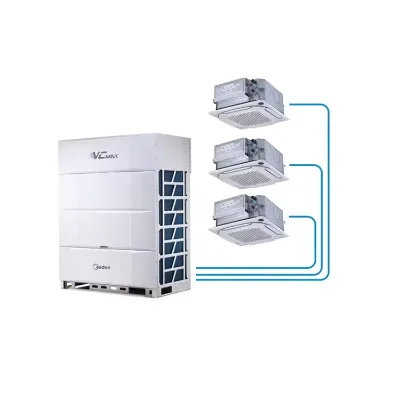
Midea Energy Saving DC Inverter VRF System with LEED Compliance and Global Approvals
$595.66 - $1129.71
MOQ: 1 sets
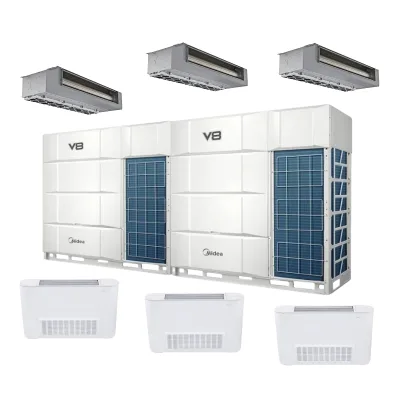
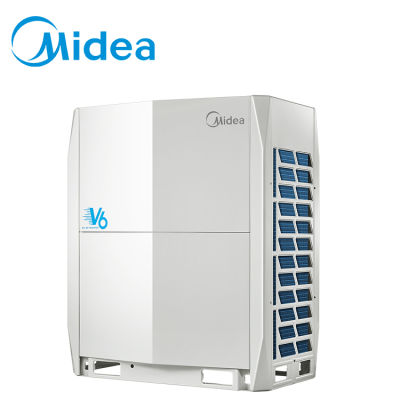

Ultra-Efficient Gree Gmv6 Vrf for Apartments with Inverter Technology
$1700.00 - $4500.00
MOQ: 1 Pieces


China Factory LG Brand Hot Selling Inverter Vrf Air Conditioning System
$500.00 - $2000.00
MOQ: 1 Pieces

Gree Vrv Vrf Inverter Air Conditioner Central Air Conditioning Units HVAC System
$1000.00 - $2999.00
MOQ: 1 Pieces

Comprehensive Sourcing Guide
Strategic Sourcing Guide for Inverter VRF Systems in Household Applications
Procuring an inverter Variable Refrigerant Flow (VRF) system for household applications requires a nuanced understanding of technical specifications, regulatory compliance, and supply chain reliability. Unlike standard split systems, VRF technology offers superior energy efficiency and zoning capabilities, making it a premium choice for modern residential complexes and large private residences. This guide synthesizes verified product attributes and industry standards to assist buyers in navigating the procurement landscape without relying on unverified marketing claims. The focus remains on objective data points, such as the observed operating voltages, energy efficiency ratings, and certification requirements found in current market listings.
Technical Architecture and Performance Specifications
The core of an inverter VRF system lies in its ability to modulate refrigerant flow based on real-time thermal loads. For household applications, the technology typically utilizes DC Inverter compressors, which allow for precise speed control and reduced energy consumption compared to fixed-speed alternatives. The observed product data indicates that these systems operate on AC power with specific voltage requirements, including 380/400 VAC for three-phase applications and single-phase options ranging from 208-230V to 220-240V. This versatility is critical for residential installations where power infrastructure may vary.
Performance metrics are paramount when evaluating system efficiency. The data suggests that effective units achieve an Energy Efficiency Ratio (EER) between 3.32 and 4.72, while the Coefficient of Performance (COP) ranges from 3.56 to 5.5. These figures indicate a high level of thermodynamic efficiency, particularly in heating modes. Furthermore, the systems are designed to handle a broad operating temperature range, functioning in cooling modes from -5°C to 55°C and in heating modes from -20°C to 30°C. This wide operational envelope ensures reliability in diverse climatic conditions, a necessity for household units that must perform year-round.
Refrigerant choice is another critical technical factor. Current listings identify R410A as the standard refrigerant for these units. Buyers must verify that the specific model they select adheres to local environmental regulations regarding refrigerant types, as some regions are transitioning toward lower Global Warming Potential (GWP) alternatives. The cooling capacity for these systems typically spans from 8kW to 61.5kW, while heating capacity ranges from 9kW to 69kW. This scalability allows for the customization of systems to match the specific square footage and thermal load of a residential property.
Compliance, Certification, and Regulatory Standards
Navigating the regulatory landscape is essential for ensuring that the installed VRF system meets legal and safety requirements. The observed product attributes confirm that compliant units often carry ISO, CE, and CCC certifications. The CE marking indicates conformity with health, safety, and environmental protection standards for products sold within the European Economic Area, while the CCC mark is mandatory for products sold in the People's Republic of China. The presence of the ISO certification suggests adherence to quality management systems, though buyers should verify the specific ISO standard (e.g., ISO 9001) on a case-by-case basis.
Energy efficiency standards are equally critical. The data highlights that high-performance units meet the China Energy Efficiency Standard Level 1, which represents the highest tier of energy conservation in the Chinese market. For international buyers, it is imperative to cross-reference these domestic standards with local energy codes, such as those from ASHRAE in the United States or the EU Ecodesign Directive. The observed noise levels provide another dimension of compliance; indoor units are noted for ultra-low noise operation, with specific indoor machine noise levels recorded at less than 23dB. This is a significant advantage for residential settings where acoustic comfort is a primary concern.
Cost Drivers and Economic Considerations
The total cost of ownership for an inverter VRF system is influenced by several factors beyond the initial purchase price. The observed price range in the market spans from 0 to 15,000 USD, though this wide variance likely reflects differences in capacity, brand positioning, and included accessories. Buyers should be aware that the initial capital expenditure is often higher for VRF systems compared to traditional split systems, but this is frequently offset by long-term energy savings due to the high COP and EER values.
The minimum order quantity (MOQ) for these systems is observed to range from 1 to 10 units. This flexibility allows individual homeowners or small contractors to procure single units without being forced into bulk purchases, although larger projects may benefit from negotiating volume discounts. The delivery time is a significant logistical factor, with standard lead times observed at 30 days. This timeline should be factored into project schedules to avoid delays in installation.
Packaging and shipping costs also contribute to the overall expense. The products are typically packed in wooden packages, pallets, PE bags, cartons, and corner protectors to ensure safe transit. The gross weight of units can be substantial, with specific observations noting weights around 215 kg to 225 kg depending on the model. These physical attributes necessitate careful planning for logistics, including the availability of appropriate lifting equipment and transport vehicles at the installation site.
Typical Applications and Installation Scenarios
Inverter VRF systems are uniquely suited for household applications that require multi-zone climate control. The "Central Air Conditioners" classification and the "Triple" output type suggest that these systems are designed to connect multiple indoor units to a single outdoor unit, allowing for independent temperature control in different rooms. This is particularly beneficial for large single-family homes, townhouses, or small apartment complexes where individual room comfort is a priority.
The operating voltage of 380V ~ 3n/50Hz/60Hz indicates that these systems are designed for three-phase power, which is common in larger residential buildings or commercial-residential hybrids. The ability to operate on both 50Hz and 60Hz frequencies makes them adaptable to different regional power grids. The "Cooling/Heating" capability ensures that the system provides year-round comfort, eliminating the need for separate heating and cooling equipment.
Installation complexity is a key consideration for VRF systems. The "Vector Control Transducer" principle and "PWM Control" switch mode imply a sophisticated electronic control system that requires skilled technicians for proper setup and commissioning. The "Net Weight" and "Gross Weight" specifications highlight the physical bulk of the equipment, which may require structural reinforcement or specific mounting locations on the building facade or roof.
Supplier Evaluation and Verification Protocols
When evaluating potential suppliers, buyers must prioritize transparency and the verification of product attributes against the provided data. The presence of specific model numbers such as "HOD," "ZTVT," and "CTVT" serves as a reference point for due diligence. Buyers should request detailed datasheets that explicitly confirm the model number, capacity, and efficiency ratings match the observed specifications.
Verification of certifications is non-negotiable. Buyers should ask for valid certificates for ISO, CE, and CCC, ensuring they are current and issued by recognized bodies. The "China Energy Efficiency Standard Level 1" claim should be supported by official test reports. Additionally, the "Condition: New" attribute must be confirmed through the supplier's warranty terms and return policies.
The supplier's ability to meet the 30-day delivery time and handle the specific packaging requirements (wooden packages, pallets) is also a critical evaluation metric. Buyers should inquire about the supplier's experience with household VRF installations and their capacity to provide technical support during the commissioning phase. The "Customization: Available" attribute suggests that suppliers may offer tailored solutions, but the scope and cost of these customizations must be clearly defined in the contract.
Quality Control and Long-Term Procurement Considerations
Ensuring the long-term reliability of an inverter VRF system requires a robust quality control strategy. The observed "Corrosion Durability: Higher" attribute suggests that the outdoor units are designed to withstand harsh environmental conditions, but buyers should verify the specific materials used, such as the type of coating on the heat exchanger fins. The "Lifetime: >20 years" claim is a significant selling point, but it should be understood as a design target rather than a guaranteed performance metric.
Maintenance and spare parts availability are crucial for long-term procurement. The "DC Inverter" technology and "Voltage Variable-Frequency Drive" components are complex and may require specialized replacement parts. Buyers should ensure that the supplier offers a comprehensive warranty and a clear supply chain for spare parts. The "Operating Temp. Range" and "Max.Esp: 85" specifications indicate the system's robustness, but regular maintenance is necessary to maintain these performance levels over the system's lifespan.
Finally, the "Power Supply" variability (208-230V, 220-240V, 380-415V) requires careful site assessment. The electrical infrastructure at the installation site must be capable of handling the specific voltage and phase requirements of the selected VRF model. Failure to match the power supply can lead to system failure or voided warranties. By rigorously verifying these technical and logistical details, buyers can secure a high-performance VRF system that meets the demands of modern household applications while ensuring compliance and long-term value.
FAQs
What certifications do these inverter VRF systems hold?
These systems hold ISO, CE, and CCC certifications. The CE marking ensures safety compliance for the European market, while CCC is mandatory for China. Buyers should verify specific certificate validity before purchase.
Can the system operate in extreme temperature ranges?
Yes, the unit operates in cooling from -5 to 55 degrees Celsius and heating from -20 to 30 degrees Celsius. This wide range ensures reliable performance in diverse climates for household applications year-round.
What is the minimum order quantity for these units?
The minimum order quantity ranges from 1 to 10 units. This flexibility allows individual homeowners to purchase single units without being forced into bulk purchases for small residential projects.
How long is the standard delivery time for these systems?
The standard delivery time is 30 days. Buyers must factor this lead time into their project schedules to avoid installation delays and ensure timely completion of the household HVAC setup.
Which refrigerant is used in these VRF systems?
The systems use R410A refrigerant. Buyers must verify that this type complies with local environmental regulations, as some regions are transitioning toward alternatives with lower global warming potential.
What is the indoor noise level of the unit?
The indoor machine noise is less than 23 decibels. This ultra-low noise level provides significant acoustic comfort, making the system suitable for quiet residential environments and bedrooms.