Source Food Grade Gas Cream Charger for Whipping, Desserts, and Beverages
Find 30 listings for Food Grade Gas Cream Charger with options in 8g, 640g, and 2000g sizes. Buyers can compare models like CK-580, brands such as Sokka or Hiwhip, and customization features for dessert tools and beverage applications.
Key considerations
Products List


Food Grade Cream Chargers 3.3L Disposable Gas Cylinder N2o Cream Charger
$12.50 - $13.50
MOQ: 3200 Pieces


Cream Charger 3.3L/2000g Food Grade Nitrous Oxide Cream N2o Gas Charger
$12.00 - $18.00
MOQ: 2000 Pieces


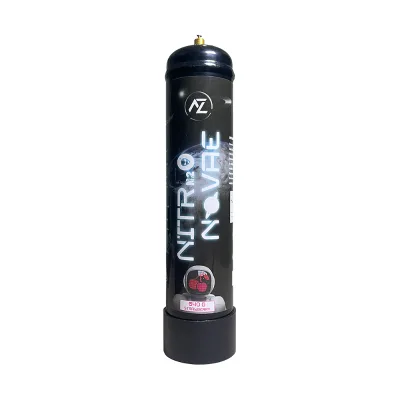


2.2L Cream Charger with Food Grade for Homeuse
$15.00 - $20.00
MOQ: 5000 Pieces
Shaoxing Safety Plus Fire Fighting Equipment Manufacturing Co., Ltd.

2.2L Cream Charger with Food Grade for Dessert Use
$15.00 - $20.00
MOQ: 5000 Pieces
Shaoxing Safety Plus Fire Fighting Equipment Manufacturing Co., Ltd.
Comprehensive Sourcing Guide
Strategic Sourcing Guide for Food Grade Gas Cream Chargers
Understanding Product Specifications and Variants
The core keyword "Food Grade Gas Cream Charger" refers to a specific class of industrial and culinary tools designed to dispense nitrous oxide (N2O) for whipping cream and creating foams in the food and beverage sector. When analyzing the available market data, it becomes evident that these products are not monolithic but exist in a spectrum of specifications tailored to different volumes and usage scenarios. The observed product models in the current supply landscape include distinct weight and volume classifications such as 8g, 640g, 580g, 2000g, 3000g, 3.3L, and 4.5L variants.
The 8g cream charger is the most ubiquitous unit, typically sold in individual packs or bulk boxes, often containing 6 pieces per box. This size is standard for professional kitchens and home use where small batches of whipped cream are required. In contrast, larger capacity units like the 640g, 580g, and 2000g models serve industrial applications or high-volume dessert production facilities. These larger units are often categorized under "cream chargers" with specific model numbers like "cream charger 640g" or "2000g Cream Charger." The distinction between weight (grams) and volume (Liters) in the product listings suggests that buyers must carefully verify whether the specification refers to the gas volume contained within the steel cylinder or the total weight of the unit.
Material composition is a critical observation point. The available data indicates that the primary material for these chargers is Carbon Steel. This material choice is fundamental to the product's ability to withstand the high internal pressure of compressed nitrous oxide. The physical attributes also vary by color, with observed options including Blue, Silver, and Pink. While color is often an aesthetic or branding choice, it does not alter the functional performance of the gas delivery. Furthermore, the packaging varies significantly; some units are individually packed, while others come in cartons with specific counts like "6PCS Per Box" or "2 PCS." Buyers must align their packaging requirements with their downstream distribution needs, as the "Customized" option for packing is frequently available.
Compliance, Purity Standards, and Safety Verification
Ensuring the safety and compliance of food-grade gas chargers is paramount, as these products come into direct contact with consumable items. The supplied data highlights specific purity levels, noting values such as 99.9%, 99.95%, and a broader range of 99.9%-99.999%. These figures represent the concentration of nitrous oxide within the charger. For food applications, high purity is non-negotiable to prevent the introduction of impurities that could affect the taste, texture, or safety of the whipped cream or foam.
When evaluating compliance, buyers should look for explicit statements regarding food-grade certification. While the provided context mentions a low-confidence background reference to "CE" certification, it is crucial not to treat this as a guaranteed attribute for every listed product. Instead, procurement teams must verify that the supplier can provide valid documentation proving the gas meets local food safety regulations, such as those from the FDA in the United States or EFSA in Europe. The standard "580g" and "640g" listed in the product attributes appear to be weight standards rather than safety certifications, so buyers should not assume these numbers imply regulatory approval without further verification.
The "Food & Beverage" application tag confirms the intended use, but it does not replace the need for specific food-grade gas certification. Buyers should request a Certificate of Analysis (CoA) for each batch to confirm the purity levels match the claimed 99.9% or higher. Additionally, the material safety of the carbon steel cylinder must be verified to ensure it does not leach harmful substances under pressure. The presence of "Customized" branding and "OEM Acceptable" logos suggests that many suppliers offer private label services, which often include custom compliance documentation. However, the buyer remains responsible for ensuring that the private label product meets the regulatory requirements of the destination market.
Cost Drivers and Pricing Dynamics
The pricing for food grade gas cream chargers is influenced by a complex interplay of factors, including material costs, volume, and customization levels. The observed price range in the market spans from $0.09 to $29.00 USD. This wide disparity indicates that the unit price is highly dependent on the specific model and the quantity ordered. The lower end of the spectrum likely corresponds to standard 8g chargers purchased in high volumes, while the higher end may reflect larger capacity units (e.g., 2000g or 4.5L) or specialized packaging configurations.
Minimum Order Quantity (MOQ) is a significant cost driver in this sector. The observed MOQ range extends from 4 units to 10,080 units. Suppliers often set higher MOQs for custom orders, such as those requiring specific branding, colors, or packaging. For instance, a standard 8g charger might have a lower MOQ, whereas a customized 640g unit with a specific logo might require an order of 1,000 pieces or more. The data explicitly mentions an MOQ of 1,000 PCS for certain customized items, which aligns with the general trend of higher volumes for private label services.
Buyers should also consider the cost implications of the "Customized" attributes. Options such as "Customized Flavor" or "Customized Color" may incur additional setup fees or higher per-unit costs. The "Sustainable" feature noted in the product attributes could also influence pricing, potentially adding a premium for eco-friendly packaging or manufacturing processes. When negotiating, buyers must balance the unit price against the MOQ to optimize cash flow. For example, ordering 10,080 units might yield a lower per-unit cost but requires significant capital investment and storage capacity. Conversely, smaller orders at the lower end of the MOQ range may result in higher per-unit costs but offer greater flexibility.
Typical Applications and Usage Scenarios
The primary application for these chargers is in the food and beverage industry, specifically for making desserts, whipped cream, and foams. The product attributes explicitly list "Bakeware," "Dessert Tools Making Cream," and "Cream Whippers" as usage categories. The 8g chargers are ideal for professional kitchens, cafes, and home bakers who require small, precise amounts of gas for immediate use. These are often used with handheld cream whippers to create light, airy textures in desserts.
Larger capacity chargers, such as the 640g, 580g, and 2000g models, are designed for industrial applications. These are typically used in large-scale dessert production facilities, catering services, or commercial beverage stations where continuous, high-volume output is necessary. The "Cookie Tools" and "Baking Tools & Accessories" classifications suggest that these chargers are integral to a broader range of baking and dessert preparation processes. The "Grape, Watermelon or Other" flavor options indicate that some chargers may be used for flavored foams or specialized dessert presentations, although the gas itself is typically odorless and tasteless, with flavoring added separately or through the product formulation.
The versatility of these products is further enhanced by the "Customized" nature of the branding and packaging. Suppliers offering "OEM ODM Private Label Service" allow businesses to create their own branded lines of cream chargers, which can be marketed to specific customer segments. This customization extends to the "Color" and "Logo," enabling companies to align the product with their brand identity. The "Stocked" feature implies that some suppliers maintain inventory for immediate shipment, which is beneficial for businesses with urgent procurement needs.
Supplier Evaluation and Selection Criteria
Selecting the right supplier for food grade gas cream chargers requires a rigorous evaluation process that goes beyond price comparison. The available data indicates that suppliers offer a range of brands, including "Sokka," "Hiwhip," and "Mosa," as well as "Customized" options. Buyers should prioritize suppliers who demonstrate transparency regarding their manufacturing processes and quality control measures. The presence of "OEM Acceptable" and "Logo: OEM Acceptable" attributes suggests that many suppliers are capable of producing private label goods, but the quality of these goods must be verified.
Key evaluation criteria should include the supplier's ability to provide consistent purity levels, as indicated by the 99.9% to 99.999% range. Buyers should request samples to test the gas quality and the structural integrity of the carbon steel cylinders. The "Customization" availability is a strong indicator of a supplier's flexibility, but it should not come at the expense of quality. Suppliers that offer "Sustainable" products may also be preferable for companies with environmental goals, provided the sustainability claims are substantiated.
The origin of the products is another critical factor. The data confirms that the products originate from China, which is a major manufacturing hub for these items. Buyers should verify the supplier's location and logistics capabilities to ensure timely delivery. The "Lead Time" is not explicitly provided in the data, so buyers must inquire about production and shipping timelines, especially for customized orders. Additionally, the "Services" offered, such as OEM and ODM, should be clearly defined to avoid misunderstandings regarding intellectual property and production responsibilities.
Quality Control and Long-Term Procurement Considerations
Maintaining high quality standards is essential for the long-term success of any procurement strategy involving food grade gas cream chargers. The "Purity" levels of 99.9% and above are critical, and buyers should implement a robust quality control protocol that includes batch testing and regular audits. The "Carbon Steel" material must be inspected for defects that could compromise the cylinder's integrity under pressure. The "Individual Packed" and "Carton" packaging options should be evaluated for their ability to protect the product during transit and storage.
Long-term procurement considerations involve building a sustainable relationship with suppliers who can consistently meet demand and quality standards. The "Customized" nature of the products means that buyers should establish clear specifications for branding, packaging, and product attributes to ensure consistency across orders. The "MOQ" of 1,000 PCS for some items suggests that buyers should plan their inventory levels carefully to avoid stockouts while minimizing holding costs.
Buyers should also consider the "Feature" of sustainability, which is listed as an attribute. This could involve using recyclable packaging or sourcing from suppliers with environmentally friendly practices. The "Stocked" availability of certain models allows for a just-in-time inventory strategy, reducing the need for large stockpiles. However, for customized orders, lead times may be longer, requiring advanced planning.
In conclusion, sourcing food grade gas cream chargers requires a balanced approach that considers technical specifications, compliance, cost, and supplier reliability. By leveraging the available data on models, materials, and customization options, buyers can make informed decisions that align with their operational needs and quality standards. The wide range of options, from 8g to 4.5L, and the availability of private label services, provide ample opportunities for businesses to find the right fit for their specific requirements.
FAQs
What materials are used for food grade gas cream chargers?
The chargers are constructed from carbon steel to withstand high internal pressure. This material ensures safety during the dispensing of nitrous oxide for food applications.
Which purity levels are available for these gas chargers?
Available purity levels range from 99.9% to 99.999% depending on the specific product model. Buyers should verify batch certificates to ensure the gas meets food safety standards.
Can I order customized packaging for bulk purchases?
Yes, customized packaging options are available for most product models. Suppliers offer individual packing or carton configurations like 6 pieces per box based on buyer requirements.
What is the minimum order quantity for custom branded chargers?
The minimum order quantity for customized items is typically 1000 pieces. Standard models may have lower MOQs, but branding and specific packaging usually require higher volume orders.
Which specifications are available for industrial use?
Industrial models include capacities such as 580g, 640g, 2000g, and 3.3L. These larger units are designed for high-volume dessert production and commercial beverage stations.