Source IP66 Wireless Radio Communication Mesh for Field, Fleet, and Site
Compare 29 IP66 Wireless Radio Communication Mesh units from verified Chinese manufacturers. Buyers can evaluate models with COFDM waveforms, mesh or PTP modes, and varying TX power levels for diverse industrial applications; compare the available evidence and request quotations based on your requirements.
Key considerations
Products List

ad hoc mesh network radios wireless mesh for airborne manet cofdm image repeater
$4000.00 - $5500.00
MOQ: 2 Pieces


COFDM Transmission mesh network radio datalink communication IP mesh MIMO transmission
$5000.00 - $7000.00
MOQ: 2 Pieces

tactical communication RF links IP mesh radio HF network MIMO solution
$7000.00 - $10000.00
MOQ: 2 Pieces


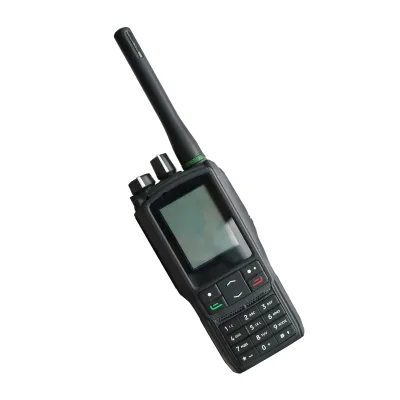


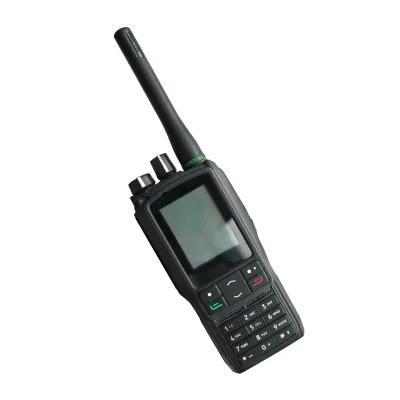
Data Radio: Mimomesh Wireless Mesh/Data Link-Multiple Handheld Series
$4336.00 - $4923.00
MOQ: 1 Pieces

Data Radio: Mimomesh Wireless Mesh/Data Link-Powerful Backpack Series
$6980.00 - $7715.00
MOQ: 1 Pieces


Data Radio: Mimomesh Wireless Mesh/Data Link-OEM/ODM Customized Module Series
$3159.00 - $7421.00
MOQ: 1 Pieces

Data Radio: Mimomesh Wireless Mesh/Data Link-Lightweight Airborne Series
$4750.00 - $7450.00
MOQ: 1 Pieces

Data Radio: Mimomesh Wireless Mesh/Data Link-Vehicular/Rack-Mounted Series
$6686.00 - $15430.00
MOQ: 1 Pieces


Comprehensive Sourcing Guide
IP66 Wireless Radio Communication Mesh Sourcing Guide
Procuring IP66 Wireless Radio Communication Mesh systems requires a disciplined approach to balancing rugged environmental resilience with complex network topology requirements. Buyers must first distinguish between devices that merely claim weather resistance and those that actively maintain connectivity in harsh field conditions. The IP66 rating indicates a high level of protection against dust ingress and powerful water jets, which is critical for outdoor deployments in telecommunications, public safety, and industrial monitoring. Understanding the specific mechanical and electrical safeguards built into the chassis is the first step in ensuring long-term reliability.
Beyond physical durability, the mesh architecture itself dictates how data flows across the network. Unlike traditional point-to-point links, mesh networks offer self-healing capabilities, allowing nodes to reroute traffic automatically if a connection fails. This redundancy is vital for mission-critical applications where downtime is unacceptable. Buyers should evaluate how the mesh protocol handles node addition and removal, as well as how it manages interference in crowded spectrum environments. The interplay between physical ruggedness and logical network resilience defines the true value of these systems.
Product Scope and Observed Listing Signals
The current market for wireless mesh radios presents a wide variance in specifications, with observed price ranges spanning from approximately $99 to $20,000 USD. This broad spectrum reflects differences in transmit power, bandwidth options, and intended use cases, ranging from simple data telemetry to high-definition video transmission. Minimum order quantities are typically low, often starting at just one or two units, which facilitates initial prototyping and small-scale pilot deployments. Buyers should carefully correlate price points with the specific technical capabilities required for their project to avoid overpaying for unnecessary features or under-specifying for critical needs.
Listing signals often highlight key performance indicators such as transmit power, which can vary significantly between models. For instance, some units offer 30dBm or 33dBm per channel, while higher-end models may provide 43dBm for extended range. Frequency bands also vary, with options covering 340-500MHz, 1000-1700MHz, 2000-2500MHz, and 4500-5000MHz. These variations directly impact propagation characteristics and regulatory compliance in different regions. Buyers must verify that the listed frequency bands align with local spectrum regulations and that the observed data throughput claims, such as up to 60Mbps in MIMO mode, are achievable in their specific deployment environment.
Technical Specifications to Verify
When evaluating technical specifications, buyers must prioritize the working mode and network capacity to ensure scalability. Common modes include Mesh, Point-to-Point (PTP), and Point-to-Multipoint (PTMP), with some devices supporting Ad Hoc configurations for rapid deployment. Network capacity is a critical metric, with typical setups supporting up to eight nodes, while advanced options may scale to 32, 64, or even 128 nodes. Understanding these limits is essential for planning network topology and ensuring that the system can handle the required number of endpoints without performance degradation.
Signal integrity and interface versatility are equally important considerations. RX sensitivity figures, such as -108dBm at 1.25MHz bandwidth, indicate the device's ability to receive weak signals, which is crucial for long-range or obstructed links. Buyers should also verify the available interfaces, which often include Ethernet, RS232, RS485, TTL, and specialized ports for talkback or GPS. The presence of multiple interface options allows for flexible integration with existing infrastructure. Additionally, confirming the supported bandwidths, ranging from 1.25MHz to 20MHz, helps in optimizing spectral efficiency and data rates according to specific application demands.
Compliance and Safety Documentation
Compliance documentation is non-negotiable for international procurement, as it ensures that equipment meets regional regulatory and safety standards. Buyers should verify that suppliers provide valid certifications such as CE, RoHS, and ISO, which attest to electromagnetic compatibility, hazardous substance restrictions, and quality management systems. These certifications are often listed alongside the product model, such as the RFMOD-302 or RFCN-332, and serve as a baseline for legal operation in various markets. Without proper certification, devices may face customs delays or be prohibited from use in regulated industries.
Safety and operational standards also extend to the physical design and environmental sealing of the units. The IP67 rating, often associated with ruggedized mesh radios, provides an additional layer of protection beyond the IP66 requirement, ensuring submersion resistance in extreme conditions. Buyers should request detailed technical datasheets that confirm these ratings through independent testing. Furthermore, verifying the power supply scope, typically DC 9-14V, ensures compatibility with existing power infrastructure. Proper documentation also includes information on the device's condition, ensuring that new units are delivered with all necessary accessories and protective packaging.
Cost Drivers and Commercial Terms
Several technical factors directly influence the cost of wireless mesh radio systems, with transmit power and bandwidth options being primary drivers. Higher transmit power, such as 43dBm compared to 30dBm, typically commands a premium due to the increased complexity of the RF components and thermal management requirements. Similarly, devices supporting wider bandwidths or advanced features like MIMO diversity may be priced higher than basic PTP units. Buyers should analyze the total cost of ownership, considering not just the unit price but also the potential for future expansion and maintenance.
Commercial terms also play a significant role in the procurement process, particularly regarding customization and support. Many suppliers offer customization options to tailor devices to specific frequency bands or interface requirements, which can affect lead times and pricing. Buyers should clarify whether the quoted price includes necessary accessories, such as antennas or mounting brackets, and whether installation support is available. Understanding the supplier's policy on returns, warranties, and technical assistance is crucial for mitigating risk. Clear communication about these terms helps prevent unexpected costs and ensures a smoother deployment process.
Supplier Qualification and Quality Control
Supplier qualification is a critical step in ensuring the reliability of wireless mesh radio systems. Buyers should assess the supplier's manufacturing capabilities, focusing on their ability to maintain consistent quality across production batches. Verification of ISO certification and other quality management standards provides confidence in the supplier's processes. Additionally, buyers should inquire about the supplier's experience in the wireless communications sector, as this often correlates with better technical support and product stability. A supplier with a strong track record is more likely to deliver products that meet specified performance criteria.
Quality control measures should be explicitly defined in the procurement agreement. Buyers should request information on incoming material inspections, in-process testing, and final product validation. For ruggedized devices, this may include environmental stress screening to verify IP ratings and structural integrity. Suppliers should also provide clear documentation on the testing procedures used to validate range and throughput claims. Establishing a robust quality control framework helps identify potential issues early in the production cycle, reducing the risk of deploying faulty equipment in the field.
Long-Term Procurement Checks
Long-term procurement success depends on the supplier's ability to provide ongoing support and product evolution. Buyers should evaluate the supplier's roadmap for future product updates, ensuring that current investments will remain compatible with emerging technologies and standards. This includes checking for firmware update capabilities that can enhance security or add new features over time. A supplier that actively develops its product line demonstrates a commitment to longevity and customer satisfaction, which is essential for maintaining a competitive edge in dynamic operational environments.
Additionally, buyers should establish clear channels for technical support and spare parts availability. In the event of hardware failure or network issues, rapid access to expert assistance and replacement components is vital. Suppliers should offer comprehensive warranty terms and clear procedures for returns or repairs. Regularly reviewing supplier performance against agreed-upon metrics helps maintain accountability and ensures that the partnership continues to deliver value. By focusing on these long-term factors, buyers can secure a reliable supply chain that supports their operational needs for years to come.
FAQs
What customization options are available for these wireless radios?
Customization is available for these wireless radios to meet specific project needs. Buyers can request tailored configurations for bandwidth, network capacity, and interface types. This flexibility allows integration into diverse systems like telephone, mobile, or server networks without requiring standard off-the-shelf limitations.
How does the mesh working mode function in this system?
The system supports Mesh, PTP, and PTMP working modes for versatile deployment. This allows nodes to communicate directly or through intermediaries, ensuring robust connectivity. The network capacity can scale up to 128 nodes, providing reliable data transmission across large areas with typical line-of-sight distances.
Which certifications do these wireless radio devices hold?
These devices hold ISO, GS, RoHS, and CE certifications for quality and safety compliance. Such standards ensure the products meet international regulatory requirements for electronic equipment. Buyers can rely on these certifications when sourcing for projects requiring strict adherence to global safety and environmental norms.
Can the device operate in silent mode for low visibility?
Yes, the device supports Silent Mode for LPD and LPI operations. This feature helps maintain low probability of detection and interception during sensitive missions. It is particularly useful for tactical applications where minimizing signal emission is critical for operational security and stealth requirements.
What is the typical transmission distance for line-of-sight conditions?
Typical line-of-sight distance ranges from 20km to 200km depending on the specific model selected. Some units achieve up to 200km while others offer 20km or 30km ranges. Non-line-of-sight distances vary from 1km to 5km, ensuring reliable communication in various terrain conditions.
How many network nodes can a single network support?
A single network can support up to 8 nodes typically, with options for 32, 64, or 128 nodes. This scalability allows the system to adapt to small teams or large-scale deployments. The network capacity is configurable to match the specific operational requirements of the user.
What interfaces are provided for data and control connections?
Interfaces include ETH, RS232, RS485, TTL, Talkback, GPS, USB, and WiFi ports. These connections support data, voice, and control signals for diverse applications. The multiple interface options ensure compatibility with various external devices like computers, servers, and mobile phones.