Source Iron Roofing Nails for Metal Sheets, Tile Roofs, and Wood Frames
Explore 30 listings for Iron Roofing Nails featuring galvanized finishes and smooth or twisted shanks. Buyers can compare specifications like length, diameter, and washer options to find the right fasteners for roofing sheet applications.
Key considerations
Products List




Comprehensive Sourcing Guide
Strategic Sourcing Guide for Iron Roofing Nails
Understanding Product Specifications and Material Variability
When sourcing Iron Roofing Nails, buyers must first navigate a complex landscape of technical specifications that vary significantly between suppliers. The core material for these fasteners is consistently identified as iron, with specific grades such as Q195 and Q235 frequently cited in product descriptions. These grades indicate the chemical composition and tensile strength of the raw material, which directly influences the nail's ability to hold fast under wind loads and structural stress. The manufacturing process often involves drawing the iron wire to specific diameters, with observed shank diameters ranging from 1.5mm to 5.5mm and head diameters spanning from 2mm to 12mm.
The physical dimensions of the nails are a critical factor in selection. The market data reveals a wide spectrum of lengths, from short 3/4" and 7/8" variants to longer 1-1/4", 1-1/2", and 1-3/4" options, with some product lines extending up to 3" or even 2000mm for specialized applications. This variability necessitates precise verification against the specific thickness of the roofing sheet and the underlying purlin structure. Buyers should not assume a single standard length applies to all projects; instead, they must match the nail length to the penetration depth required for the specific roofing material, whether it be metal sheeting or composite panels.
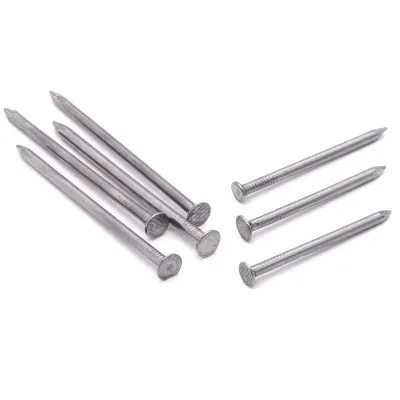
Shank design is another pivotal specification. The observed market offers both smooth and twisted (or spiral/screw) shanks. Smooth shanks are typically used where the roofing material is soft or where the nail is driven into a pre-drilled hole, relying on the head and washer for holding power. Conversely, twisted or spiral shanks provide superior grip in wood or composite substrates, reducing the likelihood of the nail backing out due to thermal expansion or vibration. The choice between these shank types should be dictated by the substrate material and the environmental conditions the roof will face.
Compliance Standards and Certification Verification
Navigating the regulatory and standards landscape is essential for ensuring that sourced roofing nails meet international safety and quality benchmarks. The product data indicates that manufacturers often adhere to a variety of national and international standards, including GB (Chinese National Standard), JIS (Japanese Industrial Standard), DIN (German Institute for Standardization), and ANSI (American National Standards Institute). While the specific standard applicable to a buyer's project depends on the local building codes, the presence of these certifications in supplier documentation is a strong indicator of quality control maturity.
Buyers must verify that the supplier can provide documentation confirming compliance with the specific standard required for their region. For instance, if a project is in the United States, compliance with ANSI standards is likely mandatory, whereas a project in Europe might require DIN certification. The data also highlights the existence of ISO certification for certain product lines, which serves as a general indicator of a manufacturer's adherence to international quality management systems. However, the presence of an ISO label does not automatically guarantee that the specific batch of nails meets the mechanical performance requirements of the local building code.
Furthermore, the grading of the nails is a critical compliance metric. The observed market includes nails with grades such as 4.8 and 10.9. These numbers refer to the tensile strength and yield strength of the fastener. A grade 10.9 nail is significantly stronger than a grade 4.8 nail, making it suitable for high-stress structural applications. Buyers must ensure that the grade selected matches the engineering specifications of the roof design. Relying on a lower-grade nail for a high-load application can lead to catastrophic failure, while over-specifying can unnecessarily inflate costs. Therefore, the verification process should include a request for mill test certificates or third-party test reports that explicitly state the grade and mechanical properties of the specific batch being purchased.
Surface Finishing and Corrosion Resistance
The longevity of Iron Roofing Nails is heavily dependent on their surface finish, which protects the underlying iron from corrosion caused by moisture, humidity, and atmospheric pollutants. The primary finishing processes observed in the market are galvanization and color galvanization. Galvanization involves coating the nail with a layer of zinc, which acts as a sacrificial anode to prevent rusting. The data also mentions "Yellow Galvanized" and "Zinc Plated" finishes, which are variations of the galvanization process that may offer different levels of corrosion resistance or aesthetic appeal.
In addition to zinc-based coatings, some products are described as having a polished finish. While polishing improves the aesthetic appearance and may reduce friction during installation, it does not inherently provide the same level of corrosion protection as galvanization. For roofing applications, where the nails are exposed to the elements, a galvanized finish is generally the minimum requirement. Buyers should inquire about the thickness of the zinc coating, as a thicker coating generally correlates with a longer service life, especially in coastal or industrial environments where salt or chemical corrosion is a concern.
The "Color Galvanized" option suggests a dual-layer approach where a colored coating is applied over the galvanized layer. This can be beneficial for aesthetic integration with colored roofing sheets, but it is crucial to verify that the color coating does not compromise the underlying corrosion protection. The data also notes the availability of nails with and without gum washers. The gum washer, often made of EPDM or similar rubber compounds, provides a secondary seal against water infiltration around the nail head. This feature is particularly important for preventing leaks in metal roofing systems, where water can easily track down the shank if not properly sealed.
Cost Drivers and Pricing Dynamics
The pricing of Iron Roofing Nails is influenced by a complex interplay of material costs, manufacturing processes, and order volume. The observed price range in the market is vast, spanning from $0.02 to $900 per unit or lot, reflecting the diversity of product types, from small quantities of specialized high-grade nails to bulk orders of standard galvanized variants. This wide range underscores the importance of understanding the cost drivers before engaging in negotiations.
The primary cost driver is the raw material, specifically the iron wire. Fluctuations in the global price of iron and steel directly impact the unit cost of the nails. Additionally, the grade of the material plays a significant role; higher-grade iron (e.g., Q235 vs. Q195) commands a higher price due to its superior mechanical properties. The surface finishing process is another major factor. Galvanized and color galvanized nails require additional processing steps, including pickling, galvanizing, and potentially painting, which increases the production cost compared to uncoated or polished nails.
Order volume is a critical determinant of the final price. The observed Minimum Order Quantity (MOQ) ranges from 1 to 10,000 units, indicating that suppliers are willing to accommodate both small trial orders and large-scale procurement. Buyers who can commit to larger volumes, such as the 25kg or 50kg cartons often cited in packing specifications, are likely to secure more favorable pricing. Conversely, smaller orders may incur higher per-unit costs due to the fixed costs of production setup and packaging.
Packaging also influences the overall cost structure. The data shows various packing options, including 25kg/carton, 50kg/bag, and coil packaging (e.g., 120PCS/coil). Specialized packaging, such as custom cartons or gunny bags, may incur additional charges. Buyers should consider the logistics of their supply chain when selecting packaging; bulk packaging is more cost-effective for shipping but may require more storage space and handling equipment at the destination.
Typical Applications and Installation Considerations
Iron Roofing Nails are primarily designed for securing roofing sheets to the underlying structure, but their application extends to various other construction scenarios. The most common use case is the attachment of metal roofing sheets to wooden or steel purlins. The choice of nail type depends on the specific roofing material; for example, nails with gum washers are essential for preventing leaks in metal sheeting, while smooth shanks might be preferred for softer materials where a tight grip is not required.
The data highlights specific applications such as "Roofing Sheet" and mentions the use of nails with features like "Flower Word" grooves or "Hinged Bolts" and "Common Bolts" in certain contexts. While the latter terms might refer to specific fastening systems or accessories, the core application remains the secure attachment of roofing materials. The length of the nail is critical here; it must be long enough to penetrate the roofing sheet and embed sufficiently into the purlin to provide a secure hold without protruding through the other side.
Installation considerations also include the compatibility of the nail with the driving tool. Twisted shank nails are often used with nail guns for faster installation, as the spiral design helps prevent the nail from spinning in the driver. Smooth shank nails may require different driving techniques or tools. Buyers should ensure that the selected nails are compatible with the installation equipment available on their construction sites to maximize efficiency and minimize labor costs.
Supplier Evaluation and Quality Control Protocols
Evaluating suppliers for Iron Roofing Nails requires a rigorous approach to quality control and due diligence. Given the wide range of observed specifications and standards, buyers must verify that the supplier has the capacity to consistently produce nails that meet the required technical and compliance criteria. This involves reviewing the supplier's production capabilities, quality assurance processes, and track record.
Key areas to investigate include the supplier's adherence to the stated standards (GB, JIS, DIN, ANSI) and their ability to provide test reports for mechanical properties such as tensile strength and hardness. The presence of ISO certification is a positive indicator, but it should be complemented by specific product testing data. Buyers should request samples of the nails to verify the surface finish, shank type, and dimensions against the order specifications.
Quality control protocols should also cover the packaging and labeling of the product. The data indicates various packing methods, and it is essential that the packaging protects the nails from damage during transit and clearly identifies the product specifications, including grade, length, and coating type. Suppliers who offer custom packaging or labeling can be valuable partners for buyers who need to streamline their inventory management or comply with specific project documentation requirements.
Long-Term Procurement and Supply Chain Resilience
Sourcing Iron Roofing Nails is not merely a transactional activity but a strategic decision that impacts the long-term performance and maintenance costs of the roofing system. Buyers should consider the reliability of the supplier's supply chain, their ability to scale production to meet demand fluctuations, and their commitment to continuous improvement in product quality.
The observed MOQ ranges and lead times (though not explicitly detailed in the data, implied by the range of 1-10,000 units) suggest that buyers should plan their procurement cycles carefully to avoid stockouts or overstocking. Establishing a long-term relationship with a reliable supplier can provide stability in pricing and supply, which is crucial for large construction projects with tight schedules.
Furthermore, buyers should monitor market trends and technological advancements in fastener technology. As building codes evolve and new roofing materials are introduced, the requirements for fasteners may change. A proactive approach to procurement involves staying informed about these changes and working with suppliers who can adapt their product lines to meet new standards. This ensures that the roofing system remains compliant and durable over its intended lifespan, minimizing the risk of premature failure and costly repairs.
In conclusion, sourcing Iron Roofing Nails requires a comprehensive understanding of technical specifications, compliance standards, and market dynamics. By carefully evaluating suppliers, verifying product quality, and considering long-term procurement strategies, buyers can secure high-quality fasteners that ensure the safety and longevity of their roofing projects. The diversity of options available in the market, from different grades and finishes to various shank designs, offers the flexibility to tailor the solution to specific project needs, provided that the selection process is grounded in rigorous verification and strategic planning.
FAQs
What materials are used to make Iron Roofing Nails?
These nails are primarily made from iron, specifically grades Q195 and Q235. The material choice ensures sufficient tensile strength for holding roofing sheets securely against wind loads and structural stress during installation.
Which surface finishes are available for corrosion protection?
Available finishes include galvanized, color galvanized, yellow galvanized, zinc plated, and polished options. Galvanized coatings provide essential sacrificial protection against rust, while polished finishes offer aesthetic appeal but less corrosion resistance.
Can I customize the shank type and washer features?
Yes, customization is available for shank types including smooth, twisted, spiral, or screw designs. Buyers can also select nails with or without gum washers to ensure water sealing or standard fastening based on their specific project needs.
What standards do these roofing nails typically comply with?
Products often comply with GB, JIS, DIN, and ANSI standards depending on the manufacturer. Some items also carry ISO certification, indicating adherence to international quality management systems for consistent production and safety benchmarks.
How are the nails packed for shipping and delivery?
Standard packing includes 25kg cartons, 50kg bags, or gunny bags with custom options available. Some coils contain 120 pieces per coil with 60 coils per carton, ensuring secure transport and easy handling at the construction site.
What is the typical price range for these fasteners?
The observed price range spans from 0.02 to 900 USD per unit or lot. Final costs depend heavily on order volume, material grade, surface finish complexity, and specific packaging requirements chosen by the buyer.
Which standards define the dimensions of these nails?
Dimensions are defined by standards such as GB, JIS, DIN, and ANSI with lengths ranging from 3/4 inch to 3 inches. Shank diameters vary between 1.5mm and 5.5mm to suit different roofing sheet thicknesses and structural requirements.