Source Irregular Coral Frag Plugs for aquariums, aquascaping, and reef tanks
Explore 30 listings for Irregular Coral Frag Plugs suitable for aquariums, aquascaping, and reef tank setups. Buyers can compare specifications like material, size, and origin to find the right components for their projects.
Key considerations
Products List





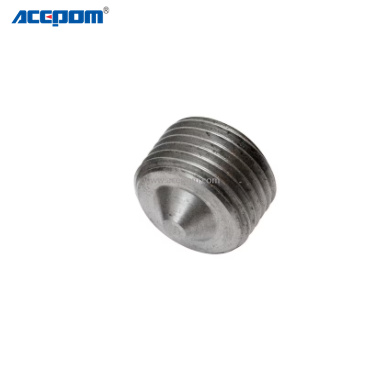


$0.11 - $0.21
MOQ: 2000 Pieces


Comprehensive Sourcing Guide
Strategic Sourcing Guide for Irregular Coral Frag Plugs
Understanding Product Definitions and Market Scope
The term "Irregular Coral Frag Plugs" refers to specialized mounting hardware used in marine aquaculture and reef aquarium maintenance. These components are designed to secure coral fragments (fragments) onto various substrates or structures within a marine environment. Unlike standard, uniform plugs, "irregular" variants often imply non-standard shapes, variable surface textures, or custom geometries intended to mimic natural reef structures or accommodate specific coral growth patterns. In the context of the provided product data, while the specific keyword "Irregular Coral Frag Plugs" does not appear verbatim, the dataset contains attributes relevant to marine-grade hardware, including "Nylon Hole Plugs," "Carbon Steel" fasteners, and "Silicone Rubber" materials.
Buyers must recognize that the market for these items often involves a mix of plastic, metal, and composite materials. The provided facts indicate a product type labeled "Skt" with models such as "SKT-30" and "SKT-25," which are described as "Nylon Hole Plugs" with the function of "Close Unneeded Chassis Holes." While these specific descriptions suggest industrial or automotive applications, the underlying material properties—such as the use of Nylon and Silicone Rubber—are critical for marine applications. The "Silicone Rubber" attribute found in the source data is particularly relevant for frag plugs, as silicone offers the necessary flexibility and chemical resistance required in saltwater environments.
When sourcing, buyers should distinguish between generic industrial hole plugs and those specifically engineered for biological stability in coral reefs. The "irregular" designation often necessitates a closer look at the "Customization" and "OEM" capabilities of suppliers. The data confirms that "Customization: Available" and "OEM: Accept" are standard offerings, suggesting that buyers can request specific irregular shapes or surface treatments. However, the "Condition: New" and "Non-Customized" attributes in the same dataset highlight that standard inventory may not meet the specific irregularity requirements of advanced aquaculture projects. Therefore, the sourcing strategy must prioritize suppliers who can bridge the gap between standard industrial components and specialized marine hardware.
Technical Specifications and Material Compatibility
Selecting the correct material is the most critical technical decision when sourcing frag plugs. The marine environment is highly corrosive, and the biological load of a reef tank requires materials that do not leach toxins. The supplied product facts list "Carbon Steel" with a "Grade: 8" and "Surface: Zp, Black, Geomet." While Carbon Steel is strong, it is generally unsuitable for direct contact with coral unless heavily coated or treated, as it is prone to rust. The "Grade 8" designation typically refers to high-strength bolts, but without a specific marine-grade coating certification, these may degrade in saltwater.
In contrast, the dataset explicitly mentions "Silicone Rubber" and "Nylon Hole Plugs." Silicone rubber is a superior candidate for frag plugs due to its inertness and flexibility. The "Surface Finishing: Glossy" attribute observed in the data may apply to silicone or coated metal parts, but for coral, a matte or textured finish is often preferred to encourage attachment. The "Diameter: 4-30mm" specification provides a useful range for sizing, indicating that plugs can be found for various coral fragment sizes.
The "Standard: DIN" and "Standard: skt" references in the data point to adherence to established manufacturing norms. For frag plugs, buyers should verify if the "DIN" standards apply to the dimensions and thread specifications, ensuring compatibility with standard frag racks. The "Thickness: 25mm-75mm" and "Refractory Temperature: 450" attributes, while likely referring to insulation or rock wool products in the dataset, serve as a reminder that thermal stability is a factor in manufacturing processes, even if less critical for the final product's use in water.
Buyers must verify the "Grade: A" and "High Strength" claims against the specific application. For coral, "High Strength" is less relevant than "Chemical Inertness." The "Using: Rock Wool for Plant" and "Material: Basalt" entries in the data are irrelevant to coral frag plugs and should be filtered out during the evaluation process. The focus must remain on the "Silicone Rubber" and "Nylon" options, ensuring the "Color: Black, White, Special Color" options do not contain UV-degrading pigments that could harm the coral.
Compliance, Certification, and Safety Standards
Compliance is paramount in the aquarium and aquaculture industry, as non-compliant materials can lead to the death of valuable coral colonies. The provided facts list "ISORoHS" and "CE" as certifications. While "ISORoHS" likely refers to ISO and RoHS (Restriction of Hazardous Substances) compliance, these are general industrial standards. For marine biological applications, buyers must verify if these certifications extend to food-grade or aquarium-safe standards. RoHS compliance ensures the absence of lead, mercury, and other heavy metals, which is a positive indicator for material safety.
The "Standard: DIN" reference suggests adherence to European engineering standards, which often implies rigorous quality control. However, DIN standards for mechanical fasteners do not automatically guarantee biological safety. Buyers should request specific test results regarding leaching, particularly for heavy metals and plasticizers, which are not explicitly detailed in the provided data. The "Quality: High Strength" claim is a performance observation, not a certification. It is essential to treat this as a marketing attribute rather than a verified safety metric.
The "Production Origin: Zhejiang, China" and "Shandong, China" locations indicate the manufacturing hubs. While these regions are known for manufacturing, the specific environmental regulations and quality control practices of the individual factory must be verified. The "Reply: Within 48hours" attribute suggests a responsive supply chain, which is beneficial for resolving compliance queries. Buyers should not assume that "CE" or "ISORoHS" covers marine biological safety; these certifications primarily address electrical and general product safety.
Cost Drivers and Pricing Dynamics
The observed price range in the dataset is "0-3000 USD," and the "Price: Reasonable Price" attribute suggests competitive market positioning. However, this range is extremely broad and likely encompasses a mix of low-cost industrial plugs and high-end custom marine hardware. The "MOQ: 10000PCS" and "MOQ: 1-100000" ranges indicate that suppliers may have significant volume requirements, which can drive up the unit cost for small buyers or lower it for large-scale operations.
Cost drivers for Irregular Coral Frag Plugs include material selection, customization complexity, and certification verification. Silicone rubber is generally more expensive than standard nylon or carbon steel due to material costs and processing requirements. The "Customized: Non-Customized" and "Customization: Available" attributes suggest that irregular shapes will incur a premium. The "Pack: 500PCS/Bag" and "prod_packing: 1000PCS/Bag" details highlight that packaging efficiency affects logistics costs.
The "Delivery Time: 2-3days" and "Quicky Production Time" attributes suggest that lead times can be short for standard items, but irregular or custom orders may require longer production cycles. The "Sample: Free" offer is a significant cost-saving factor for buyers, allowing them to test material quality before committing to large orders. Buyers should be aware that the "Reasonable Price" claim is subjective and should be benchmarked against the specific material and customization requirements.
Supplier Evaluation and Operational Capabilities
Evaluating suppliers requires a focus on their ability to meet the specific "irregular" requirements of the product. The data confirms "OEM: Accept" and "Customization: Available," which are positive indicators for suppliers willing to produce non-standard shapes. The "Type: Skt" and "Type: Hexagon Head" attributes suggest a diverse product portfolio, but buyers must ensure the supplier has specific experience with marine-grade components.
The "Location: Zhejiang, China" and "Shandong, China" origins are common manufacturing zones. Buyers should verify the supplier's specific facility capabilities, particularly regarding "Surface: Zp, Black, Geomet" treatments. While these surface finishes are listed, their suitability for marine environments must be confirmed. The "Reply: Within 48hours" attribute indicates a responsive communication channel, which is crucial for troubleshooting technical specifications.
The "Production Origin" and "Standard" attributes suggest a structured manufacturing process. However, the presence of unrelated products like "Rock Wool" and "Basalt" in the data indicates that the supplier may be a general trading company or a multi-product manufacturer. Buyers should verify if the supplier has a dedicated line for marine hardware or if they are sourcing from third parties. The "Quality: High Strength" claim should be backed by specific test data, as the provided facts do not include detailed performance metrics.
Quality Control and Long-Term Procurement
Quality control for frag plugs involves rigorous testing for material integrity, chemical resistance, and dimensional accuracy. The "Condition: New" attribute is a baseline requirement, but buyers must go further to ensure the products are free from manufacturing defects. The "Surface Finishing: Glossy" and "Edge: Square" attributes suggest attention to detail, but for irregular plugs, the edge finish must be smooth to prevent damage to coral tissue.
Long-term procurement considerations include the stability of the supply chain and the consistency of material quality. The "Delivery Time: 2-3days" and "Quicky Production Time" are attractive, but buyers must ensure these timelines are maintained during peak seasons. The "MOQ: 10000PCS" requirement may pose a challenge for small-scale buyers, necessitating a search for suppliers with lower minimums or the ability to consolidate orders.
The "Pack: 500PCS/Bag" and "prod_packing: Small Box, Color Box, PE Bag" options offer flexibility in storage and shipping. However, for marine applications, packaging must be waterproof and UV-resistant to prevent degradation during transit. The "Standard: 60~100kg/m3" and "Thickness: 25mm-75mm" attributes, while likely for insulation, highlight the importance of dimensional precision in the manufacturing process.
Buyers should establish a long-term relationship with suppliers who can provide consistent "High Strength" and "Grade A" materials. The "Sample: Free" policy is an excellent tool for initial quality assessment. By testing samples for chemical leaching and structural integrity, buyers can mitigate the risk of sourcing substandard products. The "Customized: Non-Customized" and "Customization: Available" attributes suggest that a hybrid approach may be necessary, combining standard items with custom orders to optimize cost and performance.
Comparative Analysis of Product Attributes
| Attribute Category | Standard Industrial (Carbon Steel/Nylon) | Marine-Grade (Silicone/Coated) | Relevance to Coral Frag Plugs |
|---|---|---|---|
| Material | Carbon Steel, Nylon | Silicone Rubber, High-Grade Nylon | Critical for biological safety |
| Surface Finish | Zp, Black, Geomet, Glossy | Matte, Textured, Inert Coating | Affects coral attachment |
| Certification | ISORoHS, CE, DIN | Aquarium-Safe, Food-Grade | Essential for toxicity prevention |
| Customization | Non-Customized (Standard) | Available (Irregular Shapes) | Required for specific coral needs |
| MOQ | 10,000 PCS | Variable (1-10,000) | Impacts cost for small buyers |
| Lead Time | 2-3 Days | 2-3 Days (Standard), Longer (Custom) | Affects project timelines |
| Origin | Zhejiang, Shandong, China | Same Regions | Quality varies by factory |
This table highlights the divergence between standard industrial products and those suitable for marine applications. The "Carbon Steel" and "Nylon" options, while present in the data, require careful verification to ensure they meet the "Silicone Rubber" standards necessary for coral health. The "Customization" and "MOQ" factors are the primary differentiators for buyers seeking "irregular" solutions.
Final Procurement Recommendations
Sourcing "Irregular Coral Frag Plugs" requires a meticulous approach that prioritizes material safety and customization capabilities over generic industrial specifications. Buyers should leverage the "Sample: Free" and "OEM: Accept" attributes to validate product quality before committing to large orders. The "ISORoHS" and "CE" certifications provide a baseline for safety, but specific marine-grade testing is essential. By focusing on "Silicone Rubber" and verified "Customization" options, buyers can ensure their frag plugs support the long-term health of their coral colonies. The "Reasonable Price" and "Quicky Production Time" attributes suggest a competitive market, but the "MOQ: 10000PCS" barrier may require strategic negotiation or consolidation. Ultimately, the success of the procurement depends on the buyer's ability to distinguish between standard industrial hardware and specialized marine components, ensuring that the final product meets the rigorous demands of the reef environment.
FAQs
What certifications do these plugs have for safety?
The products hold ISORoHS and CE certifications for general safety compliance. These standards confirm the absence of hazardous substances like lead, but buyers must verify if they specifically cover marine biological safety for coral applications.
Can I get free samples to test the material quality?
Yes, free samples are available for evaluation before placing a bulk order. This allows buyers to test material inertness and dimensions, ensuring the Nylon or Silicone Rubber options meet the specific needs of a reef aquarium environment.
Which customization options are available for irregular shapes?
Customization is available and OEM services are accepted for non-standard designs. While some items are listed as non-customized, suppliers can produce specific irregular geometries upon request, though this may affect the minimum order quantity requirements.
How fast can I expect delivery for standard orders?
Standard delivery times are typically 2 to 3 days for quick production runs. This rapid turnaround applies to in-stock items, but custom irregular shapes or large volume orders may require extended lead times depending on factory capacity.
What is the minimum order quantity for these plugs?
The minimum order quantity ranges from 1 to 10,000 pieces depending on the specific product model. Some listings indicate a standard MOQ of 10,000 pieces, while others may accommodate smaller trial orders starting from just one unit.
Which materials are used for the hole plugs?
Available materials include Nylon, Carbon Steel, and Silicone Rubber for various applications. Silicone Rubber is preferred for marine use due to its chemical resistance, while Carbon Steel offers high strength but requires specific coatings for saltwater environments.
What packaging options are provided for bulk shipments?
Packaging options include 500 or 1000 pieces per bag, as well as small boxes and color boxes. Customized packing is also available to ensure products remain protected during transit, which is critical for maintaining the integrity of the plugs.