Source ISO CE Hydrogen Gas Generator for New Energy, Pharmaceutical, and Chemical
Compare 30 listings of ISO CE Hydrogen Gas Generator models with varying voltages, flow rates, and purity levels. Buyers can evaluate specifications for applications in new energy, pharmaceuticals, and chemical industries.
Key considerations
Products List


Hydrogen Gas Generator Hydrogen Electric Generators Nitrogen Gas Generator
$888.00 - $1555.00
MOQ: 1 set


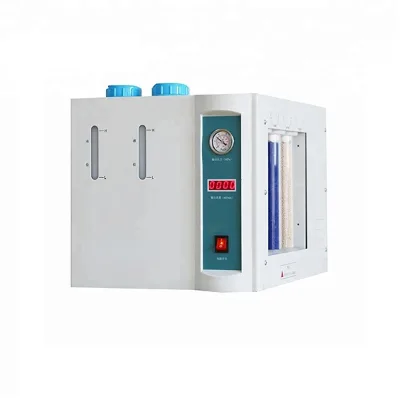

High Quality Hydrogen Gas Generator Oxygen Generator Hydrogen Air Generator
$10000.00 - $50000.00
MOQ: 1 Sets

Hot Sale High Purity Pem Industrial Hydrogen Generator Hydrogen Gas Generator
$10000.00 - $588000.00
MOQ: 1 Sets

High Productivity Industrial Pem Hydrogen Generator Price Hydrogen Gas Generator
$10000.00 - $588000.00
MOQ: 1 Sets

Factory Price Industrial Hydrogen Generator Hydrogen Air Oxygen Generator
$10000.00 - $588000.00
MOQ: 1 Sets


500kw Gas Generator Naturally Aspirated High Hydrogen Gas Generator
$210000.00 - $240000.00
MOQ: 1 Sets


Comprehensive Sourcing Guide
Strategic Sourcing Guide for ISO CE Hydrogen Gas Generators
Understanding the Technical Landscape of Hydrogen Oxygen Generators
When sourcing equipment under the core keyword of "ISO CE Hydrogen Gas Generator," buyers must first navigate a diverse technical landscape where product attributes vary significantly across different listings. The available data indicates that these machines are primarily categorized by their control mode, which ranges from manual operation to advanced CNC systems. This distinction is critical for procurement decisions, as the control interface directly impacts operational complexity and integration into existing automated workflows. Furthermore, the voltage specifications observed in the market are not uniform; listings explicitly mention AC380V, AC220V, and dual voltage options of 220V/110V. Buyers must verify the electrical infrastructure of their facility before selecting a unit, as a mismatch in voltage requirements can lead to immediate operational failure or safety hazards.
The physical dimensions and weight of these generators also present a wide spectrum of options. Some units are described with compact dimensions of 458x230x380mm and a weight of 23kg, making them suitable for laboratory environments or mobile applications. In contrast, other listings refer to larger industrial models with capacities and standards that suggest heavier, stationary installations. The production rate for hydrogen purity is a key technical differentiator, with some specifications claiming a range of 99.999% to 99.9999%. However, these figures should be treated as observed attributes of specific models rather than universal guarantees for all products in the category. Buyers should expect to see variations in hydrogen flow rates, with some models offering outputs between 320ml/Min and 520ml/Min, while others may support higher air flow capacities ranging from 3000ml/Min to 5000ml/Min.
The application fields for these devices are equally varied, spanning from new energy sectors to pharmaceutical, electronic, and chemical industries. The intended usage often dictates the necessary purity levels and flow stability. For instance, generators designed for gas chromatography or specific measuring ranges of 0-300ml/Min serve analytical purposes, whereas units intended for hydrogen and oxygen manufacturing focus on bulk production capabilities. The noise level is frequently cited as a low attribute, which is a significant consideration for facilities requiring quiet operation, such as research labs or clean rooms. Additionally, the temperature control range for certain models is specified as 0-45 C, indicating a need for environmental monitoring during operation.
Compliance Verification and Certification Standards
In the context of international procurement, the presence of ISO and CE certifications is a primary filter for supplier evaluation. The supplied data confirms that many listed products carry ISO, CE, and CCC certifications. While the text explicitly lists these certifications as attributes of specific items, buyers must understand that these are not automatically granted to every product in the "hydrogen gas generator" category. The verification process requires requesting current, valid certificates that match the specific model number being purchased. It is important to distinguish between the general presence of a certification and its applicability to the specific configuration of the machine.
The data also references specific standards such as ISO 22734, ISO 16110, ISO 9001, ISO 14001, and ISO 19880. However, these are categorized as low-confidence background information and should not be asserted as mandatory requirements for every unit without direct confirmation from the supplier. Buyers should use these standards as a checklist for discussion rather than as guaranteed specifications. For example, ISO 9001 relates to quality management systems, while ISO 14001 pertains to environmental management. The presence of these standards in a supplier's portfolio suggests a commitment to quality and environmental responsibility, but the buyer must verify if the specific product line adheres to these protocols.
The CE marking indicates conformity with health, safety, and environmental protection standards for products sold within the European Economic Area. The CCC certification is specific to the Chinese market, indicating compliance with Chinese compulsory product certification. When sourcing from China, which is the primary origin noted in the data, the combination of CE and CCC suggests a product designed for both domestic and export markets. However, buyers must ensure that the "CE" claim is backed by a valid Declaration of Conformity and that the testing was performed by an accredited body. Relying solely on the presence of a logo on a product listing without documentary proof can lead to compliance risks, especially when importing into regulated markets.
Cost Drivers and Pricing Structure Analysis
The pricing for hydrogen gas generators in the current market exhibits a massive variance, with observed ranges spanning from $500 to $588,000 USD. This wide disparity is driven by several key factors, including the scale of production, the level of automation, and the purity output capabilities. The lower end of the price spectrum likely corresponds to compact, manual units with lower flow rates and basic control systems, such as those with a weight of 23kg and dimensions around 450x200x400mm. These units are typically intended for small-scale laboratory use or specific niche applications where high-volume output is not required.
Conversely, the upper end of the price range reflects industrial-grade machines equipped with CNC control modes, higher voltage requirements (AC380V), and advanced features like energy-saving technologies. The "Energy Save" attribute and the "Efficiency" capacity mentioned in the data suggest that higher-priced models may incorporate advanced engineering to reduce long-term operational costs. The customization availability is another significant cost driver; units that can be tailored to specific application fields, such as pharmaceutical or electronic manufacturing, often command a premium. Additionally, the packaging standards, ranging from "Standard Packing" to "Export Standard Packaging," can influence the final cost, particularly for international shipments where robust protection is necessary to prevent damage during transit.
The minimum order quantity (MOQ) observed in the data is consistently 1, indicating a flexible purchasing environment where buyers can acquire single units without needing to commit to bulk orders. This flexibility is beneficial for small businesses or research institutions that do not require large-scale deployment. However, buyers should be aware that while the MOQ is low, the lead times and shipping costs for international orders can significantly impact the total cost of ownership. The origin of the products, primarily from China (including specific regions like Zhejiang and Hunan), also plays a role in pricing, as logistics and tariffs vary based on the specific port of departure and the destination country.
Typical Applications and Operational Requirements
The versatility of hydrogen gas generators is evident in their diverse application fields, which include new energy, pharmaceutical, electronic, and chemical industries. In the new energy sector, these generators are utilized for hydrogen and oxygen production, serving as a critical component in fuel cell research and development. The high-purity hydrogen output, potentially reaching 99.999% to 99.9999%, is essential for applications where even trace impurities can compromise experimental results or product quality. In the pharmaceutical and electronic sectors, the precision and stability of the gas supply are paramount. The ability to measure gases, nitrogen, and air, along with specific temperature control ranges, makes these units suitable for sensitive manufacturing processes.
For laboratory environments, the compact size and low noise level of certain models make them ideal for integration into existing setups. The "Cutting Welding" parts attribute suggests that some units may also be adapted for industrial fabrication tasks, although this is less common for high-purity generators. The "Object Measure" attribute, specifically referencing gas chromatographs, highlights the role of these generators in analytical chemistry, where a stable and pure gas flow is required for accurate detection and quantification of chemical compounds. The measuring range of 0-300ml/Min indicates that these units are designed for precise, low-volume applications rather than bulk industrial processing.
The operational requirements for these generators vary based on the specific model. Units with manual control modes may require more frequent operator intervention, while CNC-controlled models offer automated operation suitable for unattended processes. The voltage requirements must be strictly adhered to; a mismatch between the supply voltage and the generator's rating (e.g., AC380V vs. AC220V) can result in equipment damage. Additionally, the temperature control range of 0-45 C implies that the operating environment must be maintained within these limits to ensure optimal performance and longevity. Buyers should also consider the "Advantage" of technical support, which is crucial for troubleshooting and maintaining the efficiency of these complex systems over their lifespan.
Supplier Evaluation and Quality Assurance Protocols
Evaluating suppliers for hydrogen gas generators requires a rigorous approach to ensure that the products meet the necessary technical and safety standards. The data indicates that the majority of suppliers originate from China, with specific mentions of Zhejiang and Hunan provinces. While the origin is a known factor, buyers should not rely solely on geographical location to assess quality. Instead, the focus should be on the supplier's ability to provide verifiable documentation, including ISO and CE certificates, and their track record in delivering products that match the described specifications.
Quality control should be a central part of the procurement process. Buyers must verify that the "Condition" of the equipment is "New" and that the "Standard Packing" or "Export Standard Packaging" is sufficient to protect the unit during shipping. The "Technical Support" advantage mentioned in the data is a critical factor; suppliers who offer comprehensive after-sales service, including installation guidance and maintenance training, are better positioned to ensure the long-term success of the procurement. The "Customization" availability also serves as an indicator of a supplier's flexibility and capability to meet specific client needs, which is often a sign of a mature and responsive manufacturing operation.
When assessing the product attributes, buyers should treat them as observations rather than universal claims. For instance, while some listings mention a "Low" noise level, this should be confirmed through product datasheets or third-party testing reports. Similarly, the "Energy Save" attribute should be validated against the actual power consumption figures provided by the supplier. The "Production Rate" of 99.999%~99.9999% is a specific claim that requires verification through independent testing or certification. Buyers should request sample reports or test data to confirm that the product meets these high-purity standards before finalizing the purchase.
Long-Term Procurement and Maintenance Considerations
Sourcing hydrogen gas generators is not merely a transactional event but a long-term investment that requires careful planning for maintenance and lifecycle management. The "Condition" of the equipment being "New" is a starting point, but the longevity of the unit depends on the quality of the components and the availability of spare parts. The "Parts" attribute, which includes cutting and welding components, suggests that the machine may have replaceable elements that require periodic inspection and replacement. Buyers should inquire about the lead time for spare parts and the availability of technical support to ensure minimal downtime during the operational life of the generator.
The "Customization" feature offers a pathway to future-proofing the equipment. As operational needs evolve, the ability to modify the machine's configuration or upgrade its control systems can extend its useful life. However, this customization must be carefully managed to ensure compatibility with existing infrastructure and safety standards. The "Voltage" and "Control Mode" specifications are particularly important in this regard, as changes in power supply or automation requirements may necessitate significant modifications to the unit.
Furthermore, the "Certification" status should be reviewed periodically to ensure ongoing compliance with changing regulations. The presence of ISO, CE, and CCC certifications is a strong indicator of initial compliance, but buyers should verify that these certifications remain valid and that the supplier maintains adherence to the relevant standards. The "Advantage" of technical support is crucial for navigating any regulatory changes or technical challenges that may arise. By establishing a strong relationship with a supplier who offers robust support, buyers can ensure that their hydrogen gas generators continue to operate efficiently and safely throughout their intended lifespan.
Summary of Key Procurement Factors
In conclusion, sourcing "iso ce hydrogen gas generators" requires a balanced approach that considers technical specifications, compliance verification, cost drivers, and long-term maintenance. The market offers a wide range of options, from compact, low-cost units to large, industrial-grade machines with advanced features. Buyers must carefully evaluate the voltage, control mode, and purity levels to ensure the selected unit meets their specific operational needs. The presence of ISO and CE certifications is a positive indicator, but it must be supported by valid documentation and independent verification. By focusing on these key factors and maintaining a rigorous evaluation process, buyers can secure high-quality hydrogen gas generators that deliver reliable performance and value over the long term.
FAQs
What certifications do these generators typically hold?
Many listed units carry ISO, CE, and CCC certifications. Buyers must verify that specific certificates match the model number and request valid documentation from the supplier before purchase to ensure compliance.
How does the voltage specification affect machine selection?
Voltage requirements vary significantly between AC380V, AC220V, and 220V/110V options. Facilities must match the generator's voltage rating to their electrical infrastructure to prevent operational failure or safety hazards.
Which control modes are available for these units?
Available control modes range from manual operation to advanced CNC systems. The choice impacts operational complexity, with CNC units suitable for automated workflows and manual units for simpler laboratory tasks.
Can buyers customize the product for specific applications?
Customization is available for many models to suit specific application fields like pharmaceutical or electronic manufacturing. This flexibility allows tailoring to unique needs but may influence the final cost and lead time.
What is the observed price range for these generators?
Observed prices range from 500 to 588000 USD depending on scale and features. Lower costs typically correspond to compact manual units, while higher prices reflect industrial CNC models with advanced energy-saving capabilities.
Where are these hydrogen generators primarily manufactured?
Products originate primarily from China, including regions like Zhejiang and Hunan. Buyers should consider logistics and tariffs associated with these origins when calculating the total cost of ownership for international orders.