Source Jacketed Cable Trailer Wiring Harness for Auto, Home, and Electronic
Find 30 options for Jacketed Cable Trailer Wiring Harness designed for automotive, home appliance, and electronic applications. Buyers can compare specifications, certifications, and pricing to select the right stranded copper wire harness for their needs.
Key considerations
Products List




Comprehensive Sourcing Guide
Jacketed Cable Trailer Wiring Harness Sourcing Guide
Sourcing jacketed cable trailer wiring harnesses requires a disciplined approach that balances electrical performance with environmental durability. These components serve as the critical nervous system for trailer lighting, braking, and communication systems, connecting the towing vehicle to the trailer unit. Buyers must recognize that "jacketed" implies an outer protective layer, typically PVC, designed to shield internal conductors from abrasion, moisture, and chemical exposure. The procurement strategy must therefore prioritize materials that withstand the specific mechanical and environmental stresses of road transport, ensuring long-term reliability without compromising electrical integrity.
The market offers a wide variety of configurations, ranging from simple low-voltage lighting circuits to complex high-voltage data networks. Procurement teams should begin by defining the exact interface requirements, such as the number of poles or cores, and the specific connector types needed for compatibility with existing infrastructure. Since many suppliers offer customization, it is essential to establish clear technical drawings and specifications early in the sourcing process to avoid mismatches in pinout configurations or physical dimensions. This foundational clarity prevents costly rework and ensures that the final assembly integrates seamlessly into the trailer’s electrical architecture.
Product Scope and Observed Listing Signals
The observed product landscape reveals a diverse range of wiring harness solutions, with prices varying significantly based on complexity and material quality. Listings indicate a price range from approximately $0.10 to $184, reflecting the spectrum from basic single-conductor wires to fully assembled, multi-core harnesses with specialized connectors. Minimum Order Quantities (MOQs) also vary widely, starting from as low as one unit for prototyping or replacement parts up to 10,000 units for mass production. Buyers should align their order volume with their production schedule, noting that higher volumes may unlock better pricing tiers but require stricter inventory management.
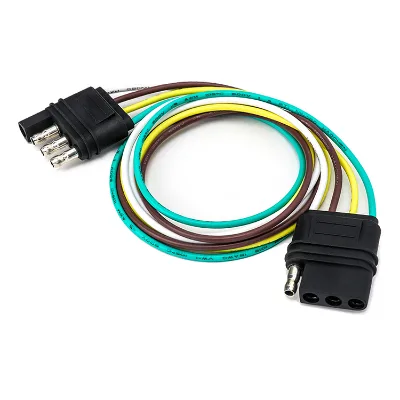
Product attributes highlight a strong emphasis on customization and specific application environments. Many listings specify "Customized" for color, model, and standards, indicating that off-the-shelf solutions may not meet unique trailer designs. Common applications cited include electronic devices, automobiles, home appliances, and motorcycles, suggesting that the underlying technology is versatile but must be adapted for trailer-specific use cases. The presence of terms like "Trailer Lighting Wire Harness" and "4 Pole trailer connector" confirms that dedicated trailer solutions are available, often featuring rectangular or round shapes depending on the connector design and space constraints within the trailer frame.
Technical Specifications to Verify
Verifying the conductor type and insulation material is the first step in ensuring electrical reliability. Most observed products utilize stranded copper or tin-plated copper wire cores, which offer flexibility and resistance to fatigue from vibration—a critical factor for moving vehicles. The insulation material is predominantly PVC, chosen for its flame retardant properties and durability. Buyers must confirm that the PVC jacket meets the required temperature ratings and chemical resistance standards for the specific operating environment, whether it involves exposure to road salts, oils, or extreme weather conditions.
The core count and interface type are pivotal for functional compatibility. Listings show options for 5, 10, 15, or 30 cores, catering to different levels of system complexity. It is crucial to distinguish between low-voltage wiring harnesses, typically used for lighting and signals, and high-voltage harnesses, which may be required for electric or hybrid trailers. The interface type is often specified as AC/DC, but buyers must verify the voltage and current ratings to ensure the harness can handle the load without overheating. Additionally, the shape of the connector, whether rectangular or round, must match the mating port on the trailer to ensure a secure and weather-tight seal.
Compliance and Safety Documentation
Certification verification is non-negotiable for trailer wiring harnesses, as these components are subject to strict safety regulations. Common certifications observed include UL, RoHS, ISO, CCC, and VDE. UL certification is particularly important for products intended for the North American market, ensuring that the materials and construction meet specific safety standards. RoHS compliance indicates that the product is free from certain hazardous substances, which is increasingly required for environmental and regulatory reasons. Buyers should request valid certification documents and verify their authenticity with the issuing bodies to avoid non-compliant products.
Standards and manufacturing practices also play a significant role in product quality. Some products are listed as "With UL or None UL," highlighting the need for buyers to explicitly specify their certification requirements in the purchase order. Customized standards are available, but this introduces variability that must be managed through rigorous quality control. The origin of the products, primarily from China, including specific regions like Zhejiang, suggests a mature supply chain but also necessitates careful oversight of manufacturing processes. Buyers should ensure that the supplier adheres to consistent quality management systems, such as ISO standards, to maintain product uniformity across batches.
Cost Drivers and Commercial Terms
Several factors influence the final cost of jacketed cable trailer wiring harnesses, with material composition and customization level being primary drivers. The use of tin-plated copper versus bare copper, the thickness of the PVC jacket, and the complexity of the crimping and assembling classes all contribute to the price. Products with higher core counts or specialized connectors, such as those for trailer lighting, tend to be more expensive due to the increased labor and material costs. Buyers should analyze the cost breakdown to understand where value is added and avoid overpaying for unnecessary features that do not impact performance.
Commercial terms, including packaging and shipping, also affect the total cost of ownership. Observed packaging options range from PE bags and trays to carton boxes and plastic pallets, depending on the order size and product fragility. Proper packaging is essential to prevent damage during transit, especially for harnesses with delicate connectors. Buyers should negotiate clear terms regarding packaging standards to ensure that products arrive in usable condition. Additionally, lead times and payment terms should be clarified early, as customized products may have longer production cycles than standard items.
Supplier Qualification and Quality Control
Supplier qualification requires a thorough assessment of their manufacturing capabilities and quality control processes. Buyers should verify that the supplier has experience in producing automotive and trailer wiring harnesses, as this indicates familiarity with the rigorous demands of the industry. The presence of attributes like "Crimping Assembling Classes" suggests that the supplier has specialized equipment and trained personnel for precise assembly. It is advisable to request samples for testing before committing to large orders, allowing buyers to evaluate the physical quality, electrical performance, and durability of the product.
Quality control measures should be integrated into the procurement process to mitigate risks. Buyers should inquire about the supplier’s testing protocols, including insulation resistance, voltage withstand, and environmental stress tests. Although specific test results are not provided in the listings, a reputable supplier should be able to demonstrate their quality assurance procedures. Establishing a clear communication channel for addressing defects or non-conformities is also crucial. Buyers should define acceptable quality limits (AQL) and inspection criteria in the contract to ensure that any issues are resolved promptly and fairly.
Long-Term Procurement Checks
Long-term procurement success depends on establishing a sustainable relationship with suppliers who can support ongoing needs. Buyers should monitor supplier performance over time, tracking metrics such as on-time delivery, product consistency, and responsiveness to issues. Regular audits or periodic quality checks can help identify potential problems before they escalate. Additionally, staying informed about changes in industry standards and regulations is essential to ensure that the sourced harnesses remain compliant throughout their lifecycle. This proactive approach helps maintain the integrity of the trailer’s electrical system and reduces the risk of costly failures.
As technology evolves, buyers should remain open to innovations in materials and design that may offer improved performance or cost efficiency. For example, advancements in jacket materials or connector designs could enhance durability or simplify installation. However, any changes should be evaluated carefully to ensure they meet the existing technical and regulatory requirements. By maintaining a flexible yet disciplined sourcing strategy, buyers can secure a reliable supply of jacketed cable trailer wiring harnesses that support the operational needs of their trailer fleet while minimizing risk and cost.
FAQs
What certifications are available for Jacketed Cable Trailer Wiring Harness?
Available certifications include UL, RoHS, ISO, CCC, and VDE depending on the specific product model. Some items are supplied with UL certification while others may have none, so verify the standard before ordering to ensure compliance with your regional requirements.
Can I customize the wire harness cores and colors?
Yes, customization is available for core counts ranging from 5 to 30 cores and for wire colors. You can specify the exact number of cores needed, such as 5, 10, 15, or 30, and request a customized color to match your specific application needs.
Which materials are used for the wire core and insulation?
The wire core material is typically copper or tin-plated copper wire. The insulation material is PVC, and the product shape is generally round wire, though some harnesses may feature rectangular shapes depending on the specific design requirements.
How is the product packed for shipment?
Packaging options include PE bags, trays, carton boxes, and plastic pallets. The specific packing method varies by order, with some items shipped in bags or cartons while others utilize trays or pallets for bulk transport stability.
What is the origin and condition of these wiring harnesses?
The products originate from China, specifically Zhejiang, and are supplied in new condition. These items are designed for various applications including automobiles, motorcycles, and home appliances, ensuring they meet standard industry expectations for new electronic components.
What are the typical applications for this wiring harness?
These harnesses are used in electronic, automobile, motorcycle, computer, and home appliance applications. They serve as low voltage or high voltage wiring harnesses and are specifically designed for automotive wiring harness systems and trailer parts.