Source Jac Truck Cab Overturn Bracket for JAC Gallop, Chassis, and Cab Mounting
Find 30 verified listings for the Jac Truck Cab Overturn Bracket, including parts for JAC Gallop trucks, chassis frames, and cab mounting systems. Compare specifications like material, model numbers, and warranty terms from multiple suppliers.
Key considerations
Products List

Original JAC Heavy Duty Truck Spare Parts Upper Front Bracket 87690-Y5010b
$6.00 - $8.00
MOQ: 1 Pieces

Original JAC Heavy Duty Truck Spare Parts Leaf Spring Fixing Bracket Right 54221-Y4ap0
$28.00 - $35.00
MOQ: 1 Pieces

Original JAC Spare Parts Upper Bracket Assy. for Hydraulic Cylinder 64340-Y40d0
$13.80 - $16.00
MOQ: 1 Pieces

Original JAC Heavy Duty Truck Spare Parts Lower Right Rear Bracket 87698-7A100
$6.00 - $8.00
MOQ: 1 Pieces

JAC Heavy Duty Truck Spare Parts Reverse Brake Release Springs (Long) Ak880440012
$3.40 - $4.00
MOQ: 1 Pieces


Auto Parts Shift Bracket Holding Select Shift for JAC Truck 1703080b1DAB0
$22.00 - $38.00
MOQ: 1 Pieces


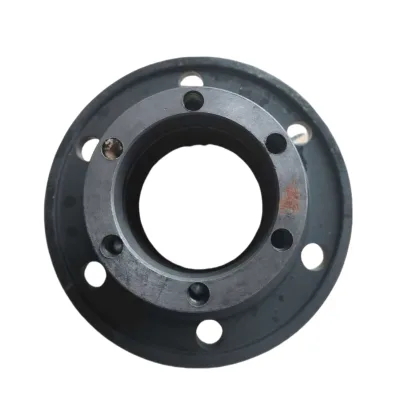
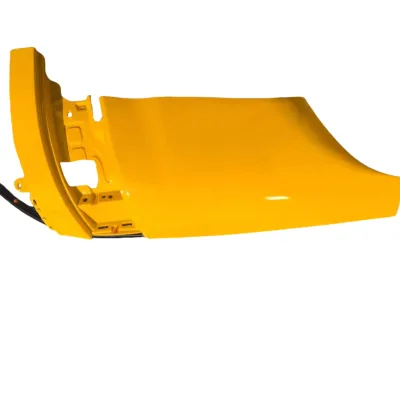
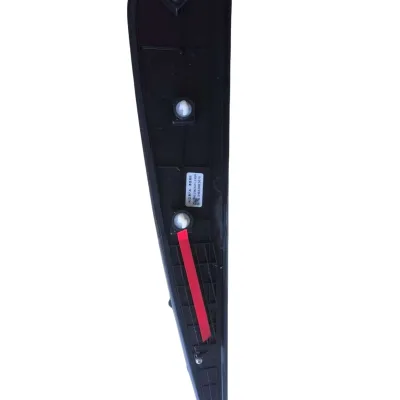
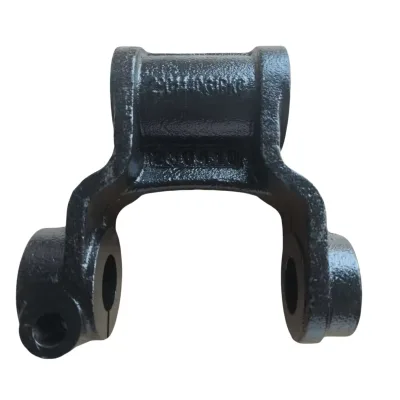



Comprehensive Sourcing Guide
Strategic Sourcing Guide for JAC Truck Cab Overturn Brackets
Understanding Component Specifications and Part Identification
The procurement of a cab overturn bracket for a JAC Gallop truck requires precise identification of the component's physical and functional attributes. Based on the available market data, this component is primarily categorized as a structural mounting bracket designed for the cab assembly. The part is explicitly identified under the name "Cab Rear Bracket" or "Mounting Bracket," with specific part numbers such as 5001282-14b, 5001012-13cx105, and 5001012-13CX105 serving as critical identifiers for buyers. These alphanumeric codes are essential for ensuring compatibility with the specific chassis and cab configuration of the JAC Gallop truck.
The material composition of these brackets varies, with observed listings indicating both Steel and Rubber variants. Steel is the predominant material for structural brackets, providing the necessary rigidity to support the cab during overturning operations or to secure the cab to the chassis frame. Conversely, rubber components may be utilized as isolators or bushings within the bracket assembly to dampen vibrations and reduce noise transmission. The color of the parts is typically observed as Black or Original, reflecting standard factory finishes or protective coatings.
Physical dimensions and weight are also key specifications. One observed variant lists a weight of 1.2 kg, while another specification mentions a standard dimension of 121222cm, which likely refers to packaging or a specific sub-component dimension rather than the entire bracket assembly. Buyers must verify the exact dimensions against the truck's service manual, as the bracket serves a critical role in the "Cab" type classification and is often associated with the "Chassis" system. The position of the part is frequently noted as "Right," indicating that specific brackets may be asymmetrical and designed for a specific side of the vehicle.
Technical Applications and System Integration
The cab overturn bracket is not an isolated component but a critical integration point within several vehicle systems. Its primary application is listed as the "JAC Gallop Truck," confirming its specific fitment for this model line. The bracket functions as a pivotal link in the "Driving System Parts" category, specifically relating to the "Frame" and "Suspension" systems. In the context of the "Steering System Parts," it may interact with the "Steering Transmission Device" or "Operating Mechanism," ensuring that the cab's structural integrity is maintained during dynamic steering maneuvers.
Furthermore, the bracket's role extends to the "Electrical System Parts" and "Brake System Parts." While the bracket itself is mechanical, its stability ensures that associated wiring harnesses and brake control lines, which may route through or near the cab mounting points, remain secure. The "Brake Control" and "Starting System" are listed as related categories, suggesting that the bracket's failure could indirectly impact the safety and operational readiness of these systems. The "Transmission System Parts" and "Gearbox" are also mentioned in the broader context of the truck's powertrain, highlighting the need for a robust mounting solution that can withstand the torque and vibration generated by the engine and transmission.
The following table summarizes the system integration points observed in the product data:
| System Category | Specific Sub-System | Relevance to Cab Overturn Bracket |
|---|---|---|
| Driving System | Frame, Suspension | Primary structural support and vibration isolation. |
| Steering System | Steering Transmission Device, Operating Mechanism | Ensures cab alignment and stability during steering. |
| Electrical System | Lighting, Starting System | Protects routing of electrical components near the cab. |
| Brake System | Brake Control, Transmission | Maintains integrity of lines and controls routed through the mount. |
| General | Cab, Chassis | Fundamental connection between the upper body and lower chassis. |
Compliance, Certification, and Quality Standards
When sourcing these brackets, verifying compliance with international standards is a critical step for ensuring long-term reliability and safety. The product data indicates that some suppliers possess ISO14001 certification, which relates to environmental management systems. While this certification does not directly certify the mechanical strength of the bracket, it suggests that the manufacturing facility adheres to rigorous environmental and operational standards, which often correlates with better overall quality control processes.
Buyers should also look for explicit quality assertions. The data lists "Good" as a quality descriptor for certain listings, though this is a subjective term. More concrete verification should be sought in the form of specific material grades for the steel used or hardness ratings for rubber components. The "Condition" of the parts is consistently listed as "New," which is a baseline requirement for safety-critical components. However, buyers must ensure that "New" implies factory-fresh inventory rather than refurbished or remanufactured parts, as the structural integrity of a cab bracket is paramount.
Regarding standards, one observation notes a dimension of "121222cm" under the "prod_standard" field. This likely refers to packaging standards or a specific sub-component size rather than a universal engineering standard. Buyers should not assume this is a universal standard for all cab brackets. Instead, they should request documentation that confirms the part meets the original equipment manufacturer (OEM) specifications for the JAC Gallop truck. The HS code 8421230000 is observed, which classifies the product under machinery for filtering or purifying liquids or gases, a classification that may seem unusual for a bracket. This discrepancy highlights the need for buyers to verify the correct HS code with their customs broker to ensure accurate tariff classification and avoid regulatory issues.
Cost Drivers and Pricing Dynamics
The pricing for cab overturn brackets exhibits a wide range, with observed values spanning from 1 USD to 3146.61 USD. This significant variance is driven by several factors, including the material composition, the complexity of the casting or forging process, and the specific part number. The lower end of the price spectrum likely corresponds to simpler rubber isolators or smaller steel components, while the higher end may reflect heavy-duty steel brackets, complete assemblies, or parts with specialized coatings and treatments.
The Minimum Order Quantity (MOQ) is another critical cost driver. The data shows an MOQ range of 1 to 10 units. An MOQ of 1 allows for single-unit procurement, which is ideal for emergency repairs or small fleet maintenance, but it often comes with a higher unit price due to the lack of economies of scale. Conversely, an MOQ of 10 suggests that bulk purchasing is required to access lower price points. Buyers must balance their immediate inventory needs against the potential for bulk discounts.
Other factors influencing cost include the packaging method. Listings mention "Carton," "Cartons or Wooden Cases," and "Customized" packaging. Wooden cases are typically more expensive but offer superior protection for heavy or delicate components during long-distance shipping, which can reduce the risk of damage and associated replacement costs. The "Customization" attribute is also listed as available, which can increase the unit cost but may be necessary for non-standard applications or specific fleet requirements.
Supplier Evaluation and Geographic Considerations
The geographic origin of the products is a significant factor in supplier evaluation. The data consistently identifies the product origin as "China," with a specific mention of "China Shangdong Jinan." Jinan is a major industrial hub in China known for its automotive parts manufacturing capabilities. Sourcing from this region can offer access to a concentrated supply chain and potentially lower logistics costs. However, buyers should verify the specific location of the supplier to ensure they are dealing with a legitimate manufacturer or authorized distributor rather than a trading company with limited oversight.
Supplier reliability is further indicated by the "After-sales Service" and "Service" attributes. Listings mention "Online Support" and a service commitment of "Within 24 Work Hours." These are strong indicators of a supplier's commitment to customer satisfaction and their ability to handle technical queries or resolve issues quickly. The "Warranty" period is also a key metric, with a 6-month warranty observed. This warranty period provides a safety net for buyers, ensuring that the supplier stands behind the quality of the bracket.
When evaluating suppliers, buyers should prioritize those who can provide detailed technical documentation, including material certificates and dimensional drawings. The presence of specific part numbers like "Vg1560080300" and "AK880440012" in the data suggests that some suppliers may offer cross-references or compatible parts for different truck models, which can be valuable for fleet managers operating mixed fleets. However, buyers must exercise caution and verify these cross-references against their specific vehicle models to avoid fitment issues.
Quality Control and Long-Term Procurement Strategy
Implementing a robust quality control (QC) strategy is essential when procuring cab overturn brackets. Given the safety-critical nature of the component, visual inspection alone is insufficient. Buyers should request third-party inspection reports or conduct their own QC checks upon receipt. Key inspection points include verifying the material grade, checking for surface defects such as cracks or porosity, and confirming the dimensional accuracy against the OEM specifications. The "Color" attribute, listed as Black or Original, can serve as a quick visual check, but it should not be the sole determinant of quality.
For long-term procurement, establishing a relationship with a supplier that offers "Customization" can be beneficial. As fleet requirements evolve or as specific truck models are updated, the ability to customize the bracket design or material composition can extend the lifecycle of the component. Additionally, the "Main Market" data indicates a focus on the "Middle East" and "South Asia." Buyers should consider the environmental conditions in these regions, such as high temperatures or corrosive salt air, and ensure that the brackets are treated with appropriate corrosion-resistant coatings.
The "Service" attribute of "Within 24 Work Hours" suggests that the supplier is capable of rapid response, which is crucial for minimizing vehicle downtime. In a procurement strategy, this responsiveness should be weighed alongside the unit price and warranty terms. A slightly higher price for a supplier with superior after-sales support and a robust warranty may result in lower total cost of ownership by reducing the risk of premature failure and associated repair costs.
Finally, buyers should maintain a clear record of the part numbers and specifications for all procured brackets. The data shows multiple part numbers for similar components (e.g., 5001282-14b vs. 5001282-14B). Ensuring that the exact part number is recorded and matched to the vehicle's VIN will prevent future confusion and ensure that replacement parts are always compatible. By adhering to these rigorous standards and verification processes, buyers can secure a reliable supply of cab overturn brackets that maintain the safety and operational efficiency of their JAC Gallop truck fleets.
FAQs
What materials are used for JAC Gallop truck cab brackets?
The brackets are primarily made of steel for structural rigidity, though rubber variants exist for vibration isolation. Buyers should verify the specific material grade against the OEM part number to ensure compatibility with the JAC Gallop truck chassis.
Which part numbers identify the JAC Gallop cab overturn bracket?
Key identifiers include 5001282-14b, 5001012-13cx105, and 5001012-13CX105. These alphanumeric codes are essential for matching the correct mounting bracket to the specific cab and chassis configuration of the JAC Gallop truck model.
Can I find suppliers with ISO14001 certification for these parts?
Yes, some suppliers offer brackets with ISO14001 certification, indicating adherence to environmental management standards. This certification often correlates with better quality control processes, ensuring the new condition and structural integrity of the steel or rubber components.
What is the minimum order quantity for JAC truck cab brackets?
The minimum order quantity ranges from 1 to 10 units depending on the supplier. An MOQ of 1 allows for single-unit procurement for emergency repairs, while higher MOQs may be required to access bulk pricing tiers for fleet maintenance.
How long is the warranty period for these cab brackets?
The standard warranty period observed is 6 months for new condition parts. This warranty provides a safety net for buyers, ensuring the supplier stands behind the quality of the steel or rubber mounting bracket against premature failure.
Where are the JAC Gallop truck cab brackets manufactured?
Products originate from China, with specific manufacturing hubs located in Shandong Jinan. This region is known for automotive parts capabilities, offering a concentrated supply chain for sourcing structural brackets and related chassis components.
What packaging options are available for shipping these brackets?
Packaging options include cartons, wooden cases, or customized solutions depending on the supplier. Wooden cases offer superior protection for heavy steel brackets during long-distance shipping, reducing the risk of damage compared to standard carton packaging.