Source Jacquard Cotton Cooling Bedspread for Home, Hotel, Hospital
Explore 30 listings for the Jacquard Cotton Cooling Bedspread designed for home, hotel, and hospital environments. Buyers can compare features like anti-dust mite protection, customizable designs, and various material compositions including polyester and cotton blends.
Key considerations
Products List


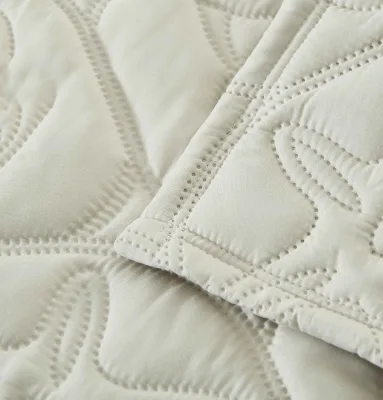
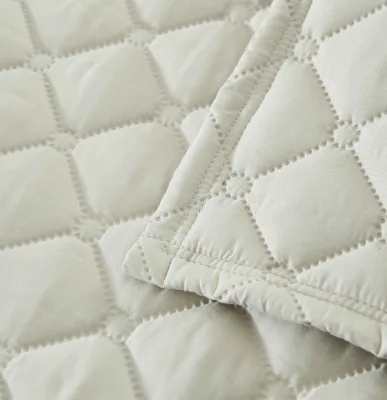


Jacquard Comforter Set Bed Cover Satin Silk Bedspread 4 PCS Bedding Sets
$22.00 - $24.00
MOQ: 500 Sets


Embroidered Cotton Bed Cover Set Thickened Quilted Bed Sheet Bedspread
$40.00 - $44.00
MOQ: 5000 Pieces


Comprehensive Sourcing Guide
Strategic Sourcing Guide for Jacquard Cotton Cooling Bedspreads
Understanding Product Definitions and Material Realities
When sourcing a "Jacquard Cotton Cooling Bedspread," buyers must first reconcile the specific terminology with the actual product attributes available in the global market. The term "jacquard" refers to a weaving technique that creates intricate patterns directly into the fabric structure, while "cotton" implies a natural fiber composition. However, market analysis reveals a complex landscape where "cotton" often appears in blends or as a primary component alongside synthetic fibers to achieve specific performance metrics like cooling.
Current product observations indicate that while 100% cotton options exist, a significant portion of the market offers polyester or poly-cotton blends. For instance, specific listings highlight materials such as "100% Polyester," "Polyester / Cotton," and "Polyester/polycotton." The "cooling" aspect is frequently achieved through the use of microfiber covers or specific fiber fillings, such as 80-150GSM fiber, rather than pure cotton alone. Buyers should verify if the "cotton" in the product description refers to the core fiber or a blend, as pure cotton may not always provide the same moisture-wicking or thermal regulation properties as engineered microfiber or specialized polyester blends designed for temperature control.
The "jacquard" pattern is often realized through printing or embroidery techniques in modern listings. Some products feature "Printed" patterns, while others specify "Embroidered" or "Multi Patchwork Colors" designs. It is crucial to distinguish between a true woven jacquard texture and a printed or embroidered surface that mimics the look. The observed product attributes include styles ranging from "Quilted/Ultrasonic" to "Multi Patchwork," suggesting that the cooling function may be integrated through the quilting structure or the specific filling material rather than the weave alone.
Technical Specifications and Construction Standards
Evaluating the technical specifications of a bedspread requires a close examination of size standards, fabric composition, and filling density. The market data shows a variety of size standards, including "Queen," "King," "Single," and specific metric dimensions like "220x240" and "230x250." Buyers must ensure that the supplier's size definitions align with regional standards, as "Queen" and "King" can vary significantly between manufacturers in China and international markets.
Fabric composition is a critical technical parameter. While the search term specifies cotton, the available data includes "200tc 130X70" fabric composition, "Microfiber" covers, and fillings described as "80-150GSM Fiber" or "100% Polyester." The "cooling" claim is often associated with the filling weight and the breathability of the cover. A lighter GSM (grams per square meter) filling, such as the 80-150GSM range observed, typically facilitates better airflow and cooling compared to heavier winter fillings. Additionally, the inclusion of "Spandex" (5% in some listings) suggests a stretch component that may affect the fit and drape of the bedspread.
The construction method also impacts performance. Listings mention "Quilted" and "Ultrasonic" bedding styles. Ultrasonic quilting uses high-frequency sound waves to bond layers without needles, which can reduce friction points and improve the smoothness of the surface. The "Anti Dust Mite" and "Anti-Pull" features observed in the product attributes are technical claims that buyers should verify through physical inspection or third-party testing, as these are not inherent to all cotton or polyester products.
Compliance, Certification, and Safety Verification
In the B2B bedding sector, compliance and certification are non-negotiable for entering regulated markets. While the provided data mentions "OEKO-TEX" and "BSCI" as background standards, these are not confirmed attributes for every listed product. Buyers must treat these as verification targets rather than guaranteed inclusions. The "Eco-Friendly" attribute is listed for some items, but this is a broad claim that requires specific documentation to substantiate.
Safety standards for bedding often involve restrictions on harmful substances, such as formaldehyde, heavy metals, and azo dyes. The "OEKO-TEX Standard 100" is a widely recognized benchmark for textile safety, ensuring that the fabric is free from harmful levels of regulated substances. However, since the supplied facts do not confirm that every product holds this certification, buyers must explicitly request test reports from the supplier. Similarly, social compliance certifications like "BSCI" (Business Social Compliance Initiative) are essential for ensuring ethical manufacturing practices, particularly when sourcing from regions with complex supply chains.
Buyers should also verify the "prod_standard" values provided by suppliers. Some listings reference specific dimensions like "405045cm" for packing or "95% Polyester, 5% spandex" for composition. These specific standards must be cross-referenced with the buyer's internal quality requirements. If the product is intended for use in hospitals or hotels, additional hygiene and fire safety standards may apply, which are not explicitly detailed in the general product attributes but are critical for compliance.
Cost Drivers and Pricing Dynamics
The pricing of jacquard cotton cooling bedspreads is influenced by several dynamic factors, including material costs, customization levels, and order volume. The observed price range in the market spans from $1.2 to $45 USD, a wide variance that reflects differences in quality, size, and feature sets. Lower-priced items typically correspond to basic polyester blends or smaller sizes, while higher-priced items often involve complex jacquard weaves, premium cotton blends, or extensive customization.
Material composition is a primary cost driver. 100% cotton is generally more expensive than polyester or poly-cotton blends due to the cost of raw materials and processing. The inclusion of microfiber covers or specialized fillings like 80-150GSM fiber can also impact the final price. Furthermore, the "Customization" and "OEM" (Original Equipment Manufacturer) capabilities listed in the product attributes add to the cost. Suppliers offering "Hundreds Ready Designs Available" or "Any Pantone Color" options may charge a premium for the flexibility and design work involved.
Order volume, represented by the Minimum Order Quantity (MOQ), significantly affects the unit price. The observed MOQ range is 10 to 5000 units. Buyers purchasing at the lower end of the MOQ spectrum (e.g., 10-100 units) will likely face higher per-unit costs compared to those placing large orders of 5000 units. The "Quantity" attribute, such as "3 PCS" sets or "2PCS/3PCS Bedspread Set," also influences the total cost calculation. Buyers must consider the total landed cost, including packaging options like "PVC Bag," "OPP Bag," or "Carton," which vary in price and environmental impact.
Typical Applications and Usage Scenarios
The versatility of jacquard cotton cooling bedspreads makes them suitable for a wide range of applications, from residential use to commercial hospitality settings. The observed "Usage" attributes include "Home," "Hotel," "Hospital," "Camping," and "Travel." This broad applicability suggests that the product design must balance aesthetic appeal with functional durability.
In residential settings, the "Spring and Autumn" season designation indicates that these bedspreads are designed for moderate climates, providing warmth without excessive heat retention. The "Anti Dust Mite" feature is particularly valuable for home users concerned with allergens. For the hospitality industry, including hotels and hospitals, the "Eco-Friendly" and "Anti-Pull" features are critical. Durability is paramount in high-turnover environments, and the "Quilted" or "Ultrasonic" construction methods help maintain the integrity of the bedspread after repeated washing.
The "Camping" and "Travel" usage categories highlight the portability and lightweight nature of some products. The "Vacuum Pack" and "Woven Bag" packaging options support this application by reducing volume for transport. Buyers targeting these segments should prioritize products with lightweight fillings and compact packaging. The "Multi Patchwork Colors" and "Printed" patterns appeal to diverse consumer preferences, making the product suitable for various interior design themes in both home and commercial spaces.
Supplier Evaluation and Quality Control Protocols
Selecting the right supplier requires a rigorous evaluation process that goes beyond the basic product attributes. Buyers should assess the supplier's capability to handle "Customization" and "OEM" requests, as these indicate flexibility and manufacturing maturity. The "prod_origin" being listed as "China" is a common starting point, but buyers must verify the specific factory's quality control systems and production capacity.
Quality control protocols should focus on the specific attributes observed in the product listings. Buyers must verify the "Fabric Composition" to ensure it matches the agreed-upon specifications, such as "100% Cotton" or "Microfiber." The "Weight (For Quit)" of 2-3 Kg is a critical metric that must be consistent across batches to ensure uniform performance. Additionally, the "Pattern" and "Printing" quality should be inspected for color fastness and definition, especially for "Multi Colors Patchwork" designs.
The "prod_packing" methods, such as "Export Carton" or "PVC Bag," must be evaluated for their ability to protect the product during transit. For products intended for "Hotel" or "Hospital" use, the packaging should be robust enough to prevent damage and maintain hygiene. Buyers should also check the "Set Detail" to ensure that all components, such as "1 Bedspread+2 Pillowcase," are included and of consistent quality.
Long-Term Procurement and Strategic Considerations
Sourcing jacquard cotton cooling bedspreads is not just a transactional activity but a strategic decision that impacts long-term brand reputation and customer satisfaction. Buyers should consider the scalability of the supplier's production capabilities. The "MOQ" range of 10 to 5000 units suggests that suppliers can accommodate both small test orders and large-scale production runs, but buyers must confirm lead times and capacity for future growth.
Sustainability is becoming a key consideration in the bedding industry. The "Eco-Friendly" attribute and the availability of "Any Pantone Color" options allow buyers to align their products with corporate social responsibility goals. However, buyers must verify the specific environmental claims through third-party audits or certifications. The "Customization" feature also offers an opportunity to differentiate the product in a competitive market, but it requires careful management of design files and approval processes.
Finally, buyers should establish clear communication channels with suppliers to address any issues related to "prod_model" variations or "prod_standard" discrepancies. The "WHBS200C04" and "001-FEL-A15" model numbers indicate a need for precise tracking of product versions. By maintaining a proactive approach to quality control and supplier relationship management, buyers can ensure a steady supply of high-quality jacquard cotton cooling bedspreads that meet their specific market demands.
Comparative Analysis of Product Attributes
To facilitate decision-making, the following table summarizes key product attributes observed in the market, highlighting the variations buyers must navigate.
| Attribute Category | Observed Variations | Strategic Implication |
|---|---|---|
| Material Composition | 100% Cotton, 100% Polyester, Polyester/Cotton, Microfiber | Verify fiber content for cooling performance and allergen sensitivity. |
| Size Standards | Queen, King, Single, 220x240, 230x250 | Confirm regional size compatibility to avoid returns. |
| Filling Weight | 80-150GSM Fiber, 2-3 Kg | Lighter fillings offer better cooling; heavier fillings offer more warmth. |
| Construction Style | Quilted, Ultrasonic, Embroidered, Patchwork | Quilting affects durability; ultrasonic offers smooth finish. |
| Packaging | PVC Bag, OPP Bag, Vacuum Pack, Export Carton | Choose packaging based on shipping volume and sustainability goals. |
| Customization | OEM Acceptable, Any Pantone Color, Custom Designs | High customization increases cost but enhances brand differentiation. |
| Usage Context | Home, Hotel, Hospital, Camping, Travel | Match product features (e.g., anti-dust mite) to the specific environment. |
This comparative analysis underscores the importance of detailed specification checks. Buyers should not assume that a product labeled "cotton" will have the same properties as one labeled "polyester," nor should they assume that "cooling" is a universal feature. By carefully evaluating these attributes against their specific requirements, buyers can make informed decisions that align with their procurement goals.
FAQs
What materials are used for jacquard cotton cooling bedspreads?
Materials vary between 100% polyester, cotton blends, and microfiber covers. Some listings specify 100% cotton while others use polyester or poly-cotton blends. The filling often consists of 80-150GSM fiber or 100% polyester to ensure cooling properties.
Which sizes are available for these bedspreads?
Available sizes include Queen, King, Single, and specific metric dimensions like 220x240 or 230x250. Some products are listed as Coverlet Size Queen/King while others offer standard single or queen options depending on the manufacturer's standard.
Can I customize the design and color of the bedspread?
Customization is available with options for hundreds of ready designs or any Pantone color. Buyers can request specific patterns like printed or embroidered styles, and OEM services are acceptable for tailored branding needs.
How is the bedspread packed for shipping?
Packaging options include PVC bags, OPP bags, woven bags, or export cartons. Some items use vacuum packing to reduce volume for travel or camping, while others are shipped in standard cartons for hotel or home delivery.
What are the typical usage scenarios for these products?
These bedspreads are designed for home, hotel, hospital, camping, and travel use. They are suitable for spring and autumn seasons and often feature anti-dust mite or anti-pull properties for durability in high-turnover environments.
What is the minimum order quantity for these items?
The minimum order quantity ranges from 10 to 5000 units depending on the supplier. Smaller orders may cost more per unit, while larger volumes often qualify for better pricing and customized production runs.
Are there specific features like anti-dust mite protection?
Yes, some products feature anti-dust mite and anti-pull properties. These features are observed in specific listings but should be verified as not every product in the market automatically includes these technical attributes.