Source Bath Skirt for Home, Hotel, and Spa Applications
Compare 30 Bath Skirt options from verified suppliers in China. Buyers can evaluate materials like cotton and satin, sizes, and customization features for home, hotel, and spa use. Explore knitted and plain dyed styles with various GSM weights and solid colors available for girls and women.
Key considerations
Products List
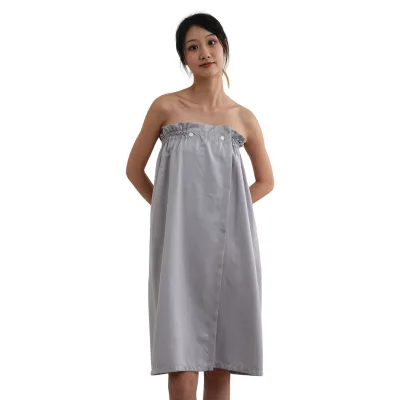
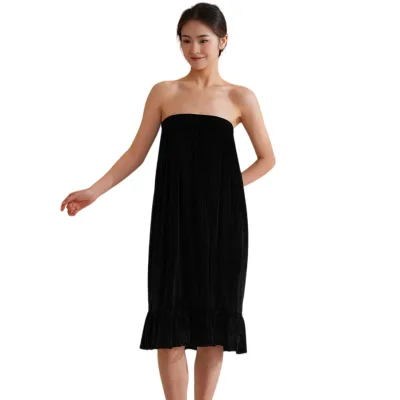
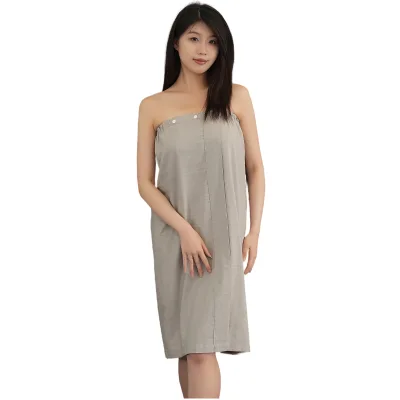

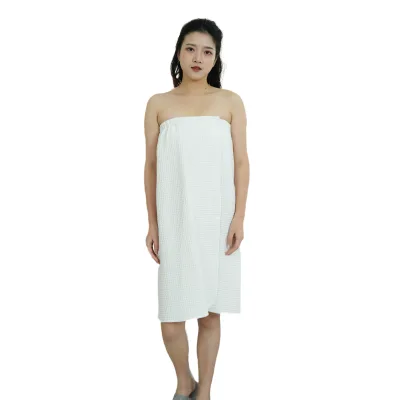
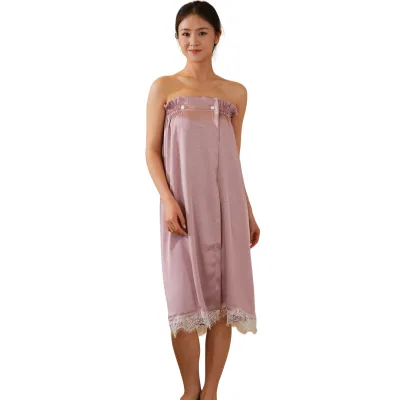


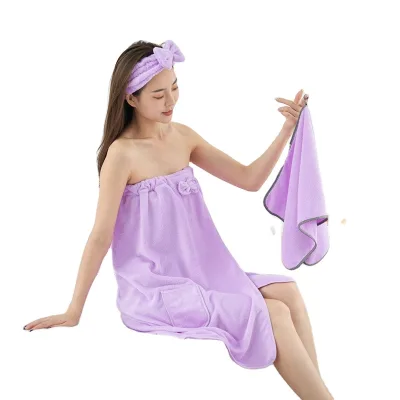
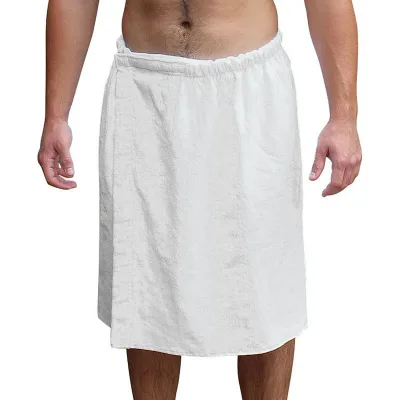

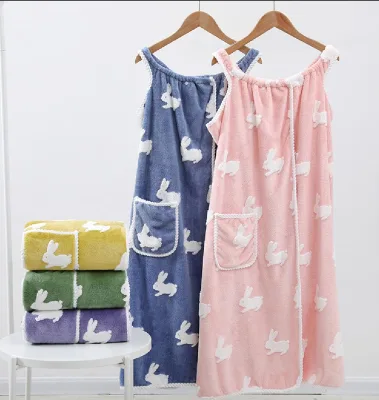

Comprehensive Sourcing Guide
Bath Skirt Sourcing Guide
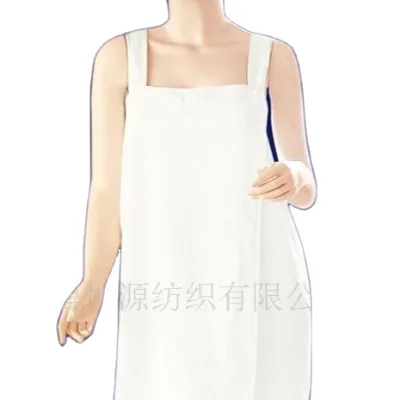
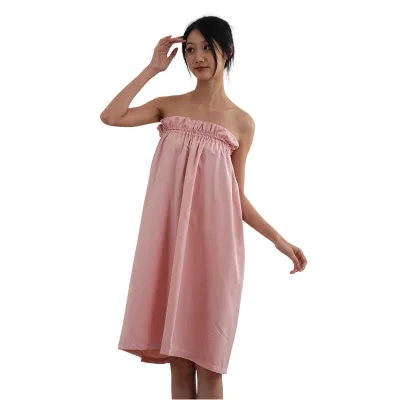
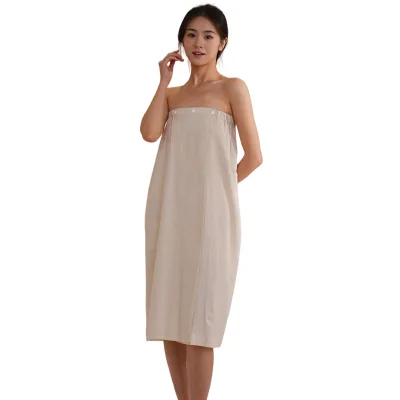
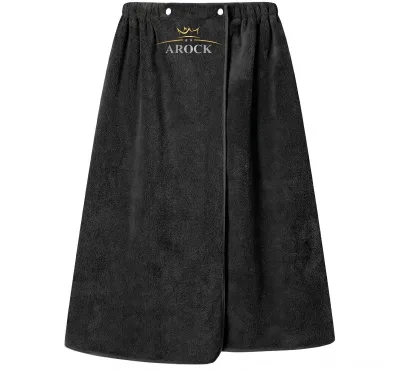
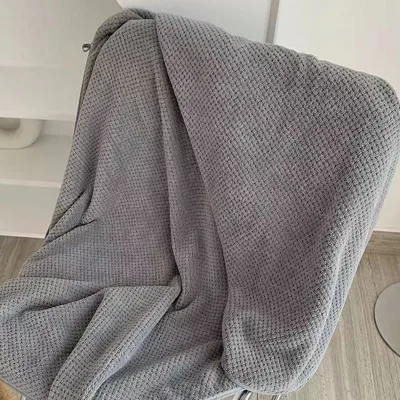
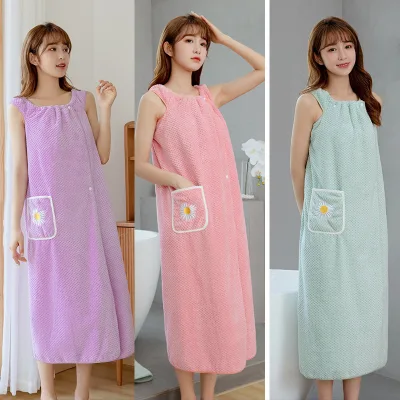
A Bath Skirt sits at the intersection of bath linen and apparel, which means sourcing teams must treat it as both a textile product and a garment when evaluating suppliers. The listings observed in this guide describe knitted, terry-fabric items made from 100% cotton or satin, positioned for home use and marketed toward girls, with solid-color patterns dominating the category. Buyers should begin by deciding which product identity they are purchasing—a wrap-style towel garment or a satin robe item—because this choice drives fabric specification, sizing logic, and inspection criteria downstream.
This guide walks through the full procurement cycle for Bath Skirt programs: defining product scope, verifying technical specifications, assembling compliance documentation, understanding cost drivers, qualifying suppliers, and setting up long-term quality controls. The attributes cited here come directly from observed product pages, so they should be treated as examples of what the market lists rather than guarantees that any specific listing satisfies every requirement. Where the data is silent—certification status, exact pricing structures, or test results—the guide tells buyers what to request from suppliers instead of asserting a value.
Product Scope and Observed Listing Signals
Observed listings describe the product under several overlapping names: Bath Skirt, bath towel, bathrobe, and satin bathrobes. Core attributes cluster around home application, solid-color patterns, terry towel fabric or satin material, and knitted construction with plain-dyed finishing. Gender targeting toward girls appears alongside size designations of S, M, and L, with one listing specifying a knee length of 120 cm. Buyers should map these signals to their own assortment strategy before contacting suppliers, because the category straddles towel textile and light apparel, and factories in each tradition will quote different processes.
Commercial signals from the listings include MOQs ranging from 20 pieces to 500 pieces, single-piece OPP bag packing, ODM supply type, and stated acceptance of OEM/ODM work with customized designs and logos placed front or back. Sample availability is explicitly supported, and one listing notes a seven-day sample order lead time. These signals suggest a category open to small-batch and customized orders, but buyers must confirm whether a given supplier genuinely supports customization depth—custom colors, logos, and design changes—rather than only modifying stock items.
Technical Specifications to Verify
The material split in observed listings—100% cotton terry versus satin—is the first specification to pin down, because it changes weight expectations entirely. One cotton listing cites fabric weights of 120 grams and GSM tiers of 299 and below or 300–499 GSM, while the satin robe listing cites a 0.4 weight. Buyers should request a full GSM or grams-per-unit declaration per size, plus fabric composition certificates, since "towel terry" and "knitted" can describe very different hand-feel and absorbency levels within the same nominal category.
Sizing and construction details require equal rigor. Observed size data includes a 120 cm length, S/M/L designations, knee length, short sleeves, round neck, elastic waist closure, and a mid-rise style, but size charts are not standardized across the category. Request measurement tolerances for length, chest or wrap width, and waist stretch range for every size. Also confirm packing dimensions—one listing shows a 25×30×10 cm single package—and per-unit weight, since both affect freight calculations. Finally, verify whether colorways listed as Blue, White, and Multi, or as "customized color," are available at your target MOQ without dye surcharges.
Compliance and Safety Documentation
Because observed listings target girls' home use, buyers should treat these items as children's-adjacent textile products and request documentation accordingly, without assuming any listing already carries certification. Ask suppliers for the test scope applicable to your destination market—fiber composition verification, colorfastness to washing and rubbing, and restricted-substance screening for dyes and finishes—since heat-transfer printing, cited as the print method in one listing, adds its own ink-compliance questions. Never accept a certificate whose tested model number does not match your production batch.
Documentation discipline matters as much as the tests themselves. One observed listing carries a model number (6412) and a brand name (Beiyayan), which buyers should use to anchor paperwork: require that test reports reference the exact model, fabric weight tier, and colorway being ordered. For decorative elements such as badges noted in the listings, request small-parts and attachment-strength assessments where children's regulations apply. Buyers should also confirm that plain-dyed and printed finishes use azo-free dye systems where required, and keep all declarations on file with shipment numbers so future audits can trace each production lot back to its documentation.
Cost Drivers and Commercial Terms
Fabric choice is the dominant cost lever: cotton terry at 300–499 GSM will price materially above lighter 299-and-below options, and satin sits in its own cost structure. Customization adds layered charges—custom dyeing for non-stock colors, logo application at front or back positions, and badge decorations each carry setup or per-unit costs. MOQ directly interacts with these charges: at 20-piece MOQs, setup fees spread thinly, while 500-piece orders absorb them more efficiently. Buyers should request a quotation matrix showing unit price at several quantity tiers rather than a single quote.
Commercial terms in observed listings are limited and should be verified in full. Buyers know only that single-item selling units, OPP bag packing, and available samples are listed, with a seven-day sample lead time supported in one case. Everything else—payment terms, mass-production lead time, Incoterms, and freight responsibility—must be negotiated explicitly. The 25×30×10 cm package size allows reasonably dense carton packing, so request a packing plan showing pieces per carton and carton dimensions to compare freight quotes accurately. Confirm whether sample fees are credited against mass orders, since sample terms vary widely even within this category.
Supplier Qualification and Quality Control
Qualification should start with the supplier's manufacturing identity. Jiangsu, China appears as a place of origin in one listing and China generally in others, so buyers should ask whether the supplier owns knitting, dyeing, cutting, and sewing capacity or brokers from workshops—vertical control typically improves consistency in GSM and color matching. For ODM-supplied items, review the supplier's design-change process: confirm that "accept customized design" extends to your required logo placement, colorway, and size curve, and request physical samples of both a stock item and a customized version before committing.
Quality control planning should reflect the product's dual textile-garment nature. Pre-production samples should be approved against a sealed specification covering GSM, dimensions per size, seam and elastic-waist strength, and color standard under agreed lighting. During production, inspect at mid-line and final stages for measurement drift, printing defects from heat-transfer application, and packing accuracy against the 1-piece-per-OPP-bag standard. Because observed MOQs span 20 to 500 pieces, scale inspection intensity to order size but keep AQL sampling consistent across orders so results remain comparable over time and across suppliers in your vendor base.
Long-Term Procurement Checks
Repeat ordering rewards buyers who track specification stability. Maintain a living technical file for each Bath Skirt SKU—model number, fabric weight tier, size chart, color standards, and packing specification—and require suppliers to flag any change before shipment. Because the category spans seasonal listings claiming all four seasons, monitor whether lighter and heavier fabric variants continue to match your declared GSM tiers across reorders. Re-run restricted-substance and colorfastness testing periodically, especially when suppliers change dye lots, add new colorways, or adjust the printing method.
Relationship and supply-continuity checks complete the program. Verify that sample lead-time performance—such as the supported seven-day sample order noted in one listing—predicts mass-production reliability, and score suppliers on on-time delivery, defect rates, and communication responsiveness each season. Keep a qualified backup source for both cotton terry and satin variants so a single-factory disruption does not stall the category. Finally, review commercial terms annually: as order volumes consolidate, renegotiate MOQ tiers, customization fees, and packing terms, and confirm that any brand or model-number changes are reflected consistently in documentation, packaging artwork, and compliance files.
FAQs
What materials are commonly used for bath skirts?
The listed bath skirts include a 100% cotton option made from towel terry fabric with knitted technics, as well as a satin bathrobe variant. Cotton terry offers absorbency for after-shower use, while satin provides a lightweight, fashionable feel. Buyers should confirm the material for each specific listing, since 30 products are represented and material composition can differ between individual items on the page.
What sizes and lengths are available for these bath skirts?
Available specifications on this page include a 120cm size and S, M, and L sizes, with a knee-length option also listed. Some products are described as bathrobes with short sleeves and a round neckline. Because multiple listings share this page, buyers should verify the exact size chart for each item before ordering samples or bulk quantities.
Can I customize the color and logo of bath skirts?
Yes, customization is supported on several listings. Colors are described as customized, with blue, white, and multi-color options available, and logo placement can be on the front or back. Printing is done via heat-transfer printing, and designs can be accepted as customized. Confirm the customization method, artwork format, and any added cost directly with the supplier before placing an order.
What is the minimum order quantity for bath skirts?
Minimum order quantities shown on this page range from 20 pieces to 500 pieces depending on the listing. One listing states a 500-piece MOQ, while another lists a 20-piece MOQ. Lower MOQs are often tied to stock designs, while custom colors or logos may require larger quantities, so confirm the MOQ that applies to your chosen specification.
How are bath skirts packed for shipping?
Packing for these items is listed as one piece per OPP bag, sold as a single item. One listing shows a single package size of 25X30X10 cm with a weight of 0.4 kg. For bulk orders, buyers should ask how OPP-bagged pieces are packed into master cartons and whether customized packaging is available for an additional cost.
Which fabric weights are offered for bath skirts?
The listed GSM options are 299 and below, and 300 to 499 GSM, covering lightweight and mid-weight towel terry fabrics. One related listing shows a fabric weight of 120 grams for a satin-style garment. Heavier GSM generally means better absorbency for cotton terry, so choose based on whether the product is for drying or light home use.
Can I get a sample before placing a bulk order?
Yes, samples are listed as available, and one listing supports a 7-day sample order lead time. Ordering a sample lets you check fabric weight, color accuracy, stitching, and size before committing to the stated MOQ. Sample fees and shipping costs vary by listing, so confirm these details with the supplier when requesting your sample.
Are bath skirts suitable for all seasons and home use?
Yes, the listings describe the application as home use and list the season as winter, summer, spring, and autumn, meaning the products are designed for year-round use. Cotton terry options suit post-shower drying, while satin versions are lighter for warmer months. Solid color patterns and fashionable styling also make them suitable for retail home textile assortments.