Source Large Capacity Waterless Aromatherapy Machine for Hotel, Home, Office
Compare 30 Large Capacity Waterless Aromatherapy Machine options featuring battery or plug-in power, varying capacities up to 200ml, and wireless designs. These units support timing functions and are suitable for hotel, home, and commercial spaces with noise levels under 35 dB.
Key considerations
Products List




Comprehensive Sourcing Guide
Strategic Sourcing Guide for Large Capacity Waterless Aromatherapy Machines
The global demand for large capacity waterless aromatherapy machines has surged as hospitality and commercial sectors seek efficient, low-maintenance air fragrance solutions. These devices, often referred to as ultrasonic or nebulizing diffusers, are engineered to disperse essential oils without the need for water, ensuring a pure scent profile and preventing mold growth associated with water tanks. For procurement professionals, navigating this market requires a disciplined approach to verifying technical specifications, understanding cost structures, and ensuring supplier reliability. This guide synthesizes available product data and industry standards to provide a robust framework for sourcing these critical assets.
Technical Specifications and Performance Metrics
When evaluating large capacity waterless aromatherapy machines, the primary differentiator lies in the atomization technology and operational parameters. The core mechanism typically involves high-frequency vibration or pressurized air to create a fine mist. Buyers must scrutinize the power consumption and voltage requirements, as these dictate compatibility with existing facility electrical systems. Observed market data indicates a range of power configurations, with specific models operating at 1.3W to 5W, often utilizing DC 5V inputs via USB-C or standard plug-in adapters. However, larger industrial units may require 12V or higher voltage inputs to sustain extended operation.
The capacity and output volume are critical for large-scale applications. While standard portable units may hold 200ml of oil, large capacity commercial units are designed to cover significantly larger spaces, with some specifications citing coverage areas up to 300 cubic meters. The oil consumption rate is another vital metric; efficient units operate at approximately 0.5ml per hour, whereas others may range between 15ml to 20ml per hour depending on the intensity setting. Buyers should verify the specific consumption rate against their facility's scent intensity requirements to avoid excessive oil usage or insufficient fragrance distribution.
Noise levels are a non-negotiable specification for environments like hotels, spas, and offices. High-quality units are engineered to operate silently, with observed noise levels ranging from 25dB to under 35dB. This ensures the device remains unobtrusive in quiet zones. Furthermore, the working time is a key performance indicator; battery-powered models may offer 2 to 8 hours of continuous operation, while plug-in units provide indefinite runtime. The charging time for battery-operated variants typically falls between 2.5 to 3 hours, a factor that influences maintenance scheduling for mobile units.
Material Composition and Build Quality
The durability and aesthetic integration of aromatherapy machines depend heavily on the materials used in their construction. The market presents a dichotomy between portable, lightweight units and robust, industrial-grade devices. Portable models often utilize a combination of PP (Polypropylene) and ABS (Acrylonitrile Butadiene Styrene) plastics, offering a balance of cost-effectiveness and durability. These materials are resistant to chemical degradation from essential oils and are suitable for tabletop or portable applications.
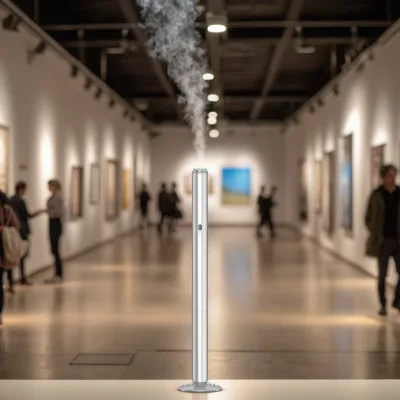
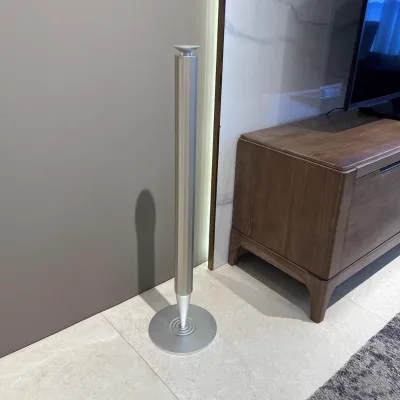
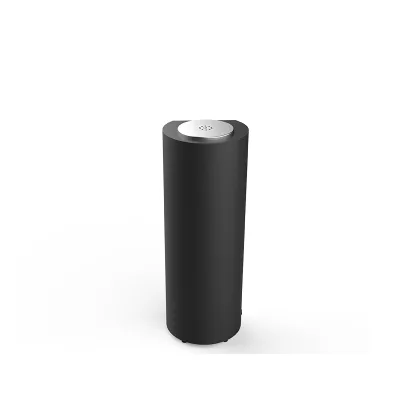
In contrast, large capacity commercial units frequently employ metal alloys, specifically Aluminum Alloy, to ensure structural integrity and heat dissipation. The use of metal not only enhances the premium aesthetic required for high-end hotels but also provides better protection for internal electronic components. The physical dimensions of these units vary significantly; while some compact models measure roughly 16x16x39cm, larger industrial units can reach dimensions of L65xw140xh1000 mm. Procurement teams must align the physical footprint of the device with the available installation space.
Weight is another consideration for installation and mobility. Units weighing approximately 3.2 kg per set are manageable for manual installation but may require specific mounting hardware for ceiling or wall integration. The packaging standard for these products is typically an export-standard carton or color box, designed to protect the device during international shipping. Buyers should request detailed material certificates to verify the safety and flammability ratings of the plastics and metals used, ensuring compliance with local building and fire codes.
Operational Features and Control Systems
Modern aromatherapy machines are increasingly integrated with smart technologies to enhance user control and energy efficiency. The control method has evolved from simple machine controls to sophisticated mobile app integration. High-end models support both machine control and mobile app control, allowing facility managers to adjust settings remotely. This feature is particularly valuable for large properties where centralized management of multiple diffusers is necessary.
The intensity of the fragrance can be customized through multiple settings, typically categorized as Strong, Mild, or Weak. This flexibility allows operators to tailor the scent profile to different times of the day or specific zones within a facility. Additionally, timing functions are standard, with some units supporting specific timer intervals to automate the release of fragrance. The operating language of the interface is another practical consideration; advanced models support multiple languages including English, German, French, Dutch, and Spanish, facilitating ease of use for international staff.
Battery operation adds a layer of versatility, allowing for wireless placement in areas without accessible power outlets. These units are often described as "waterless" and "wireless," emphasizing their portability and ease of maintenance. The inclusion of accessories such as USB cables, user manuals, and carrying bags is standard, but buyers should verify the completeness of the package. The power supply mode, whether DC 5V plug-in or battery/charge, must be clearly defined to ensure compatibility with the facility's power infrastructure.
Compliance, Certification, and Safety Standards
While specific certification statuses for every listed product may vary, buyers must prioritize compliance with international safety and environmental standards. The presence of certifications such as CE (Conformité Européenne) and ROHS (Restriction of Hazardous Substances) is a strong indicator of a supplier's commitment to quality and safety. These certifications ensure that the electronic components do not exceed hazardous substance limits and meet electromagnetic compatibility requirements.
Buyers should explicitly request proof of certification from suppliers rather than assuming compliance based on product descriptions. The origin of the product, often listed as Guangdong or Shenzhen in China, provides context for the manufacturing ecosystem but does not guarantee quality. Instead, the focus should be on the specific test results and compliance documents provided for the batch being ordered. The product standard, often related to volume capacity (e.g., 10-50ml or 16x16x39cm dimensions), should be verified against the actual delivered goods to ensure consistency.
Safety features such as overheat protection and automatic shut-off mechanisms are essential for large capacity units that operate for extended periods. These features prevent the device from becoming a fire hazard or damaging the essential oils through excessive heat. Procurement teams should also verify the warranty service terms, which can range from standard one-year coverage to extended two-year warranties for commercial-grade equipment. A robust warranty indicates the manufacturer's confidence in the product's longevity and reliability.
Cost Drivers and Procurement Economics
The cost of large capacity waterless aromatherapy machines is influenced by several factors, including material quality, technological complexity, and order volume. The observed price range in the market spans from approximately $5.56 to $149.60, reflecting the diversity from basic portable units to advanced commercial systems. The Minimum Order Quantity (MOQ) varies significantly, ranging from 1 unit for sample orders to 1000 units for bulk procurement. Understanding these thresholds is crucial for budget planning and inventory management.
Material costs play a significant role in pricing; units constructed with aluminum alloy and advanced electronic components will command a higher price point than those made from plastic. The inclusion of smart features like mobile app control and multi-language support also adds to the manufacturing cost. Buyers should negotiate based on the total cost of ownership, considering energy efficiency, oil consumption rates, and maintenance requirements. A lower upfront cost may result in higher operational expenses if the unit consumes oil at a faster rate or requires frequent replacement.
Lead times and shipping costs are additional economic factors. Products originating from Guangdong or Shenzhen typically have established logistics networks, but buyers should confirm lead times to avoid project delays. The packaging type, whether export-standard cartons or color boxes, affects shipping volume and cost. Bulk orders often benefit from economies of scale, reducing the per-unit cost significantly. However, buyers must balance cost savings with the risk of receiving substandard products from suppliers offering unusually low prices.
Supplier Evaluation and Quality Assurance
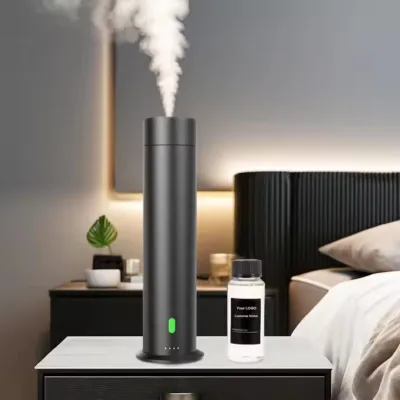
Selecting the right supplier is paramount to ensuring the reliability of the aromatherapy machines. Buyers should evaluate suppliers based on their customization capabilities, including logo printing, packaging design, and technical modifications. The availability of customization services allows companies to brand the devices for their specific use cases, enhancing brand visibility in hotels and commercial spaces. Suppliers with a track record of providing high-quality customization are preferable.
Quality control processes should be a central part of the supplier evaluation. Buyers should inquire about the testing procedures used for noise levels, power consumption, and oil consumption rates. Verification of the working time and charging time against the claimed specifications is essential. Suppliers who provide detailed test reports and allow for third-party inspections demonstrate a higher level of transparency and commitment to quality.
The service aspect of the supplier relationship is equally important. This includes after-sales support, warranty claims handling, and the availability of spare parts. A supplier offering a two-year warranty service is more reliable than one offering minimal coverage. Buyers should also assess the supplier's ability to handle large FCL (Full Container Load) quantities, as some units are packed in sets of four per box. Ensuring the supplier can meet the required FCL quantity without compromising on quality is vital for large-scale deployments.
Long-Term Procurement and Maintenance Strategy
Implementing a long-term procurement strategy for large capacity waterless aromatherapy machines involves more than just the initial purchase. It requires a comprehensive plan for maintenance, oil management, and system upgrades. The waterless nature of these devices simplifies maintenance compared to water-based diffusers, as there is no risk of mineral buildup or mold. However, regular cleaning of the atomization nozzle is necessary to prevent clogging and ensure consistent performance.
Buyers should establish a schedule for routine inspections to verify the integrity of the power supply, battery health, and control systems. For battery-operated units, monitoring the battery capacity and charging cycles is essential to prevent unexpected failures. The operating language and control interface should be reviewed periodically to ensure they remain compatible with the facility's management software.
Finally, the procurement strategy should include a plan for scalability. As the facility expands or changes, the ability to add more units or upgrade existing ones with new features like mobile app integration should be considered. Building a relationship with a supplier who can support long-term growth and provide consistent quality over time is the key to a successful procurement program. By focusing on these strategic elements, buyers can ensure a reliable and effective aromatherapy solution for their facilities.
FAQs
What is the oil consumption rate for large capacity waterless aromatherapy machines?
Efficient units typically operate at approximately 0.5ml per hour, while others may range between 15ml to 20ml per hour depending on the intensity setting. Buyers should verify the specific consumption rate against their facility's scent intensity requirements to avoid excessive oil usage or insufficient fragrance distribution.
Can these machines operate wirelessly with battery power?
Yes, many models are battery-powered and wireless, offering 2 to 8 hours of continuous operation. These units typically require about 2.5 to 3 hours to charge fully and are suitable for placement in areas without accessible power outlets.
Which materials are used to construct large capacity waterless aromatherapy machines?
Portable models often utilize a combination of PP and ABS plastics, while large capacity commercial units frequently employ aluminum alloy. These materials ensure structural integrity, heat dissipation, and resistance to chemical degradation from essential oils.
How loud are large capacity waterless aromatherapy machines during operation?
High-quality units are engineered to operate silently with noise levels ranging from 25dB to under 35dB. This ensures the device remains unobtrusive in quiet zones like hotels, spas, and offices.
What customization options are available for these aromatherapy machines?
Customization is available for logo printing, packaging design, and technical modifications. Suppliers can adapt the devices to specific branding needs, enhancing visibility in hotels and commercial spaces.
What is the typical voltage and power supply method for these devices?
Most units operate on DC 5V via USB-C or standard plug-in adapters, though some larger industrial units may require 12V inputs. Power supply modes include battery/charge or DC 5V plug-in depending on the model.