Source Liquid Cooling Mobile BESS for Grid Backup, Microgrids, and Remote Sites
Explore 30 listings for Liquid Cooling Mobile BESS systems featuring LFP cells and high-capacity configurations. Buyers can compare voltage ranges, power ratings, and cooling methods to find solutions for grid stabilization and remote energy storage.
Key considerations
Products List

Smart Grid Solar Storage Load Shifting Industrial Storage Liquid Cooling Bess
$29232.00 - $35078.00
MOQ: 1 Sets

Solar Storage Industrial Storage All in One Liquid Cooling 314ah 261kwh Bess
$29232.00 - $35078.00
MOQ: 1 Sets


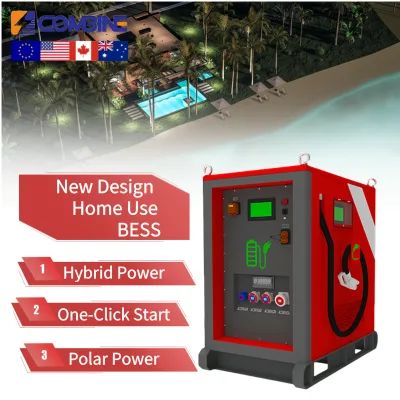
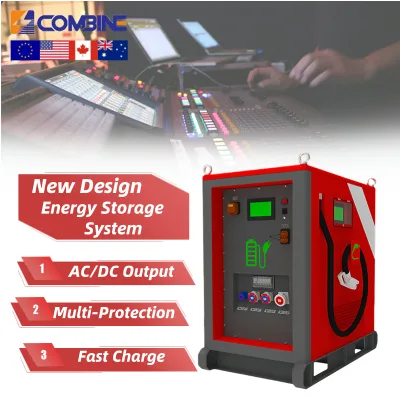


5.015 Mwh Liquid Cooled Bess with Easy Access Pack Configuration
$451350.00 - $541620.00
MOQ: 1 Pieces

5.015 Mwh Bess Container with Enhanced Safety and Thermal Management
$451350.00 - $541620.00
MOQ: 1 Pieces


Elecnova High-Quality Mobile Energy Storage System for Renewable Power
$47300.00 - $51170.00
MOQ: 1 Pieces


Outdoor Liquid Cooling 1MW Energy Storage System 5mwh Battery Storage Solar Power Bess Container
$19100.00 - $194500.00
MOQ: 1 Pieces

20FT Container 5mwh High Density Bess 314ah Liquid Cooled Storage System
$121000.00 - $280000.00
MOQ: 1 Pieces

Comprehensive Sourcing Guide
Strategic Sourcing Guide for Liquid Cooling Mobile BESS
Procuring a liquid cooling mobile Battery Energy Storage System (BESS) represents a significant capital investment for energy infrastructure, grid stabilization, and industrial power management. Unlike air-cooled alternatives, liquid cooling systems offer superior thermal management, allowing for higher energy density and extended cycle life, which are critical for high-performance applications. This guide synthesizes available market data and technical specifications to provide a disciplined framework for buyers evaluating Liquid Cooling Mobile BESS solutions. The focus remains on verifying observable attributes, understanding cost drivers, and establishing rigorous quality control protocols without relying on unverified marketing claims.
Technical Architecture and Thermal Management Specifications
The core differentiator of a Liquid Cooling Mobile BESS lies in its thermal regulation mechanism. In the observed market data, specific configurations utilize liquid cooling as the primary standard for heat dissipation. This approach is essential for maintaining optimal operating temperatures across the battery cells, particularly in high-capacity systems where heat generation is substantial. Buyers must verify that the cooling system is integrated directly with the battery modules to ensure uniform temperature distribution, which minimizes cell-to-cell variance and extends overall pack longevity.
When evaluating technical specifications, attention must be paid to the battery cell chemistry and pack configuration. The available data indicates the prevalence of Lithium Iron Phosphate (LFP) chemistry, specifically citing cell types such as 3.2V/280Ah and 314Ah variants. These cells are favored for their safety profile and long cycle life. The system configurations observed range from smaller 46.59 kWh packs to massive 261 kWh and even 5.015 MWh systems. For instance, a 5.015 MWh system may utilize a complex configuration of 12*(1p104s*4), demonstrating the scalability of liquid cooling architectures.
Voltage and power ratings are critical parameters for system integration. Observed systems operate with DC voltage ranges typically between 728V and 936V, with some high-capacity units reaching nominal voltages up to 1497.6V. The AC side of these systems often supports rated voltages of 400V or 690V, with adjustable power factors ranging from -1 to 1. The maximum charge and discharge rates are frequently capped at 0.5P for standard configurations, though high-power units may support charging rates up to 2.5MW. Buyers should confirm that the liquid cooling loop is designed to handle the thermal load generated at these maximum power levels without inducing hotspots.
Compliance, Certification, and Safety Standards
Safety is paramount in the deployment of large-scale battery storage. While specific certification statuses like UL 9540 or UL 1973 are often referenced in the broader industry, buyers must verify the actual certification status of the specific unit being procured rather than assuming compliance based on general market knowledge. The presence of a fire suppression system is a non-negotiable safety feature. In the observed product data, aerosol-based fire suppression systems are explicitly listed as a standard component, providing a rapid response mechanism to thermal events.
Environmental protection ratings are equally critical for mobile units that may be deployed in diverse climates. The data shows a range of Ingress Protection (IP) ratings, with specific units achieving IP65 for battery pack protection and IP54 for system-level ratings. An IP65 rating indicates that the battery pack is dust-tight and protected against water jets, making it suitable for outdoor mobile applications. Buyers must ensure that the cooling system's fluid lines and connectors also meet these IP standards to prevent leaks and electrical hazards.
Furthermore, grid compliance is a complex requirement. Systems must adhere to local grid codes regarding frequency, voltage, and harmonic distortion. Observed units support a rated frequency of 50Hz/60Hz and maintain a Total Harmonic Distortion (THDi) of less than 3%. The communication protocols, such as Modbus TCP/IP and Ethernet/RS485 interfaces, must be compatible with the buyer's existing Energy Management System (EMS) or Supervisory Control and Data Acquisition (SCADA) infrastructure. Verification of these communication standards ensures seamless integration and real-time monitoring capabilities.
Cost Drivers and Economic Evaluation
The total cost of ownership (TCO) for a Liquid Cooling Mobile BESS is influenced by several factors beyond the initial purchase price. The observed price range in the market is vast, spanning from $130 to $550,000, reflecting the diversity of system sizes and configurations. A 46.59 kWh unit will naturally cost significantly less than a 5.015 MWh installation. However, the cost per kilowatt-hour often decreases as the system scale increases, making larger units more economically efficient for utility-scale applications.
Minimum Order Quantity (MOQ) is another significant economic variable. The data indicates MOQs ranging from 1 unit to over 6,700 units. For buyers requiring a single mobile unit for a pilot project, the cost per unit may be higher due to the lack of economies of scale. Conversely, large-scale deployments can leverage lower unit costs but require substantial capital commitment upfront. Buyers should analyze the lead times associated with different MOQs, as larger orders may involve longer production schedules, impacting project timelines.
Additional cost drivers include the complexity of the liquid cooling infrastructure. Systems with liquid cooling standards require more sophisticated engineering for the coolant distribution manifold, pumps, and heat exchangers compared to air-cooled systems. This complexity adds to the manufacturing cost but is offset by the higher energy density and reduced footprint. Buyers should also consider the auxiliary power supply requirements, which often need to be 400V AC or 220V AC, adding to the balance of system costs.
Typical Applications and Deployment Scenarios
Liquid Cooling Mobile BESS units are versatile assets deployed across various sectors. Their high energy density and robust thermal management make them ideal for grid stabilization services, where rapid charge and discharge cycles are required. The observed discharge depth of 95% to 100% and cycle life of up to 9,000 cycles support frequent cycling applications, such as frequency regulation and peak shaving.
In the renewable energy sector, these systems serve as critical buffers for solar and wind farms, smoothing out intermittency and providing firm power output. The ability to operate in a wide voltage range (e.g., 728~936V DC) allows for flexible integration with different inverter technologies. For industrial applications, mobile BESS units can provide backup power during outages, ensuring continuity of operations for critical facilities. The compact design of liquid-cooled systems allows them to be deployed in space-constrained urban environments where air-cooled systems might be too bulky.
The mobility aspect of these units is a key advantage. Unlike fixed installations, mobile BESS units can be transported to remote locations for temporary power needs, such as construction sites, mining operations, or disaster relief efforts. The wooden frame packaging and standardized dimensions (e.g., 130013002350 mm) facilitate easy logistics and installation. Buyers should assess the specific power requirements of their application to determine if a 116kW or 128kW continuous power unit is sufficient, or if a multi-megawatt system is necessary.
Supplier Evaluation and Quality Assurance
Evaluating suppliers requires a rigorous due diligence process that goes beyond marketing materials. Buyers must verify the origin of the products, with China being a noted point of origin for many of the observed units. While this indicates a mature supply chain, buyers should assess the supplier's manufacturing capabilities, quality control processes, and track record in delivering liquid cooling systems.
Quality control should focus on the consistency of the battery cell matching and the integrity of the cooling system. The data highlights specific cell types like LFP 3.2V/280Ah, and buyers should request batch testing reports to ensure that the cells meet the specified capacity and internal resistance tolerances. The liquid cooling system must undergo rigorous pressure testing to prevent leaks, which could lead to catastrophic failure.
Communication and customization capabilities are also vital. The observed data confirms that customization is available, allowing buyers to tailor the system configuration to their specific needs. Suppliers should demonstrate the ability to modify the pack configuration, such as the 1P52S or 1P260S arrangements, and integrate specific communication protocols. Buyers should request references from previous clients who have deployed similar Liquid Cooling Mobile BESS units to validate the supplier's performance claims.
Long-Term Procurement and Lifecycle Management
Long-term procurement considerations extend beyond the initial purchase to include maintenance, warranty, and end-of-life management. The cycle life of the battery cells, observed at up to 9,000 cycles, is a key metric for calculating the economic lifespan of the system. However, the actual lifespan depends heavily on the operating conditions, including the depth of discharge and ambient temperature. Buyers should negotiate warranty terms that cover both the battery cells and the liquid cooling components, as the latter may require periodic maintenance or replacement.
The cooling system's longevity is a critical factor. Liquid cooling loops can suffer from corrosion, leaks, or pump failures over time. Buyers should ensure that the supplier provides a comprehensive maintenance plan, including access to spare parts and technical support. The IP rating of the system, whether IP54 or IP65, will influence the maintenance frequency, with higher ratings generally requiring less frequent intervention in harsh environments.
Finally, buyers must consider the environmental impact and recycling options for the battery system. As regulations on battery disposal become stricter, suppliers should provide clear guidelines on the end-of-life process for the LFP cells and the liquid coolant. A sustainable procurement strategy involves selecting suppliers who are committed to circular economy principles and offer take-back programs for used battery packs.
Summary of Key Technical Parameters
To assist buyers in their evaluation, the following table summarizes the key technical parameters observed in the market for Liquid Cooling Mobile BESS units. This comparison highlights the diversity of configurations and performance metrics available.
| Parameter | Observed Range / Specific Values | Notes |
|---|---|---|
| Battery Cell Type | LFP 3.2V/280Ah, 314Ah | High safety, long cycle life |
| System Capacity | 46.59 kWh to 5.015 MWh | Scalable configurations |
| DC Voltage Range | 728V ~ 936V (up to 1497.6V) | Matches inverter requirements |
| AC Rated Power | 116 kW to 128 kW (Continuous) | High-power variants available |
| Cooling Type | Liquid Cooling | Superior thermal management |
| IP Rating | IP54 to IP65 | Outdoor suitability |
| Cycle Life | Up to 9,000 Cycles | Dependent on DoD and temp |
| Fire Suppression | Aerosol System | Standard safety feature |
| Communication | Modbus TCP/IP, Ethernet/RS485 | Grid integration ready |
| Origin | China | Mature manufacturing base |
By adhering to these guidelines and focusing on verified technical data, buyers can make informed decisions when sourcing Liquid Cooling Mobile BESS solutions. The emphasis on rigorous verification, clear specification matching, and long-term lifecycle planning ensures a successful procurement outcome that aligns with operational goals and safety standards.
FAQs
What is the typical voltage range for these Liquid Cooling Mobile BESS units?
The DC voltage range typically spans from 728 to 936 volts for standard configurations. Some high-capacity systems may reach nominal voltages up to 1497.6 volts depending on the specific pack arrangement and cell series configuration.
Which battery cell chemistry is commonly used in these liquid cooling systems?
These systems predominantly utilize Lithium Iron Phosphate (LFP) chemistry. Specific cell types observed include 3.2V/280Ah and 314Ah variants, chosen for their safety profile and extended cycle life capabilities.
Can these units be customized for specific project requirements?
Yes, customization is available for many Liquid Cooling Mobile BESS units. Buyers can tailor pack configurations, such as 1P52S or 1P260S arrangements, and integrate specific communication protocols to match their energy management needs.
What is the minimum order quantity for purchasing these battery systems?
Minimum order quantities vary significantly, ranging from a single unit to over 6,700 units depending on the supplier and configuration. Smaller pilot projects can often source single units, while large deployments leverage bulk pricing.
How do these systems handle fire safety and thermal management?
Safety is managed through integrated aerosol fire suppression systems and liquid cooling standards. The liquid cooling ensures uniform temperature distribution, while the fire suppression provides rapid response to thermal events for enhanced operational safety.
What is the expected cycle life for these LFP battery packs?
The observed cycle life for these systems can reach up to 9,000 cycles under optimal conditions. This longevity supports frequent cycling applications like frequency regulation and peak shaving when operated within recommended depth of discharge limits.
Which communication protocols are supported for system integration?
These units support standard communication interfaces including Modbus TCP/IP and Ethernet or RS485. These protocols ensure compatibility with existing Energy Management Systems and SCADA infrastructure for real-time monitoring and control.