Source Liquid Oil Based Polyurethane Grout for Waterproofing, Construction, and Sealing
Compare 30 listings of Liquid Oil Based Polyurethane Grout suitable for waterproofing, construction, and sealing applications. Buyers can review specifications like density, solid content, and usage methods to find the right material for outdoor or indoor projects.
Key considerations
Products List


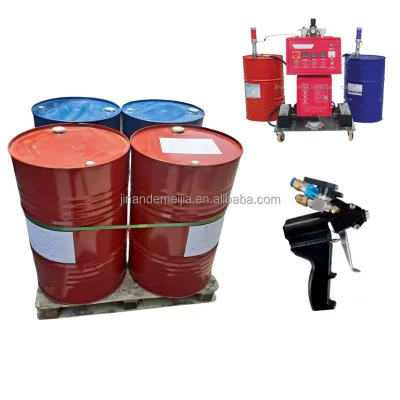


Water Based Foaming Agent Rigid PU Polyurethane Foam for Wall Insulation
$1200.00 - $1350.00
MOQ: 1 Sets


Comprehensive Sourcing Guide
Strategic Sourcing Guide for Liquid Oil-Based Polyurethane Grout
Understanding Product Attributes and Technical Specifications
When sourcing liquid oil-based polyurethane grout, buyers must first distinguish between the broad category of polyurethane products and the specific performance characteristics required for grouting applications. The supplied data indicates a diverse range of polyurethane-based solutions, including liquid formulations with varying densities, solid contents, and application methods. A critical observation from the available product attributes is the presence of liquid polyurethane systems with densities ranging from 1.0 to 1.2 g/cm³, and specific models exhibiting densities of 1.10 to 1.2 g/cm³. These physical properties are fundamental for calculating material volume requirements and ensuring the grout can penetrate the intended substrate effectively.
The solid content of these liquid systems is another vital technical parameter. Data points suggest solid content percentages between 75% and 90%, with specific instances noting values of 85% and 79% non-volatile content. High solid content generally correlates with reduced shrinkage and higher final strength, which is essential for structural grouting. Furthermore, the foaming capacity of these materials varies significantly, with observed ranges from 500% to 10,000% and specific models reporting 2,000% to 3,000%. This expansion capability is crucial for filling voids, yet it must be balanced against the specific needs of a grouting project where excessive expansion could cause structural displacement.
Application methods listed in the product attributes include spray, brush, and roller applications. While spray application is noted for certain liquid polyurethane products, construction-grade grouts often require brush or roller application for precise placement in joints and cracks. The data also highlights a dosage rate of 1.5 kg per square meter for specific waterproofing variants, which serves as a baseline for estimating consumption, though actual grout usage will depend on crack width and substrate porosity. The molecular principal chain is identified as a heterochain polymer, indicating a complex chemical structure that influences flexibility and adhesion. Buyers should verify that the specific "oil-based" formulation they select aligns with these heterochain characteristics to ensure compatibility with the intended substrate and environmental conditions.
Compliance, Certification, and Regulatory Verification
Navigating the compliance landscape for polyurethane grouts requires rigorous verification of certifications and standards. The provided product facts list ISO and CE certifications as observed attributes for certain polyurethane products. When sourcing oil-based polyurethane grout, buyers must confirm that the specific supplier holds valid ISO certification, which typically relates to quality management systems, and CE marking, which indicates conformity with health, safety, and environmental protection standards for products sold within the European Economic Area. However, the presence of these certifications in the general product pool does not guarantee that every specific grout model possesses them; verification against the specific product datasheet is mandatory.
Beyond general certifications, buyers must scrutinize the product standards and specifications. The data references packing standards such as 18kg drums, 200kg drums, and customized packaging options. While these are logistical standards, they often reflect adherence to specific handling and safety protocols. For construction applications, the product standard might also reference specific industry norms for waterproofing or structural repair. The observed product models, such as VPU-1, VPU-2, GS-001, and SPUP-01004, suggest that manufacturers use distinct model numbers to denote different chemical compositions or performance grades. Buyers should request the specific standard documentation associated with each model number to ensure it meets local building codes and regulatory requirements for the project location.
It is also important to note that the product origin is listed as China. While this is a significant manufacturing hub, it necessitates a thorough due diligence process regarding the specific factory's compliance history. Buyers should not assume that all products from this origin automatically meet international safety standards. The verification process must include checking for third-party test reports that confirm the product's compliance with relevant fire safety, VOC (Volatile Organic Compound) emissions, and toxicity regulations. The absence of specific certification data for every product in the provided list means that the buyer must explicitly request proof of certification for the exact batch or model intended for purchase, rather than relying on general product category claims.
Cost Drivers and Economic Factors in Procurement
The economic landscape for liquid oil-based polyurethane grout is influenced by several distinct cost drivers, including raw material volatility, packaging specifications, and order volume. The observed price range in the market spans from $0.5 to $2,800 USD, a wide spectrum that reflects the diversity of product types, from small sample containers to bulk industrial drums. This variance indicates that cost is not merely a function of weight but is heavily dependent on the specific formulation, performance metrics, and packaging format. For instance, products with higher solid content or specialized additives for chemical resistance will command a premium over standard waterproofing liquids.
Minimum Order Quantity (MOQ) is another critical economic factor. The data shows an MOQ range from 1 to 5,000 units. This flexibility allows buyers to procure small quantities for testing or pilot projects, while larger orders can be negotiated for bulk supply. However, the high-end MOQ of 5,000 suggests that significant economies of scale are available for large-scale construction projects. Buyers should analyze their project timeline and storage capabilities to determine the optimal order size. Ordering too much inventory can tie up capital and increase storage costs, while ordering too little may result in higher per-unit costs and logistical inefficiencies.
Packaging standards also play a role in the total cost of ownership. The observed packaging options include 18kg drums, 200kg drums, and customized barrels. Larger drums typically reduce the cost per kilogram due to lower packaging and handling costs, but they require more storage space and specialized equipment for handling. Customized packaging, while potentially more expensive per unit, may be necessary for specific project logistics or to meet client requirements. Additionally, the product origin and associated shipping costs from China must be factored into the total landed cost. Buyers should request detailed Incoterms to understand who bears the risk and cost of freight, insurance, and customs duties.
Typical Applications and Performance Requirements
Liquid oil-based polyurethane grouts are versatile materials with applications spanning construction, marine, and industrial sectors. The provided data highlights specific usage scenarios such as water stopping, outdoor applications, roofing, basement waterproofing, and wall sealing. These applications leverage the material's ability to expand and fill voids, creating a watertight seal. The observed "Main Usage" attributes include water stop and outdoor environments, indicating that these grouts are designed to withstand exposure to moisture and varying weather conditions.
In the marine and industrial sectors, the data points to applications in shipbuilding, marine construction, and industrial casting. The product attributes mention "Chemical Resistance" and "Modified Epoxy Acrylate" types, suggesting that certain formulations are engineered to resist harsh chemicals, oils, and solvents. This makes them suitable for environments where standard grouts might degrade. The "Function" is explicitly listed as waterproof, and the "Application Scope" includes roofs, basements, and walls, confirming their primary role in preventing water ingress.
However, buyers must be cautious about matching the specific grout formulation to the application. While the data lists "Textile, Construction, Aviation, Shipbuilding" as usage areas, not every product is suitable for every industry. For example, a grout designed for textile coating may not possess the structural strength required for marine construction. The "Construction Method" of brush or spray suggests that the product can be applied in various ways, but the specific viscosity and gel time must be compatible with the chosen method. The observed gel time of 138 seconds and water expansion rate of 23% provide concrete examples of performance metrics that buyers should compare against their project requirements. A fast gel time might be desirable for quick repairs, while a slower time might be needed for large-scale pouring operations.
Supplier Evaluation and Quality Assurance Protocols
Evaluating suppliers for liquid oil-based polyurethane grout requires a multi-faceted approach that goes beyond simple price comparison. The first step is to verify the supplier's ability to provide consistent product quality. The data indicates that customization is available, which is a positive sign of a flexible supplier capable of meeting specific project needs. Buyers should assess the supplier's capacity to customize color, packaging, and potentially chemical formulations to match project specifications. The "After-Sales Service" attribute, listed as "Online," suggests that suppliers offer technical support, but buyers should verify the depth and responsiveness of this support.
Quality control is paramount in the procurement of chemical grouts. Buyers should request detailed quality assurance documentation, including batch test reports, material safety data sheets (MSDS), and technical data sheets (TDS). The observed attributes such as "Viscosity: 1000/MPa.S" and "Foaming Rate: 362%" are specific test results that should be reproducible in every batch. Buyers must ensure that the supplier has a robust quality management system, ideally backed by the ISO certification mentioned in the data. Regular third-party inspections and audits of the manufacturing facility can provide additional assurance of product consistency.
The supplier's location, identified as China in the data, presents both opportunities and challenges. While China offers competitive pricing and a wide range of suppliers, buyers must be vigilant about logistics and communication. Establishing clear communication channels and understanding the supplier's lead times is essential. The observed lead times are not explicitly stated in the data, so buyers must negotiate specific delivery schedules based on their project timeline. Additionally, buyers should verify the supplier's track record in similar projects, particularly in the marine or construction sectors, to ensure they have the necessary experience and expertise.
Long-Term Procurement and Lifecycle Considerations
Long-term procurement of liquid oil-based polyurethane grout involves considering the product's lifecycle, warranty, and long-term performance. The data includes a "Warranty" attribute of 5 years, which is a significant indicator of the manufacturer's confidence in their product. However, buyers must understand the scope of this warranty. Does it cover material defects, application errors, or environmental degradation? Clarifying these terms is essential for risk management. A 5-year warranty suggests that the product is designed for durability, but it does not guarantee performance under all possible conditions.
Sustainability and environmental impact are increasingly important factors in long-term procurement. The "Solid Content" and "Non-Volatile Content" attributes provide insight into the environmental profile of the product. Higher solid content generally means lower VOC emissions, which is beneficial for indoor air quality and regulatory compliance. Buyers should inquire about the product's environmental certifications and its compliance with local environmental regulations. The "Surface Treatment" being listed as "Liquid" implies that the product is applied in a fluid state, which may have implications for disposal and cleanup procedures.
Finally, buyers should consider the availability of replacement parts and the long-term support for the product. In construction and marine applications, the longevity of the grout is critical. If the product fails or requires re-application, the buyer needs to ensure that the same formulation is still available and that the supplier can provide technical assistance for remediation. The "Customization" attribute suggests that the supplier can adapt to changing needs, but buyers should confirm that this customization capability extends to long-term supply agreements. By focusing on these long-term factors, buyers can ensure a stable and reliable supply chain for their polyurethane grout needs.
FAQs
What certifications are available for Liquid Oil Based Polyurethane Grout?
ISO and CE certifications are available for specific Liquid Oil Based Polyurethane Grout models. Buyers must verify these certifications against the specific product datasheet rather than assuming they apply to all listed items in the general product pool.
How is the solid content percentage defined for these liquid grouts?
Solid content percentages typically range from 75% to 90% for Liquid Oil Based Polyurethane Grout formulations. Specific models may report values of 85% or 79% non-volatile content, which correlates with reduced shrinkage and higher final strength.
Which application methods are supported for Liquid Oil Based Polyurethane Grout?
Supported application methods include spray, brush, and roller techniques for Liquid Oil Based Polyurethane Grout. The specific method depends on the product viscosity and gel time, with some models optimized for precise placement in joints.
Can the product density be customized for specific project requirements?
Product density is generally observed between 1.0 and 1.2 g/cm³ for Liquid Oil Based Polyurethane Grout. While customization is available for color and packaging, density ranges are fixed by the chemical formulation and cannot be arbitrarily altered.
What is the typical packaging standard for bulk orders of this grout?
Standard packaging includes 18kg drums, 200kg drums, and customized barrels for Liquid Oil Based Polyurethane Grout. Larger drums reduce per-unit costs but require specialized handling equipment and sufficient storage space at the project site.
How does the foaming capacity affect void filling performance?
Foaming capacity ranges from 500% to 10,000% for Liquid Oil Based Polyurethane Grout, with specific models at 2,000% to 3,000%. This expansion capability is crucial for filling voids but must be balanced to avoid structural displacement.
Which industries commonly utilize Liquid Oil Based Polyurethane Grout?
Common industries include construction, marine, shipbuilding, and industrial casting for Liquid Oil Based Polyurethane Grout. Specific formulations offer chemical resistance and waterproofing functions suitable for roofs, basements, and walls in outdoor environments.