Source Liquid Polyester Water Repellent for Garments
Find 30 listings for Liquid Polyester Water Repellent solutions suitable for garment and home textile applications. Compare technical specifications such as pH value, solid content, and curing conditions to identify the right synthetic fiber treatment for your manufacturing needs; compare the available evidence and request quotations based on your requirements.
Key considerations
Products List

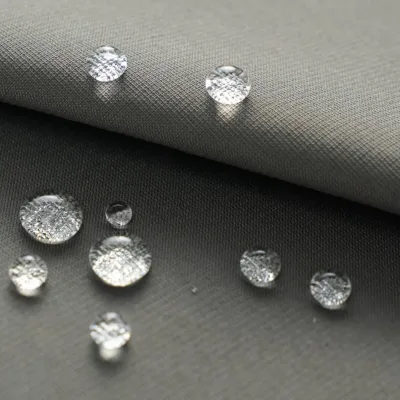
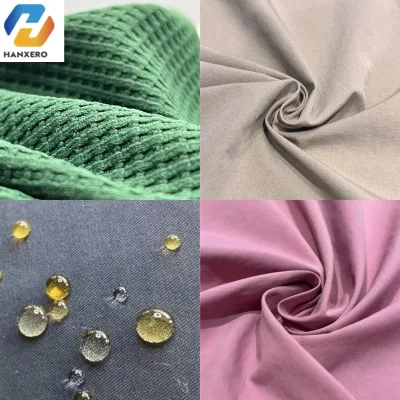



90% Polyester 10% Spandex 4-Ways Stretch Water Repellent TPU Membrane Fabric
$3.14 - $3.45
MOQ: 1000 Meters


Ripstop PU Backing 600d Polyester Oxford Fabric Water Repellent Oxford Fabric
$1.20 - $2.56
MOQ: 1000 Meters


Comprehensive Sourcing Guide
Liquid Polyester Water Repellent Sourcing Guide
Liquid polyester water repellents occupy a specific niche in textile finishing: fluorine-free, polyurethane-based formulations applied to polyester and synthetic-blend fabrics to impart hydrophobic performance. For procurement teams, this category presents a familiar sourcing challenge. Chemical auxiliaries are rarely listed with complete technical documentation, and the difference between a listing that performs and one that fails on the pad mangle often comes down to details buried in specification sheets. This guide organizes the verification work into sequential decisions, from scoping the product category through supplier qualification and long-term contract management, so buyers can move from browsing marketplace listings to defensible purchase decisions.
The listings observed in this category include polyurethane-based fluorine-free water repellents sold in liquid form, with cationic or non-ionic character, alongside finished functional fabrics such as soft shell fleece with windproof, waterproof, and breathable properties. Buyers should treat chemical auxiliaries and finished fabrics as related but distinct procurement exercises: the former demands formulation and application data, while the latter demands fabric testing and construction verification. The sections below apply primarily to the liquid repellent itself, with notes on downstream fabric applications where relevant.
Product Scope and Observed Listing Signals
The liquid water repellent listings observed present a consistent signal set: milky white liquid appearance, solid content in the 24%–26% range, pH of 2–5, cationic or non-ionic ionicity, solubility in water at any dilution ratio, and a six-month shelf life. A typical model designation such as HXL-1-08X appears with an application range of 15–90 g/L and crosslinking agent dosing of 5%–20% of the repellent dosage. Curing guidance of 120°C–190°C for 60–180 seconds indicates compatibility with standard stenter finishing lines. Buyers should treat these as starting points for negotiation, not guarantees applicable to every listing.
Packaging is commonly quoted as 125 kg plastic drums, with selling units in multiples of 125, which shapes minimum-order and logistics planning for smaller finishers. Related fabric listings, such as soft shell fleece bonded using polyurethane roller composite technology on polyester/spandex substrates, show where the repellent may be deployed downstream. Note that other listings in the same category are powders packed at 20 kg per bag, so buyers must confirm form (liquid versus powder) early. Customization availability and technical support are advertised attributes, but their substance should be tested during qualification.
Technical Specifications to Verify
Begin with formulation fundamentals. Confirm that the product is genuinely fluorine-free polyurethane-based chemistry if that matters for your compliance posture, and obtain the exact solid content range — 24%–26% is listed on some products, but your supplier's batch must fall within an agreed tolerance. Verify ionicity (cationic, non-ionic, or both), because ionicity determines compatibility with your existing pad bath auxiliaries such as crosslinkers, softeners, and catalysts. Request the pH range in writing and confirm it matches your bath chemistry to avoid coagulation or precipitation during dilution.
Application parameters deserve equal scrutiny. Pin down the recommended pickup dosage (the 15–90 g/L range cited on some listings), crosslinker proportion (5%–20% of repellent dosage), and curing window (120°C–190°C for 60–180 seconds), then map these to your actual line speed and stenter temperature profile. Ask whether the supplier validates performance at the low and high ends of the curing window, since under-curing reduces wash durability and over-curing can yellow light shades. Finally, confirm dilution behavior — "dilutable with water in any ratio" should be demonstrated in a jar test at your water hardness, not assumed from a datasheet.
Compliance and Safety Documentation
Fluorine-free positioning is frequently the reason buyers switch to polyurethane-based repellents, but the claim alone is not documentation. Request a full declaration of restricted substances covering PFAS content at the detection limits your customers require, and ask for safety data sheets in your destination market's format. For brands bound by chemical restrictions in apparel and home textile supply chains, obtain third-party test reports on the specific product — not just category-level statements — and verify the test scope, reporting limits, and report dates before relying on them. Note that standards such as OEKO-TEX or REACH appear in category context; whether a specific supplier's product holds such credentials must be confirmed directly rather than assumed.
Because the repellent is applied to fabrics destined for garments and home textiles, finished-fabric testing also matters. Agree in advance which wash durability protocol, hydrostatic head method, and spray rating method will govern acceptance, and who bears re-treatment costs if first-pass results fall short. Ask the supplier to state which tests their product was validated against and at what dosage. If your customer specifies a particular performance threshold — for example, waterproof ratings referenced on related fabric listings such as W/R W/P 3000/3000 — confirm the chemical supplier will support correlation trials between dosage, curing conditions, and achieved fabric results.
Cost Drivers and Commercial Terms
Price per kilogram is a misleading anchor in this category. The real cost driver is effective dosage: a product dosed at 30 g/L that survives ten washes may outperform a cheaper product dosed at 60 g/L that fails in three, so build a cost-per-finished-meter comparison into your evaluation. Solid content also matters — at 24%–26%, dilution economics are predictable, but confirm whether quoted pricing is on a per-drum or per-kilogram-of-active basis. Crosslinker purchases, freight for 125 kg drums, and shelf-life constraints (six months is short; plan inventory turnover accordingly) all affect landed cost.
Observed commercial terms in this category include T/T payment with 30% deposit and 70% against bill-of-lading copy, and delivery terms spanning EXW, FOB, FCA, CIF, and DAP, with some chemical listings quoting FOB Ningbo. Production lead times around 30 days appear on related fabric listings and should be verified for chemicals specifically. Negotiate shelf-life guarantees or batch-freshness commitments given the six-month shelf life, and clarify whether technical support — listed as an after-sales service — includes on-site or remote application trials at no extra cost. Confirm MOQ in drums rather than assumptions, since minimums vary widely across listings.
Supplier Qualification and Quality Control
Qualify chemical suppliers the way you would qualify dyestuff vendors: through trial lots, not brochures. Request a sample drum from current production, run a lab-scale pad trial on your own fabric at three dosages across your curing range, and compare against your incumbent product for initial repellency, wash durability, and shade change on light colors. Check batch-to-batch consistency by requesting two production batches and comparing solids content, pH, and appearance. A supplier advertising customization and technical support should demonstrate both — ask them to propose a formulation adjustment for a problem fabric before you commit to volume.
Establish incoming quality control before the first bulk order. Specify acceptance tests on each delivered lot — typically solids content, pH, and appearance against a retained reference sample — with clear rejection and replacement procedures in the contract. Given the six-month shelf life, require production dates on drum labels and enforce first-in-first-out rotation in your warehouse. Agree on retained-sample procedures so disputed batches can be re-tested against physical references. For repeat orders, define a specification sheet that locks the model number (such as WS80 or HXL-1-08X where applicable), solid content tolerance, ionicity, and packaging format, so substitutions cannot be made unilaterally.
Long-Term Procurement Checks
Over a multi-year relationship, monitor the durability of the chemistry itself, not just the supplier. Fluorine-free repellent technology continues to evolve, and formulations are periodically revised for regulatory or cost reasons — require advance notification of any formulation change, with the right to re-run qualification trials on the revised product. Track your own field data: returns related to water repellency failure, customer complaints on wash durability, and lot-level incoming QC results form an objective performance record that strengthens renegotiation and protects you if a supplier quietly shifts quality.
Build resilience into the supply arrangement. Because the category includes both liquid and powder formats from China-based suppliers (Shanghai and Zhejiang origins are visible in listings), maintain at least one qualified alternate whose product passed the same pad-trial protocol, and refresh that qualification annually with a small sample lot. Revisit commercial terms when drum prices, freight, or your dosage requirements shift materially, and keep the testing responsibility matrix — who tests, to which method, with what acceptance limits — current in your contracts. A supplier relationship in this category succeeds when the technical partnership, documentation discipline, and commercial terms all hold together across successive order cycles.
FAQs
What is the appearance of the liquid water repellent?
The product appears as a milky white liquid with a pH value between 2 and 5. It is a polyurethane-based fluorine-free water repellent suitable for synthetic fibers. The solid content ranges from 24% to 26%, ensuring effective thickening properties for various textile applications.
How should the curing conditions be set for this product?
Curing requires temperatures between 120 and 190 degrees Celsius for durations of 60 to 180 seconds. This process ensures the water repellent bonds effectively to the fabric. The crosslinking agent dosage should be adjusted between 5% and 20% of the total water repellent dosage for optimal results.
Can the product be customized for specific fabric types?
Yes, customization is available for woven and knitted fabrics made of polyester or spandex. Buyers can send color shades for specific design requirements. The product supports make-to-order supply types, allowing tailored solutions for garment and home textile usage scenarios.
What is the shelf life and storage requirement for this item?
The product has a shelf life of six months when stored properly. It can be diluted with water in any ratio due to its solubility. The packaging options include 20kg bags with PE liners or 125kg plastic drums, depending on the specific model and order volume.
Which delivery terms are available for international orders?
Delivery terms include FOB Ningbo, CIF, FCA, EXW, and DAP to accommodate various shipping needs. The production lead time is typically 30 days after order confirmation. Payment terms require a 30% deposit with the remaining 70% paid against the bill of lading copy.
What technical standards does the water repellent meet?
The product meets specific technical standards including low transmittance film properties. It offers water repellency and water pressure ratings of 3000/3000 or 6000/3000 depending on the model. Buyers should contact the supplier for more detailed standard information regarding specific performance metrics.
How is the product packaged for shipment?
Packaging options vary by model, with some items packed in 20kg bags with PE liners. Other models come in 125kg plastic drums, sold in multiples of 125. Roll packing in plastic bags is also available for specific fabric types, ensuring safe transport and storage.