Source Lock Belleville Spring Washer for Industrial Machinery
Compare 30 listings of Lock Belleville Spring Washer options from suppliers in China, Zhejiang, and Tianjin. Buyers can review material types like carbon steel and stainless steel, surface treatments, and standard sizes ranging from M3 to M48.
Key considerations
Products List





Comprehensive Sourcing Guide
Strategic Sourcing Guide for Lock Belleville Spring Washers
Navigating the global market for lock belleville spring washers requires a disciplined approach that balances technical precision with supply chain reliability. These components, often referred to as disc springs or pressure washers, are critical for maintaining bolted joint integrity under dynamic loads, thermal expansion, and vibration. The sourcing landscape is populated with diverse manufacturers, primarily concentrated in industrial hubs across China, offering a wide spectrum of materials, finishes, and customization capabilities. Buyers must move beyond generic product listings to understand the specific attributes that define a high-performance locking mechanism. This guide outlines the essential factors for evaluating suppliers and specifications, ensuring that procurement decisions are grounded in verifiable data rather than marketing assertions.
Technical Specifications and Material Selection
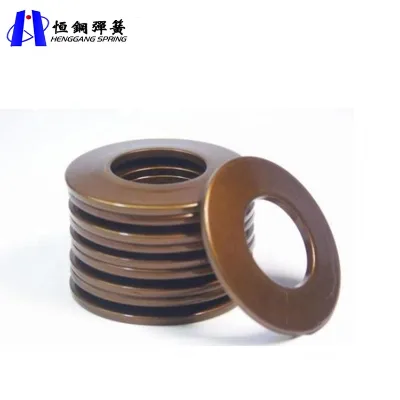
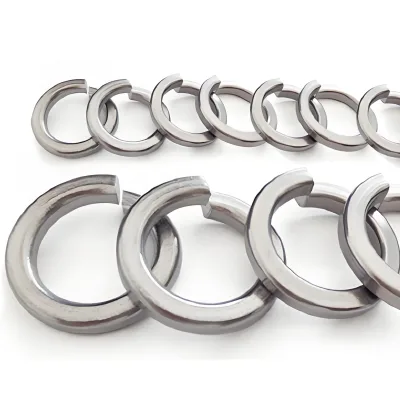
The foundation of a successful procurement strategy lies in understanding the precise technical specifications required for the application. The core keyword, Lock Belleville Spring Washer, implies a specific geometry designed to provide a restoring force. In the current market, materials are a primary differentiator. Suppliers frequently list Carbon Steel, Stainless Steel, and various grades of Steel as available options. The choice of material dictates the environmental resistance and mechanical strength of the final component. For instance, Carbon Steel is often cited for general industrial applications, while Stainless Steel is selected for environments requiring corrosion resistance.
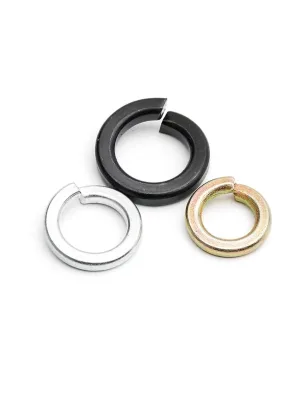
Dimensions and standards are equally critical. Observed market data indicates a wide range of standard sizes, including fractional measurements like 1/2", 5/8", 3/4", and 3/8", as well as metric designations ranging from M3 to M48. Some suppliers offer custom sizing, allowing for M3-M16 or broader ranges based on specific customer needs. The structural design is another key variable; the market distinguishes between "Standard" spring washers and specific "Combination Washer" structures, such as Type A and Type B. These structural variations affect how the washer interacts with the bolt head and the mating surface. Additionally, surface treatments play a vital role in performance. Common processes include Plain, Zinc Plated, Phosphating, and Nickel plating. Buyers must verify that the specified surface treatment aligns with the operational environment, as the wrong finish can lead to premature failure or galvanic corrosion.
Compliance, Standards, and Certification Verification
When sourcing industrial fasteners, compliance with international standards is non-negotiable for ensuring interchangeability and safety. The market data reveals references to specific standards such as DIN2093, which governs the dimensions and properties of disc springs. Other listings mention standards like ISO 9001:2015, though this should be treated as a background expectation rather than a guaranteed attribute for every listed product. Buyers must explicitly request certification documents from suppliers to confirm that a specific batch meets the required standard.
It is essential to distinguish between "Standard" compliance and "Custom" specifications. While many products adhere to established norms like DIN2093 or metric series (M3-M48), a significant portion of the market offers "As Required" or "Custom" standard options. This flexibility is valuable for specialized applications but introduces a higher risk of non-compliance if the supplier's quality control is not rigorous. Buyers should verify that the supplier can provide test reports or material certificates that explicitly reference the standard being met. Relying on generic claims without documented proof can lead to procurement of components that fail under load or do not fit the intended assembly. The presence of a specific model number, such as A09, VSKD, or BW, often serves as a proxy for a specific standard configuration, but this should always be cross-referenced with the technical drawing provided by the manufacturer.
Cost Drivers and Pricing Dynamics
The pricing of lock belleville spring washers is influenced by a complex interplay of material costs, manufacturing complexity, and order volume. The observed price range in the market spans from $0 to $5,000, a broad spectrum that reflects the difference between small quantities of high-grade stainless steel washers and bulk orders of carbon steel components. The Minimum Order Quantity (MOQ) is a significant cost driver, with observed ranges extending from 1 unit to 10,000 units. Suppliers often structure their pricing tiers based on these volume thresholds, offering lower unit costs for larger orders.
Material selection is the most direct cost factor. Stainless steel components inherently cost more than carbon steel equivalents due to the raw material price and the additional processing required. Furthermore, surface treatments add to the cost; processes like nickel plating or specialized phosphating are more expensive than plain finishes. Customization is another major variable. While many suppliers offer "Available" customization for size, material, and packaging, these bespoke requirements often incur higher tooling and setup fees. Buyers should also consider the packaging costs, as options range from simple bulk packing to complex solutions involving small boxes, outer cartons, pallets, and waterproof films with wooden frames. The "Half a Pack" or "All Inclusive" packaging options mentioned in some listings suggest varying levels of logistical support, which can impact the final landed cost. Understanding these drivers allows buyers to negotiate more effectively and avoid paying a premium for unnecessary features.
Typical Applications and Performance Requirements
Lock belleville spring washers are engineered for specific high-stress environments where standard flat washers fail to maintain preload. The primary application is in industrial settings where vibration, thermal cycling, or dynamic loading threatens to loosen bolted connections. The "disc spring washer" and "pressure washers" keywords highlight their role in absorbing shock and maintaining clamping force. In machinery subject to constant vibration, these washers act as a spring element, compensating for relaxation in the bolt thread and preventing the joint from loosening.
The versatility of these components is evident in their usage across various sectors. The market data indicates "Industrial" as a primary usage category, but the specific geometry allows for use in automotive, aerospace, and heavy machinery applications. The "Flat", "Leaf", and "Plate" styles suggest different load-deflection characteristics suitable for varying force requirements. For example, a Belleville washer stack can be designed to provide a constant force over a large deflection range, making it ideal for applications where thermal expansion might otherwise compromise the joint integrity. Buyers must ensure that the selected washer type matches the specific load requirements of their application. A standard lock washer may suffice for light-duty tasks, but heavy-duty industrial applications often require the specific load-bearing capacity of a belleville design.
Supplier Evaluation and Operational Capabilities
Evaluating a supplier requires a deep dive into their operational capabilities and geographical footprint. The supply chain for these components is heavily concentrated in China, with key production hubs identified in Wenzhou, Zhejiang, Ruian, and Tianjin. These regions are known for their manufacturing clusters, offering a dense network of suppliers with varying specializations. Buyers should verify the specific "Place of Origin" for each order, as different regions may have different quality control standards and logistical efficiencies.
Supplier reliability is often gauged by their lead times and delivery capabilities. Observed data suggests delivery times ranging from 10 to 25 days, with some specific orders quoted at 15 days. This variability highlights the importance of confirming lead times before placing an order, as rush orders or custom specifications can extend these timelines. Payment terms are another critical evaluation point, with common structures including FOB (Free on Board) and 30% TT in advance with 70% TT before shipment. These terms reflect the risk profile of the transaction and the trust level between buyer and seller. Additionally, the availability of OEM services indicates a supplier's willingness to adapt to specific branding or design requirements. Buyers should prioritize suppliers who demonstrate transparency in their production processes and offer clear communication regarding potential delays or quality issues.
Quality Control and Long-Term Procurement Strategy
Ensuring long-term success in sourcing lock belleville spring washers requires a robust quality control framework. The market offers a mix of "Standard" and "Custom" products, and the quality of the latter depends heavily on the supplier's internal controls. Buyers must insist on rigorous inspection protocols, including material verification, dimensional checks, and surface finish analysis. The presence of specific model numbers and standard references is a positive indicator, but it does not replace the need for physical inspection upon receipt.
Long-term procurement considerations extend beyond the initial purchase. Buyers should evaluate the supplier's ability to maintain consistency over time, especially for custom orders. The "Available" customization option is a double-edged sword; while it offers flexibility, it requires a strong partnership with the supplier to ensure that design changes do not compromise quality. Furthermore, the packaging method, ranging from simple bulk to complex palletized systems, impacts the longevity of the product during transit. Buyers should select packaging that protects the washers from corrosion and physical damage, particularly for stainless steel or plated components. Establishing a relationship with a supplier who offers reliable after-sales support and can provide replacement parts quickly is essential for minimizing downtime in critical industrial applications. By focusing on these strategic elements, buyers can build a resilient supply chain that delivers high-quality lock belleville spring washers consistently.
Comparative Analysis of Product Attributes
To assist in decision-making, the following table summarizes key attributes observed in the market, highlighting the variations buyers must navigate.
| Attribute Category | Observed Variations | Sourcing Implication |
|---|---|---|
| Material | Carbon Steel, Stainless Steel, General Steel | Verify material grade for corrosion resistance and strength. |
| Standard | DIN2093, M3-M48, Custom, 1/2" to 3/8" | Confirm exact standard compliance for interchangeability. |
| Structure | Standard, Type A, Type B, Combination | Select structure based on load distribution and joint design. |
| Surface Finish | Plain, Zinc Plated, Phosphating, Nickel | Match finish to environmental conditions to prevent rust. |
| Packaging | Bulk, Carton, Box + Pallet, Waterproof Film | Ensure packaging prevents damage during shipping and storage. |
| Lead Time | 10-25 Days, 15 Days (Specific) | Plan inventory levels based on confirmed delivery windows. |
| MOQ | 1 to 10,000 Units | Negotiate pricing tiers based on order volume. |
This comparative view underscores the necessity of detailed specification sheets. A buyer cannot assume that a product labeled "Spring Washer" will meet the specific needs of a high-vibration application without verifying the material, standard, and surface treatment. The diversity of options available in the market, from Wenzhou to Tianjin, offers significant flexibility but demands a rigorous vetting process to ensure that the selected components deliver the required performance and reliability. By adhering to these guidelines, procurement teams can secure high-quality lock belleville spring washers that enhance the safety and efficiency of their industrial operations.
FAQs
What materials are available for lock belleville spring washers?
Available materials include carbon steel, stainless steel, and general steel. Buyers should select carbon steel for general industrial use or stainless steel for corrosion resistance in harsh environments.
Which standards do these washers typically follow?
Common standards include DIN2093, metric sizes from M3 to M48, and custom specifications. Some listings also reference fractional sizes like 1/2 inch or 3/8 inch depending on the specific model.
Can suppliers provide customization for these washers?
Yes, customization is available for size, material, and packaging requirements. Buyers can request specific dimensions, surface treatments like zinc plating, or unique packaging solutions tailored to their needs.
How long is the typical delivery time for these washers?
Delivery times generally range from 10 to 25 days, with some specific orders quoted at 15 days. Lead times may vary based on order volume and whether the product is standard or custom.
What are the standard packaging options for these washers?
Packaging options include bulk, cartons, small boxes, and pallets with waterproof film. Some suppliers offer half packs or all-inclusive packaging to ensure safe transit and easy inventory management.
Where are these washers primarily manufactured?
Manufacturing origins include Wenzhou, Ruian, and Tianjin in China. Buyers should verify the specific place of origin as different regions may have varying production capabilities and quality standards.
What surface treatments are commonly applied to these washers?
Common surface treatments include plain finish, zinc plating, phosphating, and nickel plating. The choice of treatment depends on the required corrosion resistance and the specific application environment.