Source Lobe Pump for Food, Chemical, and Biofuel Industries
Compare 30 Lobe Pump options from verified Chinese manufacturers. Buyers can evaluate specifications like material, pressure, and customization for high-viscosity liquid applications in food and beverage processing, automotive, and biofuel sectors. Detailed data includes temperature ranges, discharge pressures, and mechanical seal types for informed sourcing decisions.
Key considerations
Products List


$4621.00 - $4634.00
MOQ: 1 Pieces


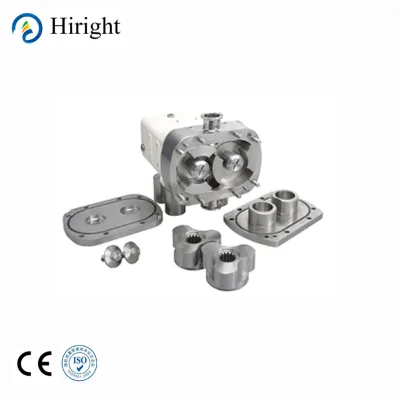


Durable Rotary Lobe Pump in Stainless Steel for Industrial Applications
$1300.00 - $1400.00
MOQ: 1 Pieces

Comprehensive Sourcing Guide
Lobe Pump Sourcing Guide
Sourcing lobe pumps requires a clear understanding of their mechanical advantages, particularly for handling high-viscosity liquids and shear-sensitive fluids. These positive displacement pumps operate by rotating two or more lobes in opposite directions, creating a vacuum that draws fluid into the pump chamber and displaces it toward the discharge port. This mechanism ensures a smooth, pulse-free flow, making them ideal for food and beverage, pharmaceutical, and chemical processing industries. Buyers must recognize that while the basic principle is consistent, variations in rotor design, housing material, and seal configuration significantly impact performance and suitability for specific media.
The procurement process begins with defining the operational parameters, including flow rate, pressure requirements, and fluid characteristics. Observed market listings indicate a wide capacity range, from 0.1 to 10,000 cubic meters per hour, allowing for scalability from small batch processes to large industrial operations. Temperature resistance is another critical factor, with many units designed to handle temperatures up to 280°C, though some hygienic variants are limited to 150°C. Understanding these boundaries helps buyers avoid premature seal failure or material degradation, ensuring the selected pump aligns with the thermal and rheological demands of the application.
Product Scope and Observed Listing Signals
The current market offers a diverse array of Lobe Pump configurations, ranging from standard cast iron models to high-grade stainless steel variants. Listings frequently highlight materials such as AISI 304 and AISI 316L for wetted parts, which are essential for maintaining hygiene and resisting corrosion in aggressive or sanitary environments. The observed price range spans from approximately $123 to $50,000, reflecting the vast difference between simple, low-capacity units and complex, high-pressure systems equipped with integrated reducers and motors. Buyers should note that minimum order quantities are often set at one unit, facilitating easy prototyping or small-scale procurement without significant financial commitment.
Packaging and origin are also key signals in product listings, with many suppliers indicating wooden box or plywood case packing to ensure safe transit. The majority of observed products originate from China, a hub for manufacturing these mechanical components. Specific models like the CLJ80B0.1-60 and DPJ80F5-20 suggest a standardized naming convention that may encode capacity or pressure ratings. Additionally, customization is widely available, allowing buyers to tailor end connections such as butt-weld, tri-clamp, thread, or flange options to fit existing piping infrastructure. This flexibility is crucial for integrating new pumps into established processing lines without extensive modification.
Technical Specifications to Verify
Verifying technical specifications is paramount to ensuring the pump meets operational demands. Key attributes to confirm include the maximum discharge pressure, which can reach up to 2.0 MPa in certain models, and the maximum head, typically ranging from 80 to 110 meters. Buyers must also check the maximum rotational speed, observed at 530 RPM for some units, as this affects flow rate and wear characteristics. The acting form, often double-acting, influences the efficiency and continuity of fluid transfer. Additionally, the type of mechanical seal, whether single or double, is critical for preventing leakage, especially when handling hazardous or valuable fluids.
Material compatibility extends beyond the body to include internal components like gears and seals. While cast iron is common for structural integrity, stainless steel bodies are preferred for sanitary applications. The presence of a reducer and motor in some listings indicates a complete assembly, simplifying installation but requiring verification of voltage compatibility, such as 220V or 380V. Cable length, observed at 10 meters in some cases, should be assessed for site-specific installation constraints. Buyers should also confirm the pump type, such as vane or rotary lobe, as this dictates the internal geometry and suitability for specific fluid viscosities.
Compliance and Safety Documentation
Compliance with international standards is essential for ensuring safety and quality in industrial applications. Many observed products carry CE and ISO certifications, indicating adherence to European safety directives and international quality management systems. For food and beverage applications, compliance with standards like EN 1935/2004 may be relevant, although buyers should verify the specific applicability to their region and product type. Documentation should include material test reports for stainless steel components to confirm corrosion resistance and structural integrity under operating conditions.
Safety features, such as the absence of leakage in well-maintained units, are critical for environmental protection and worker safety. Buyers should request detailed documentation on the mechanical seal design, particularly for double-seal configurations that provide an additional barrier against fluid escape. Warranty terms, often listed as one year, should be reviewed to understand coverage for defects and performance issues. Additionally, suppliers should provide clear instructions for installation and maintenance to ensure the pump operates within its specified parameters, thereby extending its service life and maintaining compliance with operational safety standards.
Cost Drivers and Commercial Terms
Several factors influence the final cost of a Lobe Pump, including material selection, customization options, and integrated components. Stainless steel models, particularly those with 316L construction, command higher prices due to material costs and processing complexity. The inclusion of reducers, motors, and specific end connections adds to the base price, as does the level of customization required for unique application needs. Buyers should also consider the packaging method, with wooden cases offering superior protection but potentially increasing shipping costs compared to standard packaging.
Commercial terms such as warranty and support services play a significant role in the total cost of ownership. A one-year warranty is common, but buyers should negotiate for extended coverage or comprehensive service agreements to mitigate long-term risks. Lead times and minimum order quantities, often set at one unit, affect inventory management and cash flow. Buyers should also evaluate the supplier’s ability to provide OEM support, which can be crucial for branding and specific technical requirements. Transparent pricing that breaks down component costs helps in making informed decisions and avoiding hidden fees.
Supplier Qualification and Quality Control
Evaluating supplier qualifications is crucial for ensuring reliable procurement. Buyers should verify the supplier’s manufacturing capabilities, including their ability to produce cast iron and stainless steel components to precise tolerances. Quality control processes should include rigorous testing of pressure ratings, temperature resistance, and seal integrity. Suppliers with CE and ISO certifications demonstrate a commitment to standardized quality management, which reduces the risk of defects and non-compliance. Buyers should also assess the supplier’s experience in the specific industry, such as food and beverage or chemical processing, to ensure they understand the unique demands of the application.
Communication and support are key indicators of supplier reliability. Suppliers should provide detailed technical documentation, including installation manuals and maintenance guidelines. Responsiveness to inquiries and ability to customize products according to specific requirements are also important factors. Buyers should request references or case studies from previous clients to gauge the supplier’s track record. Additionally, the availability of spare parts and after-sales service should be confirmed to ensure long-term operational support. A qualified supplier will offer comprehensive support throughout the product lifecycle, from selection to installation and maintenance.
Long-Term Procurement Checks
Long-term procurement success depends on establishing robust relationships with suppliers and implementing continuous improvement strategies. Buyers should conduct regular performance audits of installed pumps to identify potential issues early and schedule preventive maintenance. Tracking key performance indicators, such as energy consumption and maintenance frequency, helps in evaluating the pump’s efficiency and reliability over time. Suppliers should be engaged in periodic reviews to discuss any operational challenges or potential upgrades, ensuring the pump continues to meet evolving process requirements.
Supply chain resilience is another critical aspect of long-term procurement. Buyers should diversify their supplier base to mitigate risks associated with single-source dependencies. Maintaining a buffer stock of critical spare parts, such as seals and rotors, can reduce downtime in case of unexpected failures. Additionally, staying informed about industry trends and technological advancements allows buyers to proactively upgrade their equipment, enhancing productivity and compliance. By focusing on these long-term checks, buyers can optimize their Lobe Pump procurement strategy, ensuring sustained operational efficiency and cost-effectiveness.
FAQs
How do I choose the right Lobe Pump size for viscous liquids?
Choose a Lobe Pump by matching its capacity range, discharge pressure, and operating temperature to your product. Models listed here cover capacities from 0.1 to 10000 m3/H, maximum discharge pressure of 2.0 MPa, and temperatures from 40 to 280 degrees Celsius. Low-speed operation helps handle high-viscosity liquids like molasses while protecting product integrity.
What materials are available for the pump body and wetted parts?
Common options include cast iron and stainless steel, with hygienic models offered in AISI 304 (1.4301) and AISI 316L (1.4404). Stainless steel food-grade lobe pumps suit beverage, dairy, and molasses applications. Iron gear options are available in some series, and the right choice depends on your fluid, sanitation requirements, and cleaning regime.
Which end connections and body types can I specify for a Lobe Pump?
You can specify butt-weld, tri-clamp, threaded, or flange end connections depending on your piping standard. Body types include horizontal (TUL) and vertical (TUR) configurations, with standards such as TUL/R20-125 and STUL/R20-125 listed. Horizontal units are easier to service, while vertical designs save installation space in compact skids.
Can I order a customized Lobe Pump with a specific motor and seal?
Yes, customization is available across the listed Lobe Pump products. You can specify single mechanical seal as standard or a double mechanical seal option, along with reducers and matched motors. Voltage options include 220V and 380V, and OEM customized support is offered. Provide your flow rate, viscosity, and temperature requirements when requesting a configuration.
What certification and packaging should I expect when sourcing?
Listed products carry CE and ISO certification, and hygienic stainless steel models are designed for food-grade applications. Packing options include wooden boxes, wooden cases, and plywood wooden cases, with a one-pump-one-case standard noted for some models. Confirm the exact certificate scope and export packaging details with the supplier before ordering.
What is the maximum temperature and head for these lobe pumps?
Maximum operating temperature is listed as 150 degrees Celsius (302 degrees Fahrenheit) for the hygienic rotary lobe series, while other models handle temperatures from 40 up to 280 degrees Celsius. Maximum head ranges from 80 to 110 meters depending on the model. Always verify the temperature rating of the seals and the reducer for your specific application.