Source Low Noise Automatic Home Generator for Land, Standby, Emergency
Compare 30 units of Low Noise Automatic Home Generator with power ranging from 24kW to 115kW. These diesel units feature micro-computer control and are designed for land use, standby power, and emergency crew applications.
Key considerations
Products List
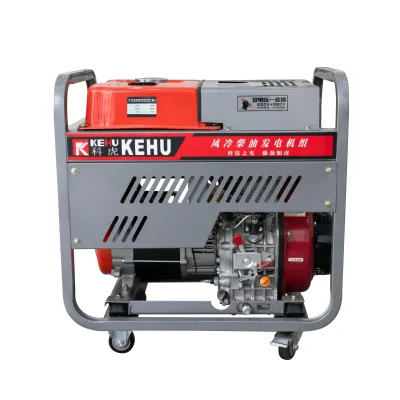


Ultra-Quiet Portable Generator with Advanced Noise Reduction Features
$2400.00 - $3000.00
MOQ: 1 Pieces


Soundproof Type Gas Generator Natural Gas Generator Silent Generator Electric Generator
$28800.00 - $500000.00
MOQ: 1 Sets

High Quality Auto Start Control Silent Portable Generator with Handle and Wheels
$528.00 - $568.00
MOQ: 10 Pieces


Compact Home Generator with Automatic Start Feature for Reliable Power
$1500.00 - $110000.00
MOQ: 1 Sets


Portable Home Generator with Automatic Start Feature for Convenience
$1500.00 - $110000.00
MOQ: 1 Sets

Comprehensive Sourcing Guide
Strategic Sourcing Guide for Low Noise Automatic Home Generators
Procuring a Low Noise Automatic Home Generator requires a disciplined approach that balances technical performance, acoustic engineering, and reliability. The market offers a diverse array of units ranging from compact residential backups to robust industrial-grade systems. Buyers must navigate complex specifications to ensure the selected unit meets the specific demands of home environments, where noise reduction and seamless automatic operation are paramount. This guide synthesizes observed market data and technical attributes to provide a framework for evaluating potential suppliers and products without relying on unverified claims.
Technical Architecture and Power Specifications
The foundation of any reliable generator lies in its engine architecture and power output capabilities. In the current market, diesel engines remain a dominant choice for home backup due to their efficiency and durability. Observed specifications indicate that high-speed diesel engines are frequently utilized, often featuring four-cylinder configurations with a four-stroke cycle. The cooling method is a critical differentiator; while some units utilize air cooling, higher-end models designed for continuous or heavy-duty standby applications often employ water cooling to maintain optimal operating temperatures and reduce noise.
Power output varies significantly across the product spectrum. Buyers should look for units with rated power capabilities ranging from 24kW to over 100kW. For instance, specific model lines have been observed with rated powers of 24kW/30kVA, 100kW/125kVA, and 115kW. The electrical output is typically AC three-phase, operating at standard voltages such as 400V, with rated currents varying from 43A to 180A depending on the load capacity. The engine speed is another vital parameter, with units often operating at 1500rpm or 1800rpm to ensure stable frequency output.
The control system is equally important for "automatic" functionality. Advanced units feature micro-computer control systems that manage the startup sequence, load balancing, and shutdown procedures. These systems often include AC rotating exciters for stable voltage generation. The intake pressure impulse is frequently supercharged to maximize power density, and the compression ratio is a key indicator of engine efficiency, with observed values around 16.9. Displacement figures, such as 2.953 liters, help buyers understand the physical scale and potential torque output of the engine.
Acoustic Engineering and Noise Reduction Strategies
The core requirement for a "low noise" generator involves specific design features aimed at minimizing acoustic emissions. Standard industrial generators can be quite loud, making them unsuitable for residential areas without significant mitigation. The market offers units explicitly categorized as "Low Noise Automation Type," which integrate soundproofing enclosures and advanced damping materials.
When evaluating noise performance, buyers must verify the physical dimensions of the unit, as larger enclosures often allow for better sound attenuation. Observed standard dimensions for such units include configurations like 21009301230mm and 270011001320mm. The installation method is typically fixed, requiring a stable foundation to prevent vibration-induced noise. The excitation mode, often AC rotating, contributes to smoother operation, which indirectly reduces mechanical noise.
It is crucial to distinguish between the engine's inherent noise and the enclosure's performance. While the engine itself may be a high-speed diesel unit, the overall system noise is determined by the quality of the acoustic housing. Buyers should inquire about the specific noise reduction techniques employed, such as the use of sound-absorbing liners and vibration isolators. The "Low Noise Automation Type" designation suggests that the manufacturer has engineered the unit to meet residential noise ordinances, but specific decibel levels should be verified against local regulations rather than assumed.
Compliance, Standards, and Certification Verification
Navigating the regulatory landscape is essential for ensuring that a generator is legal to operate and safe for use. Emission standards are a primary area of concern, particularly in regions with strict environmental regulations. Observed data points to compliance with the Imo Tier 3 standard, which is a rigorous benchmark for marine and stationary diesel engines. However, buyers must confirm that the specific unit they are purchasing carries this certification, as standards can vary by model and production batch.
Certification status is another critical factor. While some background information mentions CE certification, this should be treated as a potential attribute rather than a guaranteed fact for every listed product. Buyers must request valid certification documents from the supplier to verify that the unit meets the safety and electromagnetic compatibility requirements of the destination country. The product standard itself may be customized, meaning that generic standards might not apply.
The installation environment also dictates compliance needs. Units designated for "Land Use" must adhere to local building codes regarding ventilation, fire safety, and exhaust management. The "Conditions of Use" are typically specified as land use, which implies that the unit is not designed for marine or mobile applications unless explicitly stated. Buyers should ensure that the supplier provides a declaration of conformity that aligns with the specific jurisdiction where the generator will be installed.
Cost Drivers and Pricing Dynamics
The pricing of low noise automatic home generators is influenced by a complex interplay of factors, including power capacity, acoustic engineering, and control system sophistication. The observed price range in the market is extensive, spanning from approximately $146 to $500,000. This vast disparity reflects the difference between small, portable units and large, fully automated, soundproofed industrial systems.
Several key drivers influence the final cost. First, the rated power is a primary determinant; a 24kW unit will naturally cost less than a 100kW or 115kW system. Second, the level of automation and control complexity adds significant value. Units with micro-computer control and automatic start-up capabilities command a premium over manual or semi-automatic models. Third, the acoustic enclosure is a major cost component. The materials used for soundproofing, the engineering of the ventilation system, and the vibration isolation mounts all contribute to the price.
Packaging and logistics also play a role in the total cost of ownership. Observed packaging options include wooden boxes and reinforced plastic film, which can affect shipping costs and the condition of the unit upon arrival. Buyers should consider the total landed cost, including freight, insurance, and customs duties, rather than focusing solely on the unit price. The minimum order quantity (MOQ) is typically low, ranging from 1 to 10 units, making these products accessible for individual homeowners and small businesses alike.
Typical Applications and Usage Scenarios
Understanding the intended application is vital for selecting the right generator. The market data indicates that these units are designed for a variety of usage scenarios, including common units, standby units, and emergency crew applications. For home use, the primary function is typically as a standby power source, providing electricity during grid outages. The automatic nature of the unit ensures that power is restored within seconds of a failure, preventing disruption to household appliances and essential systems.
The "Low Noise Automation Type" designation suggests that these units are specifically optimized for residential neighborhoods where noise complaints are a concern. They are suitable for land use applications where the generator is installed in a fixed location, such as a garage, basement, or dedicated outdoor pad. The installation method is fixed, requiring professional setup to ensure stability and safety.
Beyond residential use, these generators can serve small commercial entities or emergency response teams. The ability to handle a range of power outputs, from 24kW to 115kW, allows them to support various loads, from basic lighting and refrigeration to heavy machinery and HVAC systems. The "Common Units" classification implies versatility, while the "Standby Unit" label highlights their role in backup power scenarios. Buyers should assess their peak load requirements to ensure the selected unit has sufficient capacity for both continuous and emergency operation.
Supplier Evaluation and Quality Assurance
Selecting a reputable supplier is critical for securing a reliable product and long-term support. Buyers should prioritize suppliers who can provide transparent documentation regarding the product's origin, specifications, and compliance. The place of origin for many observed units is China, with specific manufacturing hubs like Weifang noted. While this provides insight into the supply chain, buyers must verify the specific factory and its quality control processes.
Quality assurance should be a central part of the evaluation process. Buyers should request detailed test reports and performance data to verify claims about power output, noise levels, and emission standards. The customization availability noted in the market suggests that suppliers may offer tailored solutions, but this requires clear communication of requirements and expectations. The "Customized" product standard indicates that units can be adapted to specific needs, but this should be done through a formal agreement to ensure quality is not compromised.
When evaluating suppliers, look for those who offer comprehensive after-sales support, including maintenance services and spare parts availability. The "Single item" selling unit suggests that individual purchases are common, but buyers should still inquire about warranty terms and service networks. The production model numbers, such as ALD-R40S or Ald-P30s, can be used to track specific product lines and verify their history and performance in the field.
Long-Term Procurement and Maintenance Considerations
Procuring a generator is not a one-time transaction but the beginning of a long-term relationship with the equipment. Maintenance is essential to ensure the generator remains reliable and efficient over its lifespan. The engine's compression ratio, cooling method, and fuel type are all factors that influence maintenance requirements. Diesel engines, for example, require regular oil changes, filter replacements, and fuel system checks.
The automatic control system also requires periodic software updates and calibration to ensure accurate operation. Buyers should plan for regular inspections to check the integrity of the soundproof enclosure and the condition of the vibration isolators. The fixed installation method means that the unit must be protected from environmental factors such as rain, dust, and extreme temperatures.
Long-term procurement considerations also include the availability of spare parts and the cost of consumables. Buyers should verify that the supplier can provide a steady supply of parts for the specific model number. The "Customization" attribute may affect the availability of standard parts, so it is important to ensure that any customizations do not create supply chain bottlenecks. By planning for these long-term needs, buyers can ensure that their investment in a Low Noise Automatic Home Generator continues to provide value and reliability for years to come.
Comparative Analysis of Key Specifications
To assist in the decision-making process, the following table summarizes key specifications observed in the market for low noise automatic home generators. This comparison highlights the variability in power, dimensions, and control features.
| Feature Category | Observation 1 (Compact/Residential) | Observation 2 (Mid-Range) | Observation 3 (High-Capacity) |
|---|---|---|---|
| Rated Power | 24kW / 30kVA | 100kW / 125kVA | 115kW |
| Voltage | 400V | 400V | 400V |
| Rated Current | 43A | 180A | N/A |
| Engine Type | Diesel, 4-Cylinder | Diesel, 4-Cylinder | Diesel, 4-Cylinder |
| Cooling Method | Water Cooling | Water Cooling | Water Cooling |
| Speed | 1500rpm / 1800rpm | 1500rpm / 1800rpm | High Speed |
| Control Type | Micro-Computer Control | Micro-Computer Control | Micro-Computer Control |
| Dimensions | 21009301230mm | 270011001320mm | Variable |
| Emission Standard | Imo Tier 3 | Imo Tier 3 | Imo Tier 3 |
| Installation | Fixed | Fixed | Fixed |
| Noise Type | Low Noise Automation | Low Noise Automation | Low Noise Automation |
This table illustrates that while the core technology remains consistent across different power ranges, the physical dimensions and electrical ratings scale with the power output. Buyers should use this framework to match their specific power needs with the appropriate unit size and configuration.
FAQs
What is the rated power range for these generators?
The rated power ranges from 24kW to 115kW depending on the specific model. Units like the Ald-P30s offer 24kW while the Ald-P115s provides 115kW, with intermediate options available for various home backup needs.
Which cooling methods are used in these units?
These units utilize either air cooling or water cooling methods. Water cooling is often found in higher-end models designed for continuous operation, while air cooling is used in other configurations to manage engine temperature effectively.
Can the product be customized for specific needs?
Yes, customization is available for these generator units. Buyers can request tailored specifications, and the product standard is often customized to meet unique requirements while maintaining the core diesel engine architecture.
What is the minimum order quantity for purchasing?
The minimum order quantity ranges from 1 to 10 units. This flexible MOQ allows individual homeowners and small businesses to purchase single items or small batches without requiring large industrial commitments.
How are these generators installed for home use?
These units are designed for fixed installation on land. They are categorized as low noise automation types, requiring a stable foundation to ensure safety and minimize vibration noise during operation in residential settings.
What emission standard do these diesel engines meet?
The engines comply with the Imo Tier 3 emission standard. This standard ensures that the diesel engines meet rigorous environmental requirements for pollutants, making them suitable for regulated stationary applications.