Source Luggage Foam Net Thermoforming Machine for Suitcase, Case, and Hardware
Compare 18 verified options for the Luggage Foam Net Thermoforming Machine tailored for suitcase, case, and hardware applications. Evaluate specifications like output capacity, power requirements, and customization features to find the right fit for your production needs.
Key considerations
Products List


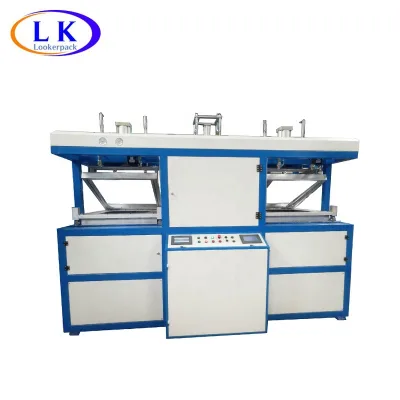
2 Station Automatic ABS/PC Plastic Luggage Making Machine Thermoforming Machine
$16000.00 - $17000.00
MOQ: 1 Sets


Automatic Plastic Bag Making Machine Thermoforming Machine for Luggage Suitcase Traveling Bags
$16500.00 - $17500.00
MOQ: 1 Sets

Comprehensive Sourcing Guide
Strategic Sourcing Guide for Luggage Foam Net Thermoforming Machines
Understanding Core Technical Specifications and Molding Methodologies
When evaluating luggage foam net thermoforming machines, buyers must first distinguish between the specific molding methodologies employed by different manufacturers. The market presents distinct technical approaches, primarily categorized by the shaping mode and the mechanical configuration of the press. Based on available product data, the industry utilizes both extrusion and pressing methods, though pressing is frequently associated with high-precision thermoforming applications for luggage components. A critical observation in the current supply landscape is the variation in column configurations; machines are available with either double column or four column structures. The four-column design often implies enhanced stability for larger forming dimensions, which is essential when producing robust luggage shells.
The raw material compatibility is a fundamental technical constraint. The machinery is specifically engineered to process thermoplastic materials such as ABS (Acrylonitrile Butadiene Styrene) and PC (Polycarbonate), which are the industry standards for durable luggage manufacturing. The ability to handle sheet thicknesses ranging from 1mm to 4mm is a key performance indicator for these units. Buyers should verify that the specific model under consideration can accommodate the thickness of the raw material sheets they intend to purchase, as this directly impacts the forming pressure and vacuum requirements.
Vacuum pressure and air consumption are vital operational parameters. Data indicates that effective thermoforming units often operate within a vacuum pressure range of 0.07 to 0.09 MPa. Furthermore, the air consumption rates vary significantly depending on the machine's capacity and automation level, with observed ranges including 400L/Min, 800L/Min, and 900L/Min. These figures are critical for calculating the necessary compressed air infrastructure at the factory floor. The driven type for these machines is predominantly pneumatic, relying on compressed air to execute the forming, clamping, and ejection cycles.
Compliance, Certification, and Regulatory Standards
Navigating the regulatory landscape for industrial machinery requires a rigorous verification of certifications and standards. In the context of sourcing thermoforming equipment, the presence of CE (Conformité Européenne) marking is a primary indicator of compliance with European safety, health, and environmental protection requirements. Product listings frequently cite CE certification as a baseline standard. Additionally, ISO 9001 certification is a common attribute, with specific references to the 2015 version of the standard appearing in technical documentation. This certification suggests that the manufacturer has implemented a quality management system that meets international benchmarks for consistency and process control.
However, buyers must exercise caution regarding the interpretation of standards. While some data points reference ISO9001:2008, the more current and widely accepted standard is ISO9001:2015. When evaluating a supplier, it is essential to confirm the specific version of the ISO standard they adhere to, as older versions may not reflect current best practices in quality assurance. The certification status should be verified through official documentation rather than relying solely on marketing claims. The absence of a specific certification in a product listing does not necessarily imply non-compliance, but it does require the buyer to request explicit proof of compliance before proceeding with a purchase.
Cost Drivers and Pricing Dynamics in the Thermoforming Market
The pricing structure for luggage foam net thermoforming machines is influenced by a complex interplay of factors, including automation level, output capacity, and physical dimensions. The observed market price range for these units falls between $14,500 and $25,500 USD. This variance is not arbitrary but is driven by the machine's technical capabilities. For instance, models with higher output capacities, such as those capable of producing 120 ABS cases per hour or 95 PC cases per hour, command a premium over units with lower throughput, such as those producing 60 to 80 cases per hour.
Total power consumption is another significant cost driver. Machines with a total power rating of 38kW represent a higher energy investment and typically correlate with more robust mechanical systems and larger forming dimensions. The physical footprint of the machine, often measured in millimeters (e.g., 290015602430mm), also influences the cost due to the amount of steel and components required. Furthermore, the complexity of the control system plays a role; computerized and fully automatic machines generally cost more than semi-automatic or manual variants.
The input power requirements, typically specified as 380V with a 3-phase 50Hz configuration, must be compatible with the buyer's local electrical infrastructure. If a facility requires voltage conversion or additional power distribution equipment, these ancillary costs should be factored into the total cost of ownership. The raw material grade, specifically the "Automatic Grade" designation, suggests a level of material processing efficiency that can impact long-term operational costs, though the initial machine price remains the primary financial consideration during the procurement phase.
Typical Applications and Industry Suitability
The primary application for these thermoforming machines is the manufacturing of luggage and suitcases. The machinery is explicitly designed to shape plastic sheets into the complex contours required for hard-shell luggage. The "Suitable Industry" classification for these units is consistently identified as the luggage and suitcase sector. This specialization ensures that the forming tools and vacuum systems are optimized for the specific geometries of travel bags, including handles, wheels, and structural reinforcements.
Beyond luggage, the versatility of these machines allows for applications in the machinery and hardware sectors. The ability to form ABS and PC materials makes them suitable for producing various industrial components that require high impact resistance and durability. The maximum forming dimension of 600420200mm provides a clear boundary for the size of products that can be manufactured, which is a critical constraint for buyers planning to produce oversized or specialized luggage items.
The production output rates, measured in pieces per hour (PCS/H), are a direct reflection of the machine's suitability for different production scales. High-output models are ideal for large-scale manufacturing facilities aiming to meet high demand, while lower-output models may be more appropriate for smaller workshops or custom production runs. The "OEM: Can Be Customized Per Required" attribute indicates that these machines can be adapted to produce specific designs or sizes, offering flexibility for buyers with unique product requirements.
Supplier Evaluation and Geographic Considerations
When evaluating potential suppliers, geographic origin is a significant factor in logistics, lead times, and communication. The majority of the available thermoforming machines originate from China, with specific manufacturing hubs identified in Quanzhou and Zhejiang provinces. These regions are known for their concentration of machinery manufacturing capabilities. The origin location can influence the shipping costs and the complexity of the import process, particularly regarding customs duties and regulatory compliance in the destination country.
Supplier reliability is often assessed through their lead times and customization capabilities. A standard lead time of 15 days is observed for these machines, which is a crucial metric for production planning. Buyers should verify if this lead time is consistent or if it varies based on the level of customization required. The ability to customize the machine per requirements is a strong indicator of a supplier's flexibility and technical competence. However, buyers must ensure that customization requests do not compromise the machine's certification status or safety standards.
Packaging is another aspect of supplier evaluation. The standard packaging for these machines includes wooden cases, wooden pallets, and plastic stretch film. This robust packaging is essential for protecting the machinery during international transit. Buyers should confirm that the packaging meets the specific requirements of their shipping carrier and that the wooden materials comply with international phytosanitary standards to avoid delays at customs.
Quality Control and Long-Term Procurement Considerations
Ensuring the long-term reliability of a thermoforming machine requires a proactive approach to quality control and maintenance planning. The machine's weight, typically around 2.2 tons, necessitates a stable and reinforced factory floor to prevent vibration and misalignment during operation. Regular maintenance of the pneumatic systems, including the air pressure regulators and vacuum pumps, is essential to maintain the specified air pressure ranges of 0.65 to 0.75 MPa. Deviations from these pressures can lead to inconsistent forming results and reduced product quality.
The automation level of the machine, ranging from semi-automatic to fully computerized, impacts the long-term operational costs. Fully automatic and computerized models reduce the reliance on manual labor but may require more specialized technical support for troubleshooting and software updates. Buyers should assess the availability of spare parts and the technical support infrastructure provided by the supplier. The "Automatic Grade" of the raw material processing suggests that the machine is designed for continuous operation, but the actual uptime will depend on the quality of the maintenance program.
Finally, buyers should consider the scalability of their production needs. The maximum output capacity of the machine should align with current and projected demand to avoid premature obsolescence. While the observed output ranges from 60 to 120 PCS/H, the actual capacity may vary based on the complexity of the product design and the thickness of the material. A thorough evaluation of the machine's performance under load, including its ability to maintain consistent vacuum pressure and air consumption, is essential before finalizing the procurement decision. By focusing on these technical and operational factors, buyers can ensure a successful integration of thermoforming machinery into their production lines.
FAQs
What raw materials can this machine process for luggage?
The machine processes thermoplastic materials like ABS and PC sheets. It accommodates sheet thicknesses ranging from 1mm to 4mm, which is essential for forming durable hard-shell luggage components effectively.
Can the machine output be customized for specific production needs?
Yes, the machine supports OEM customization per required specifications. Buyers can request adjustments to the forming dimensions or output rates to match their specific production volume and product design requirements.
Which certification standards do these thermoforming machines meet?
Most units carry CE certification and ISO 9001:2015 compliance. These standards indicate adherence to European safety regulations and international quality management systems, ensuring reliable and safe industrial operation.
How long is the lead time for ordering a new machine?
The standard lead time is typically 15 days for production and preparation. This duration may vary slightly depending on the level of customization required or the specific model configuration selected by the buyer.
What is the maximum forming dimension supported by the machine?
The maximum forming dimension is 600 by 420 by 200 millimeters. This capacity defines the largest luggage shell or component that can be successfully thermoformed using the specified tooling and vacuum pressure.
Which power voltage is required to operate this equipment?
The machine requires an input power of 380V with a 3-phase 50Hz configuration. This standard industrial voltage ensures the pneumatic and electric systems function correctly during the thermoforming cycle.
How is the machine packaged for international shipping?
Units are packed in wooden cases or on wooden pallets with plastic stretch film. This robust packaging protects the machinery during transit and complies with international phytosanitary standards for wooden materials.