Source Manual Lift Electric Overhead Stirrer for Lab, Hospital, School
Compare 30 verified listings for the Manual Lift Electric Overhead Stirrer to find units suitable for laboratory, hospital, and school environments. Buyers can evaluate specifications like voltage, speed range, and material to select the right equipment for their specific needs.
Key considerations
Products List


Platform Stacker 250kg Mini Portable Semi Electric Manual Stacker Lifter
$570.00 - $1100.00
MOQ: 1 Pieces


Compact Double Girder Overhead Hoist with Electric Lifting Capability
$4000.00 - $5100.00
MOQ: 1 Pieces


Comprehensive Sourcing Guide
Strategic Sourcing Guide for Manual Lift Electric Overhead Stirrers
Understanding the Core Technology and Operational Mechanics
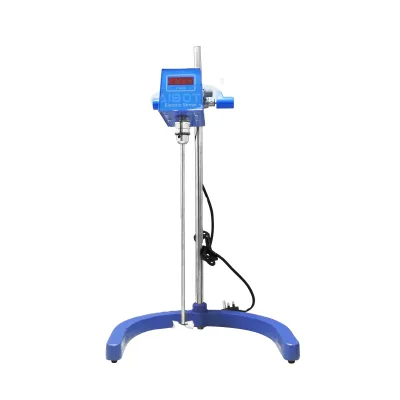
When sourcing a Manual Lift Electric Overhead Stirrer, buyers must first distinguish this equipment from magnetic stirrers or fixed-height units. The defining characteristic of this category is the combination of an electric motor capable of high-torque rotation with a mechanical lifting mechanism that allows the operator to manually adjust the vertical position of the stirrer head. This manual lift feature is critical for laboratory and industrial environments where vessel heights vary significantly, or where the need to insert and remove large stirring rods requires precise, hands-on control.
The observed product attributes indicate that these units are frequently categorized by their structure, with options available in both desktop and portable configurations. Desktop models are typically designed for permanent or semi-permanent installation on a laboratory bench, offering stability for continuous operation. In contrast, portable variants are engineered for mobility, allowing technicians to move the unit between different workstations or field sites. The material composition of the structural frame is a primary observation, with stainless steel and general steel being the most common materials cited. Stainless steel is often preferred for applications in hospitals, schools, and labs where chemical resistance and ease of cleaning are paramount, while steel frames may be utilized in industrial settings where cost-efficiency is a higher priority.
The motor technology is another critical technical differentiator. Modern overhead stirrers increasingly utilize brushless DC motors. This technology offers significant advantages over traditional brushed motors, including reduced maintenance requirements, longer operational life, and smoother speed control. The speed range observed in the market data spans from 100 to 2500 RPM, with some digital models offering a range of 50 to 2200 RPM. For buyers dealing with high-viscosity fluids, the maximum viscosity rating is a vital specification. Data suggests that advanced models can handle viscosities up to 10,000 mPa·s, making them suitable for mixing thick slurries, polymers, or heavy industrial compounds. The power consumption for these units typically centers around 60W, operating on a standard voltage range of 100 to 240V, which ensures compatibility with international power grids without the immediate need for transformers.
Technical Specifications and Performance Verification
Evaluating the technical specifications of a Manual Lift Electric Overhead Stirrer requires a detailed review of the drive system, control interface, and physical dimensions. The speed display accuracy is a key metric for precision applications. High-end digital models provide a speed display accuracy of ±3 RPM, ensuring that experimental conditions remain consistent and reproducible. This level of precision is often coupled with a digital LCD interface, which allows for the direct input of target speeds and the monitoring of real-time performance.
The physical capacity of the stirrer is defined by its maximum volume rating. Market observations indicate a range of capabilities, with some units rated for 20 liters and others extending to 40 liters. This variance dictates the scale of the operation; a 20L unit is suitable for standard laboratory batch processes, while a 40L unit is necessary for pilot-scale production or larger industrial mixing tasks. The shaft and head restraints are typically constructed from stainless steel to prevent corrosion and ensure structural integrity under load. The plate size, which refers to the mounting surface or the base dimensions, varies, with observed specifications including 300x200mm and 200x300mm configurations. These dimensions are crucial for ensuring the unit fits within the available workspace and provides sufficient stability during high-speed operation.
Connectivity and data management are increasingly important in modern procurement. Some models feature an RS232 data interface, allowing the stirrer to be connected to a computer or data logging system. This capability facilitates the recording of speed profiles over time, which is essential for quality control in pharmaceutical and chemical manufacturing. The motor type, specifically the brushless DC motor, contributes to the overall efficiency and noise reduction of the unit. When evaluating specifications, buyers should verify the power rating, typically around 60W, and ensure that the voltage range (100~240V) matches the local electrical infrastructure. Additionally, the weight of the unit, with net weights around 6kg and gross weights near 7kg, impacts shipping logistics and the required strength of the mounting surface.
Compliance, Certification, and Regulatory Standards
In the B2B procurement of laboratory and industrial equipment, compliance with international standards is non-negotiable. The market data highlights several key certifications that buyers should look for to ensure safety and quality. The most frequently observed certifications include ISO and CE. The CE marking indicates conformity with health, safety, and environmental protection standards for products sold within the European Economic Area. The ISO certification, often referenced alongside CE and SGS, suggests that the manufacturer adheres to international quality management systems.
Specific product standards listed in the supply chain data include CE, SGS, and ISO. These are not merely marketing terms but represent third-party verification of the product's design and manufacturing processes. For instance, the SGS standard implies that the product has undergone rigorous testing for safety and performance. Buyers must verify that the specific model they are purchasing carries these certifications, as they are often model-specific. The origin of the products is predominantly China, with specific manufacturing hubs identified in Cangzhou, Hebei, Nanjing, and Zhejiang. While the location of origin is a factual observation, it does not inherently dictate quality; however, it informs the buyer about the supply chain geography and potential logistics considerations.
When assessing compliance, buyers should also consider the "prod_standard" field, which lists ISO, CE, and SGS as the primary standards. It is important to note that while some listings mention "reach," this is a low-confidence background fact and should not be treated as a verified certification for the specific product without further documentation. The certification status should be confirmed through official documentation provided by the supplier, such as test reports or certificates of conformity. For applications in hospitals, schools, and labs, adherence to these standards is critical to ensure the safety of the operators and the integrity of the experiments or processes being conducted.
Cost Drivers and Pricing Dynamics
The pricing of manual lift electric overhead stirrers is influenced by a complex interplay of factors, including material quality, motor technology, and feature set. The observed price range in the market spans from $27 to $30,000 USD. This vast disparity indicates that the market includes both basic, entry-level units and highly specialized, industrial-grade systems. The lower end of the price spectrum likely corresponds to simpler models with basic speed control, standard steel construction, and limited features. Conversely, the higher price points are associated with advanced digital interfaces, brushless DC motors, higher viscosity ratings, and robust stainless steel construction.
Material costs are a significant driver of the final price. Units constructed primarily from stainless steel generally command a higher price than those with steel or plastic components, due to the durability and corrosion resistance of stainless steel. The inclusion of a digital LCD display and RS232 data interface also adds to the cost, as these features require more sophisticated electronics and software integration. The maximum volume capacity is another pricing factor; models capable of handling 40L volumes typically cost more than those limited to 20L, reflecting the larger motor and more robust mechanical structure required.
The minimum order quantity (MOQ) observed ranges from 1 to 100 units. This flexibility allows buyers to procure single units for pilot testing or small-scale operations, as well as bulk orders for large-scale deployment. The customization options available, including the ability to request custom packing or specific model configurations, can also influence the final cost. Customized orders may incur additional fees for tooling, design changes, or specialized packaging. Buyers should be aware that while the base price is a starting point, the total cost of ownership includes shipping, import duties, and potential customization fees. The standard export packing and carton packaging options are common, but custom packing solutions may be available at a premium.
Typical Applications and Industry Use Cases
Manual lift electric overhead stirrers are versatile tools utilized across a wide spectrum of industries. The primary application areas identified include laboratories, hospitals, schools, and industrial facilities. In laboratory settings, these stirrers are essential for chemical synthesis, sample preparation, and research experiments where precise control over mixing speed and viscosity is required. The ability to manually lift the stirrer head allows researchers to easily adjust the position of the stirring rod to accommodate different vessel sizes and shapes, which is a common requirement in R&D environments.
In hospital and medical contexts, the stirrers are used for preparing pharmaceutical compounds, mixing reagents for diagnostic tests, and handling biological samples. The use of stainless steel components is particularly important here to maintain hygiene and prevent contamination. The portable nature of some models makes them suitable for use in various departments within a hospital, from the pharmacy to the pathology lab. In educational institutions, these units serve as critical teaching tools for chemistry and biology students, providing a hands-on experience with mixing principles and equipment operation.
Industrial applications are equally significant, with the stirrers employed in manufacturing processes that require the mixing of high-viscosity materials. The high torque capabilities of brushless DC motors make these units ideal for processing polymers, adhesives, and heavy industrial slurries. The maximum volume capacity of up to 40L allows for pilot-scale production and larger batch processing. The specific model selection depends on the viscosity of the material being mixed and the required throughput. For instance, a model with a maximum viscosity rating of 10,000 mPa·s would be necessary for thick industrial compounds, while a standard model might suffice for lower viscosity liquids in a school or lab setting.
Supplier Evaluation and Quality Assurance Protocols
Selecting the right supplier for manual lift electric overhead stirrers requires a rigorous evaluation process that goes beyond price comparison. Buyers should prioritize suppliers who can provide verifiable documentation of their certifications, including ISO, CE, and SGS. The presence of these certifications should be confirmed through official certificates rather than just marketing claims. The origin of the product, whether from Cangzhou, Hebei, Nanjing, or Zhejiang, should be transparently disclosed, as this information can impact shipping times and logistics planning.
Quality assurance protocols are essential to ensure that the purchased units meet the required specifications. Buyers should request detailed product data sheets that outline the technical specifications, including speed range, power consumption, and maximum volume. The consistency of the build quality, particularly the use of stainless steel for critical components like the head restraints and shaft, should be verified. The packing standards, such as "Standard Export Carton" or "Carton or Customized," should be clearly defined to prevent damage during transit.
When evaluating suppliers, buyers should also consider the availability of customization options. The ability to customize the product, including the model number and specific features, can be a significant advantage for specialized applications. However, buyers must ensure that any customization does not compromise the safety or performance of the unit. The lead time and production capacity of the supplier are also critical factors, especially for large orders. While specific lead times are not provided in the data, buyers should inquire about the production schedule and the ability to meet delivery deadlines.
Long-Term Procurement and Maintenance Considerations
Long-term procurement of manual lift electric overhead stirrers involves more than just the initial purchase; it requires a strategic approach to maintenance, support, and lifecycle management. The choice of motor type, such as the brushless DC motor, has significant implications for long-term maintenance. Brushless motors generally require less maintenance than brushed motors, as they do not have carbon brushes that wear out over time. This reduces the frequency of service intervals and lowers the total cost of ownership.
Buyers should also consider the availability of spare parts and technical support. A reliable supplier should have a robust supply chain for replacement parts, such as stirring rods, motor brushes (if applicable), and control boards. The warranty terms and after-sales service are critical components of the procurement strategy. Buyers should negotiate clear warranty periods and response times for technical support to ensure minimal downtime in case of equipment failure.
The adaptability of the equipment to future needs is another consideration. As laboratory or industrial processes evolve, the requirements for mixing may change. The ability to upgrade the control interface or add data logging capabilities through the RS232 interface can extend the useful life of the unit. Additionally, the portability of some models allows for flexibility in reconfiguring the workspace as needs change. Buyers should plan for the eventual replacement of the unit by considering the scalability of their current procurement strategy and the availability of newer models with enhanced features.
Final Procurement Checklist and Verification Steps
To conclude the sourcing process, buyers should adhere to a comprehensive checklist to ensure all requirements are met. This includes verifying the certification status (ISO, CE, SGS), confirming the material composition (stainless steel or steel), and checking the technical specifications against the intended application. The speed range, maximum volume, and viscosity rating must align with the specific needs of the operation. The voltage and power requirements should be compatible with the local infrastructure.
Buyers should also review the packaging and shipping details to ensure the unit arrives in good condition. The origin of the product and the supplier's location should be documented for logistics planning. Finally, the customization options and any specific model requirements should be clearly communicated to the supplier to avoid misunderstandings. By following these steps, buyers can make informed decisions and secure high-quality manual lift electric overhead stirrers that meet their operational and safety standards.
FAQs
What certifications do manual lift electric overhead stirrers typically hold?
Most units hold ISO and CE certifications to ensure safety and quality compliance. Some models also include SGS standards, which verify rigorous testing for performance. Buyers should verify specific model documentation to confirm these certifications are present before purchase.
Which voltage range supports these overhead stirrers for international use?
These devices generally operate on a voltage range of 100 to 240V. This wide range ensures compatibility with international power grids without needing transformers. Always check the specific product label to confirm the unit matches your local electrical infrastructure.
How much maximum volume can these stirrers handle in a batch?
Capacity varies by model, with options ranging from 20 liters up to 40 liters. Smaller units suit standard lab batches, while larger units support pilot-scale or industrial mixing tasks. Select the capacity based on your specific vessel size and production requirements.
Can I find manual lift electric overhead stirrers with digital speed displays?
Yes, advanced models feature LCD digital displays with speed accuracy of plus or minus 3 RPM. These units often include brushless DC motors and RS232 data interfaces for precise control. Digital interfaces allow for direct speed input and real-time performance monitoring.
What materials are used for the frame and head restraints of these units?
Frames and head restraints are commonly constructed from stainless steel or general steel. Stainless steel is preferred for labs and hospitals due to its chemical resistance and ease of cleaning. Steel frames are often used in industrial settings for cost efficiency.
Which applications are suitable for manual lift electric overhead stirrers?
These units are designed for use in labs, hospitals, schools, and industrial facilities. They handle tasks ranging from chemical synthesis to mixing high-viscosity polymers. The manual lift feature allows easy adjustment for different vessel heights across various environments.
What is the typical minimum order quantity for purchasing these stirrers?
Minimum order quantities range from 1 unit for single purchases up to 100 units for bulk orders. This flexibility allows buyers to test single units or deploy systems across multiple sites. Customization options may also affect the specific MOQ required by the supplier.