Source Manual Stainless Steel Coffee Grinder for Home Hotel Restaurant
Compare 30 listings of Manual Stainless Steel Coffee Grinder options featuring adjustable grind speeds and power-off protection. Buyers can evaluate models like MCG03 and NM350 for home, hotel, or restaurant use with capacities under 5 cups.
Key considerations
Products List


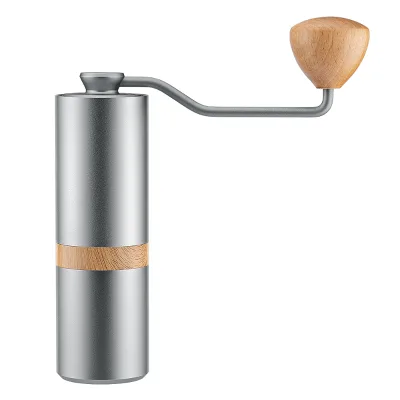
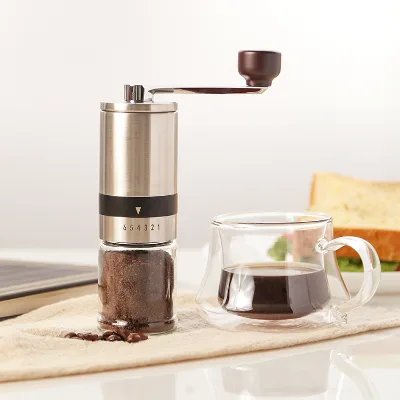
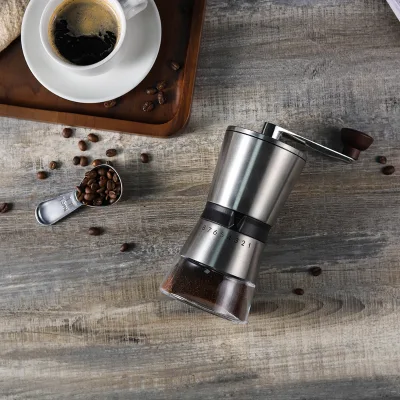
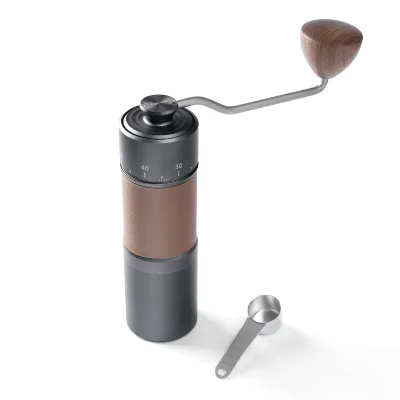
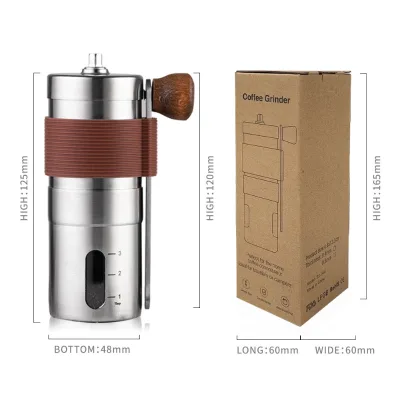
Hot Sales Hand Coffee Mill Custom Stainless Steel Manual Coffee Grinder
$19.00 - $23.00
MOQ: 50 Pieces


Electric Coffee Grinder with Stainless Steel Blades Automatic Coffee Bean Grinder
$13.78 - $14.36
MOQ: 1000 Pieces




Comprehensive Sourcing Guide
Strategic Sourcing Guide for Manual Stainless Steel Coffee Grinders
Understanding Technical Specifications and Material Composition
When sourcing manual stainless steel coffee grinders, buyers must first distinguish between the various technical configurations available in the current market. The core keyword implies a specific intersection of power source, material, and application. Based on observed product data, the "Manual" power source is a definitive characteristic for this category, eliminating electric variants that rely on external power grids. This mechanical operation often relies on a hand-crank mechanism, which is particularly valued in settings where portability and independence from electricity are paramount.
The material composition is equally critical. While the search term specifies "stainless steel," the supply data reveals a nuanced landscape where housing materials are explicitly listed as Stainless Steel, yet internal or structural components may utilize Aluminum Alloy. For instance, specific models in the market feature a Stainless Steel housing, ensuring durability and resistance to corrosion, while other variants list Aluminum Alloy as the primary metal type. Buyers must verify the specific application of each metal within the grinder's assembly. A grinder marketed as "stainless steel" might have an aluminum alloy frame, which affects weight and thermal conductivity. The housing material directly impacts the longevity of the device, especially in high-humidity environments or commercial kitchens where frequent washing is required.
Grind consistency is another technical pillar. The observed product attributes indicate that "Fine Grind" is a standard capability for many units in this category. However, the presence of "Adjustable" grind speed adjustment suggests that buyers should look for mechanisms that allow the user to control the particle size, ranging from coarse for French press to fine for espresso. The classification of these devices as "Blade Coffee Grinders" in some listings contrasts with the "Mills Type: Coffee Grinder Manual" found in others. This distinction is vital; blade grinders often produce uneven particles compared to burr mills, which are typically preferred for high-quality extraction. Buyers must scrutinize the internal mechanism to ensure the "Fine Grind" claim aligns with the actual grinding technology employed, as the term "blade" can sometimes imply a less precise output than a burr system.
Compliance, Certification, and Regulatory Standards
Navigating the compliance landscape for manual coffee grinders requires a rigorous verification of certifications, as the supply data presents a fragmented picture of regulatory adherence. The observed product attributes list several distinct certifications, including CE, CIQ, LFGB, and FDA. The presence of CE certification indicates compliance with European safety, health, and environmental protection requirements, which is essential for any exporter targeting the European market. Similarly, CIQ (China Inspection and Quarantine) is a domestic Chinese standard that often serves as a baseline for export quality control.
For markets with strict food safety regulations, such as the United States, the LFGB (German Food and Feed Code) and FDA (Food and Drug Administration) certifications are non-negotiable. The data explicitly links these certifications to specific product models, suggesting that not all manual grinders in the catalog may possess them. Buyers must not assume that a product labeled as a "Coffee Grinder" automatically meets these standards. Instead, they must request specific documentation for the model number in question. The absence of a certification in the general product description does not necessarily mean the product is non-compliant, but it does mean the buyer must verify the status before placing an order.
Furthermore, the "Standard" attribute in the supply data lists dimensions such as "44.54238.5cm" and weight specifications like "20g." These are likely packaging or unit specifications rather than international safety standards. Buyers should be wary of confusing physical dimensions with regulatory compliance standards. There is no mention of ISO 9001 or other quality management system certifications in the provided facts. Therefore, the procurement strategy must include a direct inquiry to the supplier regarding their quality management systems and whether the specific batch of grinders has undergone third-party testing for food contact safety. Relying solely on the presence of a "CE" tag without verifying the scope of that certification can lead to significant compliance risks, especially if the product is intended for commercial use in hotels or restaurants.
Cost Drivers and Pricing Dynamics
The pricing structure for manual stainless steel coffee grinders is influenced by a complex interplay of material costs, customization options, and order volume. The observed price range in the market spans from $2.35 to $73 USD, a significant variance that reflects differences in build quality, brand positioning, and feature sets. The lower end of this spectrum likely corresponds to basic models with minimal customization, perhaps utilizing Aluminum Alloy for structural components and simple packaging. In contrast, the higher price points are associated with premium features such as full Stainless Steel construction, advanced grind adjustment mechanisms, and specialized certifications like LFGB or FDA.
Customization is a primary cost driver in this sector. The supply data confirms that "Customization" is available, with options for color customization and tailored packaging. Products listed with "Custom Box with Master Carton" or "White or Color Box" options will inherently carry higher unit costs compared to those shipped in standard cartons. The ability to customize the color, with options ranging from "Black" to "Customized Accepted," adds value but also increases the manufacturing complexity and cost. Buyers seeking branded merchandise or specific color schemes for corporate gifting should anticipate a price premium over standard off-the-shelf models.
Minimum Order Quantity (MOQ) also plays a pivotal role in the final landed cost. The observed MOQ range is broad, extending from 1 to 1000 units, with specific listings showing MOQs of 50PCS and 500PCS. Suppliers with lower MOQs may charge a higher per-unit price to cover setup and production costs for smaller batches. Conversely, buyers committing to larger volumes, such as the 500PCS threshold seen in some listings, may negotiate better pricing tiers. However, the "Sustainable" and "Stocked" features noted in the product attributes suggest that some suppliers maintain inventory, which can reduce lead times and potentially stabilize costs for urgent orders. Buyers must balance the desire for low MOQ flexibility against the economies of scale offered by larger orders to optimize their total cost of ownership.
Typical Applications and Usage Scenarios
The versatility of manual stainless steel coffee grinders makes them suitable for a diverse array of applications, ranging from domestic use to professional hospitality settings. The product attributes explicitly list "Home" as a primary application, highlighting the device's suitability for individual consumers who value the ritual of grinding coffee beans fresh. The compact nature of these grinders, with some models having a capacity of "Under 5 Cups," makes them ideal for small households or apartments where counter space is limited.
Beyond the home, the data indicates a strong presence in commercial environments. The "Usage" attribute encompasses "Home Hotel Restaurant Office," demonstrating the product's adaptability to high-traffic settings. In hotels and restaurants, the manual operation provides a unique selling point, allowing staff to grind beans on demand without the noise and maintenance requirements of electric grinders. The "Milling Spice" functionality and "Applicable Spices: Salt, Pepper, Chili" further expand the utility of these devices. In professional kitchens, a single manual grinder can serve dual purposes, handling both coffee beans and dry spices, which enhances operational efficiency.
The "Design Style: Modern" and "Fashionable" attributes suggest that these grinders are also marketed as aesthetic objects. In office settings or boutique cafes, the visual appeal of a stainless steel grinder with a modern design can enhance the overall ambiance. The "Sustainable" feature aligns with the growing trend of eco-friendly operations, appealing to establishments that prioritize environmental responsibility. Whether for grinding coffee in a quiet home kitchen or milling spices in a bustling restaurant, the manual stainless steel grinder offers a reliable, noise-free, and versatile solution. Buyers should evaluate the specific needs of their target market to determine if the "Blade" or "Mills" type best suits their application, as the grinding mechanism will impact the quality of the final product in different scenarios.
Supplier Evaluation and Procurement Strategy
Evaluating suppliers for manual coffee grinders requires a meticulous approach to verifying the consistency of product attributes and the reliability of the supply chain. The supply data reveals a mix of product models, including "MCG03," "Grinder 06," "CR Manual Grinder01," and others, each with distinct specifications. A robust supplier evaluation process should begin with a detailed request for product data sheets that confirm the specific model number, material composition, and certification status. Buyers must ensure that the supplier can consistently deliver the exact specifications listed, particularly regarding the "Stainless Steel" housing and "Fine Grind" capability.
The "Origin" of the products is listed as "China," which is a common manufacturing hub for this category. However, buyers should not rely solely on the country of origin as a proxy for quality. Instead, they should assess the supplier's ability to manage the "Customization" process effectively. The availability of color customization and packaging options requires a supplier with flexible production lines and strong quality control measures. Inquiries should focus on the supplier's track record with similar customization requests and their ability to maintain consistency across batches.
Lead times and inventory management are also critical factors. The "Stocked" feature indicates that some suppliers maintain ready-to-ship inventory, which can be advantageous for buyers with immediate needs. However, for customized orders, lead times will vary. Buyers should establish clear communication channels to confirm production schedules and ensure that the "MOQ" requirements are met without compromising the timeline. Additionally, the "Feature: Sustainable" attribute suggests that suppliers may have specific environmental practices. Buyers interested in sustainability should request evidence of these practices, such as waste reduction initiatives or eco-friendly packaging materials, to align with their corporate social responsibility goals.
Quality Control and Long-Term Procurement Considerations
Implementing a rigorous quality control (QC) protocol is essential for ensuring the longevity and performance of manual stainless steel coffee grinders. Given the variation in materials, with some units using Stainless Steel and others Aluminum Alloy, QC checks must verify the material integrity of each component. Buyers should specify acceptance criteria for the "Grind Speed Adjustment" and "Fine Grind" performance to ensure the grinder meets the expected output quality. Testing for mechanical durability, such as the smoothness of the hand-crank operation and the stability of the housing, is crucial, especially for models intended for commercial use in hotels and restaurants.
The "Power-off Protection" attribute presents an interesting contradiction in the data, with some listings indicating "Power-off Protection" and others "Without Power-off Protection." Since these are manual grinders, this attribute likely refers to safety mechanisms that prevent injury or damage during operation, such as a secure locking mechanism or a fail-safe in the grinding chamber. Buyers must clarify this requirement with the supplier to ensure the product includes the necessary safety features for their intended market.
Long-term procurement considerations involve building a sustainable relationship with suppliers who can support the "Customization" needs over time. As market trends shift, the demand for specific colors, designs, or certifications may change. A supplier with a proven track record of meeting "CE," "CIQ," "LFGB," and "FDA" standards will be better positioned to adapt to regulatory changes. Buyers should also consider the "Product Packing" options, such as "Carton" versus "Custom Box with Master Carton," as these impact the logistics and presentation of the product. Ensuring that the packaging protects the grinder during transit and aligns with the brand image is a key aspect of long-term success. By focusing on these quality and sustainability factors, buyers can secure a reliable supply of high-quality manual coffee grinders that meet both current and future market demands.
FAQs
What certifications are available for manual coffee grinders?
Available certifications include CE, CIQ, LFGB, and FDA depending on the specific model. Buyers must verify which certification applies to the requested product model before ordering, as not all units carry every standard.
Can I customize the color and packaging for these grinders?
Customization is available for both color and packaging options. Suppliers offer choices ranging from standard black to custom colors, with packaging options including white boxes, color boxes, or custom boxes with master cartons.
What is the minimum order quantity for these products?
The minimum order quantity ranges from 1 to 1000 units, with specific listings showing thresholds of 50 or 500 pieces. Buyers should check the specific model requirements, as some stocked items may have lower MOQs than custom orders.
How is the grind speed adjusted on these manual grinders?
Grind speed adjustment is available on specific models, allowing users to control the particle size. The product attributes indicate adjustable mechanisms, though buyers should confirm if the specific unit uses a blade or burr system for consistency.
What materials are used for the housing of these grinders?
Housing materials are typically Stainless Steel, ensuring durability and corrosion resistance. Some models may also utilize Aluminum Alloy for structural components, so buyers must verify the specific metal composition for the desired model.
Where are these manual coffee grinders manufactured?
The products originate from China, which is a common manufacturing hub for this category. Buyers should confirm the specific factory location and lead times, as production schedules may vary based on customization requirements and order volume.